
Learn about recycling hot water heaters in NY & CT. Our 2026 guide covers safe prep, local rules, and pro services for easy appliance disposal.
Recycling Hot Water Heaters Your 2026 Guide to Safe Disposal
That massive, rusty tank taking up space in your basement or garage is more than just an eyesore. I can tell you from experience, you cannot legally throw it out with your regular trash. Forcing the issue can lead to some hefty fines, so responsible recycling is your only real option.
Why You Can't Just Trash Your Old Water Heater
When a water heater finally kicks the bucket, it's tempting to just drag it to the curb and hope for the best. But here in New York and Connecticut, these units are considered large appliances, which are banned from the standard municipal waste stream. Ignoring those rules is considered illegal dumping, and the penalties can be steep.
Frankly, even if it were legal, tossing it would be a huge waste. These old tanks are packed with valuable materials that can be recovered and reused. Leaving one to rust away in a landfill is like throwing money and finite resources in the garbage.
A Hidden Cache of Valuable Metals
Your average 40 to 50-gallon tank is a heavy piece of equipment, weighing anywhere from 120 to 150 pounds when completely empty. The bulk of that is high-quality steel, but the real value for a scrap yard is often found in the smaller components inside.
We've dismantled hundreds of these, and they almost always contain:
- Copper: A highly prized scrap metal found in the wiring, internal tubing, and heat exchangers.
- Brass: Look for this on the valves and fittings. It’s another valuable non-ferrous metal.
- Anode Rods: These sacrificial rods, designed to prevent tank corrosion, are usually made of recyclable aluminum or magnesium.
- Stainless Steel: Some high-efficiency and electric models will have stainless steel heating elements.
A professional recycler can break down a water heater and recover over 90% of its metal content. Think about that—recycling steel uses 74% less energy than making it from raw ore. That's a massive reduction in the environmental toll from mining.
The true value of recycling an old water heater isn't just the few bucks you might get from a scrap yard. It's about conserving huge amounts of energy, reducing the need for destructive mining, and keeping a bulky, non-biodegradable steel tank out of our local landfills.
Avoiding Environmental Contamination
Properly disposing of a water heater also means keeping hazardous materials out of our soil and groundwater. While most modern tanks are pretty clean, older models can have pilot light switches containing mercury.
Even newer hybrid heat pump water heaters contain refrigerants. These are regulated substances that must be captured by a certified technician before the unit is scrapped. Tossing an appliance like this means those chemicals will eventually leach out, causing serious environmental harm. If you're looking for more guidance on handling different types of waste, our junk removal tips and resources page is a great place to start.
Getting Your Water Heater Ready for Removal
So, you’re ready to get rid of that old water heater. Before you or anyone else can haul it away, there are a few things you absolutely must do to prevent a disaster. This isn't just about making it easier to move; it's about safety. Get this part wrong, and you could be looking at serious water damage, an electrical hazard, or even a gas leak.
First things first: shut everything down. If you have an electric heater, head to your breaker box and switch off the dedicated circuit. For a gas model, you’ll need to close the gas shutoff valve, which is usually a small handle on the pipe leading directly into the heater's control unit. Once the power or gas is off, find the main water line feeding the tank and turn that valve to the "off" position as well.
The Challenge of Draining the Tank
Here's where a simple-sounding task often turns into a major headache. To drain the tank, you'll connect a standard garden hose to the drain valve near the bottom of the heater. Run the other end of the hose to a floor drain or safely outside. Before you open the drain valve, go open a hot water faucet somewhere in your house—this lets air in and breaks the vacuum, allowing the tank to actually drain.
Sounds easy, right? In our experience, this is where things go south. Those little drain valves are notorious for seizing up with rust or getting clogged with years of sediment. We've seen them refuse to budge, snap right off, or just trickle out water for hours on end. What should take an hour can quickly become a day-long ordeal.
Remember, a full 50-gallon water heater has over 400 pounds of water in it. If that drain valve fails or the hose pops off, you're looking at a serious indoor flood—a nightmare scenario, especially in a finished basement. It's one of the main reasons homeowners decide to call in a professional.
And the water that does come out? It's rarely clean. Expect rusty, sediment-filled water that can easily stain your floors. This is another one of those hidden "gotchas" that professionals are prepared for, but can catch a DIY-er completely off guard.
The diagram below shows why going through this process is worth it. The materials inside your old unit are far too valuable to just end up in a landfill.
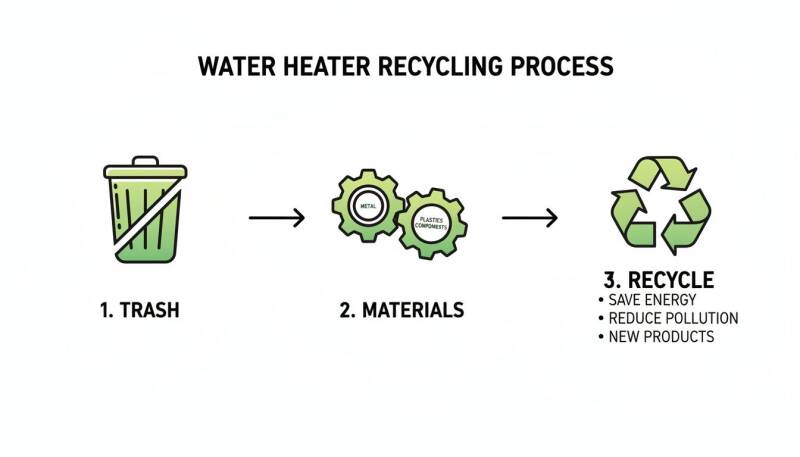
As you can see, a retired water heater's journey should end at a recycling facility, not a dump. This careful process ensures that valuable materials like steel, copper, and brass are recovered, which helps reduce the environmental footprint of manufacturing new products.
Many of the jobs we feature in our before and after project gallery begin with the safe removal of old appliances just like this one.
Alright, your old water heater is finally drained, disconnected, and just sitting there. Now what? The big question is where to take it, because just dragging it to the curb in Westchester or Fairfield County isn't going to fly.
Both New York and Connecticut have very specific rules that prohibit throwing large appliances like water heaters out with your regular trash. It's not just about appearances; it’s about preventing landfill overload and avoiding some pretty serious fines. We're talking up to $1,000 per violation if you get caught.
Plus, these things are packed with valuable materials. A standard 50-gallon tank contains around 150 lbs of steel and another 5-10 lbs of copper. Recycling isn't just a good idea—it's the law.
To help you decide on the best path forward, here’s a quick comparison of your main disposal options in the area.
Water Heater Disposal Options in NY & CT
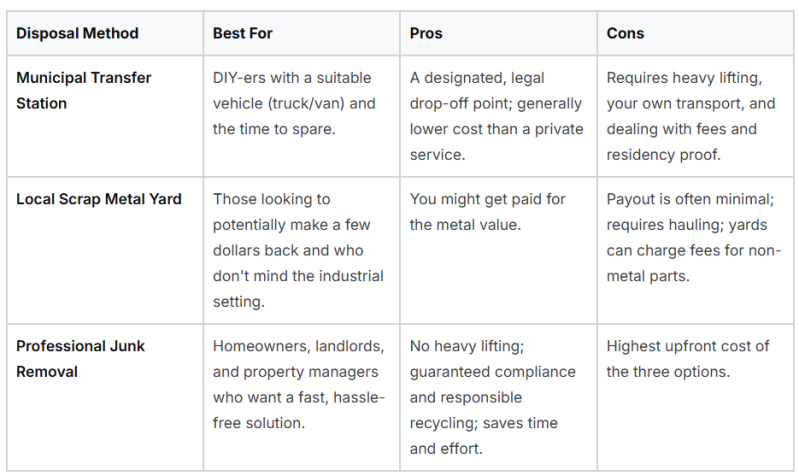
Each option has its place, but as you can see, the trade-off is almost always between your time and effort versus the cost. Let's break down what each of these really involves.
The DIY Route: Municipal Transfer Stations
Your first thought might be to just haul the unit to your local town or county transfer station yourself. Facilities like the Westchester County H-MRF in Yonkers or the Dutchess County Resource Recovery Agency in Poughkeepsie are set up for this. But it’s not as simple as pulling up and dropping it off.
Here’s what you’re really looking at:
- Disposal Fees: You'll almost certainly have to pay a fee, which can change based on where you live and the weight of the tank.
- The Haul: This is on you. That means wrestling a heavy, awkward metal tank into your truck or van and getting it there safely.
- Red Tape: Be prepared to show proof of residency. You should also call ahead to check their hours for appliance drop-offs, as they can be limited.
If you have a pickup truck and are up for a workout, this is a perfectly viable option. For most people, though, it’s a lot of hassle.
Trying Your Luck at a Scrap Metal Yard
Another hands-on approach is taking the old heater to a scrap yard. The appeal here is pretty obvious—getting a little cash back for the metal. In my experience, however, the reality rarely lives up to the expectation.
Scrap yards pay by the pound, but the price for mixed steel is incredibly low. Once you subtract the cost of your gas, the time you spent getting there and waiting in line, and any fees the yard might charge for the insulation or other non-metal parts, you could easily walk away with just a few bucks. Sometimes, you might even end up owing them a small fee.
For a property manager or realtor cleaning out a home, the time investment for a single water heater just doesn't make financial sense. It’s a time-consuming process for a very minimal return.
The Smart Move: Professional Pickup and Removal
For the vast majority of homeowners and real estate professionals, hiring a junk removal service is the most practical and efficient choice. Yes, it costs more than doing it yourself, but what you’re really paying for is a complete, stress-free solution.
A professional crew handles all the heavy lifting, loading, and transportation. You don't have to lift a finger.
Even more importantly, a good company guarantees the unit goes to a certified appliance recycler. This is critical. It ensures that any residual hazardous materials are managed correctly and that every bit of recyclable metal is recovered and put back into the supply chain. This is exactly how we handle our professional junk removal services, whether we're picking up a single water heater or clearing out an entire estate. It takes all the guesswork and risk of fines off your plate, giving you total peace of mind.
The Real Costs vs Scrap Metal Payouts
So, you’ve wrestled that old water heater out of the basement. The big question now is, can you actually make a few bucks scrapping it, or is this going to cost you money? Let's be honest, everyone hopes for a little cash back for their efforts.
Unfortunately, the first thing you'll likely encounter is a fee, not a payout. If you haul the unit to a local recycling center or transfer station yourself, expect to pay for the privilege. These drop-off fees typically run anywhere from $25 to over $100. That money covers the facility's cost to properly dismantle the unit and handle any potentially hazardous components, so it's a necessary evil.
The Reality of the Scrap Metal Payout
Now for the part everyone gets excited about—the scrap metal payout. A standard 150-pound residential water heater sounds like it should be worth something, right? It’s mostly steel, with some more valuable copper and brass fittings inside. But here’s the reality check.
Scrap steel prices are notoriously low. Even with a little copper in the mix, the math is often disappointing. Here's a typical breakdown:
- Steel: You've got about 140 pounds of steel. At current market rates, that might get you $5 to $15.
- Copper & Brass: The few pounds of non-ferrous metals are the real prize, but they’ll only add another $5 to $15 to your total.
When the dust settles, you're looking at a grand total of maybe $10 to $30. Once you factor in the gas to get to the scrap yard and what your time is worth, you're often breaking even or even losing money on the deal.
For the vast majority of homeowners, the time and physical effort required to drain, move, and transport a heavy water heater far outweighs the minimal financial return from scrapping it. The real value is often found in convenience, not cash.
The DIY vs Professional Service Breakdown
Let's put this into perspective by comparing the DIY route to hiring a pro. Going it alone means draining the tank, wrestling it out of your house, loading it into a truck, and spending a few hours driving, waiting, and dealing with the scrap yard. It’s a serious physical commitment.
On the other hand, a professional junk removal service gives you a clear, upfront price. Yes, it’s a cost, not a payout. But what you're paying for is a complete, hands-off solution. The pros handle the removal from anywhere in your home, do all the lifting, and ensure the unit is legally and responsibly recycled.
When you weigh the guaranteed convenience and safety against the slim possibility of making a few dollars, the choice becomes pretty clear for most people. The peace of mind is almost always worth more than what the scrap yard will offer.
The Hassle-Free Professional Disposal Solution
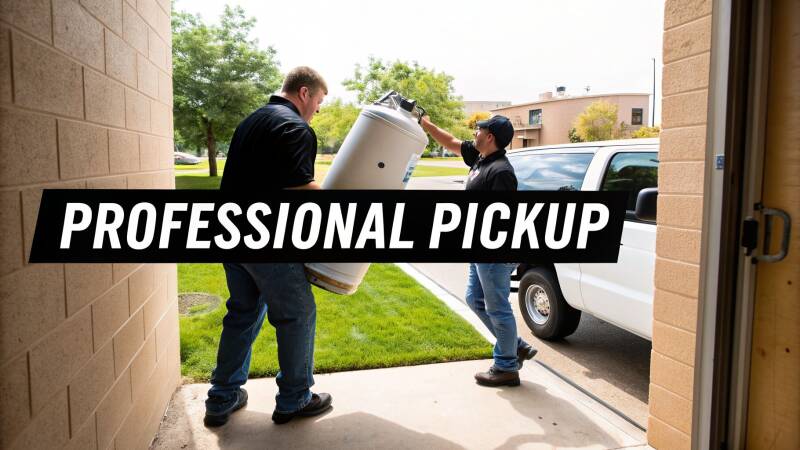
When you weigh the measly scrap payouts against the back-breaking work involved, it becomes pretty clear. For most homeowners and property managers, the real value isn’t in a few dollars for metal—it’s in reclaiming your time and knowing the job is done right.
That’s where calling in a professional like D&B Complete Home Services makes all the sense in the world. It turns what could be a weekend-ruining project into one simple phone call.
Hiring a pro isn't just about paying someone to haul away a heavy tank. It’s about a comprehensive service that handles every single frustrating detail you'd otherwise have to manage yourself. We take on the entire job so you don't have to lift a finger—or worry about a thing.
Our All-In-One Removal Process
When our team shows up, we don’t expect to find the unit sitting on your curb. We come prepared with the right tools and expertise to handle the whole process from start to finish. Here’s what you can expect when we handle your water heater pickup:
- Safe Disconnection: First things first. We safely shut down the water, gas, or electrical lines to protect your home.
- Clean Draining: We manage the messy part—draining the tank. Our crew contains all the sediment-filled water, so you won’t have to deal with spills or water damage.
- Careful Removal: Wrestling a 150-pound tank up tight basement stairs or through narrow hallways is our specialty. We know how to maneuver these beasts without leaving a single scratch on your walls, floors, or doorways.
- Responsible Recycling: We don’t just dump it. We make sure your old water heater is delivered to a certified recycling facility, guaranteeing it’s processed in a way that’s both eco-friendly and legally sound.
This is more than just making your life easier. It’s about delivering a reliable service that leaves your property clean and ready for whatever's next, whether that’s installing a new water heater or just enjoying your reclaimed space.
A little-known secret for getting the most value: if you bundle your water heater pickup with a larger junk removal, like an estate cleanout or a garage decluttering project, you can save a good chunk of money. It’s the smartest way to knock out multiple disposal jobs at once.
Solutions For Every Scenario
The need to recycle a hot water heater isn't just a one-off problem for homeowners. We’re constantly helping clients in more complex situations, which really shows how flexible a professional service can be.
For example, we often work with property managers in Westchester who need to clear out appliances from multiple apartments during a turnover. We can coordinate a single visit to remove all the old units, which saves them a massive amount of time and logistical headaches.
It’s a similar story for homeowners doing a major renovation. You might need the water heater gone, but what about the old cabinets, flooring, and other construction debris? We can bundle it all into one pickup. When you work with D&B Complete Home Services, you’re not just hiring muscle—you’re getting a partner dedicated to making your entire project run smoothly.
Common Questions We Hear About Water Heater Recycling
After years of helping homeowners in NY and CT, we've found that the same questions pop up when it's time to get rid of an old water heater. Let's get you some straight answers from the field.
Can I Just Put My Old Water Heater Out With the Trash?
The short answer? Not a chance. In both New York and Connecticut, your water heater is considered "white goods," which are big appliances banned from regular trash collection.
Leaving one on the curb isn't just an eyesore; it's illegal dumping, and you could be looking at some hefty fines. These units are packed with recyclable steel and sometimes contain regulated parts that need special handling. You have to go through a proper channel, whether that's a designated recycling program, a scrap yard, or a professional service like ours.
How Much Is a Water Heater Worth as Scrap?
People are often surprised to learn how little scrap value a water heater has. Realistically, you're probably looking at $10 to $30, depending on its weight and the day's metal prices. The vast majority of the unit is steel, which just doesn't fetch a high price per pound.
Think about it this way: once you burn gas hauling a 150-pound tank to the scrap yard, spend your time waiting in line, and potentially pay a fee for them to deal with the insulation and plastic parts, you often end up breaking even—or even losing money on the deal.
Do I Have to Drain the Tank Before You Show Up?
While we always appreciate the effort, it’s absolutely not necessary when you call D&B Complete Home Services. Our crew comes fully prepared to handle the disconnection and draining right there on the spot.
Honestly, this is one of the biggest reasons people hire us. We take the risk of a messy, complicated job off your hands. You don't have to wrestle with a heavy, awkward tank full of sediment and water, and there's zero chance of a last-minute flood in your basement.
What About Hazardous Materials Inside the Tank?
This is a fantastic question, and it gets to the heart of why proper recycling is so important. While newer tanks are pretty clean, older models can contain some nasty stuff that has no business in a landfill.
We see it all the time:
- Mercury Switches: Older gas models, especially from before the early 2000s, often had pilot light assemblies that contained small but potent amounts of mercury.
- Refrigerants: The modern hybrid "heat pump" water heaters work like a refrigerator in reverse. They contain regulated refrigerants that are potent greenhouse gases and must be professionally recovered by law.
- PCBs: If you have a truly ancient water heater (think pre-1979), its capacitors might contain polychlorinated biphenyls (PCBs), a very toxic substance that requires careful disposal.
We work with certified recycling facilities that know exactly how to identify, safely extract, and process these components. It’s the only way to ensure we’re protecting our local environment and staying in full compliance with federal and state regulations.
Don't let that old, bulky water heater turn into a headache. The team at D&B Complete Home Services can manage the entire process, from a clean disconnection to certified, responsible recycling. Learn more about our hassle-free junk removal services today.
Add comment
Comments