
Learn how to renovate a house on a budget with our expert guide. Discover actionable tips on planning, high-ROI upgrades, and smart spending.
How to Renovate a House on a Budget in 2026
Thinking about renovating your home can be exciting, but the potential cost often feels like a brick wall. Here’s the good news: a beautiful, updated home doesn’t have to come with a six-figure price tag. The secret to renovating on a budget isn't about cutting corners; it's about smart planning, knowing where to spend your money for the biggest visual payoff, and figuring out what you can tackle yourself versus when it's time to call in a pro.
This playbook is designed to give you that road map. We'll break down the entire process so you can turn that vision for your home into a realistic, achievable plan that maximizes every single dollar you spend.
Your Smart Renovation Starts Here
Forget the idea that you need a massive, all-at-once overhaul. The most successful budget-friendly renovations I've seen are all about making strategic, intelligent choices. It’s a process of transformation, not just a spending spree.
Instead of getting paralyzed by the sheer scale of a full remodel, we're going to focus on what truly matters. It all begins with taking a good, honest look at your property. From there, we'll build a plan that gets you a space you love without draining your savings.
Prioritize for Maximum Impact
Learning how to renovate on a budget really means becoming a master of prioritization. Not all projects are created equal in the world of ROI (return on investment). While a full kitchen gut might be the ultimate dream, a more practical "Phase 1" approach is often far more satisfying—and affordable.
Think about these high-impact starting points:
- A Fresh Coat of Paint: This is, without a doubt, the most cost-effective way to completely transform a room. The right neutral colors can make a space feel larger, brighter, and instantly cleaner.
- Updated Light Fixtures: You'd be amazed at how much swapping out dated, clunky fixtures for modern ones can change a room's entire vibe. It’s a relatively simple DIY project that adds a huge amount of style.
- New Cabinet Hardware and Faucets: Small details can make an enormous difference. New knobs, pulls, and faucets are affordable upgrades that give kitchens and bathrooms a quick, modern facelift.
I always tell homeowners that a successful budget renovation is 80% planning and 20% execution. When you create a detailed plan and focus on these high-return projects first, you sidestep budget blowouts and make sure your money is working as hard as you are.
For those bigger, foundational tasks that need to happen before the fun cosmetic stuff, investing in a specialized service is a smart move. For example, many homeowners in the Hudson Valley rely on professionals like D&B Complete Home Services for critical first steps like demolition and junk removal. Handing that off ensures the project starts on a clean, safe, and professional foundation, freeing you up to focus on the finishing touches.
To help you decide where to put your money first, here's a quick look at some of the best-value projects out there.
Quick Guide to High-ROI Renovation Projects
This table summarizes some of the most budget-friendly projects that give you the highest return on your investment. It's a great starting point for prioritizing your to-do list for maximum impact.
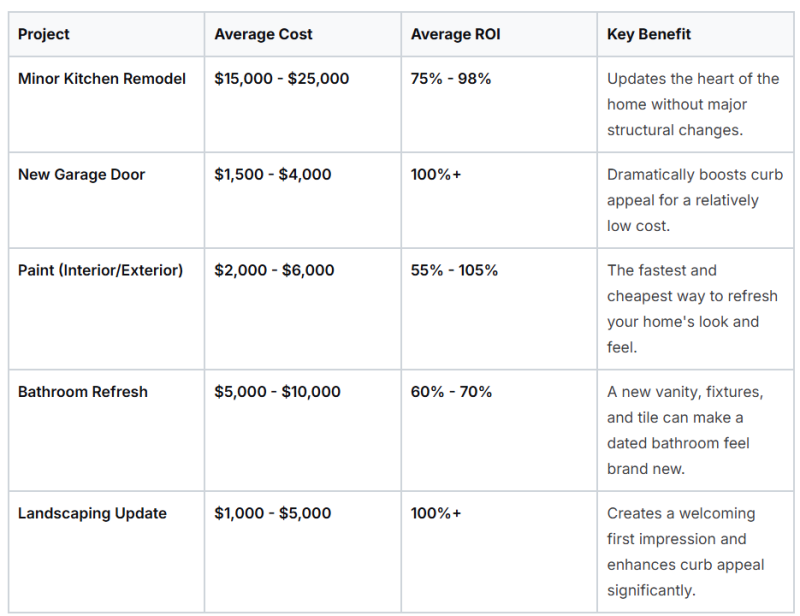
As you can see, you don't have to tear down walls to add serious value and enjoyment to your home. Focusing on these high-impact areas ensures your renovation budget is well-spent.
Crafting Your Renovation Plan and Budget
Every successful renovation I've ever seen started long before the first wall came down. It started with a solid plan. If you’re trying to figure out how to renovate a house on a budget, your roadmap is everything—it’s what separates a successful project from a costly, stressful nightmare.
The very first thing you need to do is conduct a ruthless home audit. Walk through your property with a clipboard and a critical eye, and make two lists: urgent needs and cosmetic wants. That nagging roof leak? That’s a non-negotiable need. The trendy waterfall countertop you saw on Pinterest? That’s a want.
This simple sorting exercise is the bedrock of your budget. It keeps you honest and prevents you from splurging on pretty finishes when a hidden problem, like outdated wiring, is just waiting to cause major headaches and expenses later on.
Building Your Detailed Budget
With your priorities straight, it's time to attach some real numbers to your vision. A vague budget is just a wish list. What you need is a detailed, line-item spreadsheet that leaves no stone unturned.
Start digging into costs for both materials and labor—even for jobs you think you'll do yourself. Get multiple quotes for any work you plan to hire out. For example, if you're set on new floors, don't just get one price. Price out the material per square foot from several suppliers and get estimates from at least three different installation crews.
I can't stress this enough: the biggest mistake homeowners make is forgetting the contingency fund. No renovation, big or small, goes exactly to plan. You absolutely must set aside 15-20% of your total budget for the curveballs, like finding rotted subfloor under the old linoleum.
Your budget spreadsheet should have columns for everything:
- Permit Fees: Call your local building department to find out what permits you'll need and what they cost.
- Material Costs: List it all out, from 2x4s and drywall down to the last box of screws.
- Labor Quotes: A spot for every professional you'll hire, like plumbers or electricians.
- Tool & Equipment Rentals: Don't forget the cost of that floor sander or paint sprayer you'll need for a weekend.
- Waste Disposal: Budget for dumpster rental or junk removal services.
- Contingency Fund: Your 15-20% "uh-oh" fund. Don't skip this!
This process isn't just about accounting; it's about taking control.
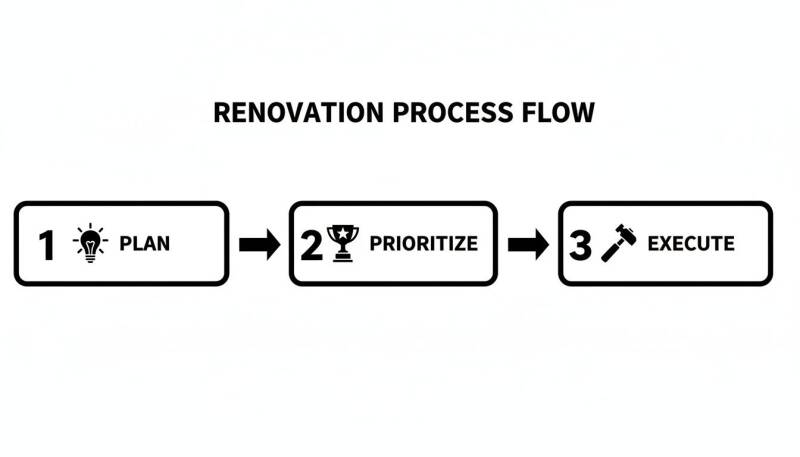
The path is simple: smart planning allows you to prioritize effectively, which in turn leads to successful execution without breaking the bank.
Creating a Phased Timeline
Seeing the total cost can be a shock. Don't let it derail you. Very few people have the cash to do a full-gut renovation all at once. The solution? Break it down into phases. A phased timeline lets you tackle the project in manageable chunks, funding it as you go without taking on a mountain of debt.
A realistic phased plan might look something like this:
- Phase 1 (First 3 Months): Focus entirely on the boring but critical stuff. This means structural and safety issues—roof repairs, electrical panel upgrades, fixing leaky pipes. They aren't glamorous, but they protect your investment.
- Phase 2 (Months 4-6): Now for a little reward. Tackle a high-impact room like the kitchen or master bath. Use budget-friendly moves like painting cabinets, upgrading countertops, and swapping out fixtures.
- Phase 3 (Months 7-12): Move onto the other living spaces. Think refinishing hardwoods, painting bedrooms and living rooms, and installing modern light fixtures.
- Phase 4 (Next Year): With the interior under control, you can turn your attention outside. This is the time for curb appeal projects like landscaping, painting the exterior, or finally building that deck.
This approach transforms a huge, intimidating project into a series of smaller, achievable wins. It gives you time to save for the next stage and makes living through the renovation far more bearable. When it comes to learning how to renovate a house on a budget, this kind of strategic patience is your most valuable tool.
When to DIY and When to Hire a Pro
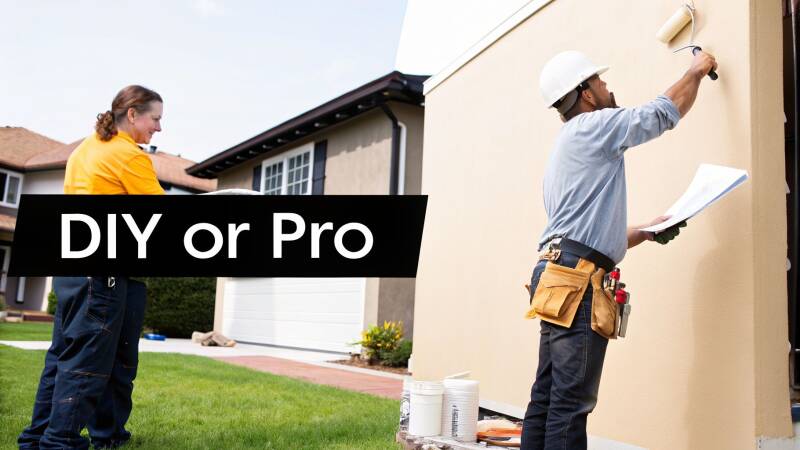
When you’re renovating on a budget, the "DIY or hire a pro" question comes up on just about every task. The temptation to save a bundle on labor is strong, I get it. But I’ve also seen firsthand how a botched DIY job can spiral into a repair bill that’s far bigger than the original professional quote.
The trick is being brutally honest with yourself about your skills, how much time you really have, and what’s at stake if something goes wrong.
Perfect DIY Projects for Budget Renovations
Some jobs are just begging to be done yourself. If you have a free weekend, a little patience, and know your way around YouTube tutorials, you can get huge visual impact for very little money. The risk is low, and the reward is high.
- Painting: This is the undisputed champion of high-impact DIY. Good prep is everything—take the time to clean the walls, tape your edges, and use a quality primer. Do that, and you can completely change the feel of a room for the cost of paint and supplies.
- Installing New Hardware: This is a 30-minute win. Swapping out dated cabinet pulls, drawer handles, and doorknobs is one of the easiest ways to modernize a kitchen or bathroom. If you can use a screwdriver, you can do this.
- Light Landscaping: You don't need a green thumb to make a difference outside. Just pulling weeds, spreading a fresh layer of mulch, and planting a few hardy shrubs can give your curb appeal a massive boost.
- Minor Demolition: Tearing out that gross old carpet or a clunky, 1980s bathroom vanity is incredibly satisfying. Just make sure you know what's behind a wall before you start swinging. A quick peek is always a good idea.
Tackling these projects yourself not only saves a ton of cash but also gives you a real sense of accomplishment. But the smartest DIYers I know are the ones who also know their limits.
Your time and safety have value. If a project requires specialized tools you'll never use again, poses a safety risk, or will take you weeks to finish what a pro could do in a day, hiring out is often the smarter financial decision.
When You Absolutely Need to Hire a Professional
Then there are the non-negotiables. These are the jobs that involve your home's core systems, where a mistake isn't just expensive—it can be downright dangerous, illegal, or even void your homeowner's insurance. Don’t even think about it. Call a licensed and insured professional.
Jobs to Leave to the Pros:
- Electrical Work: Faulty wiring is a top cause of house fires. Unless you're a licensed electrician, don't mess with moving outlets, adding circuits, or rewiring fixtures.
- Plumbing: Even a tiny, slow leak behind a wall can lead to thousands in water damage and mold nightmares. For moving supply lines or re-routing drains, hire a plumber.
- Structural Changes: Thinking of taking down a wall? If it's load-bearing, you need a structural engineer and a professional crew. This is never, ever a DIY job.
- Gas Line Work: Working with natural gas is incredibly dangerous. Any project involving gas appliances or pipes requires a licensed professional. Period.
The Smart Middle Ground: Specialized Services
Finally, there’s that gray area—the messy, back-breaking jobs that you could technically do, but probably shouldn't. This is where specialized services offer fantastic value.
Think about a project like upgrading your attic insulation. In the huge US home improvement market—valued at $538 billion back in 2021—savvy homeowners look for projects with a high ROI. Upgrading attic insulation often delivers a stunning 100% return on your investment by cutting energy bills. For older homes in places like Westchester and Dutchess counties, that’s a massive win.
For a job like that, or for bigger demolition projects and the junk removal that follows, hiring a team like D&B Complete Home Services is the smart play. They have the right gear to work safely and quickly, and they’ll manage all the debris, focusing on eco-friendly disposal through recycling and donations. This lets you save your DIY energy for the fun stuff—the finishing touches that really make the space your own.
If you’re trying to figure out how to manage all the waste from your project, you might find some helpful info in our expert junk removal tips and resources.
High-Impact Upgrades for Every Room
This is where the magic happens. Once you’ve done the hard work of planning and setting a budget, it’s time to see your vision come to life. The secret to renovating a house on a budget isn't about spending less—it's about spending smart on the things that give you the most bang for your buck.
You can achieve a dramatic new look without the dust and expense of a full gut job. A little sweat equity and some clever choices are all it takes to make any room feel fresh, modern, and completely your own.
The Budget-Friendly Kitchen Makeover
Let’s face it, a full kitchen demolition and remodel can easily run $25,000 or more, which just isn't in the cards for most of us. The good news? You can get a similar "wow" factor for well under $1,000 by focusing on cosmetic fixes.
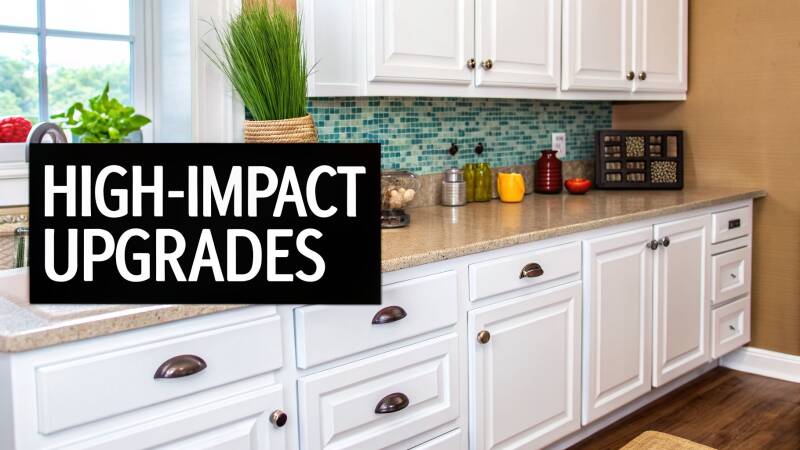
If your cabinets are in decent shape, don't even think about replacing them. A fresh coat of paint is the single most powerful tool you have. A dated, dark wood kitchen can be completely revitalized with a modern neutral like white, gray, or even a bold navy. Just make sure to prep properly and use a high-quality primer and paint designed for cabinetry.
Next, think of hardware as jewelry for your kitchen. Swapping out old knobs and pulls for new ones is a quick, cheap update that makes a huge difference. Tie it all together with a peel-and-stick backsplash—they look surprisingly like real tile but without the headache of grout and mortar.
I’ve seen homeowners completely transform their kitchens over a weekend using just these three techniques. It’s the ultimate lesson in working with what you have. A gallon of paint, new hardware, and a smart backsplash choice can make a 15-year-old kitchen look brand new.
Refreshing the Bathroom Without a Full Remodel
Bathrooms are another area where costs can get out of hand quickly. The strategy here is to refresh, not replace. A stained, ugly bathtub doesn’t necessarily need to be ripped out. Professional reglazing can make it look bright white and new for a few hundred dollars, saving you the $3,000+ cost of a full tub replacement and installation.
Give the vanity a new lease on life with paint and new hardware. If it's truly beyond saving, you can often find affordable and stylish replacements at big-box stores or a local reuse center. A new faucet is another simple DIY swap that instantly modernizes the whole sink area.
Don't overlook the small details that pack a big punch:
- New Light Fixtures: Get rid of that dated "Hollywood" light strip. A modern vanity light or a pair of sconces adds a touch of class.
- Framed Mirror: Ditch the plain, builder-grade sheet of glass and hang a beautiful framed mirror instead.
- Updated Fixtures: A new showerhead, toilet paper holder, and toilet handle are inexpensive fixes that create a cohesive, updated look.
You can see for yourself how these small changes add up to a major transformation in these inspiring before and after renovation photos.
Living Spaces and Architectural Details
In living rooms and bedrooms, paint is your best friend. A fresh coat in a well-chosen neutral color will make the space feel larger, cleaner, and brighter. If you have hardwood floors that have seen better days, refinishing them costs a fraction of a full replacement and delivers an incredible return on your investment.
To give a room a high-end feel, consider adding some simple architectural details. Crown molding is a classic choice that makes any room feel more polished and complete. Lightweight MDF molding is a great DIY-friendly option. A simple board-and-batten accent wall is another fantastic way to create a strong focal point without breaking the bank.
When renovating on a budget, don't forget that curb appeal often delivers the highest ROI. A great example is replacing your front door. A new steel entry door consistently ranks as a top upgrade, often returning over 100% of its value at resale. Data from 2021 showed that minor exterior upgrades like this helped fuel a 15% increase in remodeling activity. It’s a smart move for homeowners and an absolute must for landlords who need to enhance security and get a property ready for the market.
Finding Materials and Managing Waste Smartly
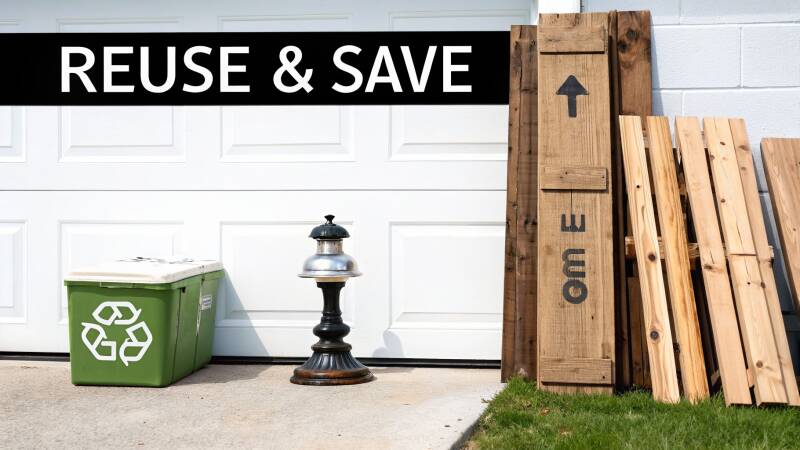
Material costs and junk removal fees are two budget killers that can sneak up on you fast. If you want to learn how to renovate a house on a budget, you’ve got to get good at two things: hunting for affordable materials and smartly handling the mess you make.
After labor, the biggest dents in your wallet will come from what you buy and what you throw away. But with a little resourcefulness, you can dramatically reduce both. It’s all about shifting your mindset from automatically buying new to finding quality alternatives full of character.
Hunting for Reclaimed and Salvaged Treasures
Before you even think about setting foot in a big-box store, you need to explore the world of secondhand materials. This is where you’ll unearth unique items with a bit of history and save a ton of money in the process. The key is knowing where to dig.
Your first stop should always be local architectural salvage yards. These places are absolute goldmines for everything from vintage solid-core doors and old-growth hardwood flooring to antique light fixtures and clawfoot tubs. You can find materials with a level of quality and craftsmanship you just can't get with new stuff, often for a fraction of the price.
Next up, check out reuse centers like Habitat for Humanity ReStores. These non-profits are packed with donated building materials, furniture, and appliances. I’ve seen fellow renovators walk out with entire kitchen cabinet sets, high-end tiles, and brand-new windows for pennies on the dollar—all while helping a good cause.
And don't sleep on the internet. Online boards can be amazing resources for finding:
- Leftover Materials: Contractors and other DIYers are constantly selling their surplus flooring, tile, and paint at a huge discount just to get it out of their garage.
- Gently Used Fixtures: People remodeling their own homes often list perfectly good sinks, vanities, and light fixtures for cheap or even free.
- Antique Finds: You can score unique hardware, fireplace mantels, and other decorative pieces that will give your home instant personality.
A word of caution when buying secondhand: inspect everything meticulously. For any wood, look for signs of warping, rot, or pests. If you can, test electrical fixtures before you buy. And always measure twice to make sure it will actually work in your space. A great deal is only great if you can use it.
Smart Waste Management to Cut Costs
Dealing with demolition debris is an unavoidable—and surprisingly expensive—part of renovating. Renting a standard dumpster can easily cost several hundred dollars, and landfill fees add up. A more strategic approach to your waste can save you real money and is a lot better for the environment.
The secret is to sort your debris as you go. Don’t just toss everything into one giant pile. Create separate piles for different materials, because a lot of what you might consider "junk" actually has value or can be disposed of for free.
By sorting your renovation waste, you're not just organizing—you're creating value. Donating usable items generates goodwill and a potential tax deduction, while recycling materials like metal can sometimes even put a little cash back in your pocket. This simple habit can cut your disposal costs by 50% or more.
Set up a few distinct areas on your job site for:
- Donations: Old cabinets, doors, windows, and light fixtures that are still in decent shape can be donated to a reuse center.
- Recycling: Scrap metal, clean cardboard, and certain plastics can be taken to a recycling facility, which means no landfill fees.
- True Trash: This pile—for things like rotted wood, busted drywall, and old insulation—should end up being your smallest.
For what’s left, hiring a pro can be much more efficient than a dumpster. A dumpster just sits there, taking up space in your driveway, while a junk removal crew does all the heavy lifting in a single trip. If you're tackling a big demo, you can learn more about how professional junk removal services work and see why they are often a smarter, budget-friendly choice. These teams are experts at sorting everything for proper, eco-friendly disposal, making sure as little as possible goes to the landfill. It saves you time, prevents back injuries, and just gets the problem handled.
Your Top Budget Renovation Questions, Answered
Even the most well-thought-out renovation plan comes with its share of questions. As you get ready to dive in, you're bound to have some "what ifs" and "how to's" pop into your head. Let's walk through some of the most common ones I hear from homeowners. Think of this as a final gut-check to build your confidence before the real work begins.
Okay, Where Do I Actually Start?
Before you even think about swinging a hammer or picking out paint chips, your very first move is to conduct a thorough audit of your home. This is non-negotiable. You need a crystal-clear picture of what you’re dealing with.
Get a notepad and walk through every single room. Your job is to separate the must-haves from the nice-to-haves. A leaky roof, old knob-and-tube wiring, or a furnace on its last legs are must-haves. A new quartz countertop is a nice-to-have. The critical health-and-safety items always come first.
Once you have that list, you can build a realistic, line-item budget. The most important line item? A 15-20% contingency fund. Trust me, something unexpected will come up. This fund is what keeps a small problem from derailing your entire project.
What’s the Secret to Saving the Most Money?
There isn't one single trick, but a combination of three things will save you more money than anything else: doing some of the work yourself (DIY), getting creative with sourcing materials, and being patient with your timeline.
You can save thousands in labor costs by taking on jobs like demolition, painting, or even installing things like flooring and light fixtures. For materials, think outside the big-box stores. I've seen clients find incredible deals at architectural salvage yards, on Facebook Marketplace, or by buying last year's floor models.
And finally, don't try to do it all at once. Phasing your renovation—tackling the kitchen this year, the bathroom next—lets you pay as you go. This keeps you out of debt and gives you time to pounce on sales for big-ticket items like appliances or vanities.
I always tell homeowners that the smartest path to renovating a house on a budget is this hybrid approach. By combining strategic DIY with savvy material sourcing and a patient, phased timeline, you can achieve remarkable results without the financial strain.
Which Upgrades Give Me the Most Bang for My Buck?
If you want to add real value without breaking the bank, focus on projects with a high return on investment (ROI) that make a huge visual difference. A fresh coat of paint in a neutral color is, without a doubt, the champion here. It's cheap, easy, and completely changes the feel of a space.
Minor kitchen and bathroom remodels are your next best bet. You don't need to gut the room. Simply painting the existing cabinets and adding new, modern hardware can make a kitchen feel brand new. In the bathroom, a new vanity, updated fixtures, and maybe reglazing a dated bathtub can work wonders.
Don't forget about the outside! Curb appeal is what gets buyers in the door. These projects consistently have some of the best returns:
- New Steel Entry Door: It's amazing what a new front door does for a home's look. This upgrade can often recoup over 100% of what you spent on it.
- Garage Door Replacement: An old, dented garage door can drag down your whole exterior. A new one provides an instant facelift.
- Landscaping and Exterior Paint: A freshly painted house and a well-kept yard create an irresistible first impression.
Is It Cheaper to Hire a Contractor or Manage the Project Myself?
On paper, managing a renovation yourself is almost always cheaper because you aren't paying the 10-20% management fee that a general contractor charges. But—and this is a big but—that path requires a ton of your own time, a solid base of knowledge, and serious organizational skills.
If you’re new to this, one or two costly mistakes can completely wipe out those savings and create massive headaches. For most people tackling a budget renovation, a hybrid approach works best.
You act as the project manager, handling the overall schedule and budget. You do the DIY jobs you're comfortable with, like painting or landscaping. Then, you hire individual pros for the critical stuff. Call a licensed plumber for the plumbing, an electrician for the wiring, and a professional crew for the messy demolition and junk removal. This gives you the perfect blend of cost savings and expert work where it matters most.
Ready to start your renovation but dreading the mess of demolition and debris? Let the professionals at D&B Complete Home Services INC. handle the tough stuff for you. From interior demolition to complete junk removal, our team provides fast, reliable, and eco-friendly services so you can focus on the next phase of your project. Visit our website to get a free estimate and see how we can help.
Add comment
Comments