Learn how to recycle dishwasher the right way, with safe disconnection tips, local options, and when to call a pro.
How to Recycle Dishwasher: A Practical Guide (how to recycle dishwasher)
Recycling an old dishwasher isn't just about making room for a new one. It's about taking a surprisingly impactful step for the environment by keeping a hefty bundle of steel, plastic, and copper out of the local landfill.
Properly disposing of an old dishwasher means safely handling its hazardous bits, assessing its condition, and then getting it to the right place—whether that's a certified recycling facility or a professional removal service. This one decision helps fuel a circular economy and protects our natural resources.
Why You Should Recycle Your Old Dishwasher
Before you even think about pulling that heavy machine out from under the counter, let's talk about why it's so important. An old dishwasher is far from just junk; it's a mix of valuable materials and some stuff you definitely don't want sitting in a landfill.
Think of the average dishwasher as a small treasure chest of recyclable materials. The body is mostly steel, a material that can be melted down and used over and over again. Recycling steel uses up to 75% less energy than creating it from scratch. Beyond the steel, you've got copper wiring, a variety of plastics, and electronic circuit boards. When these items end up in a landfill, we lose those resources forever, and harmful elements can eventually seep into our soil and water.
The Growing Importance of Appliance Recycling
This isn't just a feel-good choice; it's part of a massive global shift. The home appliance recycling market is booming, thanks to tougher environmental laws and people like you becoming more aware of the issue.
The global market was valued at over $21 billion in 2025 and is on track to hit nearly $35 billion by 2032. That number shows just how many appliances, including dishwashers with their typical 10-15 year lifespan, are being replaced every single day.
When you choose to recycle, you're directly helping to:
- Conserve Natural Resources: Reclaiming steel, copper, and aluminum means we don't have to mine as much raw material from the earth.
- Prevent Pollution: Making sure any coolants or electronic parts are handled correctly keeps toxic materials out of the ecosystem.
- Support a Circular Economy: The materials from your old appliance get a new life in new products, which is the whole point of a sustainable system.
For those of us in New York and Connecticut, this is especially critical. With our strict e-waste regulations, properly recycling an old dishwasher isn't just a good idea—it's the law. You can't just drag it to the curb and hope for the best; doing so can get you fined. The feeling of clearing out that old machine and making way for a clean slate is incredibly satisfying. See examples of how professional removal transforms a space and you'll see what I mean.
Safely Preparing Your Dishwasher for Removal
Let’s be honest: getting an old dishwasher ready for removal is the most important part of the job. If you rush it, you’re looking at a potential kitchen flood, a nasty electrical shock, or a badly scratched countertop. Before we even get to the recycling part, we have to get this beast disconnected and out of your kitchen safely.
First things first, and there's no skipping this part. Go to your electrical panel and flip the breaker for the dishwasher to the OFF position. Then, look under your sink for the water shutoff valve and turn it clockwise all the way until it stops. This single step prevents 99% of a potential disaster.
Disconnecting the Essentials
With the power and water safely off, it's time to get your hands dirty. You won't need anything fancy—just a few common tools:
- An adjustable wrench or a good set of pliers
- A screwdriver (usually a Phillips head)
- A voltage tester (this is non-negotiable)
- A couple of old towels and a small bucket
Start by laying the towels down in front of the dishwasher. They'll protect your floor and catch the water that will spill out.
Your first target is the drain hose. This is the flexible, ribbed hose that connects the dishwasher to your sink’s drain pipe or garbage disposal. Use your pliers to loosen the metal clamp, then wiggle the hose free. Be ready to direct it into your bucket, as there’s always some grimy water left inside.
Next up is the water supply line. This is a smaller, often steel-braided hose. Use your wrench to disconnect it from the shutoff valve under the sink first, then from the dishwasher itself. Again, expect a little water to dribble out—that's what the towels are for.
Now for the electrical—and this is where you need to be extra careful. Even with the breaker off, always double-check for live power with a voltage tester. The wiring is usually tucked inside a small junction box near the bottom front of the unit. Once you’ve confirmed the power is dead, you can safely unscrew the wire nuts and separate the wires.
Pro Tip: Grab a small plastic bag or container for all the screws and little hardware pieces you remove. I also highly recommend snapping a quick photo of the wiring and hose connections on your phone before you take anything apart. It’s a real lifesaver if you get stuck or need a reference.
Sliding the Unit Out
The last thing holding your dishwasher in place are two small mounting brackets screwed into the bottom of your countertop. Just open the dishwasher door, look up at the top of the frame, and you'll spot them. Unscrew them, and the unit is officially free.
For more in-depth preparation advice, feel free to check out our comprehensive junk removal tips and resources page.
With everything disconnected, you can now start to gently slide the dishwasher straight out. It might catch a bit on the flooring, so a slow, steady pull is key. Once it’s all the way out, you’re ready for the next step.
Seeing what’s actually inside your dishwasher really drives home why recycling it properly matters so much.
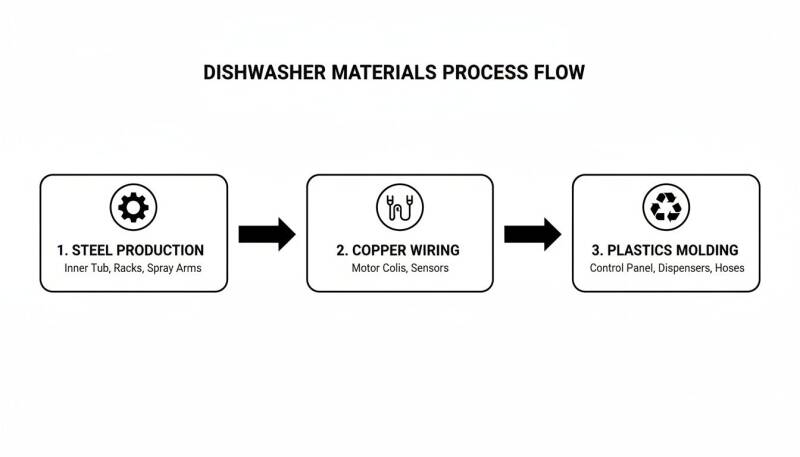
As you can see, your old appliance is packed with valuable stuff like steel, copper, and different plastics. When you recycle it, you're not just getting rid of junk—you're sending raw materials back into the manufacturing stream to be used again.
Donation vs. Recycling: What's the Right Call?
So, you've successfully wrestled your old dishwasher out from under the counter. Now comes the big question: can it find a new home, or is it time for it to be recycled?
Giving a working appliance a second life is a fantastic, sustainable choice. But let's be honest—not every used dishwasher is a good candidate for donation. Taking a moment to assess its true condition is the most responsible thing you can do. You don't want to pass a lemon on to a family in need or a charity that will just have to pay to junk it themselves.
When Donating Your Dishwasher Makes Sense
If your dishwasher is still humming along reliably, donation is absolutely the best way to go. You’re keeping a large, bulky item out of the waste stream and helping someone in your community. It's a true win-win.
Your dishwasher is likely a great candidate for donation if it checks these boxes:
- It’s not ancient: Generally, if it's less than 5-7 years old, it's still efficient enough for a new home. Much older, and the energy and water use might be too high.
- It actually works well: The machine completes a full cycle without leaking, making scary noises, or flashing error codes. All the racks slide smoothly, and the spray arms are intact.
- It looks decent: It's clean and doesn't have a ton of rust, deep dents, or ugly scratches. Appearance really matters when a non-profit is trying to re-home it.
Places like the Habitat for Humanity ReStores in New York and Connecticut are perfect for this. But here’s a pro tip: always call your local store first. Their needs and storage space can change daily, so a quick call will confirm they can take your specific model.
Clear Signs It’s Time for Recycling
Sometimes, recycling is simply the most ethical choice. Donating a dishwasher that’s on its last legs just creates a new problem for someone else. It's time to head straight for the recycling option if your machine is showing any of these red flags.
An old dishwasher should be recycled if it's broken beyond a simple, affordable fix, is more than a decade old, or has serious rust and leak issues. Non-profits often have to pay to dispose of broken donations, so sending a failing appliance their way can actually cost them money. Choosing to recycle it from the start is the more considerate path.
To make it even clearer, I've put together a quick comparison to help you decide which path to take.
Donation vs Recycling: Which Path to Choose?
Use this table to quickly decide if your old dishwasher is a better candidate for donation or recycling based on its condition and age.
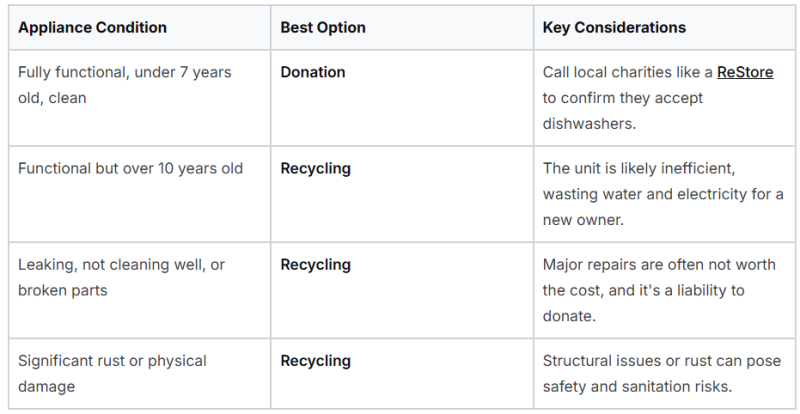
In the end, it really comes down to a simple gut check. If you wouldn't feel good about giving that dishwasher to a friend to install in their kitchen, then recycling is the right move. That way, you ensure its steel, copper, and plastic get a new life without causing a headache for a local charity.
Where to Recycle Your Dishwasher in NY and CT
Okay, you've done the hard part—the dishwasher is disconnected, empty, and sitting in your garage. Now what? For those of us in Westchester, Putnam, Dutchess, and Fairfield counties, the next step is finding a responsible place to take it, not just a dumpster.
It’s easy to think recycling is a given, but the stats tell a different story. The home appliance recycling industry is growing, processing around 55 million units globally in 2023. But here in the U.S., the EPA reports a harsh reality: out of 2.2 million tons of small appliance waste, a shocking 75.9 percent ends up in a landfill. Only a tiny 5.6 percent actually gets recycled.
These numbers really drive home why your choice matters. You can learn more about the global push for appliance recycling on globalinsightservices.com.
Your Go-To Local Recycling Spots
When you start looking for where to take that old dishwasher, you’ll find a few different types of facilities. Each operates a little differently, so knowing what to expect can save you a big headache.
Here are the usual suspects:
- Your Town’s Transfer Station: This is usually the most straightforward option. Most towns or counties have a designated spot for residents to bring bulky items. A quick search for "[Your Town] transfer station" or "[Your County] solid waste authority" is the best place to start.
- Scrap Metal Yards: These businesses are in the market for the steel, copper, and other metals inside your dishwasher. Searching "scrap metal recycling near me" will pull up a list of local buyers.
- Dedicated E-Waste Recyclers: Some facilities specialize in electronics and appliances. Going this route often gives you the best peace of mind that every last part will be handled correctly.
Make This One Crucial Phone Call
Before you even think about loading that heavy machine into your truck, pick up the phone. I can't stress this enough. Assuming a place will take your dishwasher is a recipe for a wasted trip and a whole lot of frustration.
Pro Tip: Make the call and ask these three simple questions: "Do you accept dishwashers?", "Is there a fee for drop-off?", and "Do I need to do anything to it first?"
Some places want the unit whole, while others might ask you to pull out the plastic racks or the silver basket. A municipal transfer station in Westchester might hit you with a $20 fee, but a scrap yard over in Fairfield County could actually pay you a few bucks for the metal. You won’t know until you ask.
The Realities of Cost and Hauling
Let’s talk money and muscle. If you’re dropping the dishwasher off yourself, you’ll likely run into some costs. Fees at town transfer stations typically land somewhere between $15 and $50. That money covers the facility’s cost to dismantle the appliance and safely manage any of the tricky materials inside.
A scrap yard is a different ballgame. They’ll probably take it for free and might even give you a small payout based on the day’s market price for steel. Don’t expect to get rich—it might just be enough to cover your gas—but it sure beats paying someone else.
Either way, you’re on the hook for the transportation. That means having a vehicle that can handle it and the ability to safely load, secure, and unload a bulky, surprisingly awkward appliance.
The Hassle-Free Path to Appliance Recycling
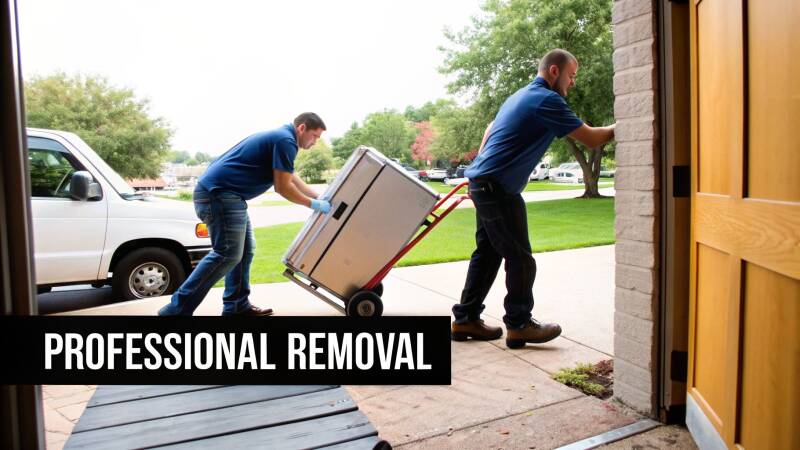
Let’s be honest—disconnecting plumbing, figuring out where to take an old dishwasher, and then actually hauling the bulky thing is a major chore. For most of us, the time, effort, and risk of a pulled muscle just aren’t worth it. This is exactly where calling in a professional service becomes the smart, stress-free move.
Hiring an experienced crew isn't just about convenience. It’s about safety and knowing the job is done right. A pro team handles the entire process, from properly disconnecting the water and power lines to carefully maneuvering the appliance out of your kitchen without a single scratch on your floors or doorframes.
Why a Professional Service Is the Smartest Choice
Think about the actual logistics for a minute. Do you have the right tools? A truck or van big enough to transport it? Do you know for sure where to take it? A professional service erases all those question marks, giving you a seamless experience from start to finish.
This approach offers total peace of mind. It’s a guarantee that the job is done correctly and your old dishwasher is recycled ethically. You get your weekend back instead of spending it deciphering local recycling rules or wrestling a 100-pound machine into a vehicle.
The true value of a reputable removal service is its commitment to responsible disposal. Some companies engage in "greenwashing," making vague eco-friendly claims. A trustworthy service, however, can tell you exactly where your appliance is going—to a certified facility for material reclamation, not just dumped in a landfill.
The D&B Services Advantage
If you want to know how to recycle a dishwasher the easy way, this is it. A company like D&B Complete Home Services is built to handle these exact jobs. The benefits are clear: you save time and your back, all while ensuring the appliance is managed responsibly.
- Safety First: Trained technicians handle all the plumbing and electrical disconnections, which means no leaks or electrical hazards.
- Property Protection: Your home is treated with respect. Pros use the right gear—like dollies and moving blankets—to prevent any damage on the way out.
- Guaranteed Recycling: The service makes sure your old dishwasher is taken to a proper recycling facility where its valuable metals and other materials are recovered.
- Total Convenience: You just point, and the appliance is gone. No heavy lifting, no logistical headaches, and no wasted time.
This hands-off approach is a lifesaver for landlords, real estate agents, or anyone managing a property turnover on a tight deadline. To see the kinds of removal challenges D&B takes on, you can check out their comprehensive junk removal services in NY and CT. At the end of the day, it turns a difficult chore into a simple phone call.
Answering Your Dishwasher Recycling Questions
Once you have a game plan for your old dishwasher, a few practical questions almost always come up. It's one thing to decide to recycle, but it's another to figure out the real-world details like cost, local rules, and what's expected of you.
Let's walk through the common hurdles and questions I hear from homeowners all the time. Getting these details straight will make the whole process a lot smoother.
How Much Does It Cost to Recycle a Dishwasher?
The honest answer? It depends. The final cost to get that old dishwasher out of your life really hinges on how much of the work you want to do yourself.
- DIY Drop-Off: If you have a truck and some muscle, hauling it to a municipal transfer station is your cheapest bet. You're usually looking at a fee between $15 and $50.
- Scrap Metal Yard: Taking it to a scrapper can be free, and some might even slip you a few bucks for the metal. Don't expect a windfall, though—it's often just enough to cover your gas.
- Professional Removal: For a completely hands-off approach, a service like D&B Complete Home Services is the way to go. A single appliance pickup typically runs from $75 to $150. That price covers the heavy lifting, the hauling, and any recycling fees on their end.
Can I Just Leave My Old Dishwasher on the Curb?
I see this question a lot, and the answer is almost always a hard no. In nearly every town across New York and Connecticut, you can't just drag an old dishwasher to the curb with your regular trash. That's a quick way to get a fine for illegal dumping.
Most places require you to schedule a special "bulk pickup," and even then, there are rules to follow and sometimes an extra fee. Before you do anything, your first move should be to check your local town or sanitation department's website. A quick phone call works, too.
If there's one piece of advice to take away, it's this: never assume curbside pickup is allowed. A five-minute check on your town's rules will save you a headache and a potential fine. It’s the first step to doing this the right way.
Do I Need to Take the Dishwasher Apart Myself?
This depends entirely on its final destination. If you're going the full DIY route, you might need to grab some tools.
Some scrap yards will ask you to pull out the non-metal bits—think plastic racks, the silverware basket, and rubber hoses. It just makes their job easier. On the other hand, most municipal transfer stations and all professional removal services are equipped to take the unit as-is. If you hire a service, they want the appliance whole. No disassembly required on your part.
What Actually Happens to a Recycled Dishwasher?
Ever wonder where it goes? It’s actually a pretty cool process. Once your old machine hits a certified recycling facility, it goes into "de-manufacturing." This is where trained workers manually remove any hazardous materials, like the electronic circuit boards.
Then the real fun begins. The dishwasher's metal and plastic shell is fed into a massive shredder that pulverizes it into fist-sized chunks. From there, a series of smart technologies take over to separate the valuable materials:
- Magnetic Separation: Powerful magnets pull out all the steel.
- Eddy Currents: This clever process uses an electric current to isolate other metals like aluminum and copper.
- Final Sorting: The leftover plastic pieces are sorted by type.
These raw, recovered materials are then cleaned up, melted down, and sold to manufacturers to become brand new products. It's a closed-loop system that uses far less energy and virgin resources than starting from scratch.
Figuring out the logistics of appliance recycling can feel like a project in itself. If you'd rather skip the hassle, the team at D&B Complete Home Services INC. can handle the entire process for you. Schedule your hassle-free pickup today!
Add comment
Comments