Considering a dumpster for junk removal? This guide covers choosing the right size, understanding costs, and what you can toss. Simplify your next cleanout.
Renting a Dumpster for Junk A Practical Homeowner's Guide
So, you're staring down a mountain of junk. We've all been there. Renting a dumpster isn't just about getting a big metal box delivered to your driveway; it’s about taking back control and conquering that overwhelming cleanout project on your own terms.
Think of it as your personal mission control for decluttering. Whether you're renovating, clearing out a property, or tackling a massive yard project, a dumpster gives you the power to work at your own pace.
When Renting a Dumpster for Junk Makes Perfect Sense
Let's be honest, some projects are just too big for your weekly curbside bin or a few trips to the local dump in the back of your SUV. A dumpster for junk is the perfect solution for managing a huge volume of waste from a specific, large-scale project. It completely takes the logistical headache out of the equation—no more worrying about where to take everything or how many trips it’ll take.
Instead of having piles of debris cluttering up your yard or garage and becoming a safety hazard, a dumpster keeps it all contained neatly in one spot. This is a game-changer for keeping your property clean and organized, whether you're working on a quick weekend project or a month-long renovation. Having that designated disposal area right there streamlines the entire process.
Ideal Scenarios for a Dumpster Rental
Some situations just scream for a dumpster rental. If your project is going to generate a lot of debris over a few days or even a week, renting is almost always the most practical and cost-effective way to go.
These are the kinds of jobs where a dumpster really shines:
- Home Renovations: Tearing out an old kitchen or bathroom? All that drywall, flooring, old cabinets, and broken tile has to go somewhere.
- Estate Cleanouts: Clearing out a loved one's home is an emotional and physically demanding job. A dumpster simplifies the process of dealing with years of accumulated belongings that can't be donated or sold.
- Major Landscaping Projects: When you’re ripping out old trees, shrubs, dirt, and busted-up patio pavers, you’d be surprised how quickly that heavy, bulky waste adds up.
- Large-Scale Decluttering: This is for the big jobs—the attic, basement, or garage cleanout you've been putting off for years. It’s the perfect way to finally get rid of that old furniture, broken appliances, and generations of clutter.
The real magic of a dumpster rental is having total control over your timeline. A junk removal service is a one-and-done deal, but a dumpster sits on your property, ready for you to fill it as you go. This flexibility is what makes it perfect for projects that unfold over several days, not just a single afternoon.
Choosing the Right Dumpster Size for Your Project
Picking the right dumpster for your junk is probably the single most important decision you'll make in this whole process. It's also where things can go wrong fast. Go too small, and you'll be on the phone ordering a second container, effectively doubling your cost and putting your project on hold. Go too big, and you're just paying for air.
Think of it like packing for a trip—you need a suitcase that fits everything without being half-empty or bursting at the seams. Nailing the size from the get-go saves you time, money, and a massive headache.
This is why having a clear idea of your project's scope is so crucial.
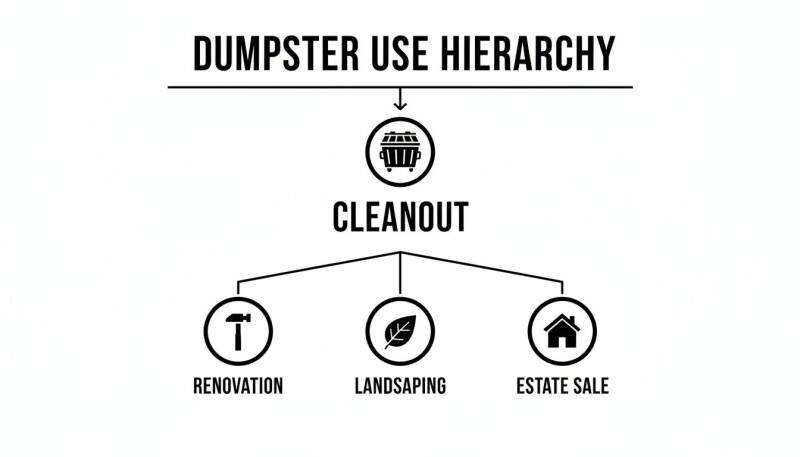
As you can see, dumpsters are workhorses for all kinds of jobs, from major home renovations to clearing out an estate. The trick is always matching the container's capacity to the scale of your junk.
Common Dumpster Sizes and Their Uses
In the industry, we measure dumpsters in cubic yards, but let's be honest—that term doesn't mean much to most people. To make it more concrete, let’s think about it in terms of something we can all picture: how many standard pickup truck loads each size can handle.
- 10-Yard Dumpster: This is our smallest and most popular option, holding about 4 pickup truck loads of material. It's the perfect fit for a small garage or basement cleanout, a single-room renovation (like a small bathroom), or clearing out debris from a weekend landscaping project.
- 15-Yard Dumpster: A fantastic middle-of-the-road choice, the 15-yarder can take on roughly 6 pickup truck loads. You’ll want to consider this size for a larger room cleanout, ripping out old flooring from a mid-sized house, or a full kitchen cabinet tear-out.
- 20-Yard Dumpster: For more substantial projects, this is often the go-to size. It holds approximately 8 pickup truck loads and is ideal for decluttering an entire home, tackling a complete kitchen remodel, or replacing the siding and windows on a smaller house.
- 30-Yard Dumpster: When you've got a major job on your hands, the 30-yard dumpster has the capacity you need, holding around 12 pickup truck loads. This is the right call for new construction, a large home addition, a full estate cleanout, or even some commercial projects.
This isn't just a niche service; the dumpster rental industry is a huge part of our economy. The global market is expected to grow from $5.6 billion in 2025 to $7.8 billion by 2035, largely thanks to booms in construction and home renovation. The roll-off dumpsters we provide at D&B Complete Home Services INC. actually make up a commanding 60.0% market share because they're essential for handling heavy, bulky debris. You can dive deeper into these market trends and growth drivers in this report from Fact.MR.
Making the Final Choice
To cut through the confusion and help you make a confident decision, we've put together a simple reference table.
Matching Your Project to the Right Dumpster Size
Use this quick-reference table to match common dumpster sizes with typical junk removal projects and avoid guesswork.
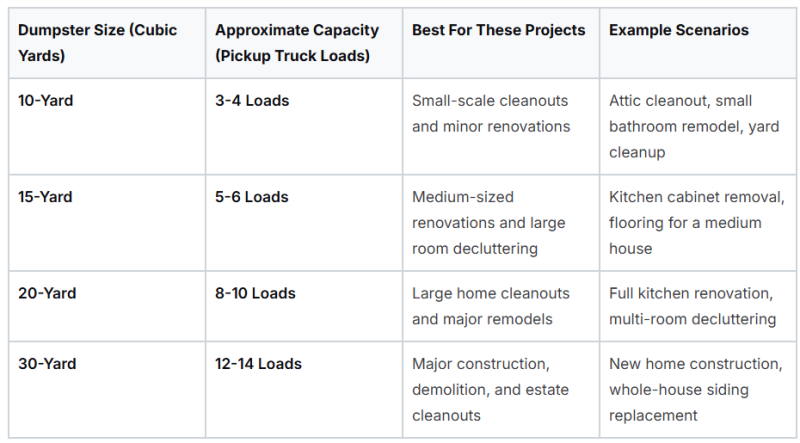
A final piece of advice from someone who’s seen it all: If you're stuck between two sizes, it's almost always cheaper and less stressful to go with the larger one. The small price difference upfront is nothing compared to the cost and hassle of ordering a second dumpster later.
Cracking the Code on Dumpster Costs and Local Permits
Figuring out the price of a dumpster for junk isn't a one-size-fits-all deal. It's a lot like pricing out a moving truck—the final cost depends on how big a truck you need, how far you're going, and how long you'll need it. Your dumpster rental quote is built the same way, starting with a base price that gets adjusted based on your specific project.
Most of the time, that initial quote you get is a flat rate. It bundles the delivery, the pickup, and a standard rental window, which is usually somewhere between 7 and 14 days. But a few key variables can move that number up or down.
What Actually Determines Your Final Price
The price isn't just a number pulled out of a hat. It’s calculated based on the real-world demands of your job, so you’re only paying for what you actually use. Getting a handle on these factors is the best way to budget properly and avoid any sticker shock when the final bill arrives.
- Dumpster Size: This one's straightforward. Just as we covered, bigger dumpsters cost more. A massive 30-yard container for a full home renovation is going to have a higher price tag than a nimble 10-yard bin for a weekend garage cleanout.
- The Weight of Your Junk: Every rental comes with a generous weight limit included. But if you go over that allowance—which happens all the time with heavy stuff like busted-up concrete, old roofing shingles, or dirt—you'll run into overage fees. These are typically charged by the ton.
- How Long You Need It: What if your project runs a little longer than planned? No problem. Most companies let you extend your rental for a daily fee, giving you the flexibility you need to finish the job right.
- The Type of Debris: Sometimes, what you're throwing away matters. Certain materials, especially construction debris, can cost more to dispose of because of specific landfill rules and processing needs.
Heads up: always ask about potential extra charges. Things like trip fees (if the truck can't get to your dumpster for pickup) or special handling fees for bulky items like mattresses and tires can pop up depending on local regulations.
Do You Need a Permit? Navigating the Local Rules
Okay, let's talk about where you're going to put this thing. If the dumpster can sit comfortably on your own private property—like your driveway—you almost never need a permit. For most homeowners in places like Westchester, Putnam, and Dutchess counties, this is the easiest and most common way to go.
But things get a little more complicated if your driveway isn't an option.
If the only place for the dumpster is on public property, like the street, a sidewalk, or an alley, then you will almost certainly need a placement permit from your local town or city. This isn't just red tape; it's a critical step for safety and keeps you on the right side of the law, ensuring the container doesn’t block traffic or create a hazard. Skip this, and you could be looking at some serious fines.
Getting a permit means reaching out to your local municipal office, usually the public works or building department. The process, cost, and lead time can vary wildly from one town to the next, so it's smart to check with your local government—whether you're in Orange County, NY, or over in Fairfield County, CT—well before your dumpster is scheduled to arrive.
What Can You Actually Throw in a Dumpster? (And What You Can’t)
So, you’ve got a dumpster sitting in your driveway, ready to swallow up all that clutter. It’s a great feeling, but before you start tossing everything in sight, it's important to know there are some ground rules. Think of it like this: your dumpster is for the everyday junk, not the hazardous stuff.
These rules aren’t just there to make your life difficult. They exist to keep landfill workers safe, protect our local environment from nasty chemicals, and comply with state and federal laws. Tossing in a prohibited item can lead to extra fees or even the dumpster company refusing to haul it away. A little know-how upfront saves a lot of headaches later.
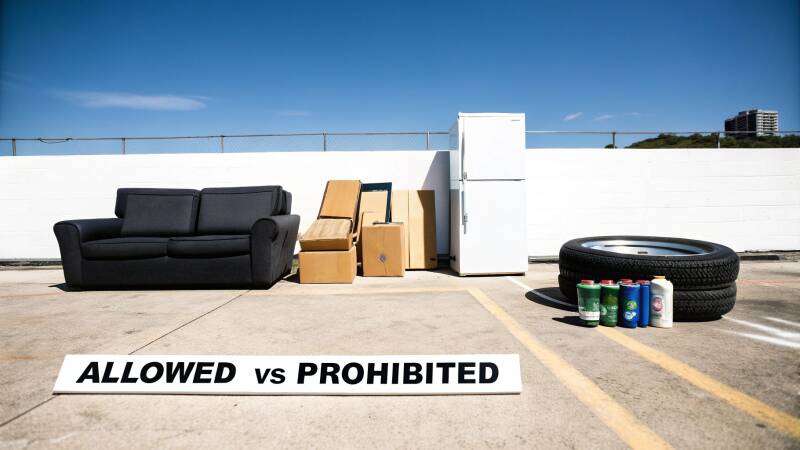
The "Go-Ahead" List: What's Generally Accepted
For the most part, your rental dumpster is perfect for all the typical junk and debris from a big cleanout or renovation. These are the non-hazardous materials that local facilities are equipped to handle.
Here’s a quick look at what you can usually toss without a problem:
- General Household Junk: All that stuff from the attic, basement, and garage. Think old toys, clothes, books, and random clutter.
- Furniture: Yes, that old saggy couch can go. Sofas, chairs, tables, mattresses, and bed frames are almost always fine.
- Appliances (without Freon): Washers, dryers, stoves, and dishwashers are typically okay.
- Yard Debris: Branches, leaves, grass clippings, and smaller stumps can be loaded right in.
- Construction Debris: This is a big one. Drywall, wood scraps, siding, roofing shingles, and old flooring are exactly what these dumpsters are made for.
The "No-Go" Zone: Prohibited and Restricted Items
Now for the important part. This is the list you need to pay close attention to. Hazardous materials are a hard no because they pose a real risk to people and the planet. Tossing them in with regular trash isn't just a bad idea—it's illegal.
A Quick Word on Safety: Never, ever mix hazardous waste with your regular junk. These items need to be disposed of in a very specific way to prevent contamination and keep everyone safe.
Here are the items that you absolutely cannot put in your dumpster:
- Hazardous Chemicals: Things like paint, solvents, oil, asbestos, pesticides, and harsh cleaning agents.
- Flammables: Propane tanks, gasoline, and other fuels are a major fire hazard.
- Batteries: Especially car batteries and lithium-ion batteries. They contain toxic heavy metals and need to go to a designated recycling center.
- Tires: Landfills hate tires. They’re bulky, don’t break down, and can trap methane gas.
- Electronics (E-waste): Your old computer, TV, or printer is considered e-waste and must be recycled properly.
- Appliances with Freon: Refrigerators, freezers, and air conditioners. The Freon must be professionally removed before disposal.
If you have stuff from the "no-go" list, don't just leave it by the curb. Your best move is to call your local town or county's solid waste authority. They'll tell you about hazardous waste collection days or point you to a facility that can handle it. For tricky items like a broken-down mower, you can find specific advice in our guide on how to dispose of old lawn equipment.
Dumpster Rental vs. Full-Service Junk Removal
So, you've got a pile of junk to deal with. What's the best way to make it disappear? You generally have two main choices: renting a dumpster or hiring a full-service junk removal crew.
Think of it like this: renting a dumpster is the DIY approach, kind of like cooking a big meal yourself. You have all the control, you work at your own pace, and it’s often more cost-effective for large jobs. A junk removal service, on the other hand, is like ordering takeout—it’s all about convenience. A team shows up, does all the work for you, and leaves you with a clean space.
Neither one is better than the other; they just solve different problems. Let's break down when each option makes the most sense.
When to Choose a Dumpster Rental
A dumpster rental puts you in the driver's seat. It's the perfect solution when you're tackling a project that's going to take some time and you want the flexibility to work on your own schedule.
A dumpster is probably your best bet if:
- Your project is a marathon, not a sprint. Think home renovations, major landscaping work, or a weekend-long garage cleanout. You can toss debris as you create it.
- You're dealing with heavy, bulky materials. Dumpsters are absolute workhorses, built to handle things like concrete, roofing shingles, and construction debris without a problem.
- You have a lot of stuff to get rid of. When it comes to sheer volume, a dumpster often gives you more bang for your buck per cubic yard.
- You don’t mind rolling up your sleeves. If you’re able and willing to do the physical loading yourself, a dumpster rental is a great fit.
There's a reason this DIY approach is so popular. The US dumpster rental market is on track to hit USD 654.0 million by 2025, according to a report from IBISWorld on the dumpster rental market. This boom is driven by the exact kinds of home renovation and construction projects we handle every day here in Fairfield County, CT, and the surrounding areas.
When to Hire a Junk Removal Service
Sometimes, you just want the problem solved—fast. That’s where a full-service junk removal crew shines. When speed and convenience are what you need most, this is the way to go.
Opt for a junk removal service if:
- You need it gone now. In many cases, a team can come and clear everything out the very same day.
- You can't—or don't want to—do the heavy lifting. They’ll handle everything, from hauling that ancient sofa up from the basement to loading it onto the truck.
- You only have a few large items. It’s way more efficient to have a crew take away a single mattress or refrigerator than to rent a whole dumpster for it.
Ultimately, the best choice boils down to three things: your budget, your timeline, and how much work you’re willing to do yourself.
To make it even clearer, let's compare these two options side-by-side.
Which Junk Removal Option Is Right for You?
Here’s a quick breakdown of the two main options for getting rid of junk, designed to help you see which one fits your project's needs, budget, and timeline.
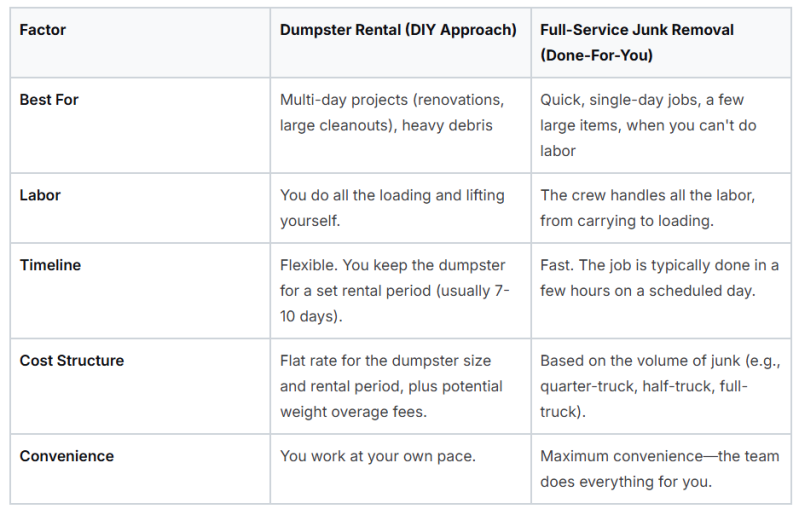
So, which path is yours? If you're leaning toward the hands-off, "just make it go away" approach, our team offers comprehensive full-service junk removal solutions to get the job done right.
Eco-Friendly Disposal and Recycling Strategies
Just because you’re renting a dumpster doesn’t mean everything has to end up in a landfill. With a little bit of planning upfront, you can make your cleanout project surprisingly eco-friendly. The real secret is to sort your items before they ever get near the dumpster.
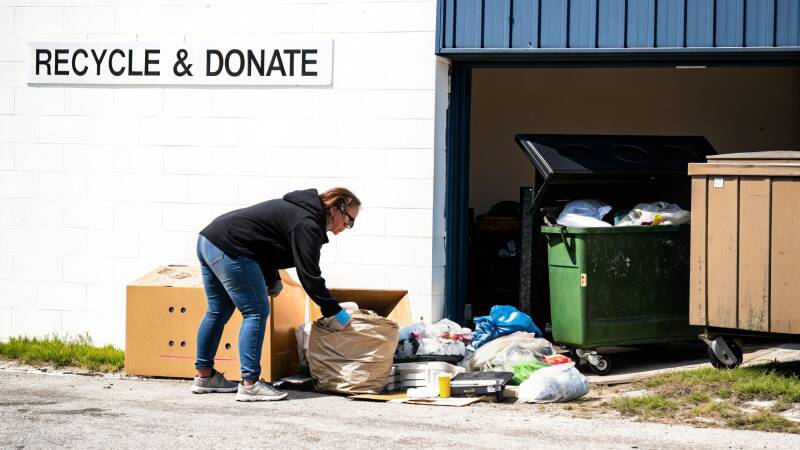
Think of it this way: every item you're getting rid of has one of three potential homes—trash, recycling, or donation. The easiest way to manage this is to set up a few different staging areas or tarps on your lawn, one for each category. This one simple step can keep a huge amount of material out of the local landfill.
Maximizing Donations and Recycling
It's amazing how many things we think of as "junk" can actually find a new life somewhere else, whether at a local charity or a recycling facility. Before you toss something, take a second to consider its potential.
- Donatable Goods: Items like gently used furniture, books, clothing, and electronics that still work are often in high demand. Charities throughout Westchester and Fairfield Counties are always looking for quality donations, so a quick phone call can tell you exactly what they need.
- Recyclable Materials: Keep an eye out for materials that are easy to recycle. Things like scrap metal, clean wood, cardboard, and yard waste are perfect examples. Pulling these out significantly cuts down on the weight and volume of what actually goes into the dumpster.
It really only takes about an hour of pre-sorting to make a huge impact on your project's environmental footprint. That small investment of time pays off by ensuring your junk is handled as responsibly as possible.
We get it—for a lot of people, the hardest part is just knowing where to begin. For more actionable advice, check out our other junk removal tips and resources, where we cover everything from handling specific items to general decluttering strategies. Taking these extra steps helps make your junk removal project as green as it can be.
Got Questions? We’ve Got Answers.
Renting a dumpster for junk is pretty straightforward, but a few questions almost always come up. Getting these sorted out ahead of time is the key to a smooth, headache-free project. Let's walk through the details that people ask us about most often.
Protecting Your Property and Managing Your Time
Right at the top of the list is a big one: "Will this thing wreck my driveway?" It's a valid concern. A full dumpster carries a serious amount of weight. The simplest, most effective trick we've learned over the years is to lay down some plywood sheets before the dumpster arrives. This creates a buffer that distributes the load and protects your asphalt or concrete from scratches and gouges.
Another common question is about timing. What if the project runs longer than you planned? Life happens, and projects can have a mind of their own. Most rental companies, including us, are flexible. If you see you're going to need an extra day or two, just give us a call. We can almost always extend the rental for a small daily fee, so you don't have to rush.
What Goes In and When to Book
People also ask if they can just throw everything in together. For most projects, like a garage cleanout or a small renovation, the answer is yes. Old furniture, kids' toys, busted-up drywall, and yard clippings can all go into the same container.
The big exception here is for super-heavy materials like concrete, dirt, or bricks. These dense items often need their own dedicated dumpster because of weight limits and disposal requirements. It's always a good idea to check with us first if you're dealing with that kind of debris.
So, how far in advance should you book your dumpster? While we can sometimes work miracles and handle a last-minute request, we always suggest booking at least 3-5 days ahead. This is especially true during the busy spring and summer months. A little bit of planning ensures you get the exact size you need, right when you need it, and keeps your project on track.
Ready to tackle your project with confidence? D&B Complete Home Services INC. provides the reliable dumpster rental and junk removal services you need. Get your free quote today!
Add comment
Comments