Learn how can metals be recycled: the process, what qualifies, and the environmental and economic benefits of recycling scrap metal.
Learn: can metals be recycled and why it matters
The short answer? Yes, absolutely. Just about every type of metal can be recycled. In fact, most metals can be melted down and reborn into new products again and again without ever losing their core properties.
It’s helpful to stop thinking of metal as a throwaway item and start seeing it for what it is: a permanent resource.
Why Metal Recycling Is a Sustainable Powerhouse
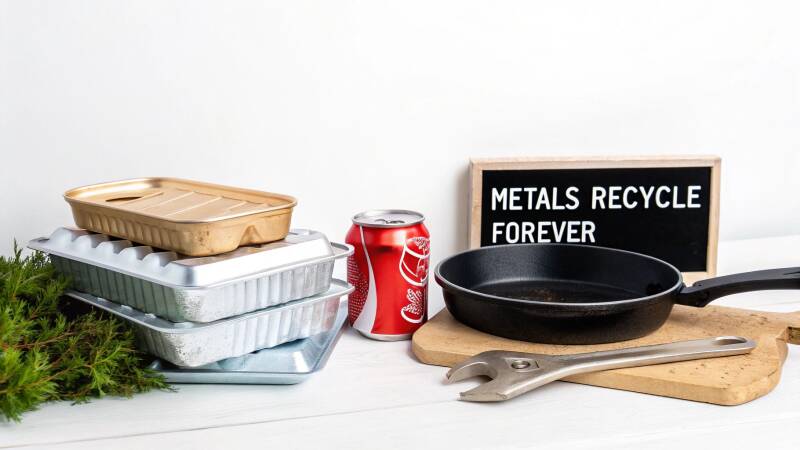
That infinite recyclability isn't just a cool trivia fact; it's the foundation of a modern, circular economy. Every single time we recycle a steel beam, an aluminum can, or a length of copper pipe, we sidestep the need to mine for brand-new ore. That one simple act creates a ripple effect of benefits, from massive energy savings to protecting our environment.
This isn't a small-scale operation, either. The global metal recycling market is set to climb from around USD 559 billion in 2025 to over USD 826 billion in the near future, largely thanks to demand from the construction and automotive industries.
Right here in the U.S., an incredible 72% of all new steel is made from old, recycled scrap. This is more than just good business—recycling steel uses 74% less energy than making it from scratch and drastically reduces carbon emissions. You can dig into more data on the metal recycling market to really see the scale of its impact.
The Two Families of Metal
To get a handle on how it all works, you only need to understand the two main "families" of metal. The best part? You can tell them apart with a simple household item.
The key difference is magnetism.
- Ferrous Metals: These are the metals that contain iron, which makes them magnetic. We're talking about things like old steel appliances, cast iron skillets, and car parts.
- Non-Ferrous Metals: This group has no iron, so they are not magnetic. It includes valuable materials like aluminum, copper, and brass.
The magnet test is your best friend when it comes to sorting scrap. If a magnet snaps right onto it, you've got a ferrous metal. If it doesn't stick, you're holding a non-ferrous metal—which often means it's worth more at the scrap yard.
Common Recyclable Metals in Your Home or Business
To help you start spotting what's what, we've put together a quick guide to the metals you'll commonly find around your property. Knowing what you have is the first step toward getting it recycled properly and even putting a little cash in your pocket.
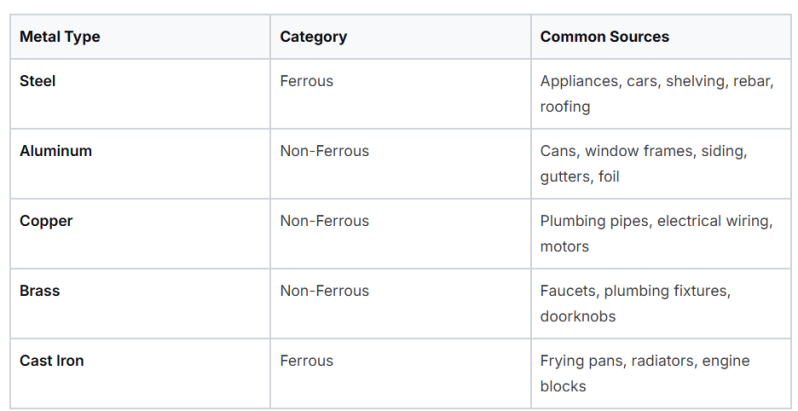
Once you start looking, you'll be surprised at how much recyclable metal is hiding in plain sight in your garage, basement, or business.
The Two Families of Recyclable Metals
So, can you recycle metal? Absolutely. But to really get a handle on how it all works, you first need to know that the world of metal is split into two big families. What separates them is surprisingly simple: one little element called iron.
Whether or not a metal contains iron dictates everything—how it behaves, its value, and even how it gets sorted at the recycling plant. The cool part is, you can usually tell them apart with a basic magnet from your fridge.
Ferrous Metals: The Magnetic Majority
First up, we have ferrous metals. These are the metals that contain iron, and that iron content is precisely what makes them magnetic. If a magnet sticks, you're dealing with a ferrous metal. This group includes some of the most common, workhorse materials out there, like steel and cast iron.
Because they’re used in just about everything—from buildings and cars to appliances and tools—ferrous metals are, by a long shot, the most recycled materials on the planet.
- Steel: Think about cars, bridges, washing machines, and refrigerators. That’s all steel.
- Cast Iron: This is the heavy-duty stuff, like old radiators, engine blocks, and that trusty skillet in your kitchen.
Their magnetism isn't just a fun fact; it's the key to how they're recycled on a massive scale. At sorting facilities, giant, powerful magnets simply lift ferrous metals right out of the mixed junk, making the whole process incredibly efficient.
In fact, ferrous metals like steel and iron are the undisputed leaders in the recycling world, making up about 75% of the entire scrap metal market. This massive volume is part of an industry valued at over USD 552 billion, with forecasts expecting it to nearly double. This is especially relevant for businesses like D&B Complete Home Services INC., where demolition and renovation projects in Fairfield County, CT, and nearby NY counties generate tons of this valuable scrap daily. Explore more about the growth of the global metal recycling market to see the full picture.
Non-Ferrous Metals: The Valuable Minority
The other side of the family is the non-ferrous metals. As you might guess, these are defined by what they don't have: iron. No iron means no magnetism. While they account for less of the total weight in recycling, they often pack a much bigger punch when it comes to value.
This group includes some of the most useful materials we have, prized for being lightweight, great conductors of electricity, and resistant to rust. You'll find them everywhere, from your smartphone to your home's plumbing.
- Aluminum: Lightweight and corrosion-proof, it’s in soda cans, window frames, and car parts.
- Copper: Highly valuable for its conductivity, it's the backbone of electrical wiring and plumbing pipes.
- Brass: A mix of copper and zinc, you'll see it in faucets, keys, and decorative hardware.
- Lead: Heavy and dense, it's primarily used in car batteries and, in older homes, for roofing.
Since magnets won't work on them, sorting non-ferrous metals is a bit more involved. It often requires more advanced technology or even sorting by hand. But because they're so valuable, making the effort to recover them is a no-brainer for both the economy and the environment.
Ferrous vs Non-Ferrous Metals At a Glance
To make it even clearer, here’s a simple breakdown of how these two metal families stack up against each other. Think of this as a quick cheat sheet for telling your scrap apart.
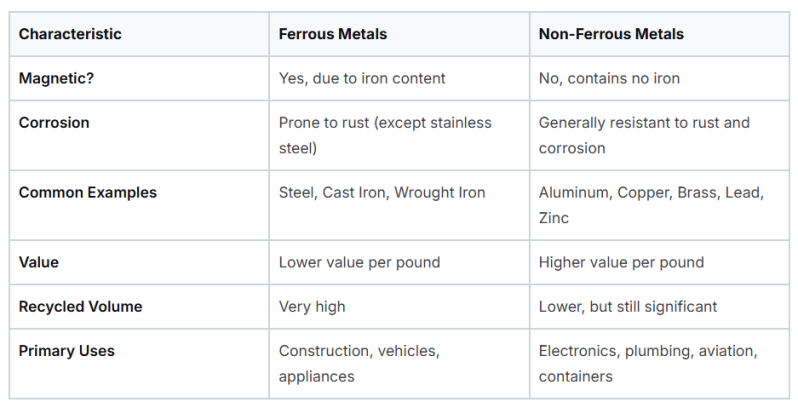
Understanding this basic difference is the first and most important step in recycling metal. It’s what helps you, and recycling facilities, sort materials properly to ensure they can be transformed into something new.
The Journey From Scrap to New Product
Ever wonder what really happens to that old washing machine or pile of rusty pipes after it's hauled away? It's easy to assume it all ends up in a landfill, but that's rarely the case. Instead, it’s the start of a remarkable journey that turns forgotten scrap into brand-new materials.
Let's trace the path of a piece of scrap steel from a garage cleanout, say right here in Westchester County, to see how this whole process works. It's a multi-step story that proves just how powerful metal recycling is.
The very first step, sorting, is surprisingly simple. It all comes down to a magnet.
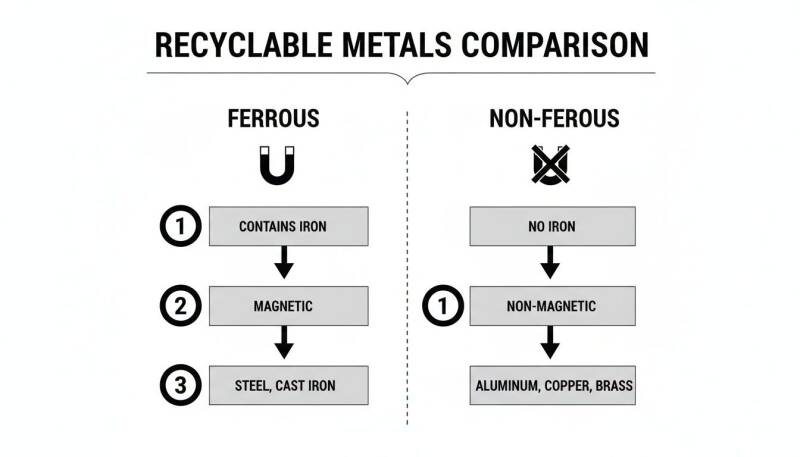
This quick test immediately divides all scrap into two main camps: iron-based metals (ferrous) and all the rest (non-ferrous), like aluminum or copper.
From Collection to Sorting
It all starts with collection. A company like D&B Complete Home Services INC. gathers the metal from various homes and job sites and brings it all to a dedicated scrap yard or a materials recovery facility (MRF).
Once it arrives, the real work of sorting begins. Think of it as a high-tech treasure hunt. Huge, powerful magnets are passed over the piles of mixed scrap, plucking out all the ferrous metals—like our steel piece—and leaving the non-ferrous materials behind. From there, other advanced sensors and even sharp-eyed workers continue to separate everything, making sure each type of metal ends up in the right pile.
Processing and Purification
With everything sorted, it’s time for processing. The scrap steel is fed into massive shredders that rip it into smaller, more uniform pieces. It's a lot like dicing vegetables before you cook; this step makes the metal much easier to melt down efficiently.
Now for the main event: melting. The shredded steel is dumped into a gigantic furnace and heated to mind-boggling temperatures—we're talking over 2,800°F. As the steel liquefies, any impurities like old paint, rust, or coatings simply burn off or rise to the top as a layer of slag, which is easily skimmed off.
This purification is the secret sauce of metal recycling. The intense heat essentially hits the reset button, burning away all the junk and leaving behind a pure, molten element ready for its next chapter.
Finally, the purified molten steel is poured into molds to cool and solidify. It comes out as huge slabs, billets, or ingots. These are the standardized, easy-to-ship forms that manufacturers buy. This reborn metal is now a raw material, ready to become a car part, a structural beam for a building in Fairfield County, or maybe just a soup can. The cycle is complete.
Why Metal Recycling Is a Win for Everyone
Recycling metal isn't just about feeling good or doing the "green" thing—it's a seriously smart move that packs a punch for both our environment and our wallets. When we make the choice to recycle, we kick off a positive ripple effect. It's a chain reaction that protects our natural resources, slashes energy consumption, and even bolsters our local economy.
Every old appliance you haul to the curb or pile of scrap from a renovation project feeds into this powerful cycle.
This whole process is a huge victory for the planet. Instead of tearing up the earth with destructive and energy-guzzling mining operations for new ore, recycling simply reuses what we already have. That means we get to preserve beautiful natural landscapes and wildlife habitats that would otherwise be gone for good. It also dramatically cuts down our reliance on raw materials, making sure there's enough to go around for generations to come.
The Environmental Payoff
The environmental benefits are genuinely staggering, especially when you look at the energy savings. Making new products from recycled metals requires a tiny fraction of the energy needed to create them from scratch using virgin ore. That massive reduction in energy use directly shrinks our collective carbon footprint, since fewer fossil fuels are burned in the manufacturing process.
Take aluminum, for example. It's a lightweight workhorse we see everywhere, from soda cans to the frames of our windows.
Aluminum is a true recycling superstar. The process of recycling it uses an incredible 95% less energy than it takes to mine and process new bauxite ore. That incredible efficiency is a big reason why aluminum is expected to capture 35.6% of the global metal recycling market's revenue. And since it can be recycled over and over again without losing quality, scrap from a home remodel becomes a valuable resource that keeps the economy moving. You can learn more about the future of the metal recycling market and its global impact.
Think about that for a second. Saving that much energy means that for every ton of aluminum we recycle, we're stopping a huge amount of greenhouse gases from ever reaching the atmosphere.
The Economic Engine
Putting the environmental gains aside for a moment, metal recycling is also a powerful economic force. It’s the very foundation of the circular economy—a system built around eliminating waste by keeping materials in constant use. This industry creates thousands of jobs in collection, sorting, processing, and manufacturing, supporting local economies in communities just like ours across Westchester and Fairfield Counties.
For businesses and manufacturers, using recycled metal just makes good financial sense. It’s almost always cheaper to buy recycled materials than newly mined ore, which helps drive down the cost of production. Those savings can ultimately be passed along to you and me, making the products we buy every day more affordable.
By treating scrap metal as a valuable commodity instead of just another piece of trash, we tap into its economic power and help build a more sustainable and efficient world for everyone.
How to Prepare Your Scrap Metal for Recycling
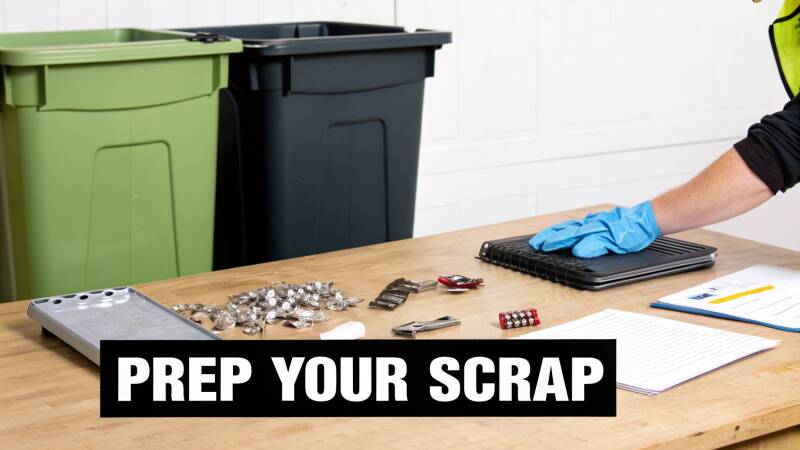
So, you understand how important metal recycling is and you're ready to tackle that pile of scrap in the garage or at the job site. That's great! Properly preparing your metal makes the whole process smoother, safer, and more efficient for everyone down the line. It might sound like a lot of work, but it really just boils down to a few simple steps.
The first thing you’ll want to do is focus on separation. A lot of metal items are attached to other materials. Before you do anything else, try to separate the metal from any large plastic, wood, or rubber pieces. For instance, if you're getting rid of an old metal-framed chair with a wooden seat, popping that seat off is a perfect start.
Next up is a quick sorting session. All you need is a magnet. Go through your pile and create two groups: ferrous (the stuff that sticks to the magnet) and non-ferrous (the stuff that doesn't). This simple magnet test is the single best thing you can do at home to help recycling facilities, as it lets them process everything much faster.
A Simple Preparation Checklist
Whether you're a homeowner cleaning out the shed or a contractor with site debris, following a quick checklist makes everything easier. These tips are especially useful if you plan on dropping the metal off yourself, but they also help a professional pickup service work more efficiently.
- Separate Contaminants: Pull off as much non-metal material as you reasonably can. Think wood, plastic, fabric, and even caked-on dirt.
- Use the Magnet Test: Sort your metals into ferrous and non-ferrous piles. This is key to maximizing the value and recyclability of what you've collected.
- Handle with Care: Always wear sturdy gloves when dealing with sharp or rusty metal. If you're transporting it yourself, make sure large items are secured so they don't slide around.
- Clean When Possible: You don't need to scrub everything spotless, but a quick rinse to get food residue out of cans or heavy grease off of old parts is always appreciated. If a pro service is picking it up, this is less of a concern.
For the big jobs—like a full construction site cleanup or clearing out an estate—the best preparation you can do is make a phone call. Professional outfits like D&B Complete Home Services INC. have the right equipment to handle the heavy lifting, on-the-spot sorting, and safe transport, saving you a ton of time and a sore back.
If you have specific items like old lawnmowers, it helps to know the right way to approach them. You can learn more about how to dispose of old lawn equipment to make sure it's done right.
We Take the Hassle Out of Metal Recycling
Knowing which metals to recycle is one thing. Actually getting rid of them is a whole different ball game.
What do you do with that ancient, cast-iron furnace taking up space in the basement? Or the rusty old swing set your kids have outgrown? Tackling these jobs yourself can feel like a massive headache.
That's where we come in. For our neighbors across Westchester, Putnam, Dutchess, and the surrounding counties, D&B Complete Home Services INC. offers a straightforward solution for removing all that unwanted metal. We're the helping hand that gets the job done right.
Forget the back-breaking work of wrestling a washing machine into a truck or making countless trips to the scrap yard with sharp, dangerous debris. Our professional crew has the equipment and the know-how to handle it all safely and efficiently.
One Call Takes Care of Everything
Whether you're clearing out a single bulky appliance or cleaning up after a major renovation project, we've got you covered. We work with homeowners decluttering their space, contractors who need a dependable cleanup crew, and property managers getting units ready for new tenants.
The real value we provide is peace of mind. When you call us, you know your old metal isn't just going to end up in a landfill. We're serious about our eco-friendly commitment, making sure every recyclable piece gets to the right facility to start its new life.
We see the potential in what most people just see as junk. By ensuring your old metal re-enters the circular economy, we help you clean up your property while making a genuinely positive impact on the environment.
From the moment we pick it up to the final sorting, we manage every single step. If you’re ready to get rid of your scrap metal without the stress, take a look at our professional junk removal services and let us do the heavy lifting for you.
Common Questions About Metal Recycling
Once you get the basics down, you'll probably still have a few practical questions. It's one thing to know the theory, but another thing entirely when you're staring at a pile of old scrap metal in your garage. Let's tackle some of the most common questions we get so you can recycle with confidence.
Getting tripped up on the small details shouldn't stop you from doing the right thing. We'll clear up the confusion and get you ready for your next cleanup project.
Do I Need to Clean Scrap Metal Before Recycling?
Honestly, for most things, you don't need to get out the soap and scrub brush. A little leftover food in an aluminum can, for example, is no big deal—it just burns off in the high-heat smelter. The real goal is to separate metal from non-metal materials when it’s simple to do.
Our team at D&B takes care of the nitty-gritty sorting anyway, so we make sure everything is ready for the recycling facility. You can just focus on getting the junk out of your space.
The most valuable thing you can do is separate your metals from other junk like wood or plastic. A little bit of grime is okay; the furnaces will take care of that.
What Are the Most Valuable Metals in My Home?
You'd be surprised what kind of value is tucked away in old household items. Generally, the metals that fetch the best prices are non-ferrous—the ones that a magnet won't stick to.
- Copper: This is the big one. Look for it in old plumbing pipes and electrical wiring.
- Brass: Faucets, plumbing fixtures, and even old doorknobs are often made of brass, which also holds its value.
- Aluminum: Think bigger items like old window frames, siding, gutters, and even those rickety lawn chairs.
Even large appliances like refrigerators or washing machines are a good source. They have valuable copper and aluminum inside, along with their heavy steel frames. For more ideas on what to look for, check out our other junk removal tips and resources.
Can I Recycle Rusted Metal?
Yes, absolutely! Rust might look bad, but it doesn't stop metal from being recycled.
Rust is just iron oxide, a natural process that happens to iron and steel. When the metal is melted down in a furnace, the intense heat treats the rust like any other impurity—it simply burns away, leaving behind pure metal that’s ready for a new life.
So, don't toss that old rusted-out fence, bicycle frame, or pile of rebar. It's all perfectly recyclable.
When you're ready to clear out your scrap without the stress, D&B Complete Home Services INC. is here to help. We provide fast, eco-friendly metal removal for homeowners and businesses, ensuring your items are recycled responsibly. Visit us online to schedule your pickup.
Add comment
Comments