Navigate post-storm cleanup with confidence. Our guide to storm debris removal covers safety, insurance claims, and hiring pros in NY & CT.
A Homeowner's Guide to Storm Debris Removal in NY and CT
When a storm finally passes, the urge to get outside and start cleaning up is overwhelming. I get it. You want to see the damage and start putting things back in order. But hold on—the most important thing you can do right after a storm has nothing to do with cleaning. It’s all about safety.
A few minutes spent doing a careful, methodical safety check can protect you from serious injury and is absolutely crucial for a smooth insurance claim down the road.
Your First Safety Checks After the Storm
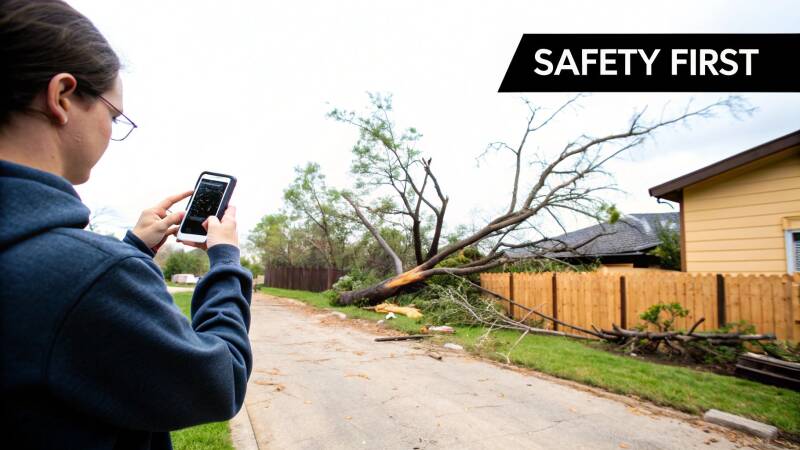
After the winds die down, don't just charge outside. The aftermath of a storm is littered with hidden dangers that can be even more treacherous than the storm itself. Your priority right now isn't dragging branches to the curb; it's assessing the situation safely and documenting everything.
Think of this initial phase as observation, not action. By spotting the major dangers and getting solid proof of the damage, you secure the area and build the foundation for a successful insurance claim.
Assess Hazards From a Safe Distance
Before you even set foot on the lawn, do your first sweep from a safe spot—a doorway, a window, maybe the porch. You're looking for the big, immediate threats that need a professional, not a homeowner with a rake. Rushing out could put you right in harm's way.
Keep an eye out for these critical red flags:
- Downed Power Lines: This is non-negotiable. Never, ever go near a downed power line. Always assume it's live and incredibly dangerous, even if it’s not sparking. Stay at least 30 feet away and call your utility company right away.
- Leaning Trees or Branches: Don’t forget to look up. A massive branch or an entire tree could be caught on your roof, tangled in other trees, or resting on the power lines still standing. We call these "widow-makers" for a reason—they can fall at any moment.
- The Smell of Gas: If you smell that distinct rotten-egg odor, you might have a gas leak. Don't turn on lights, use your phone, or do anything that could create a spark. Get out immediately and call your gas provider from a safe distance.
Document Everything Before You Move Anything
Okay, so you've checked for the immediate life-or-death stuff and it's clear. Now, your most important tool is your smartphone. Before a single piece of debris gets moved, you need to become the photographer for your own insurance claim.
This visual record is the single most valuable piece of evidence you will have. Insurance adjusters need to see the "cause and effect"—the tree that fell on the fence, the pile of shingles on the ground directly below the hole in your roof.
Seriously, take more photos than you think you'll ever need. Get wide shots of the whole property from every angle. Then, get in close and capture the specific points of damage. If your expensive grill got crushed, snap a picture of the brand name. This kind of detailed documentation is what prevents an adjuster from lowballing your claim. A little time spent here can literally save you thousands of dollars and a massive headache later.
Untangling Insurance Claims and Town Cleanup Rules
Once you've secured your property and documented the immediate mess, it's time to shift gears to the administrative side of things. This means diving into the often-confusing worlds of insurance claims and local town ordinances. Frankly, this part can be just as daunting as the physical cleanup, but getting it right from the start will save you a world of headaches and money down the road.
Think of it this way: what you do now determines whether you get a check from your insurer or a fine from your town. Let's make sure it's the former.
Getting Your Insurance Claim Right
Your homeowner's policy is a contract, and the fine print matters—a lot. While most policies offer some coverage for debris removal, the "how much" and "for what" can vary dramatically. Don't ever assume you're covered.
Here’s a common scenario I see all the time: a huge oak falls in the middle of your yard but misses the house entirely. In many cases, the cost to remove that tree comes out of your pocket. But if that same tree smashed your garage or took out a section of fence? Now the removal is almost always covered as part of the overall repair claim. It’s a frustrating but critical distinction.
The financial stakes are incredibly high. In a single recent year, global losses from natural disasters hit an astounding $224 billion. Here in the U.S., severe storms contributed $34 billion to that total. Those numbers are a powerful reminder of why your photos and detailed notes are so vital—they are your proof when you file a claim. If you're curious, you can find more data on the financial impact of climate disasters to see the bigger picture.
Working With Your Local Town's Rules
After you've got the insurance ball rolling, you need to figure out what your town expects. Every municipality in New York and Connecticut, from White Plains to Greenwich, has its own unique rulebook for storm cleanup. You can't just drag everything to the curb and hope for the best. That's a surefire way to get a citation or have the pile sit there for weeks.
For instance, most towns will pick up "vegetative debris"—think branches and leaves—but they'll often demand it's cut to a certain length (like four feet) and bundled. On the other hand, construction and demolition debris, like ruined shingles or siding, is almost universally prohibited from municipal pickup. For that, you'll need a dumpster or a private hauler.
Navigating these rules isn't just about compliance; it's about efficiency. Understanding the system helps you stage your debris correctly from the start, which speeds up the entire storm debris removal process.
Before you move a single branch, pull up your town's website or give the public works department a call. They'll lay out the specific post-storm guidelines, saving you from doing the work twice.
To help keep it all straight, here’s a quick-reference guide for handling the essential administrative tasks after a storm.
Your Post-Storm Administrative Checklist
This table breaks down the key administrative steps you'll need to take. Getting these right is just as important as the physical cleanup itself.
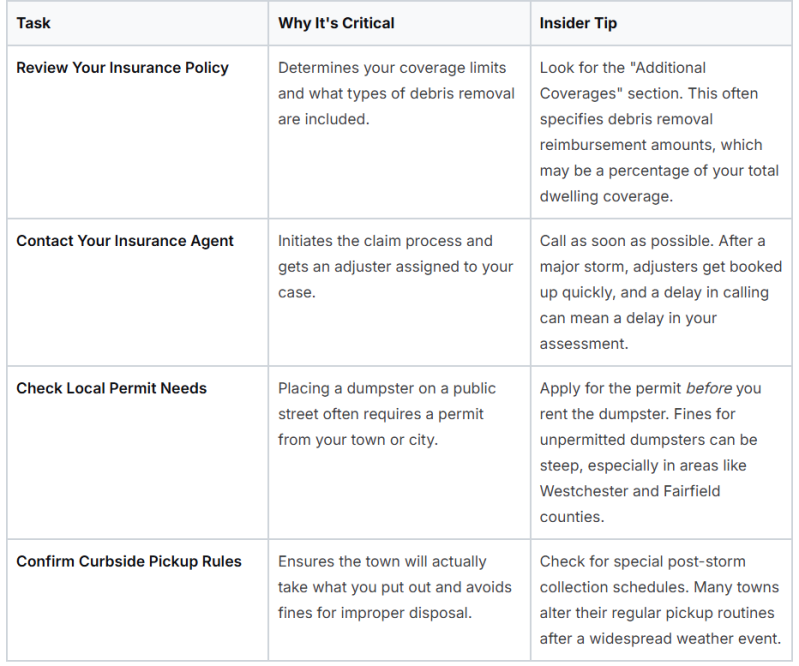
Tackling these administrative hurdles upfront makes the entire recovery process smoother. A little organization now prevents major roadblocks later.
Sorting and Staging Debris the Right Way
After a big storm blows through, your yard can look like a war zone. It's a chaotic mess of tree limbs, shingles, and personal belongings scattered everywhere. The first instinct for most people is to just start throwing everything into one big pile to clear a path. Honestly, that’s one of the biggest—and most expensive—mistakes you can make.
A jumbled heap of mixed debris is a cleanup killer. Your local town or city crews will often refuse to pick it up, and a professional storm debris removal company will have to charge you more to sort it themselves. Taking a little time to sort and stage everything correctly from the start will save you a ton of time, money, and headaches down the road.
Create Separate, Accessible Piles
The golden rule of storm cleanup is simple: like goes with like. The whole point is to create a few distinct piles that are easy for a grapple truck or cleanup crew to get to. You’ll want them near the curb, but be careful not to block the road, fire hydrants, or storm drains. The last thing you need is a clogged drain causing a mini-flood in your neighborhood.
Think about how the crew will access the piles. They need enough room to operate their equipment safely without hitting your house, mailbox, or any overhead power lines.
Here are the four main categories you need to separate everything into:
- Vegetative Debris: This is all the natural stuff. Tree branches, logs, leaves, shrubs—anything that grew in your yard goes here. This material is usually ground into mulch or composted, so it's critical to keep it clean from any other type of junk.
- Construction & Demolition (C&D) Debris: This is for all the building materials the storm ripped apart. Think shingles from the roof, busted siding, shattered windows, pieces of your fence, and soaked insulation.
- Household Goods: This pile is for personal items that got wrecked. It could be outdoor furniture, a waterlogged mattress from the basement, ruined rugs, or even kids' toys that were in a damaged shed.
- Appliances & Electronics: Big items like refrigerators, washing machines, and TVs need their own space. These things contain hazardous materials and have to be handled and recycled properly; they can't just be tossed in with regular trash.
I’ve seen it happen time and time again: someone tosses a broken fence panel on their brush pile or throws ruined patio cushions in with shattered shingles. That cross-contamination can get the entire curbside pile rejected by municipal crews, leaving the homeowner to re-sort everything from scratch.
Handle Hazardous Waste With Extreme Care
Some of the junk left by a storm is genuinely dangerous. These items can be a hazard to your family and the environment, and they absolutely cannot be mixed with your other debris piles or thrown in a dumpster.
Common household hazardous waste (HHW) you might find includes:
- Paint cans
- Pesticides or lawn chemicals
- Cleaning supplies
- Propane tanks
- Automotive fluids like oil and antifreeze
These materials have to be disposed of according to strict local rules. Your best bet is to check your town or county's website for information on special HHW collection days or designated drop-off sites. Getting caught dumping this stuff improperly can lead to some hefty fines. If you have damaged yard equipment like a lawnmower, that needs special handling too. For more on that, check out our guide on how to properly dispose of old lawn equipment.
Don't Skip the Safety Gear
Let's be real—sorting through storm wreckage is tough, physical work, and it's full of hidden dangers. The pros never show up without the right personal protective equipment (PPE), and you shouldn't either.
Make sure you have this essential gear before you start:
- Puncture-Resistant Gloves: A must-have for protecting your hands from rusty nails, broken glass, and sharp splinters.
- Steel-Toed Boots: You don't want to find out what a falling log or a sharp piece of metal can do to your foot.
- Safety Glasses: A simple way to shield your eyes from flying dirt, dust, and debris.
- Long Sleeves and Pants: This will help prevent cuts, scrapes, and exposure to whatever grime is in those piles.
The goal here is to be methodical, not just fast. By taking the time to sort and stage your debris the right way, you’re not just following the rules—you’re paving the way for a much smoother and quicker recovery.
DIY Cleanup vs. Calling a Professional
After a storm passes, one of the first big decisions you'll face is whether to handle the cleanup yourself or bring in a professional. This isn't just about saving a buck; it's a critical choice that affects your safety, your wallet, and how fast you can get your life back on track.
Let’s be clear: for minor messes—a few scattered branches, leaves, and twigs—going the DIY route is perfectly fine. If you can clear it all with a rake, a good pair of gloves, and some lawn bags, there's no need to call for backup. But when the damage is more severe, the calculus changes entirely.
When to Immediately Call for Help
Some situations are just too dangerous to tackle on your own. These are the non-negotiable, stop-what-you're-doing moments where you absolutely need to pick up the phone. Trying to be a hero here can lead to serious injury or even more damage to your property.
Here are the definitive signs you need an expert for your storm debris removal:
- Massive Fallen Trees or Limbs: If a tree is too big to safely cut with a handsaw and carry away in sections, it's a job for a professional. They have the experience and equipment—think rigging and cranes—to dismantle and remove it without accidentally dropping it on your house or fence.
- Debris Tangled in Power Lines: This is a huge one. Never, ever touch anything that's in contact with a power line. That includes branches, siding, or any other debris. You have to assume every line is live. This is a job exclusively for trained utility workers or specialized tree services equipped to handle these high-voltage risks.
- Significant Structural Damage: Is a massive tree leaning against your house? Has a branch punched through your roof? If any debris has compromised your home's structure, a DIY removal could trigger a collapse. A professional crew knows how to strategically remove the weight to prevent making a bad situation catastrophic.
- Signs of Hazardous Materials: Storms can churn up all sorts of nasty stuff. If you see or smell anything that looks like chemicals, fuel, or other hazardous waste mixed into the debris pile, steer clear. Pros are trained to identify and properly dispose of these materials according to strict environmental regulations.
It's easy to underestimate just how much debris a major storm can generate. A hurricane can leave behind millions of tons of wreckage—a chaotic mix of splintered trees, building materials, and personal belongings that can overwhelm municipal services for weeks.
The Hidden Costs and Risks of DIY
Going the DIY route to save money can often backfire. The hidden costs start piling up faster than you’d think. Renting equipment like a chainsaw, wood chipper, or a large dumpster isn't cheap. On top of that, local transfer stations often have hefty disposal fees, especially for construction debris.
This flowchart gives you a good starting point for figuring out what you're dealing with.
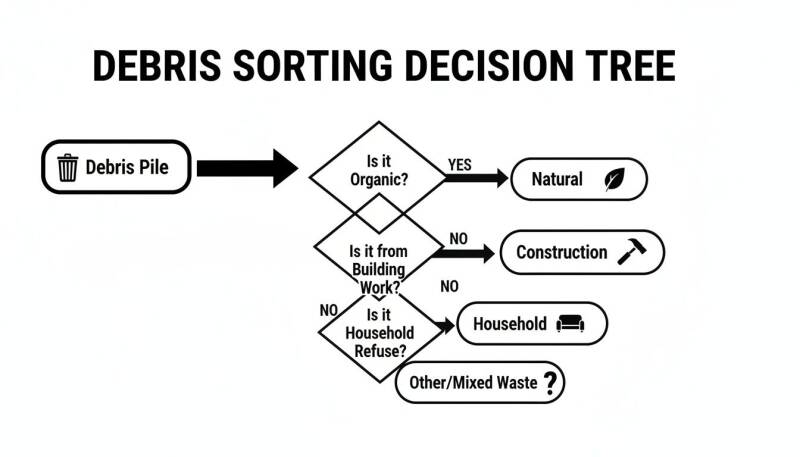
As you can see, the first and most important step is separating everything. How you sort the debris pile—natural waste vs. construction materials vs. household junk—dictates how and where you can legally get rid of it.
But the biggest risk isn't financial—it's physical. After every major storm, emergency rooms see a surge in injuries from chainsaw accidents, falls from ladders, and back problems from lifting heavy, awkward objects. One trip to the hospital can easily cost you more in medical bills and lost wages than you would have paid a professional crew in the first place.
The sheer scale of storm debris can be mind-boggling. For instance, one Category 5 hurricane left behind an incredible 4.8 million tonnes of debris. That mountain of wreckage was made up of 2.1 million tonnes of building rubble and 1.3 million tonnes of vegetation, enough to fill roughly 480,000 standard truckloads. This blocked roads and paralyzed recovery efforts for an entire region. You can learn more about how the United Nations Development Programme analyzes storm impact and why professional removal is so vital.
When you're staring down a yard full of overwhelming damage, hiring an insured and experienced team isn't a luxury. It’s a smart investment in a safe and efficient recovery.
Finding a Trustworthy Removal Partner in NY and CT
After a major storm slams New York or Connecticut, a second storm often follows: an influx of out-of-town "storm chasers" and fly-by-night contractors. These operators prey on the urgency and stress homeowners are feeling, so choosing the right partner for your storm debris removal is one of the most critical decisions you'll make.
A reputable, local company brings peace of mind. A bad one just adds another layer of frustration to an already chaotic time.
The sheer scale of debris from modern weather events makes this choice even more important. In a recent record-breaking year, the U.S. was hit by 23 separate billion-dollar weather events, producing incredible amounts of wreckage that overwhelmed local cleanup crews. You can get a sense of this challenge by reading about the staggering economic impact of severe weather events.
This is why a thorough vetting process isn't just a good idea—it's essential for protecting your property and your wallet.
Key Questions to Ask Every Potential Contractor
Before you let anyone start work, you need to ask some direct questions. The answers they give (or can't give) will tell you everything you need to know. A legitimate, professional company will have these answers ready without hesitation.
Here’s a checklist of what to ask:
- Are you fully insured? This is non-negotiable. Ask for proof of both general liability and workers' compensation. If someone gets hurt on your property and they aren't covered, you could be on the hook legally.
- Can you provide a local address and phone number? A real local business has roots in the community. Be very cautious of anyone using just a P.O. box or a generic national call center number.
- How do you structure your pricing? Reputable companies almost always charge by the volume of debris—think quarter-truck, half-truck, or full-truck loads. Avoid contractors who push for open-ended hourly rates, which can easily lead to inflated bills.
- Will you provide a written, no-obligation estimate? Never, ever accept a verbal quote. A professional estimate should clearly detail the scope of work and the final cost, protecting you from surprise fees later on.
A huge red flag we see after storms is a contractor demanding a large cash payment upfront. A reasonable deposit is one thing, but if someone demands the full amount in cash before lifting a single branch, it’s time to walk away.
Spotting the Red Flags Immediately
Beyond the questions you ask, pay close attention to how a contractor operates. Unscrupulous outfits often give themselves away if you know what to look for. They rely on high-pressure tactics to rush you into a bad decision.
Be wary if you see any of these signs:
- Unsolicited Door-to-Door Offers: Legitimate local companies are usually swamped with calls after a storm and don't have time to go door-to-door. Aggressive sales pitches on your doorstep are a major warning sign.
- Unmarked Vehicles: Professionals have branded trucks and often wear uniforms. An unmarked van or a pickup truck with out-of-state plates should make you think twice.
- Vague Disposal Plans: Ask them where the debris is going. A trustworthy partner will explain their process for recycling wood and metal, while a shady operator might just dump it illegally to save a buck.
Why Local Knowledge Matters in NY and CT
Choosing a company based in or near counties like Westchester, Putnam, Dutchess, or Fairfield is about more than just supporting local business. It's about hiring a team that truly understands the rules and resources in our area.
A local storm debris removal partner knows the specific requirements and operating hours for the transfer stations in towns from Poughkeepsie to Greenwich. They already have relationships with local recycling centers and donation drop-offs.
This insider knowledge means they can dispose of your debris more efficiently, affordably, and sustainably, ensuring everything is handled in line with local ordinances. When you need a hand with a variety of cleanup projects, a reliable local expert is invaluable. You can learn more about the full range of professional junk removal services that help you get your space back.
In the end, the right partner doesn't just clear the debris from your yard. They remove the stress from your shoulders.
Common Questions About Storm Debris Removal
After the storm's fury passes, the real work begins, and that's when the questions start rolling in. If you're feeling overwhelmed by the mess left behind, you're not alone. We hear the same concerns from homeowners all over New York and Connecticut. Let's tackle some of the most common questions to give you a clearer path forward.
How Long Does Storm Cleanup Usually Take?
This is the big one, and honestly, there's no one-size-fits-all answer. The timeline really depends on the scale of the damage. If you're just dealing with a few scattered branches across the lawn, you might have it cleared up in an afternoon.
But when you're facing multiple downed trees, structural debris from a damaged shed, or widespread wreckage, you're looking at a much bigger project—often a multi-day effort. This is where a professional crew makes a world of difference. With specialized gear like grapple trucks for heavy logs and high-capacity dump trucks, a team can often do in a single day what would take a homeowner a full weekend, or even longer.
The speed of the job boils down to a few key things:
- Volume of Debris: Are we talking about a few cubic yards or several massive truckloads?
- Type of Debris: Light brush is one thing; heavy logs, twisted metal, and broken concrete are another beast entirely.
- Accessibility: Can we get a truck right up to the debris pile, or does everything need to be hauled out from a fenced-in backyard by hand?
What Happens to Debris After It Is Hauled Away?
A top-notch removal company doesn't just see a pile of junk—we see a collection of materials that need to be managed responsibly. The goal should never be to just haul everything to the nearest landfill and call it a day. We're committed to eco-friendly practices that reduce the environmental toll.
Once the debris leaves your property, the sorting process continues. Clean organic material, like branches and logs, is usually taken to a local facility and ground into useful mulch or compost. Scrap metal from things like mangled gutters or sheds is routed to a recycling center. We even keep an eye out for salvageable items that made it through the storm, partnering with local charities to give furniture and other goods a second life.
This commitment to responsible disposal is a key differentiator between a professional service and a "guy with a truck." It ensures your storm cleanup doesn't contribute to the larger problem of overflowing landfills.
Is It Actually Safe for Me to Remove Debris Myself?
It’s completely understandable to want to jump in and start clearing things yourself, but please, put safety first. Picking up small, lightweight debris like leaves, twigs, and small branches is generally fine for most homeowners.
The risk, however, ramps up dramatically with bigger items. Debris piles can hide all sorts of hazards you can't see, like sharp nails, screws, and shards of glass. Heavy logs or chunks of fencing can shift without warning, leading to serious injuries. The biggest red flags are any debris tangled with downed power lines or leaning precariously against a damaged part of your house. These situations are incredibly dangerous and are strictly jobs for trained, insured professionals. Never risk your well-being to save a few bucks.
For more advice on handling different kinds of waste, our resource center has a great collection of junk removal tips for homeowners that you might find helpful.
How Is the Cost for Professional Removal Calculated?
No one likes financial surprises, especially after a storm. Reputable storm debris removal companies, including us, typically base the cost on the volume of the debris. In other words, the price is determined by how much space your stuff takes up in our truck—whether it's a quarter-truckload, a half-truckload, or a full truckload.
The final price tag will depend on the total amount and the specific types of materials. Very heavy items like concrete, soil, or roofing shingles might be priced differently because of higher disposal fees. We always provide a firm, no-obligation estimate before we start any work. That transparency means you know the exact cost upfront, with no hidden fees later.
Be wary of quotes that sound too good to be true. An unusually low price can be a warning sign, often pointing to a company that lacks proper insurance, plans to dump illegally, or will hit you with surprise charges at the end. A fair price reflects professional service, responsible disposal, and your complete peace of mind.
When you need a reliable partner to clear the mess and restore your property, D&B Complete Home Services INC. is here to help. Contact us today for a free, no-obligation estimate and experience a professional, stress-free cleanup. https://www.dbcompletehomeservices.com
Add comment
Comments