Master construction trash disposal with this guide. Learn to handle debris, navigate local rules, and choose the right removal strategy for any project.
A Contractor's Guide to Construction Trash Disposal
When you're in the middle of a construction or renovation project, the last thing you want to think about is the mountain of trash piling up. But figuring out how to handle construction trash disposal—sorting it, hauling it away, and getting rid of it legally—is one of the most important parts of the job.
It’s more than just a cleanup chore. A smart disposal plan is essential for keeping your site safe, staying on the right side of local NY and CT regulations, and doing your part for the environment by recycling what you can.
Your Guide to Managing Construction Debris
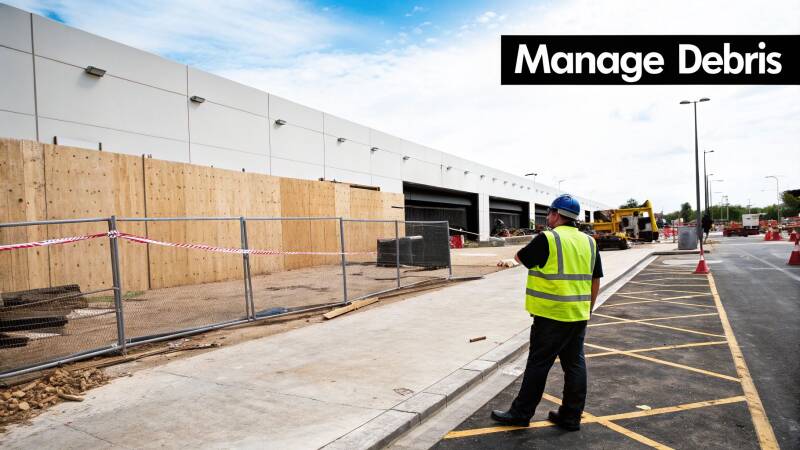
Let's be honest, every job site is a bit of controlled chaos. Debris is just part of the game. This guide is here to walk you through the challenge of managing all that waste efficiently and legally.
Getting a handle on construction debris is the logistical backbone of your project. It's not just about a tidy workspace. A solid plan directly impacts:
- Safety: A clean site means fewer trip hazards and a much lower risk of injuries from sharp materials or heavy, unstable piles of junk.
- Efficiency: When the workspace is clear, your crew can move freely and get their jobs done without constantly navigating an obstacle course.
- Legal Compliance: In our area, improper dumping comes with steep fines. Following local and state rules is non-negotiable.
- Environmental Stewardship: Every bit of wood, metal, or concrete we can divert from the landfill makes a real difference.
The Scale of Construction Waste
This isn’t just a local headache; it’s a global issue. The sheer volume of construction and demolition waste (often called CDW) generated each year is staggering, and it puts a huge strain on our landfills and natural resources.
Believe it or not, the global construction industry is responsible for around two billion tons of waste every single year. That's about a third of all solid waste created worldwide. And it's getting worse. Experts predict that figure could climb to 2.2 billion tons by 2025 if we don't get serious about reducing, reusing, and recycling.
This is why having a strategy for construction trash disposal isn't just a "nice-to-have." It’s a fundamental responsibility for anyone running a project, whether you're a contractor, homeowner, or property manager.
A Playbook for NY and CT Projects
Think of this guide as your playbook for turning a major logistical problem into a smooth, predictable part of your project. We’ll give you practical advice for dealing with debris in tightly regulated places like New York and Connecticut, where you have to do things by the book.
From identifying different types of waste to understanding the local laws and picking the right disposal method, you'll get the know-how to manage your site cleanup with confidence. You can see how we take chaotic, post-demolition sites and turn them into clean slates, ready for the next phase, in our project gallery.
Know Your Construction Waste
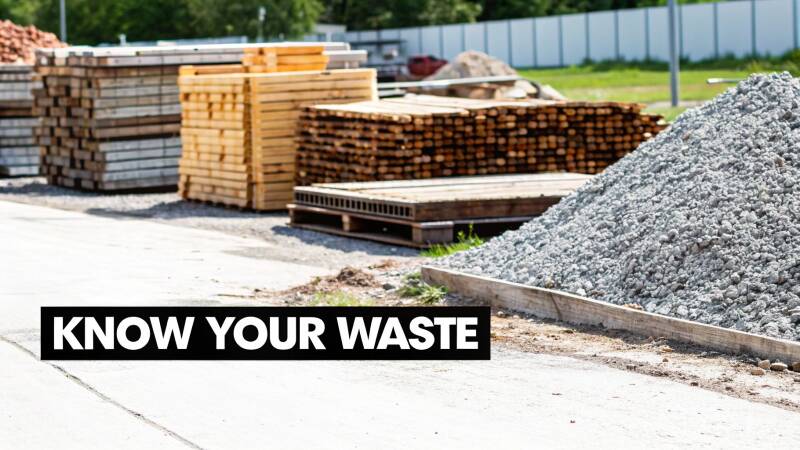
Before you can even think about hauling anything away, you have to know exactly what you're dealing with. The first rule of construction trash disposal is to stop seeing a giant mountain of junk. Instead, look closer. You'll see a collection of different materials, and each one has its own playbook for disposal and recycling.
Thinking about your waste this way is the key to a smarter, cheaper cleanup. It's how you start to accurately estimate weight, get a handle on potential costs, and figure out a plan for sorting. Suddenly, that chaotic mess becomes a manageable flow of materials.
The Heavyweights: Concrete, Brick, and Asphalt
This is the dense, heavy stuff, usually from demolition or foundation work. We're talking about concrete, brick, asphalt, and stone. These materials almost always make up the heaviest part of any construction debris pile.
But here’s the good news: this stuff is highly recyclable. Instead of just taking up space in a landfill for centuries, it can be crushed down and given a second life as aggregate for new concrete, roadbeds, or drainage systems. The trick is simply separating it from the rest of the debris.
A single cubic yard of concrete can weigh over 4,000 pounds. Keep that number in mind. It’s a powerful reminder of why you need professional-grade equipment for this kind of removal—it’s just not safe or practical to move with standard trucks and a small crew.
The Bones: Wood, Drywall, and Insulation
Next, you have the materials that form the skeleton and skin of a building. Wood from framing, drywall from interior walls, and old insulation are all common leftovers from both teardowns and new builds.
The rules for disposing of these items can get a little tricky.
- Untreated Wood: Clean lumber is great. It can be easily recycled into mulch or even used as biomass fuel.
- Treated or Painted Wood: This is a different story. The chemicals used for treatment mean it can't go in with the clean wood and often needs to be disposed of as waste.
- Drywall (Gypsum Board): If it's clean and dry, drywall can be ground up and recycled. But once it gets wet or mixed with other trash, it’s headed straight for the landfill.
Sorting through these "bones" properly is a huge part of effective job site management. If you just toss it all together, you're making recycling harder and driving up your disposal costs.
The Finishers and Recyclables
This last group includes all the finishing touches and the endless piles of packaging. Think roofing shingles, old floor tiles, metal siding, copper wiring, and, of course, mountains of cardboard boxes.
A lot of these materials have real value. Metals like copper, steel, and aluminum are commodities that scrap yards will actually pay you for. Cardboard is one of the easiest materials to recycle once it's broken down.
On the other hand, things like asphalt shingles or certain vinyl flooring have very few recycling options and usually have to be landfilled. Spotting these materials early and keeping them separate means you can cash in on the valuable stuff and keep your landfill fees to a minimum.
Common Construction Debris and Disposal Methods
To make things easier, here’s a quick-reference guide to help you identify what you have and where it should go.
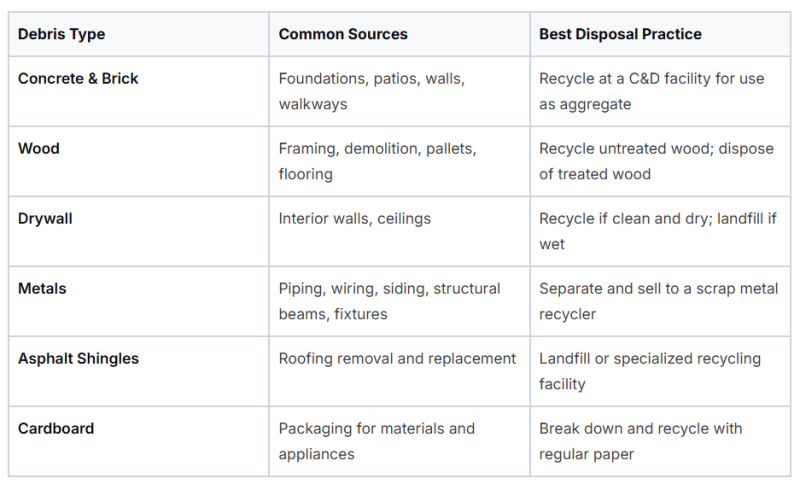
Breaking your waste down into these groups gives you real control over the cleanup process. It’s more than just tidying up; it's a professional approach that keeps your site safer, saves you money, and is better for the environment.
Navigating Local Disposal Rules in NY and CT
Trying to manage construction trash disposal without knowing the local rules is like driving through Manhattan at rush hour with no GPS. You're guaranteed to get stuck, stressed out, and probably dinged with a ticket. Every single county, city, and town across New York and Connecticut plays by its own rulebook, and it's not just pointless red tape—it’s all about keeping job sites safe and managing waste properly.
Blow off these regulations, and you can expect your project to grind to a halt. Local inspectors won't hesitate to slap a stop-work order on your site for a violation, creating expensive delays that can completely derail your timeline. Even a simple misstep, like putting a dumpster on the wrong patch of grass, can lead to fines that wipe out any cash you thought you were saving.
Permits: Your Foundation for Legal Disposal
Before a single piece of debris goes into a pile, the first question you have to ask is, "Do I need a permit?" Often, the answer boils down to where you plan on putting the dumpster. If it’s sitting neatly on your own private property, like in the driveway, you're often in the clear.
But the second that container touches public land—a street, a sidewalk, or an alley—you almost certainly need a permit. This is non-negotiable in crowded areas like Westchester County, NY, or Fairfield County, CT. Getting that permit means filing paperwork with the town, paying a fee, and following their rules, which usually cover exact placement and safety requirements like using traffic cones.
Take some of the historic towns we work in, for example. A place like Ridgefield, CT, has very strict rules about where a dumpster can go to preserve the town's look and feel. Dropping one on the street there without the right paperwork is a fast track to getting a visit from a code enforcement officer.
Understanding the Rules of the Road for Landfills and Transfer Stations
Once you've got your debris loaded up, you can't just drive to the closest dump. Every facility has its own operating hours, a list of what they'll take, and what they'll turn away at the gate. Landfills and transfer stations in NY and CT are tightly regulated, and they have no problem rejecting a truck that doesn't follow their rules.
Here’s what they typically expect:
- Proof of Origin: They’ll want to see that the waste came from inside the town or county they serve.
- Separated Materials: Don't show up with a mixed bag. Many facilities require sorted loads—one truck for concrete, another for clean wood, and so on.
- Prohibited Items: Your load will be rejected flat-out if it contains hazardous materials like asbestos, anything with lead paint, chemicals, or electronics.
The bottom line is that for a homeowner or even a busy contractor, learning the ins and outs of multiple facilities—from the massive Westchester County Material Recovery Facility to a small town transfer station in Putnam—is a full-time job. This is exactly where deep professional knowledge pays off.
The Headache of Hazardous Materials
Our region is filled with beautiful older homes, but they often contain materials that are now considered hazardous. Kick off a renovation in a pre-1980s house, and you could easily run into asbestos insulation, lead-based paint, or old oil tanks. This isn't just regular construction debris; it's classified as hazardous waste, and the law requires it to be handled with extreme care.
Getting rid of these materials legally involves a strict chain-of-custody process, with manifests that track the waste from your site all the way to a licensed facility. Messing this up isn't a small mistake—it can lead to severe legal penalties and environmental liability. For example, improper asbestos disposal can trigger fines of tens of thousands of dollars per day.
This is where a professional hauler like D&B Complete Home Services INC. is essential. We know how to spot these materials and have the procedures in place to manage their disposal according to all state and federal laws. We take care of the complicated paperwork and make sure every hazardous item is handled safely and legally, shielding you from risk. What could be a legal nightmare becomes just another managed step in the cleanup, keeping your project compliant and on schedule.
Choosing Your Debris Disposal Strategy
Alright, so you’ve figured out what kind of waste you’re dealing with. Now comes the real question: how do you get it off your property? Picking the right disposal method is a bit like choosing how to get to work. You've got three main routes, and each one has its own set of pros and cons when it comes to cost, convenience, and pure elbow grease.
You can drive yourself (the DIY approach), take the bus (rent a dumpster), or call a car service (hire a professional hauler). All three will get the job done, but the experience—and the true cost in time and effort—will be completely different. Let’s walk through these options to see which one fits your project best.
The DIY Hauling Method
At first glance, hauling the debris yourself seems like the most straightforward way to save a buck. You rent a truck, load it up, and make a run to the local landfill or transfer station. It puts you in total control of the schedule, but this path is often riddled with hidden costs and requires a whole lot of muscle.
Before you go this route, think about what's really involved:
- Your Time: Let's be honest, your time is money. A full day spent loading and hauling debris is a day you're not spending on the actual renovation or construction.
- Hidden Costs: The expenses add up fast. You’ve got the truck rental, fuel, mileage charges, and then the per-ton disposal fees at the gate, which can be surprisingly steep. Some facilities, for instance, charge $29 or more per cubic yard for construction waste.
- Physical Strain: Loading heavy, awkward materials like broken concrete, stacks of drywall, and old lumber is seriously hard work. It's the kind of back-breaking labor that comes with a very real risk of injury.
This decision-making flowchart can help you map out the key questions you need to answer before you even start, from permits to dealing with hazardous materials.
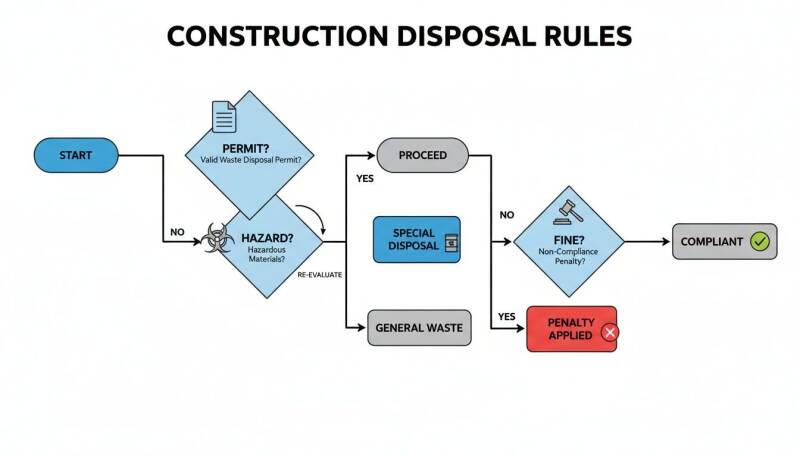
As you can see, navigating the rules isn't always simple. A wrong turn at any step can lead to fines and headaches.
The Dumpster Rental Option
Renting a dumpster is a very popular middle-of-the-road choice. A big steel bin gets dropped off at your site, you fill it at your own pace, and the company hauls it away when you’re finished. It’s an excellent setup for longer-term projects where debris piles up over several days or even weeks.
It’s not a completely hands-off solution, though. You're still on the hook for all the heavy lifting and loading. Plus, you have to manage the logistics of having a giant metal box on your property. This can mean getting permits from your town, putting down plywood to protect your driveway, and being careful not to overfill it and get hit with extra fees.
One thing to remember: you pay for the whole dumpster, whether you fill it up or not. For smaller jobs or quick cleanups, you could end up paying for a lot of empty space.
The Professional Hauler Service
Hiring a professional service, like us at D&B Complete Home Services INC., is the "done for you" option. It's the most hassle-free way to go. A trained crew shows up, does all the lifting and loading for you, sweeps the area clean, and hauls everything away on the spot.
What's great about this is you only pay for the exact amount of debris we remove, making it a surprisingly efficient choice for projects of any size.
This method completely takes the physical labor and risk of injury off your plate. It also erases the logistical headaches of dumpster permits and dump runs. We handle all the sorting, recycling, and proper disposal, making sure every piece of debris is managed according to local NY and CT regulations. This full-service approach is becoming more common, especially as the U.S. construction waste management market grows into a USD 44.1 billion industry. If you're interested in the big picture, you can learn more about these industry trends and their impact on global sustainability efforts.
Disposal Method Comparison DIY vs Dumpster vs Pro Hauler
Deciding on the best way to get rid of your construction debris can be tough. Each method has its own advantages, and the right choice really depends on your project's scale, your budget, and how much work you're willing to do yourself. To make it easier, we've broken down the key factors in this comparison table.
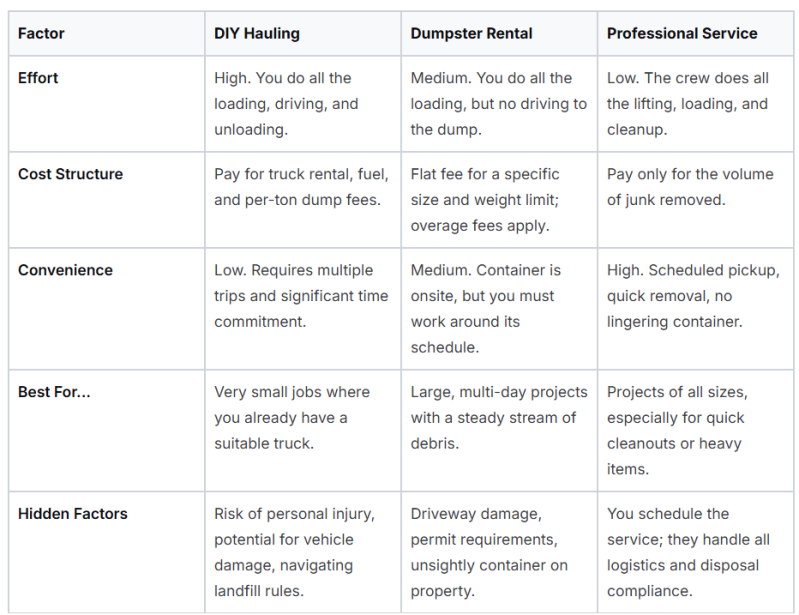
Ultimately, whether you're a hands-on DIYer or prefer a full-service solution, understanding these differences will help you make a smart, cost-effective decision for your project.
Preparing Your Site for Efficient Debris Removal
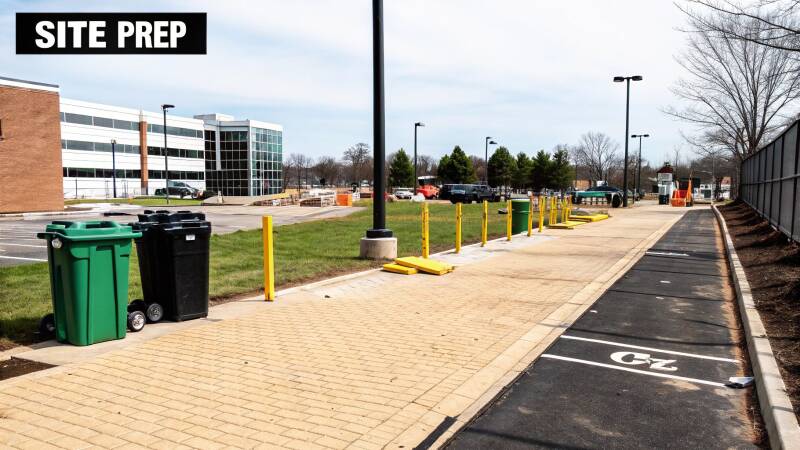
Smart construction trash disposal begins way before the hauling truck ever shows up. A bit of planning and site prep can make a world of difference for your project's safety, speed, and bottom line. Think of it like a chef preparing their ingredients before the dinner rush—having everything organized and in its place makes the whole process run like clockwork.
Bringing that same mindset to your job site can turn a chaotic cleanup into a smooth, streamlined operation. Taking a few proactive steps protects your crew and ensures the final haul-away is quick and painless, no matter which disposal option you've chosen. This groundwork is the real secret to a clean finish.
Designate a Central Collection Zone
Your first move should be to pick one dedicated spot for all debris. Instead of letting little piles of junk build up all over the site, make sure everything gets funneled into a single, easy-to-reach area. This simple habit keeps your walkways and workspaces clear, which dramatically cuts down on the risk of trips, falls, and other all-too-common accidents.
Make sure this central zone is accessible for both your crew and the removal team. The ideal spot has a clear path for wheelbarrows and equipment but is located away from the main hustle and bustle of the site. This prevents traffic jams and makes the final load-out as quick and straightforward as possible.
Pre-Sort Materials for Faster Removal
While a professional hauling service will do the final sorting, doing a rough sort on-site can seriously speed things up. You don't need a complex system. Just create separate, distinct piles for the main types of waste your project is producing.
- Heavyweights: Keep your concrete, brick, and asphalt together in one pile.
- Lumber: Stack untreated wood, pressure-treated lumber, and painted or demolished wood separately if you can.
- Metals: Create a dedicated pile for all scrap metal, from old pipes and rebar to wiring and flashing.
This initial sort helps everyone estimate volumes more accurately and lets the removal crew work much more efficiently—which can often translate into cost savings for you. It also gives your recyclable materials the best shot at actually being recycled.
A well-organized site isn't just about looking professional; it's a critical safety measure. According to the EPA, an average renovation can generate 60 pounds of waste per square foot, creating major hazards if that debris isn't managed properly from day one.
Prioritize Site Safety and Accessibility
Finally, think about the logistics of the actual pickup. The path to your debris pile needs to be completely clear and safe for the hauling crew and their truck. That means moving any vehicles, equipment, or other obstacles that could block access.
Take a minute to deal with any immediate hazards in the pile itself. If you've got lumber with nails sticking out, take a hammer and bend them over flat. Box up sharp stuff like broken glass or shattered tile to prevent nasty cuts during handling. A little foresight here goes a long way toward ensuring a safe, efficient, and injury-free cleanup. For more ideas on how to manage your project waste, check out our other junk removal tips and resources.
Why a Professional Hauler Is a Smart Investment
You’ve sorted, staged, and planned for all your construction trash, but the final step is actually getting it off your property. It’s tempting to think you can save a few bucks by hauling it yourself or renting a dumpster, but those routes often have hidden costs in time, labor, and risk.
Hiring a professional hauler isn't just a convenience—it's a smart, strategic move that buys you safety, efficiency, and a whole lot of peace of mind.
Think about it. You bring in specialized subs for plumbing and electrical work because they’re experts with the right tools and knowledge. Debris removal is the exact same principle. A professional hauler is a specialist focused on one thing: clearing your site so your crew can focus on what they do best. It’s a decision that protects your schedule, your budget, and your reputation.
Reclaim Your Most Valuable Asset: Your Time
The biggest hidden cost of DIY debris removal is always time. Every hour your crew spends wrestling with heavy materials, driving to the dump, and figuring out landfill rules is an hour they aren't doing the billable work that moves the project forward. That lost productivity adds up fast and can lead to expensive delays.
A professional hauler completely changes that math. Instead of a multi-day headache, the cleanup becomes a quick, scheduled event. A team shows up, clears the site in a few hours, and vanishes, leaving you ready for the next phase. This keeps your project humming along, which is critical for hitting deadlines and keeping your clients happy.
Eliminate the Risk of Injury and Liability
Let’s be honest: construction debris is dangerous. It’s heavy, awkward, and littered with things like rusty nails, broken glass, and sharp metal edges. Asking your crew—or yourself—to handle all that is inviting an unnecessary risk. Back strains from improper lifting or a nasty cut are all too common.
A professional hauling crew is trained and equipped for this specific job. They know the right techniques, wear the right safety gear, and have the right equipment to handle heavy, hazardous items safely. This massively reduces the chance of a costly job site accident, protecting not just your team, but your bottom line.
Guaranteed Compliance and Environmental Stewardship
Trying to keep up with the disposal regulations in New York and Connecticut can feel like a full-time job. A good hauler already knows these rules inside and out. They make sure every bit of your debris is handled and disposed of legally, from separating recyclables to managing potentially hazardous materials. This peace of mind alone is worth it, saving you from the threat of steep fines or stop-work orders.
Beyond that, a top-notch service takes environmental responsibility seriously. The best haulers have relationships with local recycling centers and donation facilities, working to divert as much material as possible from the landfill. By hiring a pro, you’re also showing a commitment to sustainable building practices—a great look for any contractor or homeowner.
Ultimately, this turns a messy, time-consuming chore into a streamlined, professionally managed process. If you’re ready to offload the heavy lifting, explore professional junk removal services to see how an expert team can make your next project that much easier.
Frequently Asked Questions About Construction Debris Disposal
Even the most well-thought-out project can leave you with questions about dealing with the leftover debris. On the job, things come up. Getting straight answers is crucial for keeping your project running smoothly, on budget, and in line with local regulations. Let's tackle some of the most common questions we hear from homeowners and contractors.
What Can’t Go into a Regular Construction Dumpster?
It's a common misconception that all construction waste can be tossed into the same pile. The reality is that some materials are classified as hazardous and legally require special disposal. Think of it this way: you wouldn't throw old car batteries or paint cans in your kitchen trash, and the same logic applies here, but the stakes are much higher.
These restricted materials can't be mixed with your standard debris:
- Asbestos (and anything containing it)
- Debris from lead-based paint
- Chemicals, solvents, oils, and strong adhesives
- Fluorescent bulbs and old batteries
Simply throwing these items into a dumpster isn't just a bad idea—it's illegal. Doing so poses a real threat to the environment and can lead to some hefty fines. A professional hauling service is trained to spot these materials and ensure they are handled and disposed of according to strict NY and CT environmental laws.
How Is the Cost of Debris Disposal Calculated?
Figuring out the final cost of debris removal usually comes down to three things: the volume of your junk (how much space it takes up), its total weight, and the disposal method you pick. Each option has its own way of calculating the price.
If you go the DIY route, you're looking at a patchwork of costs: truck rental, fuel, your own time, and the tipping fees at the landfill, which are often charged by the ton. Renting a dumpster usually involves a flat fee for a certain size and weight allowance, but be warned—it's easy to get hit with surprise overage fees if you go over that limit.
A professional hauling service, on the other hand, typically gives you a single, all-in price upfront. The quote is based on how much of their truck your debris fills, bundling all the labor, transportation, and disposal fees into one predictable number. No hidden charges.
For a Small Renovation, Is a Dumpster or a Hauling Service Better?
For smaller projects—say, a single bathroom gut or a kitchen remodel—a professional hauling service is almost always the smarter, more convenient choice. A big dumpster can sit in your driveway for days, taking up valuable space, possibly requiring a permit, and becoming a neighborhood eyesore. Plus, you’re the one doing all the heavy lifting to fill it.
A hauling service turns a multi-day chore into a simple, two-hour appointment. The crew shows up, does all the loading for you, and whisks the debris away immediately. Your space is clear, and you're done. Best of all, you only pay for the exact amount of debris you have, making it the perfect solution for residential projects where you just want the mess gone fast.
Ready to clear your site without the hassle? D&B Complete Home Services INC. provides fast, reliable, and professional construction debris removal across New York and Connecticut. Let us handle the heavy lifting for you.
Add comment
Comments