Thinking of hiring fence removal contractors? This guide covers costs, permits, and the process in NY & CT to help you plan your project with confidence.
Deciding between patching up your old fence and calling in fence removal contractors for a full tear-down is a bigger deal than most homeowners think. A quick fix might save you a few bucks today, but it can turn into a never-ending cycle of repairs. Sometimes, starting fresh is the smarter move for your property's security and curb appeal.
When to Repair vs Fully Remove Your Fence
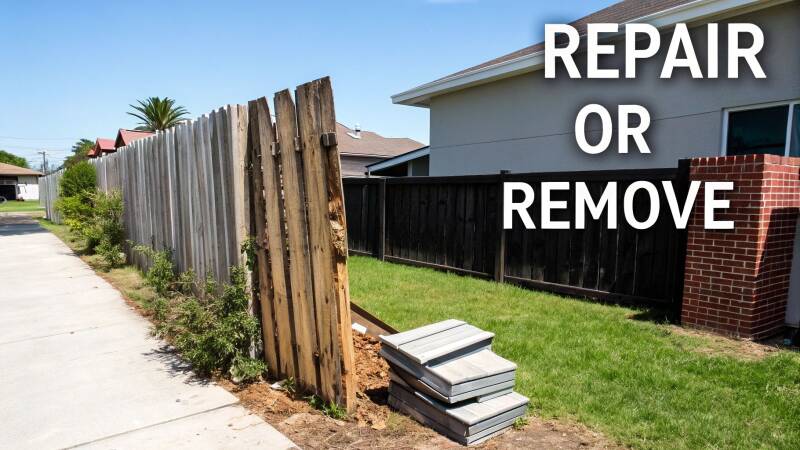
It can be tough to tell when a fence is just weathered versus when it's truly a lost cause. The best way to decide is to be honest about the extent of the damage and think about the long-term costs. A few cosmetic flaws are one thing, but systemic, structural failure is a whole different ballgame.
Telltale Signs of a Failing Fence
Some problems are more than just ugly; they’re clear signals that your fence's time is up. If you're spotting several of these issues, bringing in a pro to remove it is probably your best bet.
Here are the red flags I always tell clients to look for:
- Widespread Rot or Rust: With a wood fence, get down and check the base of the posts right where they meet the dirt. If more than 20-25% of them feel soft or crumble when you poke them, the fence's foundation is shot. For metal fences, widespread, flaking rust is the equivalent—it's eating away at the fence's strength.
- Significant Leaning: A fence that's leaning in multiple spots is a huge warning sign. It almost always means the concrete footings have failed or the posts themselves have rotted through. This isn't just a cosmetic issue; it's a real safety hazard, especially with the strong winds we get in NY and CT.
- Numerous Broken or Missing Components: Are you constantly replacing boards, pickets, or entire panels? The hassle of finding matching materials and the time spent on repairs can quickly outweigh what the old fence is even worth.
For example, a Westchester homeowner with a classic split-rail fence might find that replacing one or two rotted rails is manageable. But if the main posts are wobbling and the rot is spreading, they are simply delaying the inevitable.
The Financial Calculation
Ultimately, this decision often boils down to simple math. Imagine you're a property manager in Fairfield County with a beat-up security fence. Patching a couple of holes might only cost a few hundred dollars now. But what happens when another section gives out in three months? Those repair bills start to stack up, becoming a constant drain on your maintenance budget.
Hiring fence removal contractors, on the other hand, is a predictable, one-time cost that solves the problem for good. It gives you a clean slate to install a modern, low-maintenance fence that actually adds value and security. You can see the kind of difference a full replacement makes in our before and after project gallery. Choosing removal over endless repairs is an investment in your property and your peace of mind.
Breaking Down the Costs of Professional Fence Removal
When you decide to hire a professional crew, the first thing on your mind is probably the cost. Let’s be honest, nobody likes financial surprises. A reputable fence removal contractor doesn’t just pull a number out of a hat; their quote is a careful calculation based on the specific challenges your project presents.
Understanding what goes into that final price helps you budget properly and, just as importantly, spot a fair and transparent quote when you see one. The total cost really boils down to three things: labor, disposal, and complexity. A simple, rotting wood fence on a flat, open lawn is one thing. A rusty chain-link fence that’s become one with a line of overgrown hedges is a completely different beast.
Core Factors Influencing Your Quote
So, what exactly are contractors looking at when they assess your property? It usually comes down to a few key variables that directly impact their time and effort.
- Fence Length and Height: This one’s straightforward. Most pros price their work per linear foot. A longer, taller fence means more material to handle and more time on the job, so the cost scales up accordingly.
- Fence Material: The type of fence you have makes a huge difference. A lightweight vinyl fence is a breeze to take apart compared to a heavy, awkward wrought iron or a chain-link fence that’s been rusting for decades.
- Post Installation Method: This is often the biggest wild card. If your fence posts are just set in dirt, they can be pulled out with relative ease. But if they’re sunk into heavy concrete footings, that’s a whole other level of work. It often requires specialized tools like jackhammers or powerful post pullers, which adds a significant chunk to the labor costs.
Estimated Fence Removal Cost Breakdown
To help you get a real-world idea of what to expect in the New York and Connecticut markets, we've put together a quick guide. Just remember, these are ballpark figures. Your project's unique details will determine the final quote.
Here’s a look at what you can generally expect to pay for the removal and disposal of different fence types.
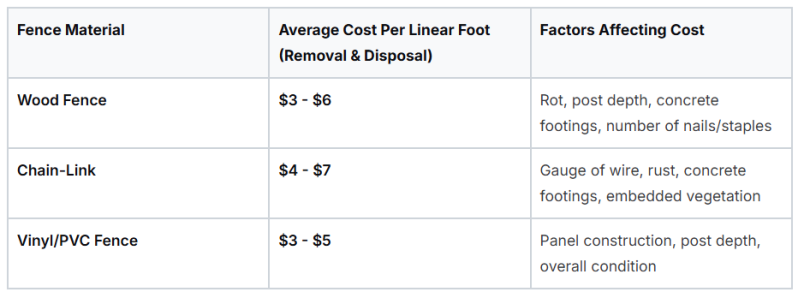
These figures should give you a solid baseline for planning your budget.
Nationally, recent data shows that fence removal averages $3 to $7 per linear foot. For a typical residential project of 100-200 feet, you're likely looking at a total cost somewhere between $500 and $1,500. This is a pretty realistic range for most homeowners in Westchester and Orange counties. For a deeper dive, you can explore how fence removal costs are calculated on Angi.com.
Key Takeaway: The biggest hidden cost often comes from those concrete-set posts. A contractor might add $40 to $90 per post for this extra labor, which can quickly add up. Always, always confirm if removing post footings is included in your initial quote to avoid a nasty surprise on the final bill.
What to Expect on Fence Removal Day
So, you’ve signed the contract and the crew is on their way. Knowing how a professional team tackles the job can take a lot of the stress out of the day. It’s not just a whirlwind of demolition; it’s a planned, step-by-step operation designed to be safe and efficient.
The first thing a good crew does upon arrival is a final walkthrough. The team lead will scout the fence line one last time, confirming access points for their equipment, checking the proximity to your prize-winning rose bushes, and double-checking the location of any marked utility lines. This quick but crucial step prevents surprises and keeps the project running smoothly.
The Systematic Removal Process
Once they’ve confirmed the plan, the real work begins. You'll notice the approach changes depending on what kind of fence you have—different materials call for different tools and techniques. It's all about dismantling things the right way to protect your property.
- Wood Fences: For a classic wood fence, they'll typically work section by section, using pry bars and reciprocating saws to carefully detach the pickets and rails from the posts.
- Chain-Link Fences: With these, you'll see the crew using bolt cutters to snip the small ties securing the mesh to the frame. The mesh gets rolled up neatly, making it much easier to handle and haul away.
- Vinyl Fences: Vinyl is often the quickest to come down. Most systems are designed for the panels to simply slide out from grooves in the posts.
This diagram highlights the three big variables that determine how complex—and costly—the job will be.
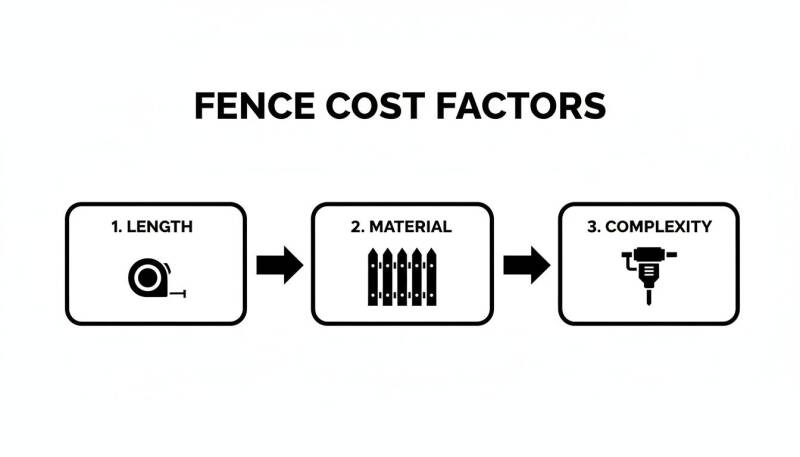
As you can see, the total length, the type of material, and any tricky elements like concrete footings are what really drive the project's scope and budget.
Tackling the Toughest Part: Posts and Footings
Getting the fence panels down is one thing, but the real heavy lifting is often buried underground. Pulling old fence posts, especially those set deep in concrete, is where you really see the value of professional-grade equipment. Forget about someone spending hours with a shovel. Contractors use powerful post pullers that can yank a post and its entire concrete footing straight out of the ground with minimal mess.
This is the most important step for getting a truly clean slate for whatever you have planned next, be it a new fence, a garden bed, or just open lawn. This kind of work is a small but vital part of the larger U.S. residential construction industry, which is projected to reach $939.5 billion annually by late 2025. Old fences almost always have to come down before new projects can go up.
Throughout the day, a good crew works methodically. They'll stack the dismantled materials in one spot, keeping the job site tidy and safe. It’s this kind of organization that really separates a professional operation from a couple of guys with a truck.
When the last post is finally out of the ground, the crew shifts into cleanup mode. They’ll rake the entire area, hunt down any stray nails or screws, and load up every last bit of debris for disposal. This commitment to a complete job, often including full junk removal services, means your property is left clean and ready for its next chapter.
Navigating Local Permits and Regulations in New York and Connecticut
Let's be honest, dealing with local permits can feel like a headache waiting to happen. But when it comes to tearing down a fence, especially in parts of New York and Connecticut, it's a step you absolutely can't ignore.
In places like Westchester, Putnam, and Fairfield counties, local rules are taken seriously. Just going at it with a sledgehammer without checking first can lead to some hefty fines and definitely won't win you any points with your neighbors.
A straightforward removal of a small, old fence might fly under the radar. But more often than not, certain situations will put you squarely in "permit required" territory. If that fence sits on a shared property line, for example, removing it becomes a legal matter that needs proper paperwork and your neighbor's okay.
When Permits Are Often Required
The specific rules can change from town to town, which is where a seasoned fence removal contractor really proves their worth. They've seen it all and know the common triggers for needing a permit.
Here are a few situations that almost always require a trip to the building department:
- Shared Property Lines: This is the big one. Taking down a boundary fence means you have to be 100% sure about your property lines and have the legal green light.
- Fence Height: Many towns have height restrictions. If your fence is over six feet in the back or four feet in the front, you likely needed a permit to build it—and you'll need one to remove it.
- Historic Districts: Live in a historic area? Expect extra scrutiny. Any change to your property's exterior, right down to the fence, will need a stamp of approval from a local board.
- Commercial Properties: Fences around businesses or used for security purposes are a different ballgame. Their removal almost always requires a permit.
A knowledgeable contractor is your best guide through this process. They've navigated the local codes countless times and can often handle the entire permitting process for you. Think of all the paperwork and phone calls you'll get to skip.
Hiring professional fence removal contractors is about more than just muscle; it’s about making sure the job is done right and legally. An experienced team understands the specific ordinances in your town, ensuring everything from the tear-down to disposal follows the rules. This protects you from legal trouble and makes the whole project run smoothly.
How to Prepare Your Property for the Removal Crew
A little prep work on your part can make a world of difference on removal day. When you take a few minutes to get your yard ready before our crew shows up, you’re not just helping us—you’re ensuring the whole project runs faster and safer from start to finish.
Think of the area along your fence line as a temporary work zone. The more space we have to move and operate, the more efficiently we can get the old fence out without a hitch.
Create a Clear Work Zone
Your first task is to clear the clutter from both sides of the fence. Giving the team a wide-open space to work means they can focus on the job instead of navigating an obstacle course of your belongings.
- Move Personal Items: Pull back any patio furniture, grills, planters, and kids' toys. A good rule of thumb is to create a buffer of at least 10-15 feet from the fence line.
- Relocate Garden Décor: Don't forget about the smaller things. Bird baths, solar lights, decorative stones, and other landscape features should be moved to a safe spot.
- Trim Back Overgrowth: If you've got bushes, vines, or tree limbs crowding the fence, it's a huge help to trim them back. This keeps our tools from getting tangled and gives us a clear view of what we're working with.
This quick cleanup prevents your property from getting accidentally damaged and, just as importantly, removes tripping hazards for the crew. It’s a small investment of your time that pays off big on removal day.
Pro Tip: Mow the grass along the fence line a day or two before we arrive. Shorter grass makes it incredibly easy for us to spot and clean up small bits of debris, like old nails or staples, ensuring we leave your yard spotless.
Ensure Easy Access and Safety
Now, think about the path from the street to your fence. We need a clear lane to bring in tools and, more importantly, to haul away all that old fencing material.
Make sure our truck has a place to park and that the path to the work area is unobstructed. Moving vehicles out of the driveway is a simple step that helps immensely.
For the safety of your four-legged family members, please keep all pets securely inside for the day. Finally, giving your immediate neighbors a quick heads-up is always a nice gesture. A little warning about the noise can go a long way in keeping everyone happy.
What Happens to Your Old Fence? A Look at Eco-Friendly Disposal
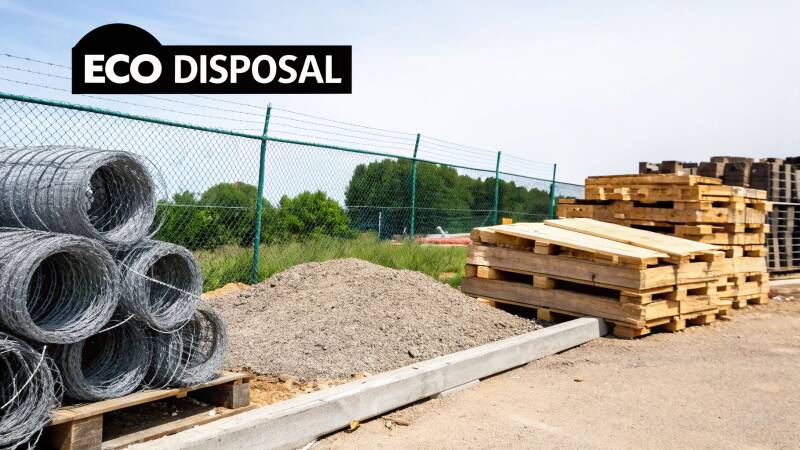
Once your old fence is neatly dismantled and loaded up, where does it all go? The answer says a lot about the contractor you’ve chosen. A top-notch professional doesn't just make a beeline for the nearest dump. They take a much more thoughtful approach to disposal, one that’s better for the environment and often benefits the local community.
For many property owners here in New York and Connecticut, sustainability isn't just a buzzword; it's a priority. When you hire fence removal contractors who focus on green practices, your project does more than just clear your property line—it becomes a responsible choice. This commitment is a hallmark of a truly conscientious company.
A Second Life for Old Materials
A great contractor looks at a pile of old fencing and sees resources, not rubbish. The key is to sort everything on-site or back at their facility, making sure each material finds its way to the right place.
Here’s a quick rundown of where things typically end up:
- Metal Components: That old chain-link or wrought iron fence is a goldmine for recyclers. Scrap metal yards eagerly take steel and aluminum, which get melted down and transformed into new products. This cuts down on the need for new mining and saves a ton of energy.
- Untreated Wood: If your wood fence is free of chemical treatments, it has plenty of potential. It can be chipped into mulch for local landscapers, composted, or sometimes even donated to artists and woodworkers who love the character of weathered lumber.
- Concrete Footings: Those heavy, stubborn concrete footings don’t just have to take up space in a landfill. They can be transported to a crushing facility where they’re broken down into aggregate, a key ingredient for building new roadbeds and other construction projects.
The real goal here is to keep as much material as possible out of the landfill. It’s a simple concept, but it makes a huge difference in reducing our local environmental footprint and promoting a more circular economy.
The Real-World Impact
This isn't just about feeling good; it has a measurable impact. A truly eco-conscious contractor can recycle 70-80% of the metals from a fence removal job. This practice drastically cuts down on landfill waste and aligns with the growing demand for sustainable home improvement projects.
As our communities continue to develop, responsible demolition is becoming more important than ever. You can learn more about the broader industry trends from these insights on fence construction at IBISWorld.com.
Choosing a contractor who shares your values on this front ensures your project is handled with care from the first post pulled to the final piece of recycled metal. It’s a decision that reflects well on your property and contributes positively to our community.
Answering Your Top Questions About Fence Removal
Even after you've done your research, it's completely normal to have a few questions rolling around in your head before you pull the trigger on hiring a professional. We get it. To put your mind at ease, here are some straight answers to the questions we hear most often from homeowners in your shoes.
How Long Does Fence Removal Actually Take?
You'd be surprised how quickly a professional crew can work. For a pretty standard backyard fence, say around 150 to 200 feet, the whole job is usually wrapped up in a single day. A good team can get the fence dismantled, posts pulled, and everything cleaned up in just 4 to 8 hours.
Of course, some things can slow the process down. If your fence posts are entombed in massive concrete footings or the crew is dealing with a steep hill and tight access, the project might bleed into a second day. Any good contractor will give you a solid time estimate right from the start.
Will My Yard Get Wrecked in the Process?
This is probably the biggest worry for homeowners, and for good reason—you've worked hard on your landscaping. A true professional crew understands this and takes serious precautions to protect your property. They'll lay down plywood or specialty mats to protect your grass from equipment and work carefully to keep disruption to a minimum.
Let's be realistic: pulling up deep-set posts will cause some minor disturbance to the ground right around the post holes. But a professional job means they won't leave your yard looking like a disaster zone. A thorough cleanup is part of the package, and that includes raking the soil level and hauling away every last scrap.
Can I Keep Any of the Old Fencing Material?
Absolutely. If you have a DIY project in mind or just want to salvage some of the old wood for a rustic garden bed, just say the word. The key is to bring this up when you're getting your quote.
Let the contractor know which materials you'd like to keep, and they'll happily stack them neatly out of the way for you. A quick conversation upfront makes sure everyone is on the same page and your materials are saved before the rest gets loaded up for disposal.
Have more questions or ready to get a quote for your project? You can contact our team directly for a free estimate anytime.
Add comment
Comments