
What does an estate cleanout services cost? Our guide breaks down pricing, hidden fees, and how to get an accurate quote for your NY or CT property.
So, you're faced with clearing out a loved one's home, and the big question is: what's this going to cost? It’s the first thing on everyone's mind, and getting a handle on the budget from the get-go is key.
Nationally, the average for estate cleanout services lands somewhere around $1,250. But honestly, that number is just a starting point. The real cost can swing from a few hundred dollars for a small, tidy apartment to several thousand for a large, packed house. It all comes down to the amount of stuff and the work required to clear it all out.
A Quick Look at Estate Cleanout Costs
Let's break down what you can generally expect. Think of these numbers as a ballpark estimate—a way to frame your budget before you start getting detailed quotes.
The most obvious factor that drives the price is the sheer size of the property. A one-bedroom condo just doesn't hold as much as a four-bedroom house with a basement, attic, and a two-car garage. More space almost always equals more belongings, which means more labor, more time, and more truck space for the crew.
Estimated Estate Cleanout Costs by Property Size
To give you a clearer picture, here’s a table that breaks down typical costs based on property size. Remember, these are national averages. Here in the New York and Connecticut metro areas, we often see prices on the higher end of these ranges due to local labor rates and disposal fees.
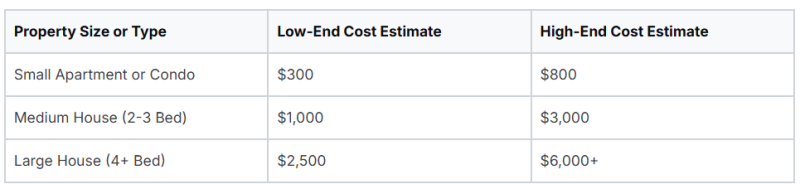
Keep in mind: This table is a great starting point, but the final price really depends on the density of the items inside, how easy it is for a crew to get in and out, and the specific estate cleanout services you actually need.
Industry data backs this up. While that $1,250 figure is the national midpoint, the realistic range for most projects is anywhere from $275 to over $4,000.
A standard three-bedroom house cleanout, for example, usually falls between $1,000 and $3,000. However, if you're dealing with a larger estate or a hoarding situation, the costs can easily climb past $4,000.
Having these initial estimates in hand gives you a crucial financial snapshot. It empowers you to have informed conversations with professional cleanout companies and confidently evaluate the quotes you receive.
What Really Determines Your Final Bill?
While the size of the property is a good starting point, the final estate cleanout services cost rarely comes down to square footage alone. Think of it like a catering bill: the cost isn't about the size of the venue, but how many guests you have and what's on the menu. In the same way, your final cleanout bill is all about what’s inside the home and the work it takes to get it all out.
Professionals don't just guess a price. They calculate quotes based on a few core factors that directly impact the time, labor, and resources your specific job will need. Once you understand these, your estimate will make perfect sense, showing you exactly what you're paying for.
The image below gives you a general idea of how property size correlates with cost, but keep in mind that the real price drivers are the details we're about to cover.
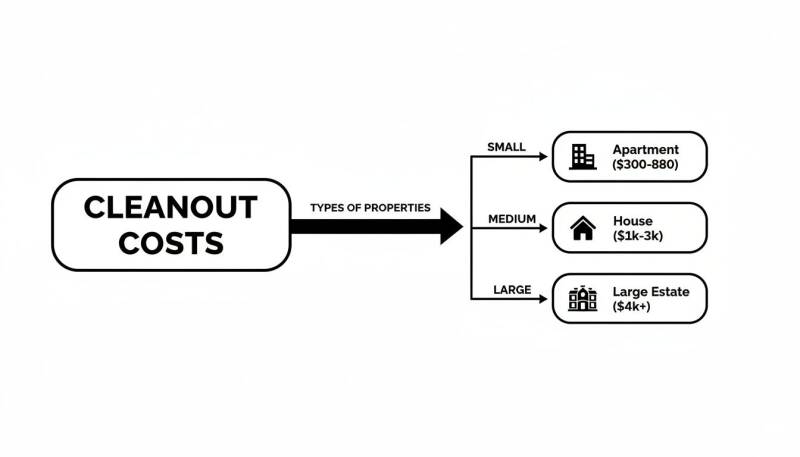
As you can see, there are big jumps between clearing an apartment versus a large estate. That’s because the overall scope of the project is what truly shapes the bottom line.
The Volume of Items
The single biggest factor in your quote is the sheer volume of stuff that needs to go. It’s simple, really. A sparsely furnished three-bedroom house will almost always be cheaper to clear out than a small, two-bedroom apartment that’s packed to the ceiling with clutter.
Cleanout companies think in terms of truckloads. A typical junk removal truck can hold about 15 cubic yards of material—that's roughly what you could fit into a standard one-car garage.
Pricing by Volume: This is the industry standard. The crew will estimate how much space your items will take up in their truck—a quarter load, a half load, maybe multiple full trucks—and build the price from there. Each "chunk" of the truck has a price that bundles in the hauling, labor, and disposal.
Labor Hours and Crew Size
Labor is the engine that drives any cleanout, so it's a major part of the cost. The math is straightforward: the number of crew members on the job multiplied by the hours they work. Most companies bill for labor at an hourly rate per person, which often lands somewhere between $25 to $50 per person.
What makes those labor hours add up?
- Item Density: A home filled with thousands of little things that need to be sorted and boxed will take far longer than a home with just a few big pieces of furniture.
- Accessibility: Is the crew navigating multiple flights of stairs? Long hallways? A steep driveway? All that adds time and serious physical effort.
- Disassembly: That giant entertainment center or old swing set has to be taken apart before it can be moved. This requires extra time and tools, which ticks the labor clock up.
A job that a two-person crew can knock out in four hours will cost a whole lot less than a project needing a four-person team for a full eight-hour day.
Disposal and Recycling Fees
Once everything is on the truck, it has to go somewhere. The fees charged by local landfills and transfer stations for legally and responsibly disposing of the items are passed on to you. You'll often see these listed as disposal fees or transfer station fees on your invoice.
These facilities charge by weight, and the rates vary from one town to the next. A truckload of heavy items like old books or construction debris will cost more to dump than a truckload of lighter things like empty boxes and old linens.
This is also where a company's commitment to being green makes a difference. A quality cleanout service will take the time to sort items for donation and recycling. While that sorting adds a bit to the labor, it can seriously reduce the total weight of what goes to the landfill, potentially lowering your disposal fees while giving usable goods a second life.
Handling Special and Bulky Items
Not everything can just be tossed onto a truck. Some items are a real pain to move and require special handling, equipment, or disposal methods, which will add to your final bill. These are usually priced out as separate line items on your estimate.
Here are a few common culprits:
- Pianos: They're incredibly heavy, awkward, and often require specialized dollies and a bigger crew. You can expect to pay an extra $200 to $400 just to get a piano out the door.
- Appliances: Refrigerators and air conditioners contain refrigerants like Freon, which must be professionally and safely removed before recycling. This incurs a special handling fee, typically $50 to $150.
- Hot Tubs: These behemoths require electrical disconnection, complete disassembly, and a ton of labor to break down and haul away.
- Electronics (E-Waste): Old TVs, computers, and monitors contain hazardous materials and are illegal to dump in a landfill. They have to go to a certified e-waste recycling facility, which comes with its own costs.
Always be upfront about any of these large or unusual items when you're getting a quote. It’s the best way to ensure the estimate is accurate and you don’t get any unwelcome surprises on cleanout day.
How Property Condition Shapes the Price
While the square footage of a home gives us a starting point, it's the condition inside that really dictates the final cost. Think about it: two houses, both 2,000 square feet. One is tidy and sparsely furnished. The other is packed floor-to-ceiling with a lifetime of possessions. Even though they're the same size, that second house is a much bigger, more complex job.
Professionals in this field look at a project less in terms of square feet and more in terms of volume and complexity. A small apartment that's been subject to hoarding can easily be a more labor-intensive—and therefore more expensive—project than a large, well-maintained home. The true state of the property is what a good crew will focus on to give you an accurate quote.

The Role of Clutter Density
We use the term clutter density to describe just how much stuff is packed into a space. A room isn't just a flat area; it's a three-dimensional container that can be filled from top to bottom. When a home has high clutter density, it dramatically increases the time and labor needed.
Instead of just walking in and carrying out a sofa, the crew might first have to clear a path, sort through piles of forgotten items, and bag up thousands of smaller objects. It’s meticulous work. This can easily turn what looks like a one-day job into a multi-day effort, which directly scales up your labor costs. A seasoned professional will assess this density during an on-site visit to give you a realistic estimate.
To get a real sense of how a professional team can transform a high-clutter space, check out some of our team’s work in the before and after gallery.
Accessibility and Structural Challenges
How easy is it to get things from inside the house to the truck? That simple question of accessibility is a huge factor in the final price. Every obstacle adds time, effort, and sometimes even risk, all of which get factored into the quote.
Here are a few common challenges that can drive up the cost:
- Stairs: Homes with multiple floors, especially those with tight or winding staircases, take more manpower and time to safely haul out heavy furniture.
- Narrow Hallways: Trying to pivot a dresser around a tight corner isn't just tricky—it slows the whole crew down.
- No Elevator: In condos or apartment buildings, not having a service elevator means every box, bag, and piece of furniture has to be carried down by hand.
- Parking Distance: If the truck has to park down the street, that adds hundreds of extra steps for the crew over the course of the day, which adds up on the clock.
Think of accessibility as a multiplier for your labor costs. For instance, having to navigate several flights of stairs or a long hallway can easily add 20-30% to the labor portion of your bill simply because of the extra time and physical strain involved.
Dealing with Hazardous Materials
Your standard junk removal crew isn't licensed or equipped to handle hazardous waste. If we find certain materials on-site, it triggers the need for specialized disposal procedures, which adds another layer of cost and complexity to the job.
It’s always best to identify these materials early on. It helps us give you an accurate quote and ensures everyone stays safe.
Common Hazardous Items to Look For:
- Chemicals: This includes old paint cans, pesticides, harsh cleaning solvents, and automotive fluids that can't go into a regular landfill.
- Asbestos: Common in older homes, it can be hiding in insulation, old floor tiles, or "popcorn" ceilings. This requires a certified abatement team.
- Biohazards: This is a broad category that includes anything from severe mold infestations to animal waste or the scene of an unattended death. Each requires a specific remediation protocol.
- Propane Tanks and Batteries: Because they are flammable or contain corrosive materials, these have to be taken to special recycling centers.
If you think any of these might be present in the estate, let the cleanout company know right away. They can guide you on the next steps or bring in a specialized partner to handle that part of the job. It will be a separate line item on the invoice, but it ensures the property is cleared safely and legally, in line with all local environmental regulations.
Real Pricing Scenarios in NY and CT
It’s one thing to talk about labor costs and truck sizes in theory, but it’s another to see how those numbers actually play out in a real quote. To connect the dots, let's walk through a few common pricing scenarios we see all the time in Westchester, Putnam, and Fairfield Counties.
Think of these examples as a peek behind the curtain of the quoting process. You'll see exactly how the key ingredients—labor, volume, and any special items—come together to create the final price. This should give you a much clearer feel for what your own project might cost.
Scenario 1: The Westchester County Apartment Turnover
Let's start with a classic: a two-bedroom, one-bathroom apartment in a White Plains building with a decent elevator. The previous resident left the usual stuff behind—a couch, a bed, some kitchen odds and ends, clothes, and general clutter. All in all, it’s about half a truckload.
This is about as straightforward as it gets. With easy elevator access and no tricky items, a two-person crew can get this done pretty quickly.
- Labor: A two-person crew working for about 3-4 hours.
- Disposal: Half a truckload, which is around 7-8 cubic yards.
- Special Fees: None. No hazardous materials or super-heavy items to worry about.
Total Estimated Range: $650 – $950
This price is typical for a basic apartment cleanout where things go smoothly. The cost is almost entirely driven by the labor hours and the standard disposal fee for that half-truckload.
Scenario 2: The Putnam County Home with a Packed Basement
Now for a more involved job. Picture a three-bedroom house in Carmel, occupied by the same family for 40 years. The main living areas are manageable, but the basement and garage are a different story—they’re crammed with old tools, furniture, stacks of papers, and a dead deep freezer. Getting everything out means hauling it all up a flight of stairs.
This project has more moving parts. The sheer volume is higher, clearing out the basement takes serious effort, and that old freezer needs to be handled properly.
- Labor: A three-person crew working a full day, likely 6-8 hours.
- Disposal: A full truckload plus a bit more, maybe 18-20 cubic yards total.
- Special Fees: Yep, there's a fee for safely removing the Freon and disposing of the deep freezer.
Total Estimated Range: $2,200 – $3,100
You can see how the cost jumps. The price reflects a big increase in both labor time and the amount of stuff we're hauling. That basement adds a lot of hours, and the appliance fee is a must for doing things by the book.
Scenario 3: The Fairfield County Multi-Level Estate
Finally, let's tackle a big one: a sprawling 4,500-square-foot home in Greenwich, CT. This property has it all—a full attic, a two-car garage, and a shed, all packed with decades of belongings. We're talking heavy antique furniture, an old piano, and even some construction debris from a forgotten renovation.
This is a major logistical undertaking. It demands a larger crew, several days of work, and some specialized equipment to get the job done right.
- Labor: A four-person crew working for 2-3 full days.
- Disposal: At least two, maybe three, full truckloads.
- Special Fees: A hefty fee for moving the piano (it’s a specialized skill) and extra charges for the heavy construction debris.
Total Estimated Range: $4,500 – $7,000+
For a large estate, the price reflects the reality of a multi-day operation. The final number is a direct result of the massive amount of labor, multiple trips to the transfer station, and the specialized fees for difficult items like that piano.
To make it even clearer, here's how these different factors can look side-by-side.
Sample Estate Cleanout Cost Scenarios
This table breaks down how different project scopes in the NY & CT area can lead to very different final costs. It’s a great way to visualize how labor, disposal volume, and special circumstances all factor into the estimate.
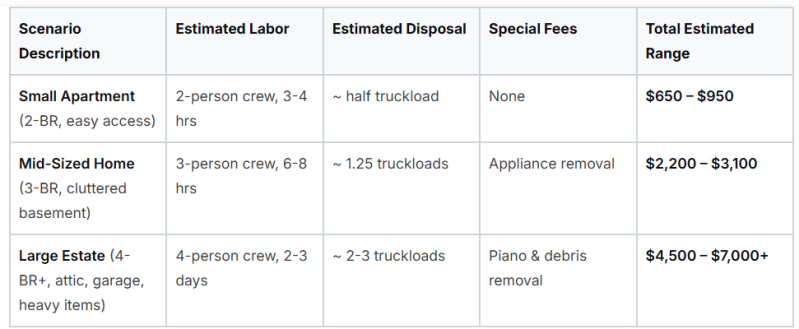
As you can see, the estate cleanout services cost is anything but a one-size-fits-all number. By seeing how professionals break down the volume, labor, and unique challenges of a job, you can get a much better handle on what to expect for your specific situation.
Smart Strategies to Lower Your Cleanout Costs
Knowing what goes into an estimate is one thing, but actively lowering the estate cleanout services cost is where you can really make a difference. While you'll need the pros for the heavy lifting, a little bit of prep work on your end can have a surprisingly big impact on the final bill.
This isn’t about you doing their job. It’s about making their job more efficient. Every minute a crew saves on sorting, bagging, or navigating a cluttered space is a minute you aren't paying for. A few smart moves beforehand can streamline the whole operation, saving you a nice chunk of change.
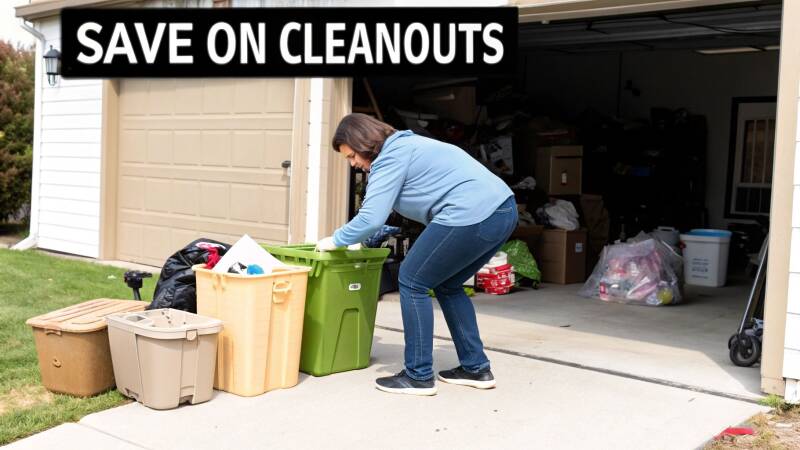
Pre-Sort and Consolidate Everything
The single most effective way to cut down on labor costs is to get a head start on sorting before the crew even pulls up. Think of it as mise en place for a big meal—having all your ingredients prepped makes the actual cooking process incredibly fast.
Start by setting up a few distinct zones for different types of items.
- Donate Pile: Gather all the clothes, furniture, and household goods that are still in good shape. This way, the crew isn't left guessing what to keep and what to toss.
- Recycle Pile: Flatten all those cardboard boxes. Bag up papers, plastics, and glass together so it's ready for the recycling center.
- Dispose Pile: This is the true junk pile destined for the transfer station. Keeping it separate is a huge time-saver.
Once you have your piles sorted, try to move them to a single, easy-to-reach spot like the garage or a room right by the front door. Turning a whole-house job into a simple grab-and-go from one location can literally shave hours off the bill. For more ideas on organizing, check out our junk removal tips and resources.
Identify and Handle Valuables First
An estate cleanout is often as much about recovery as it is about removal. Before anyone starts hauling things away, do a careful sweep for anything with sentimental or monetary value. We're talking about jewelry, family photos, important documents, antiques, and collectibles.
By setting aside valuable items to sell, you can directly offset the cleanout expenses. The proceeds from selling a single antique furniture piece could potentially cover a significant portion of the removal bill, turning clutter into cash.
When you sell these items yourself, whether online or at a local consignment shop, you get to keep 100% of the profit. It’s a smart move that puts money back in your pocket before you spend a dime on hauling away what’s left.
Ask About Material Credits
Believe it or not, some of that "junk" might be worth something. This is especially true if you're dealing with a lot of metal. If the estate has old appliances, copper pipes, scrap metal, or even aluminum siding, it’s worth asking about.
Bring it up with the cleanout company: do they offer credits for valuable scrap metal? Not every company does, but some will knock a bit off your final invoice based on the value they can get from recycling the metal. It’s a simple question that costs you nothing and could save you money.
Getting a Reliable Estimate and Avoiding Surprises
The final piece of the puzzle in managing your estate cleanout services cost is getting a quote you can actually trust. A quick phone call might give you a ballpark figure, but let's be honest—it's just a guess. The only way to get a real, reliable estimate is for a professional to see the property with their own eyes.
Think about it like hiring a painter. You'd never accept a firm price from someone who hadn't even looked at the rooms they're supposed to paint. The same exact logic applies here. An on-site assessment lets the company see how much stuff there really is, spot any tricky access points, and identify items that need special care. This in-person walkthrough is hands down the best way to avoid sticker shock when the final bill arrives.
Your Checklist for Vetting a Provider
Not all estimates are created equal, and you need to know how to spot the difference. A truly professional team will be happy to answer your questions and will be upfront about their process.
Use this checklist during your calls to protect yourself and make sure you're getting the full picture:
- Is this estimate all-inclusive? You need to know if the price covers everything—labor, transportation, and standard disposal fees. The last thing you want is to be blindsided by a "fuel surcharge" or other hidden operational costs.
- Are you fully licensed and insured? This is a deal-breaker. A legitimate company must have liability and workers' compensation insurance. It protects you, your property, and their team if an accident happens. Don't be shy about asking for proof.
- What happens if the job is bigger than expected? A good quote will account for this possibility. Ask how they handle it if the amount of stuff is more than they estimated. You need to understand exactly how they bill for any overages.
- Do you provide a written contract? A handshake deal isn't going to cut it. A detailed, written agreement locks in the price and the scope of work, protecting both you and the company from any misunderstandings down the road.
A firm, on-site estimate isn't just a courtesy; it's the mark of a professional. It shows they're committed to being transparent and ensures the price you're quoted is the price you'll pay, unless you both agree to change the scope of the job.
The Importance of a Written Agreement
Once you've made your choice, insist on getting a written contract before a single box is moved. This document is your safety net against surprise fees and miscommunication.
It should clearly spell out the total cost, exactly what services will be performed, the estimated timeline, and the payment terms. If a company seems reluctant to put their promises in writing, that’s a massive red flag. Following these steps will help you hire a service you can trust, ensuring fair pricing and a professional, stress-free experience from start to finish.
Got Questions? Here Are Some Common Ones We Hear
Even with all the details, you probably still have a few questions swirling around about the cost and the actual process of an estate cleanout. It’s completely normal. Here are some quick, straight-to-the-point answers to the questions we get asked most often.
How Long Does a Typical Estate Cleanout Take?
This really comes down to the size of the home and how much stuff is inside. For a smaller space, like a one-bedroom apartment, a good crew can often have it completely cleared out in just 3-5 hours.
A more standard three-bedroom house, on the other hand, is usually a full day's job, taking somewhere in the ballpark of 6-8 hours. If we're dealing with a larger property or a hoarding situation with a serious amount of clutter, the project can easily stretch into a multi-day affair. Any professional company should be able to give you a solid time estimate after they see the property in person.
Do I Need to Be There for the Whole Cleanout?
You don't have to be, but we always recommend being there for the beginning. That initial walkthrough is your chance to point out exactly what stays and what goes, making sure everyone is on the same page. It prevents any heartbreaking mix-ups later.
Once you've given clear directions, you should feel comfortable leaving the crew to get the work done. Many of our clients prefer to leave and come back for a final walkthrough and to handle the payment once the home is empty.
It all boils down to communication. As long as the initial instructions are crystal clear, a professional team can work without you looking over their shoulder. It frees you up so you don't have to block out your entire day.
Is There Anything a Cleanout Service Won't Take?
Yes, definitely. For safety and legal reasons, most junk removal and cleanout companies aren't licensed to handle hazardous materials. This protects our crews and ensures we're following all local and federal disposal laws.
Generally, this means we can't take items like:
- Flammable liquids such as gasoline, propane tanks, or motor oil
- Wet paint, chemical solvents, and other harsh chemicals
- Anything containing asbestos
- Medical or bio-hazardous waste
It's incredibly important to let the company know about any of these materials when you're getting an estimate. They can point you in the right direction for proper, legal disposal, which often means bringing in a specialized service. Being upfront from the start guarantees a safe and smooth cleanout for everyone.
Working through the logistics of an estate cleanout can feel overwhelming, but you're not on your own. For a clear, honest estimate and professional, compassionate service in New York or Connecticut, you can count on the team at D&B Complete Home Services INC.. Get your free, no-obligation quote today.
Add comment
Comments