Discover the true cost to demolish a shed. This guide breaks down pricing factors, DIY vs. pro expenses, and how to get an accurate quote in NY & CT.
That old shed in the backyard has probably seen better days. It might be leaning, leaking, or just plain taking up space you'd rather use for a garden or patio. Whatever the reason, you've decided it's time for it to go. But what's it going to cost?
The truth is, the cost to demolish a shed can vary quite a bit, typically falling somewhere between $250 and $2,500. A small, simple teardown will be on the lower end of that scale. However, if you're dealing with a larger structure, especially one with a stubborn concrete foundation, the price can climb.
Let's break down what that estimate really means for your wallet.
Your Quick Guide to Shed Demolition Costs
Understanding the budget is always the first step in reclaiming your yard. Getting that old structure out of the way is one thing, but you need a realistic idea of the investment before you start.
This guide will give you a clear starting point. While no two demolition jobs are exactly alike, most homeowners find that a professional job falls within a predictable price window. We'll walk through all the factors that build up to that final number.
What Goes into the Price Tag?
So, why such a wide price range? Think of it less like buying a product off a shelf and more like a custom service tailored to your specific situation. Several key variables will shape the final quote.
- Shed Size: This one's pretty straightforward. A small 8x6 foot metal shed is a much faster job than a large 12x24 foot wooden workshop. More material means more labor and, of course, more debris to haul away.
- Construction Material: Lightweight vinyl or thin metal sheds are usually cheaper to take down than solid, heavy wooden structures that require more effort to dismantle.
- Foundation Type: Is the shed just sitting on a few concrete blocks? That’s an easy job. But if it was built on a poured concrete slab, that’s a different story. Breaking up and removing a slab requires heavy equipment and significantly more labor, which will add to the cost.
- Site Accessibility: If our crew can back a truck right up to the shed, the job is simple and efficient. But if we have to navigate around fences, landscaping, or tough terrain, it adds time and complexity to the project.
For a quick reference, here’s what you can generally expect.
Shed Demolition Cost at a Glance
This table gives you a ballpark idea of professional demolition costs based on common shed sizes and materials. It’s a great way to get a quick feel for your initial budget.
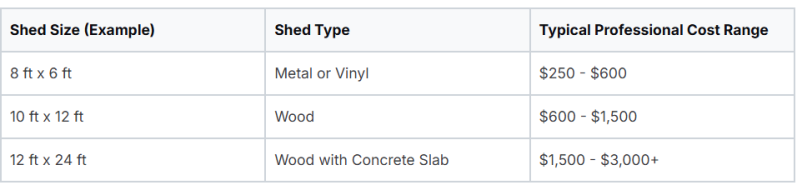
Keep in mind these are just estimates. The best way to know for sure is to get a quote based on your actual property and shed.
Across the country, the typical cost to demolish a shed falls in a broad range from about $250 to $2,500. Some complex jobs, especially those involving large foundations, can reach $3,000–$7,000. Most homeowners, however, find their projects land somewhere between $600 and $2,000, with the final price hinging on the shed's size and how easy it is to access.
For homeowners here in New York and Connecticut, getting a precise quote from a trusted local expert is the best next step. At D&B Complete Home Services INC., we believe in providing transparent, all-inclusive estimates tailored to your specific project.
Want to see what a difference a professional demolition can make? You can see the quality of our work for yourself by checking out our before and after project gallery.
Breaking Down the Demolition Bill: What Are You Actually Paying For?
Ever gotten a couple of quotes for the same job and scratched your head at the difference? Why is one company quoting $600 while another comes in at $1,600? It's a common question, and the answer almost always comes down to the specific details of your shed and your property. No two demolition jobs are exactly alike.
Think of it less like buying a product off the shelf and more like ordering a custom-built piece of furniture. The final price tag is a direct reflection of the materials, time, and specific skills needed to get the job done right. Once you understand the line items that make up a quote, you can see exactly where your money is going and why the numbers can vary so much.
The Big Three: Labor, Disposal, and Equipment
At the end of the day, almost every demolition quote boils down to three main ingredients: the crew's time, the cost to get rid of the junk, and the tools needed for the job.
- Labor Costs: This is usually the biggest chunk of the bill. It’s not just an hourly rate; it’s about the size of the crew and how long they'll be on-site. A rickety little tin shed might only take a two-person team a few hours. But a large, well-built workshop with shingles and drywall could easily keep a bigger crew busy for the better part of a day, and the labor cost will reflect that.
- Disposal and Hauling Fees: Once the shed's in a pile, it all has to go somewhere. This part of the quote covers the "tipping fees" charged by the local landfill or transfer station, plus the fuel and time to haul it away. A small shed might only generate a few cubic yards of debris, but a larger structure can create a massive pile, leading to much higher disposal costs.
- Equipment Rentals: For a simple wood shed on blocks, a couple of pry bars, a sledgehammer, and a reciprocating saw might be all that's needed. But if that shed is sitting on a thick concrete slab, the game changes. Now we're talking about bringing in heavy-duty equipment like jackhammers or even a Bobcat, and the cost to rent and operate that machinery gets added to your bill.
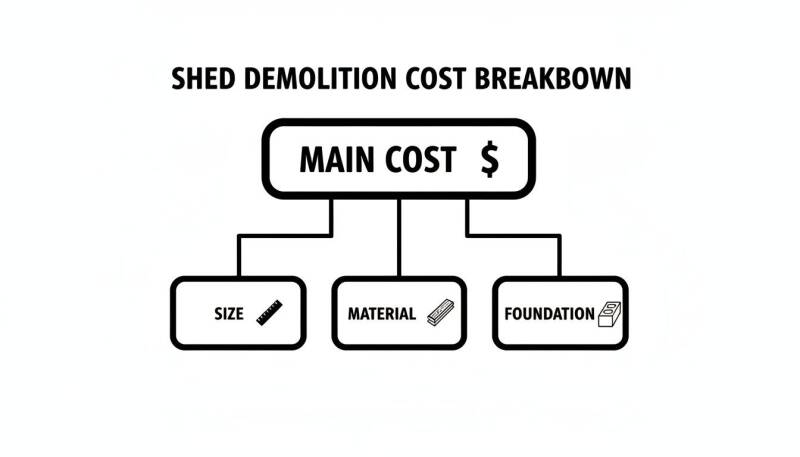
As you can see, the size, material, and foundation are the three levers that control the time, equipment, and disposal needs for your project.
Why Volume Matters More Than Footprint
You might think a 10x10 shed is a 10x10 shed, but in the demolition world, that's not the whole story. Many experienced contractors have moved away from flat-rate pricing and now base their estimates on the total cubic volume of the shed and its resulting debris. It’s just a more accurate way to capture the true scope of the work.
Let's take a small 8 ft by 8 ft shed. The debris removal alone could run you $415–$498. Now, let's say that shed is sitting on a 64-square-foot concrete slab. Suddenly, you're adding another $720–$883 just to break up and haul away the foundation. A seemingly simple job just shot past the $1,200 mark. For a closer look at how these numbers stack up, check out this detailed breakdown of shed removal costs.
The Bottom Line: Don't just think in square feet. The total volume of your shed (length x width x height) combined with what's underneath it gives a much truer picture of the final demolition cost.
The Hidden Cost of Hazardous Materials
Here’s a major variable that can change a quote in a hurry: hazardous materials. It’s not an issue in most newer sheds, but structures built before the 1980s can sometimes hide some nasty surprises that require specialized—and more expensive—handling.
- Asbestos: In older sheds, you might find asbestos in roofing, siding, or old insulation. This isn't something a standard crew can just tear down. Asbestos abatement is a tightly regulated process that requires certified professionals, special equipment, and specific disposal protocols to keep everyone safe.
- Lead-Based Paint: If that old wooden shed has layers of peeling paint, it could contain lead. Demolishing it creates toxic dust, so the crew has to take extra precautions to contain the debris. This means more setup, specialized gear, and careful disposal, all of which adds to the cost.
- Chemicals and Mold: A shed used to store old cans of pesticides, gasoline, or other chemicals might need a careful cleanup before demolition can even start. The same goes for a shed with a serious mold problem, which requires crew members to wear proper personal protective equipment (PPE).
If you even suspect your shed might contain something hazardous, tell your contractor upfront. A professional team like D&B Complete Home Services INC. knows how to spot these risks and has the training to manage them safely and by the book. That expertise isn't just an add-on; it's a crucial part of what you're paying for when you hire a pro.
DIY Demolition vs Hiring a Professional
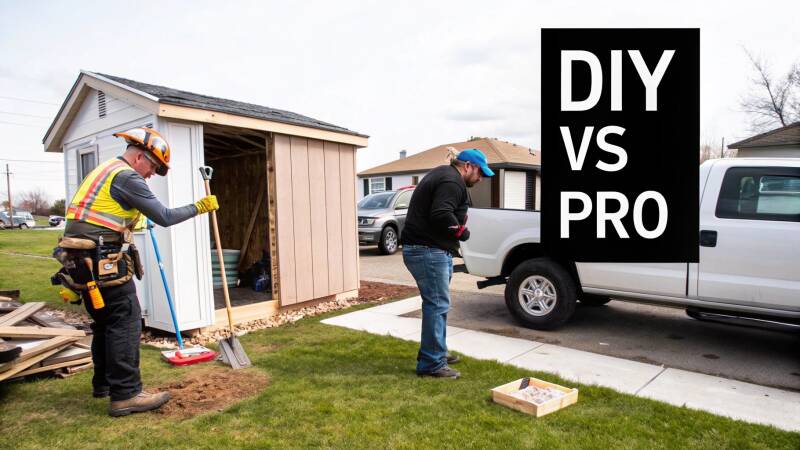
So, that old shed has to go. Now you’re facing the big question: do you roll up your sleeves and tackle it yourself, or is it time to call in the pros? At first glance, the DIY route seems like the obvious way to save a few bucks. But the real cost to demolish a shed isn't just a number on an invoice; it's a mix of your time, your safety, and all the unexpected costs that can pop up.
Choosing the right path means taking an honest look at what each option really involves. A DIY project can be rewarding, no doubt. But it can also come with a steep learning curve and a handful of headaches. On the other hand, bringing in a professional service like D&B Complete Home Services INC. offers an efficiency and peace of mind that’s tough to achieve on your own.
Let’s dig into the trade-offs to see which approach truly makes the most sense for you.
The Realities of a DIY Shed Teardown
Going the DIY route can feel like a smart financial decision. You’re essentially trading your own time and effort—sweat equity—for what you’d pay a crew. But those perceived savings can start to evaporate once you factor in the tools and logistics that a professional team already has on hand.
First up is the equipment. You'll need more than just a rusty hammer from the back of your garage. A proper demolition calls for a reciprocating saw with heavy-duty demo blades, a pry bar, a sledgehammer, and serious personal protective equipment (PPE). Think steel-toed boots, safety glasses, and thick work gloves. If you don't already own this gear, the rental fees can add up fast.
Then there's the mountain of debris you're about to create. This isn't something you can just drag to the curb for trash day. You'll likely need to rent a dumpster, which can set you back several hundred dollars depending on its size and how long you need it. The alternative is hauling it all to the landfill yourself, which means burning fuel and time on multiple trips.
The Hidden Risks of Going It Alone
Beyond the direct costs, taking on a demolition yourself carries some very real risks that are easy to overlook until it’s too late. This is physically demanding work, and the potential for injury is high. From rusty nails and falling debris to muscle strains from lifting heavy sections, a weekend project can quickly turn into a painful—and expensive—ordeal.
There's also the risk of damaging your own property. A wall that comes down the wrong way could easily take out a fence, crush your garden, or even damage the side of your house. What's more, disposing of waste improperly can lead to some hefty fines from your local municipality. Professionals carry insurance for these exact scenarios, but when you’re on your own, you're on the hook for any and all mistakes.
The bottom line is that DIY works best for small, simple sheds without complex foundations or utilities. For anything larger or more complicated, the convenience and safety of hiring a professional often outweigh the perceived cost savings.
Why Hiring a Professional Makes Sense
Hiring a professional demolition crew transforms a risky, multi-day headache into a streamlined, hands-off experience. Companies like D&B Complete Home Services INC. show up with the right team, the right tools, and the know-how to get the job done quickly and, most importantly, safely. A project that might take you an entire weekend of back-breaking labor can often be wrapped up in just a few hours.
That efficiency is a huge advantage. Professionals know how to dismantle a structure systematically, which minimizes risk and ensures the site is left completely clean. They manage every single part of the job, from the first swing of the sledgehammer to hauling away the last bit of debris for responsible disposal.
But perhaps the biggest benefit is the peace of mind. A reputable company is fully licensed and insured, protecting you from any liability if an accident were to happen. You won't have to worry about injuries, property damage, or navigating local disposal laws. The job just gets done right.
To help you weigh your options, let's put the two approaches side-by-side.
Comparing DIY vs Professional Shed Demolition
This table breaks down the key differences to help you decide whether to tackle the job yourself or bring in an expert.
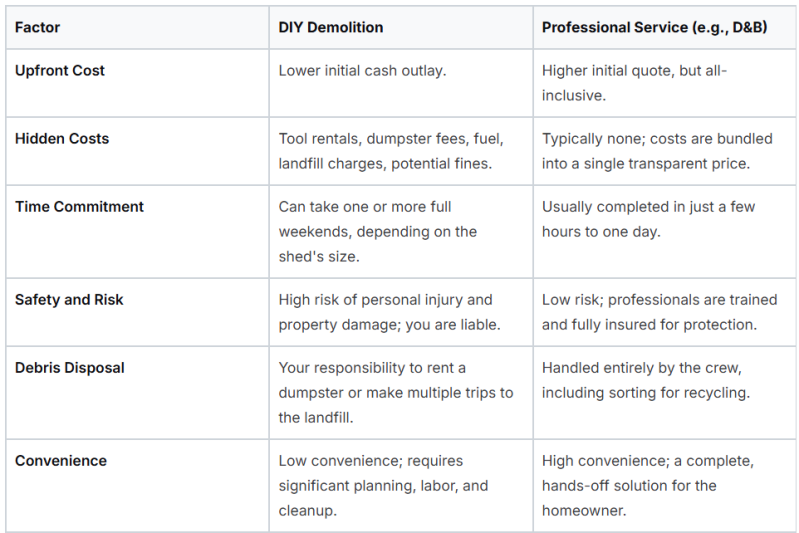
Ultimately, the best choice depends on your shed's complexity, your budget for both time and money, and your comfort level with the risks involved.
How Your Location Affects the Demolition Quote
The price you get for taking down a shed isn't a one-size-fits-all number; it's tied directly to your zip code. It's a lot like buying a slice of pizza. You'll pay a lot more for a plain slice in Manhattan, New York, than you would in Manhattan, Kansas. The same idea holds true for demolition services, where the local economy creates some pretty big price swings from one town to the next.
This is especially true for homeowners in our service areas, which include Westchester, Putnam, and Fairfield counties. These are just higher-cost areas to do business in, and that reality is going to be reflected in the final price for any professional service, including shed removal. Knowing this upfront helps you set a realistic budget.
Key Regional Cost Drivers
A few local factors are always at play when a professional company puts together a quote. These aren't random charges; they're based on the real-world expenses a contractor has to cover to operate legally and efficiently in your neighborhood.
Here are the three big ones that really shape the price:
- Local Labor Rates: What a skilled worker earns varies wildly across the country. In areas with a high cost of living, like the NY and CT metro regions, paying a fair wage to an insured, professional crew simply costs more than it would in a more rural part of America.
- Landfill and Disposal Fees: Every town and county sets its own "tipping fees" for dumping waste. You can bet that transfer stations in dense suburban areas charge a whole lot more per ton than a landfill out in the country, all thanks to higher operating costs and demand.
- Permit Rules and Red Tape: Some towns make you pull a demolition permit for even a small shed; others couldn't care less. The cost of that permit and the time it takes to get it can add both money and a few days to the project timeline.
All these pieces come together to create a unique pricing landscape for every single service area.
A Tale of Two Cities: Comparing Demolition Costs
You can really see how much geography matters when you look at the numbers. A national average might tell you the cost to demolish a shed is somewhere in the $350–$600 range, but that's only part of the story. For instance, in New York City, you're more likely to see prices from $600–$900. Hop over to Hartford, CT, and the average is closer to $497. This shows you exactly how much higher labor costs and tighter disposal rules can drive up the price. You can explore more about these regional pricing differences to get a better sense of where your town falls.
A professional quote isn't just an arbitrary number. It’s a direct reflection of local wages, dump fees, insurance costs, and even the price of gas. What’s considered a fair price in Fairfield County, CT, will naturally be different from a fair price in a lower-cost market.
Why Metro NY and CT Are Higher-Cost Markets
If you live in Westchester, Putnam, or the surrounding counties, you've probably noticed that quotes for home services can seem higher than the national averages you find online. There's a good reason for that. Companies working here are dealing with a totally different set of economic realities that directly influence how they price their work.
We're talking about higher insurance premiums, steep fuel costs for hauling debris through traffic, and some of the most expensive disposal fees in the entire country. A reputable company like D&B Complete Home Services INC. gives you a quote that is competitive and fair for this specific market. Our pricing reflects what it actually costs to do the job safely, with full insurance, and by the book—ensuring your project gets done right, without any shortcuts that could lead to headaches later on.
Getting an Accurate Estimate for Your Project
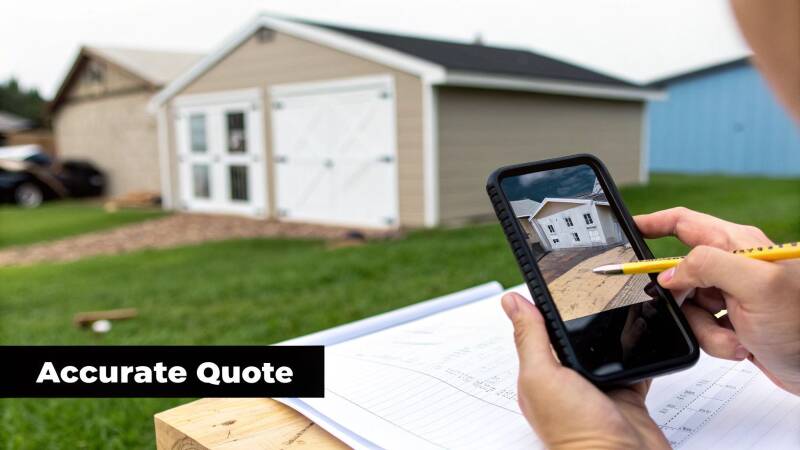
So, how do you figure out what your specific shed demolition will actually cost? It all starts with getting a solid, reliable estimate. Trying to get a quote without the right details is like asking a mechanic to price a car repair over the phone without telling them the make, model, or what's wrong with it. They can guess, but it won't be accurate.
The more information you can provide upfront, the better. Taking a few minutes to gather some key facts before you pick up the phone will not only save you time but will also ensure the quote you get is a real number, not a ballpark figure that's bound to change.
Your Pre-Quote Information Checklist
Before you start calling around, do a quick walk-through of your property and jot down these details. This little bit of prep work makes all the difference.
Here’s exactly what a professional will need to know:
- Shed Dimensions: Get a rough measurement of the length, width, and height. These numbers are the starting point for everything.
- Construction Materials: What’s it made of? A simple tin shed is very different from a wooden one with vinyl siding or a brick structure. Materials dictate the tools and time needed.
- Foundation Type: Look at what the shed is sitting on. Is it just propped up on concrete blocks, or is it on a solid poured concrete slab? Tearing out a concrete slab is a much bigger job and will definitely affect the price.
- Site Accessibility: How easy is it for a crew and their equipment to get to the shed? Can they back a truck right up to it, or will they have to navigate around fences, landscaping, or a narrow gate?
- Clear Photos: A few pictures can save a lot of questions. Snap a couple of the whole shed, one of the foundation, and another showing the path from the driveway to the shed.
Decoding a Professional Quote
After you send over your details, you should get a formal quote back. A good, trustworthy estimate is more than just a single price—it’s a clear breakdown of the entire job.
Here’s what you should look for:
- Itemized Costs: The quote needs to break down where your money is going. You should see separate line items for labor, debris hauling, and disposal fees.
- Project Timeline: A pro will give you an estimated schedule, from when they plan to start to when the site will be completely cleaned up.
- Proof of Insurance: Any reputable company will have no problem showing you their liability insurance and workers' comp. This is non-negotiable and protects you from any on-site accidents.
- Scope of Work: The document should spell out everything included in the price—dismantling the shed, breaking up the foundation (if applicable), and hauling every last scrap away.
A detailed, itemized quote is the hallmark of a transparent, professional company. Be wary of vague, one-line estimates; they often hide extra fees that pop up later. Always insist on a written breakdown.
If a quote comes in that seems too good to be true, it probably is. Super-low prices might mean they aren't insured, they're cutting corners on disposal, or they plan to hit you with surprise charges for things like foundation removal. A fair price reflects quality work, proper insurance, and responsible practices.
For a transparent, no-obligation estimate in New York or Connecticut, you can contact D&B Complete Home Services INC. with your project details.
Why Choose D&B for Your Shed Demolition
You've seen all the moving parts that go into the cost to demolish a shed, from labor rates to disposal fees. The last, and most important, step is picking the right crew for the job. You need a partner who treats your property—and your time—with the same respect you do.
For homeowners, real estate agents, and property managers across New York and Connecticut, D&B Complete Home Services INC. has become that go-to partner. We do more than just knock down an old shed; we deliver a complete, hassle-free service that leaves your property clear, clean, and ready for its next chapter.
Your All-in-One Demolition and Removal Solution
What really makes D&B different is our seamless, all-in-one process. We manage every single detail of the project so you can get back to your day.
When you bring our team on board, you get:
- Total Project Management: We handle everything from the first look at the shed to the final sweep-up.
- Comprehensive Junk Removal: There's no pile of debris left behind for you to figure out. Our service includes hauling away every last splinter of wood, scrap of metal, and chunk of concrete.
- Eco-Friendly Disposal: We're serious about responsible disposal. Our crew actively sorts materials for recycling and donation, which keeps as much waste as possible out of local landfills.
This integrated approach means you just make one phone call, and we take it from there. You can see the full scope of our cleanup and removal work by checking out our services to understand how we can help with any project on your list.
Local Expertise You Can Count On
We're not a big, faceless national chain; we're your neighbors. Our team lives and works right here, with years of hands-on experience in Westchester, Putnam, Dutchess, and Fairfield counties. That means we know the local codes, the permit processes, and the logistical quirks of getting things done in our communities.
Choosing D&B means you’re not just hiring a crew; you're partnering with a local business dedicated to providing reliable, efficient, and courteous service to our neighbors. We deliver a clean slate and total peace of mind.
Ready to get your backyard back? Let's start with a clear, accurate, and fair estimate for your shed demolition. We'll show up on time, work safely, and leave your property looking even better than when we arrived.
Contact D&B Complete Home Services INC. today to schedule your free, no-obligation estimate and take the first step toward a cleaner, more useful outdoor space.
Shed Demolition FAQs
Even with a full cost breakdown, a few specific questions usually pop up. Getting those final details ironed out is what makes the difference between a smooth project and a stressful one. Here are some quick answers to the things we get asked most often.
We’ll tackle how long it really takes, the deal with permits in our area, where the junk actually goes, and how to handle sheds that are hooked up to power or water.
How Long Does It Take to Demolish a Shed?
The timeline for tearing down a shed really boils down to its size and what it’s made of. A tiny, flimsy metal shed is a very different beast than a large wooden workshop with a concrete floor.
- Small Sheds (like an 8x6 ft metal or vinyl model): If it’s a simple structure with no real foundation, a professional crew can knock it down, clean up, and be gone in just 2 to 4 hours. It’s often a surprisingly quick job.
- Larger Sheds (think 12x20 ft with a shingled roof): For a more substantial building, especially one with finished interior walls, you should plan on it taking most of the day.
- Sheds with Concrete Slabs: This is the big variable. Breaking up and hauling away a concrete foundation is heavy work. It can easily add several hours to the job and might even push a large project into a second day.
Do I Need a Permit in New York or Connecticut?
This is a huge one, and the answer is almost always "it depends on your town." Local rules can be completely different just one town over. For the most part, you probably won't need a formal demolition permit for a small, standard backyard shed. But you can't assume that's the case.
You're much more likely to need a permit if your shed:
- Is unusually large.
- Sits on a permanent concrete foundation.
- Has electricity or plumbing running to it.
Your safest bet is to make a quick call to your local city or town building department. That one phone call can save you a world of headaches, potential fines, and project delays. A professional company like D&B knows the local codes and can usually take care of the paperwork for you.
What Happens to the Shed Debris After Hauling?
So, where does that pile of wood, metal, and shingles actually end up? The easy answer is the landfill, but that's not the responsible one. Proper disposal is a crucial part of a professional service.
At D&B Complete Home Services INC., we make eco-friendly disposal a priority. Our team sorts the materials right there on-site, separating what can be saved from what truly is trash.
- Wood: Clean, untreated lumber can often be recycled.
- Metal: All the siding, roofing, and screws are sent to a scrap metal recycler.
- Concrete: Old slabs can be crushed and reused as aggregate in new construction projects.
- Usable Items: Sometimes doors, windows, or shelving are still in great shape and can be donated.
This process dramatically reduces the amount of material that goes into a landfill.
Can You Demolish a Shed with Electricity or Plumbing?
Yes, absolutely—but it has to be done with extreme care. You can't just take a sledgehammer to a shed with live wires or active water lines. That’s a recipe for disaster.
Before any demolition starts, a qualified professional must disconnect and make those utilities safe. For a shed with power, that means a licensed electrician needs to shut down the circuit from your main panel and correctly cap the wiring. Same goes for water—a plumber has to shut off the supply and properly terminate the pipe. This isn't just a suggestion; it's a critical safety step.
Ready to get that space back? The team at D&B Complete Home Services INC. delivers safe, fast, and professional shed demolition services throughout New York and Connecticut. Contact us today for a free, no-obligation estimate!
Add comment
Comments