Planning to demolish a garage? Our guide breaks down the real cost to demo a garage, covering key price factors, permits, and how to get an accurate quote.
So, you're thinking about taking down a garage? One of the first questions that pops into anyone's head is, "What's this going to cost me?" The honest answer is: it depends.
The typical cost to tear down a garage can run anywhere from $1,500 to $10,000. That’s a huge range, I know. But for most folks with a standard two-car garage, the final bill usually lands somewhere in the $4,000 to $6,000 neighborhood. The final price tag hinges on a few key things, like the garage's size, what it's made of, and whether you're also ripping out the concrete slab it sits on.
Your Quick Guide to Garage Demolition Costs
Trying to pin down the cost of a garage demolition is a lot like budgeting for a kitchen remodel—no two projects are exactly alike. The number you see on a final quote is a mix of different factors, from how big the garage is to the materials used to build it. A small, freestanding wood-frame garage is on the simpler end of the scale. But a large, attached brick garage? That’s a whole different ballgame, demanding more crew members, heavy-duty equipment, and a careful, precise approach.
Think of the national averages you see online as a rough starting point, a ballpark figure to get you oriented. They're useful for initial planning, but they don't capture the specifics of your property. My goal here is to break down the costs into common scenarios so you can find one that mirrors your own situation. This will give you a much more realistic idea of the budget you'll need before you start making calls.
Estimated Garage Demolition Costs at a Glance
To put some real numbers to it, here's a quick look at what you can expect to pay based on garage size and the scope of the job. Just remember, these are solid estimates, but your actual costs will vary based on your location and project details.
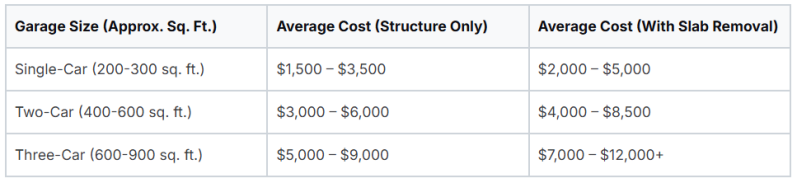
As you can see, leaving the concrete foundation in place saves a decent chunk of change, but sometimes you have to take it out for whatever you're planning next.
Understanding the Price Range
The numbers in the table show a pretty wide spectrum, and that’s because every demolition project comes with its own set of challenges. When contractors quote a job, they often think in terms of a per-square-foot rate, which usually falls between $4 and $15 per square foot.
What causes that rate to swing so much? It comes down to project complexity, how easy it is to get equipment to the site, and the logistics of hauling away the debris. For example, demolishing a standard 500-square-foot, two-car garage might run you about $5,000. But if that same garage is built from reinforced concrete or is attached to your house, the price will naturally creep toward the higher end of that scale. For a deeper dive into pricing specifics, you can find more great insights on what to expect from demolition costs.
What Goes into the Cost of Tearing Down a Garage?
If you've started getting quotes for your garage demolition, you might be scratching your head. Why is one contractor's price so much lower than another's? It can feel like you're comparing apples and oranges, but those price differences aren't random. They're based on the specific details of your garage and property.
Think of it like this: a demolition contractor is pricing out a job based on the time, tools, and risks involved. A straightforward project is going to cost less than one with a bunch of tricky variables. Once you understand what those variables are, you can look at any quote and know exactly where your money is going.
This visual gives a good overview of the typical cost range you can expect.
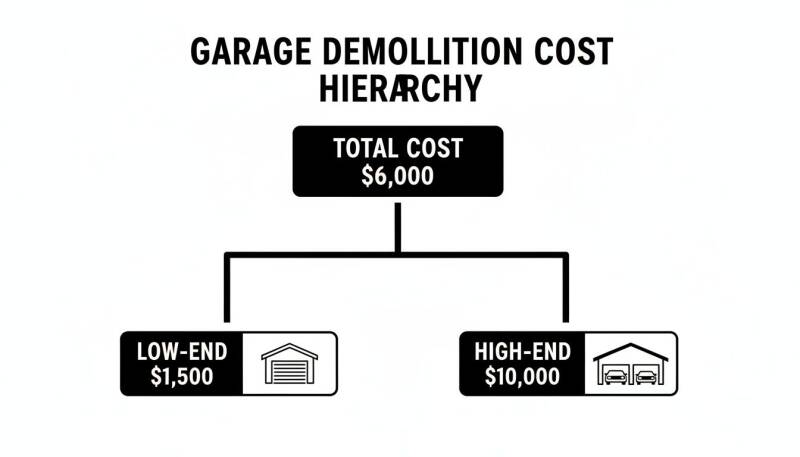
As you can see, the average sits around $6,000, but that's just a middle ground. Simple jobs can be much cheaper, while complex ones will naturally land on the higher end of the scale.
Garage Size and What It's Made Of
The most obvious factor influencing your bill is the size of the garage. It’s simple math, really. A bigger structure means more material to tear down, more debris to load up, and more time on the clock for the crew. A little 250-square-foot, single-car garage will always be more affordable to remove than a huge three-car unit.
But size is only half the story. The materials your garage is built from are just as important. Different materials require completely different approaches, equipment, and disposal plans.
- Wood Frame: This is usually the cheapest and easiest scenario. Wood is light, comes apart with standard tools, and the debris is easy to manage.
- Brick or Concrete Block: Now we're talking heavy-duty. These jobs require machinery like excavators to break everything apart. All that weight adds up fast in disposal fees, which are often charged by the ton.
- Metal: A metal garage can be quick to take apart, but the cost often hinges on how complex the frame is and what the going rate for scrap metal is. Sometimes, recycling can offset a small portion of the cost.
Attached vs. Detached: A Whole Different Ballgame
Is your garage a standalone building or is it connected to your house? This is one of the biggest forks in the road when it comes to cost. A detached garage is an island. The crew can get to work taking it down without worrying about your main home.
An attached garage? That's a completely different animal.
Think of taking down an attached garage less like demolition and more like surgery. The crew has to carefully cut the garage away from the house without damaging the shared walls, roofline, or foundation. It’s a delicate process that takes more skill, more time, and a much more careful approach, driving up the labor costs.
This extra complexity is why you'll always pay a premium for an attached garage demolition. For a typical 576-square-foot structure, a detached garage might run you $2,500 to $3,600. That same-sized attached garage? You’re likely looking at a range of $4,000 to $5,000. If you want to dive deeper into the numbers, these garage demolition pricing guides offer some excellent breakdowns.
How Your Location Impacts Demolition Pricing
Just like in real estate, the old saying holds true for demolition: it’s all about location, location, location. While national averages give you a decent ballpark figure, the final price on your quote is going to be shaped by what's happening right in your own backyard—your city, county, and even your state.
Think of it this way: tearing down the exact same two-car garage in a dense area like Westchester County, NY, will almost always cost more than doing it in a quiet rural town. Why? It comes down to some very practical realities: higher wages for the crew, more expensive landfill fees, and often a lot more red tape from the local government. These local market forces are powerful and can really move the needle on your project's final budget.
Urban Density and Logistical Hurdles
One of the biggest factors that changes from one region to another is simple logistics. In a crowded city or a tight suburban neighborhood, just getting the right equipment to your property can be half the battle.
- Tight Squeeze: If you have a narrow driveway, low-hanging power lines, or neighbors just a few feet away, the demolition crew can't just roll in with their biggest, most efficient machinery. They might have to use smaller equipment, which means the job takes longer and costs more in labor.
- Stricter Rules: Cities tend to have tougher regulations on everything from noise and working hours to how dust is controlled. Following these rules adds time and operational costs for the contractor.
- Pricey Disposal: Landfills and recycling centers near major urban hubs usually charge a premium per ton. Every truckload of debris costs more to get rid of, and that expense gets passed directly to you.
In fact, some industry insiders estimate that a city-based garage demolition can cost up to five times more than the same job in a rural setting for these exact reasons.
Labor alone can easily make up 30% to 50% of your total demolition bill. With hourly rates for a single worker often falling between $50 and $100, a small crew can add over $2,000 to the cost for just one day's work—and that figure swings wildly depending on local wages.
A Tale of Two States
To really see this in action, you just have to look at how prices vary across the country. In states like California and New Jersey, you might see average demolition costs of $8 to $10 per square foot. Head down to Florida, and that number could drop to just $2 to $6.
It's a huge difference, and it all comes back to local labor rates and market conditions. This is precisely why getting a quote from a local pro is non-negotiable. You can dig deeper into how regional labor rates affect demolition costs, but the bottom line is clear: your address isn't just a minor detail; it's one of the biggest factors determining what you'll pay.
Navigating Permits, Disposal, and Hazardous Materials
When you're pricing out a garage demolition, the obvious costs are the labor and machinery. But there's another layer of costs—the stuff that happens behind the scenes. Think of it as the project's paperwork, cleanup, and safety checks. They're not as exciting as watching a wall come down, but they're absolutely essential for getting the job done right, legally, and safely.
These less-visible tasks—pulling permits, hauling away debris, and dealing with any hazardous materials—can have a real impact on your budget. A good contractor builds these into their estimate from the start, but it's smart for you to know what they are and why they matter.
Securing the Right Demolition Permits
You can't just start swinging a sledgehammer. Before the first piece of siding comes off, your project needs the official go-ahead from your local town or city. This comes in the form of a demolition permit, and it's non-negotiable in just about every part of New York and Connecticut.
This isn't just about bureaucracy. The permitting process is a crucial safety net. It confirms that:
- Utilities have been safely disconnected. You absolutely need professionals to shut off and cap gas, electric, and water lines before demolition starts.
- The demolition plan is safe and sound. The city wants to see that the work won't put your property, your neighbors, or the crew at risk.
- Debris will be handled the right way. Your permit application usually needs to outline where all the waste is going.
The fees for these permits are a direct cost, usually running somewhere between $100 to $400, depending on where you live. An experienced team like D&B Complete Home Services knows the local requirements inside and out and handles the entire process for you. That alone saves you a massive headache and keeps the project on schedule.
The Real Cost of Debris Disposal
Once your garage is a pile of rubble, all of that material has to disappear. Getting rid of the debris is a major part of the demolition budget, and it's calculated more carefully than most people realize. Landfills and transfer stations charge by the ton.
A typical two-car garage can easily produce 20 to 40 tons of debris, especially if you're taking out a concrete slab. With local disposal fees averaging $100 to $200 per ton, you can see how quickly this can climb into the thousands.
A professional demolition service manages this whole process. We handle the dumpsters, the loading, and hauling everything to the proper facilities. If you want to get a better sense of what's involved in a responsible cleanup, take a look at these helpful junk removal tips and resources.
Handling Hazardous Materials Safely
Older garages—especially those built before the 1980s—can contain some nasty surprises. The two most common offenders are asbestos and lead-based paint. If these materials are disturbed incorrectly, they can release dangerous fibers or dust into the air, creating serious health risks for everyone nearby.
- Asbestos: Can be lurking in old insulation, siding, roofing materials, and even some floor tiles.
- Lead Paint: Was used on pretty much everything, so it's common on older wood and metal surfaces.
If there's even a suspicion of hazardous materials, a professional inspection is the first step. If they're found, abatement—the specialized process of safely removing and disposing of them—is required by law. Asbestos abatement alone can add $1,000 to $3,000 or more to your project. It's a cost you can't avoid, and it's exactly why you need a licensed professional who knows how to spot these risks from the get-go.
Smart Ways to Reduce Your Garage Demolition Costs
Once you know what drives the cost of tearing down a garage, the next step is finding practical ways to save some money without compromising on safety. A little bit of planning can go a long way in trimming the final bill, making sure you get the most out of your budget. It's not about cutting corners; it's about being strategic.
The best place to start is by tackling some of the simple prep work yourself before the demolition crew even shows up. Think of it like getting a room ready for painters—the more you clear out and prepare, the faster they can get to the main event, and the less you'll pay for their time.
Prepare the Site Yourself
Getting your hands dirty with the non-structural prep is one of the single most effective ways to lower your costs. Every minute the professionals spend on basic cleanup is a minute you’re paying for in labor fees.
Before the demolition team arrives, consider doing the following:
- Completely Empty the Garage: Get everything out—vehicles, lawnmowers, tools, old paint cans, and storage bins. Clearing the space yourself can save the crew hours of work that would otherwise show up on your invoice.
- Disconnect Utilities (with professional help): You'll need a licensed electrician or plumber for the actual disconnection, but you can speed things up by clearing a path to utility panels and shut-off valves. Easy access makes their job quicker and cheaper.
- Clear the Surrounding Area: Move anything near the garage that could get in the way. This includes patio furniture, garden hoses, planters, and kids' toys. Creating a clear path for heavy equipment is a huge time-saver.
One of the most important things for homeowners to remember is that the cheapest quote is rarely the best deal. Always focus on value, safety, and a company's reputation. Leaving the actual demolition to insured professionals like D&B Complete Home Services protects you from expensive accidents and ensures the job gets done right the first time.
Salvage and Sell Materials
Your old garage might look like a pile of junk to you, but it could be full of materials that have some resale value. Identifying what can be salvaged before the wrecking ball swings not only cuts down on disposal fees but can also put some cash back into your wallet.
Keep an eye out for these salvage opportunities:
- Scrap Metal: Copper wiring, steel beams, or aluminum siding can all be sold to a local scrap yard.
- Architectural Elements: Old solid wood doors, vintage windows, or unique light fixtures can be quite valuable to people working on restoration projects.
- Usable Lumber: If the wood framing is still in good shape (free of rot and termites), it can be repurposed for other projects or sold.
Taking these steps can make a real difference in your overall expenses. To get a better idea of the clean slate a professional demolition provides, take a look at some of our project transformations and imagine what's possible for your property.
How to Get an Accurate Demolition Quote
Knowing what drives demolition costs is one thing, but getting a firm number for your specific project is the real key to budgeting properly. The only way to get a price you can actually count on is to have a professional demolition crew come out and take a look.
An accurate quote isn’t just a number someone guesses. It's the result of a careful, hands-on evaluation of your property and the structure itself.
The Professional Quoting Process
When you call a reputable contractor, the process should be straightforward and aimed at preventing any last-minute surprises. Here’s how it usually plays out:
- Initial Contact and Discussion: The first conversation is all about your goals. A project manager will ask about the garage's size, what it's made of, and its location on your property. This gives them a basic idea of what the job involves.
- On-Site Assessment: This is the most important step. An expert needs to visit your property to physically inspect the garage. They’ll be looking at everything—measuring the dimensions, checking for site access issues, and identifying potential hazards like asbestos.
- Detailed, Transparent Estimate: After the visit, you should receive a written quote that breaks down every single cost. It needs to clearly itemize labor, equipment rentals, disposal fees, and any permit costs. A good estimate leaves no room for guesswork.
A professional quote is your project's roadmap. It should clearly outline the scope of work, timeline, and a complete cost breakdown, ensuring you know exactly what you're paying for before the work begins.
Choosing a trusted local partner like D&B Complete Home Services makes this whole process feel seamless. To see how we can help with your project, explore our comprehensive demolition services and get the clarity you need to move forward.
Garage Demolition FAQs: Your Questions Answered
Even with all the numbers laid out, you probably have a few more questions rattling around. That's completely normal. Here are some straight answers to the things we get asked most often by homeowners.
How Long Does a Garage Demolition Take?
Believe it or not, the actual demolition part is surprisingly fast. For a standard, detached garage, we can often have the structure down and the debris loaded up in just one to three days. A simple, small wooden garage might even be gone by the end of the day.
Now, a few things can stretch that timeline. A bigger garage, especially one built from heavy brick or concrete block, will naturally take a bit longer. Attached garages also require more careful, surgical work to protect your home, which can push the job into the two or three-day range. The biggest wild card is hazardous material—if we find asbestos, that has to be professionally abated before a single wall comes down, adding a separate step to the process.
Do I Need a Permit to Demolish My Garage?
In our experience, the answer is almost always yes. Most towns and cities throughout New York and Connecticut require a demolition permit. Think of it less as red tape and more as a crucial safety check. It ensures the job is done right, protecting you, your property, and the public.
Don't worry about navigating the town hall yourself. A professional demolition contractor handles the entire permitting process for you. This means we'll submit the plans, show them how we'll dispose of the debris, and coordinate with utility companies to make sure every gas, water, and electrical line is safely shut off and disconnected before we start.
Can I Demolish My Garage Myself to Save Money?
I get why people ask this. On paper, DIY demolition looks like a smart way to save a few bucks. But I have to be honest: for most people, it's a risky idea. This is tough, dangerous work that requires heavy machinery and a real understanding of how buildings come apart without collapsing unexpectedly.
A simple mistake could lead to serious injury or cause expensive damage to your house, driveway, or yard. Plus, when you factor in the cost of renting a dumpster, hauling debris to the right facility, and renting equipment, the savings often aren't what you'd expect. Hiring an insured, experienced professional is simply the safer, smarter way to go.
Ready to move from questions to answers for your specific project? D&B Complete Home Services INC. offers professional, safe, and efficient garage demolition. Head over to our website at https://www.dbcompletehomeservices.com to book a free, no-obligation estimate today.
Add comment
Comments