Your guide to hauling away old furniture in NY & CT. Learn how to donate, recycle, or hire pro junk removal with tips for homeowners and real estate agents.
Hauling Away Old Furniture: A NY/CT Pro's Guide
That old couch in the basement usually stays there longer than anyone planned. Same with the dresser in the garage, the broken recliner in the spare room, or the office furniture left behind after a tenant move-out. At first it feels temporary. Then it starts blocking storage, making showings harder, or turning a cleanout into a bigger job than it should be.
In the Hudson Valley and lower Connecticut, hauling away old furniture gets complicated fast. A lot of homes have narrow stairs, tight turns, old flooring, and long carry paths. On the commercial side, landlords and agents don't have the luxury of waiting around for the town schedule to work in their favor.
The other reality is bigger than one house or one turnover. Americans discard over 12 million tons of furniture annually, and 80% of it ends up in landfills, a 450% increase since 1960, according to Junk King's review of furniture waste and landfill impact. So getting rid of furniture isn't just about clearing space. It's also about avoiding the lazy option when a better one exists.
That Old Furniture Has to Go Now What
The job usually starts with one piece.
A homeowner in Dutchess finally wants the old sleeper sofa out before a flooring project starts. A landlord in Orange walks into a tenant abandonment and finds beds, dining chairs, and a busted TV stand still inside. An agent in Westchester has a listing with a giant entertainment center that makes the living room look smaller than it is.
None of those situations is unusual. What catches people off guard is how quickly a “simple pickup” turns into a real removal problem. Oversized arms won't clear the doorway. Basement steps are tighter than remembered. The piece is heavier than it looks. Or the town pickup date is too far out to help.
What makes furniture harder than regular junk
Furniture isn't just bulky. It's awkward.
A box of clutter can be carried out in trips. A sectional, armoire, or solid wood desk needs planning before anyone lifts a hand. In older NY and CT homes, the hard part usually isn't the weight alone. It's the turns, railings, low ceilings, and protecting walls on the way out.
Practical rule: If you have to rotate the piece three different ways just to get it out of one room, treat it like a removal job, not a quick cleanup.
Why this matters beyond your house
The landfill side of this matters too. Furniture takes up a lot of room, and a lot of it gets dumped because it's easier than sorting, donating, or dismantling. That puts more pressure on local disposal systems and leaves property owners with fewer easy options when they need something gone quickly.
For homeowners, the smart move is choosing the method that fits the condition of the item, the building layout, and your deadline. For property managers and real estate pros, the right move is usually the one that clears the space cleanly, fast, and without damage.
Your Four Furniture Removal Options in NY and CT
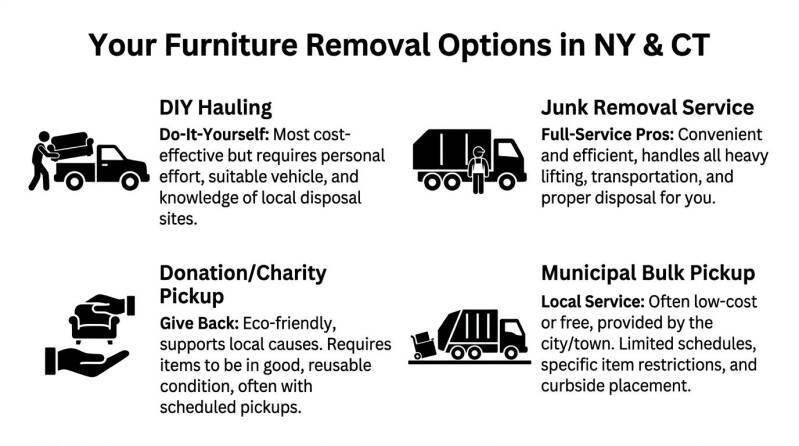
There are four realistic ways to handle hauling away old furniture in this area. Each one works in the right situation. Each one also fails in predictable ways.
DIY hauling
DIY makes sense when the piece is small enough, the path out is simple, and you already have the right vehicle.
A kitchen table with removable legs or a single chair is one thing. A sleeper sofa from a second-floor walk-up is another. The biggest mistake people make is assuming the hard part is disposal. Usually the hard part is getting the item out of the house without hurting yourself or tearing up trim, drywall, or floors.
DIY works best when:
- You have help: Bulky items shouldn't be a one-person job.
- You know the dump rules: Some loads get rejected when mixed materials or prohibited items show up.
- You can disassemble safely: Bed frames, desks, and tables often become manageable once broken down.
DIY is usually a poor fit for estate cleanouts, tight staircases, or anything upholstered that's been sitting in a damp basement.
Donation drop-off or charity pickup
Donation is the best outcome when the furniture is still clean, usable, and structurally sound.
That means no major tears, strong odors, infestation issues, broken frames, or severe water damage. If a dresser works, drawers slide properly, and it presents well, donation may be worth the effort. If a couch is sagging, stained, or questionable, expect rejection.
A lot of people waste time here by trying to donate items that are already at end of life. Charities and reuse centers aren't a workaround for trash.
Good donation candidates still look like something you'd feel comfortable putting in a guest room, rental, or first apartment.
Municipal bulk pickup
This is the option people ask about first because it sounds cheap or free. In practice, it's the least reliable for urgent jobs.
In many NY and CT suburbs, municipal budget cuts have reduced bulk pickup services by as much as 40%, leading to wait times of 2 to 6 weeks, which has pushed a 62% increase in homeowners choosing private same-day hauling when public service falls short, according to this report on junk removal demand and municipal pickup delays.
That lines up with what property owners run into locally. By the time the town can take it, the move has already happened, the closing date is near, or the new tenant is asking when the unit will be ready.
Municipal pickup can still work if:
- Your timeline is flexible: You don't need the item gone this week.
- Your town accepts that item type: Upholstered pieces, mattresses, and oversized items often come with restrictions.
- You can get it to the curb legally and safely: That's harder than it sounds with heavy furniture.
Professional junk removal
This is the most practical route when speed, labor, and building protection matter more than squeezing every dollar out of the job.
Professional crews handle the lift, the carry path, loading, and the disposal routing. That's the biggest difference. You're not just paying for a truck. You're paying to avoid a half-day of labor, potential injuries, disposal confusion, and damage to the property.
For homeowners comparing options, D&B Complete Home Services junk removal services are one local example of a full-service approach in NY and CT, especially for single-item pickups, turnovers, and larger cleanouts.
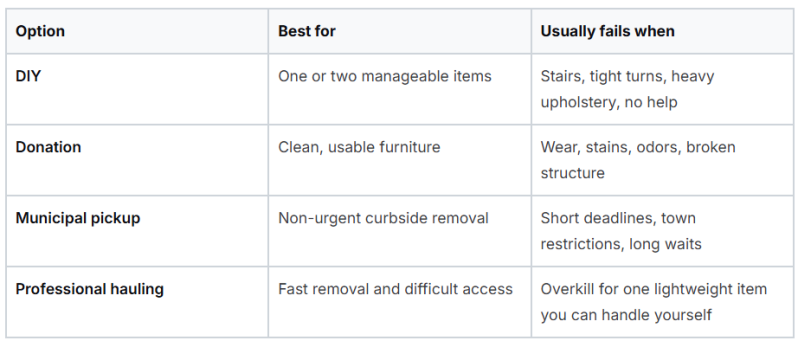
Quick decision guide
How to Prepare Furniture for a Smooth Removal
Good prep saves walls, floors, knuckles, and time. It also makes the quote more accurate and the pickup faster.
Start with a real hazard check
Before anyone lifts, inspect the piece.
Look for loose legs, broken slats, exposed staples, cracked particle board, and hardware that's half-pulled out. Professional crews follow a method that includes assessing hazards, clearing 3-foot-wide pathways, disassembling when needed, and using two-person lifts for anything over 50 lbs. That process leads to over 95% injury-free operations, while improper lifting accounts for up to 30% of household injuries in DIY situations, according to Green Earth Junk's guidance on safe furniture removal.
If something feels unstable, don't “just muscle it.” That's how arms snap off, drawers slide out, and someone ends up pinned on a stair landing.
Clear the route before moving the piece
Most removal delays happen because the path wasn't ready.
Take out rugs, shoe racks, side tables, lamps, and anything hanging into the exit line. Open doors fully. Move vehicles if the truck will need close access. In older homes around Westchester and Putnam, even a few inches can make the difference between a clean carry-out and gouged trim.
Use this basic prep list:
- Measure the furniture: Height, width, and depth matter more than rough guesses.
- Measure the choke points: Doorways, hall turns, stair width, ceiling drops.
- Protect the house: Use moving blankets, cardboard, or foam on sharp contact points.
- Empty the item completely: Drawers, cabinets, and shelving units should never travel loaded.
- Bag or tape loose hardware: Put screws, brackets, and bolts in one labeled bag.
For more practical prep guidance, D&B Complete Home Services shares additional junk removal tips and resources.
Disassemble what needs disassembly
Not every piece needs to come apart. Some absolutely should.
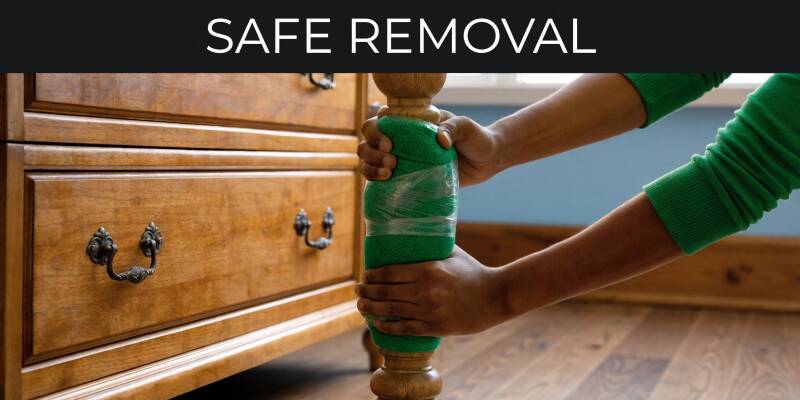
Take legs off tables and sofas when they'll create clearance issues. Remove headboards, rails, and support slats from beds. Separate hutches from lower cabinets. On large desks, detach returns or side pieces if they make the unit too wide to turn.
This walkthrough gives a good visual sense of how pros think through removal:
If the item has glass, mirrors, or brittle veneer, prep matters more than strength. One bad bump can turn a removal into a cleanup.
Estimating Costs and Scheduling Your Pickup
People often compare “free” curb pickup to a paid haul-away and stop there. That misses the true cost.
If you do it yourself, you're spending time arranging help, clearing the route, loading the piece, finding an accepted disposal site, and dealing with whatever happens if the item won't fit, gets rejected, or damages something on the way out. That doesn't always show up on a receipt, but it still costs you.
What professional removal usually costs
The national average for professional furniture removal is around $180 per job, and furniture accounts for 42% of all items removed by junk haulers, according to Sourgum's junk removal statistics roundup.
That average is useful as a benchmark, not a promise. Local pricing usually shifts based on volume, item type, access, and labor difficulty. A first-floor chair near the driveway is a very different job from a waterlogged sectional in a basement with a tight stair run.
What affects your quote
Most haulers price furniture jobs based on some mix of these factors:
- Volume: How much truck space the load takes.
- Labor difficulty: Long carries, stairs, narrow landings, detached parts, or heavy construction.
- Item type: Upholstered pieces, bed sets, office furniture, and mixed loads all create different handling needs.
- Disposal path: Donation, recycling, and landfill routes don't always involve the same process.
Scheduling rule: The more accurate your photos are, the smoother the day-of pickup goes.
Send clear photos from more than one angle. Include the staircase if access is tight. Mention whether the item is assembled, damaged, or in a basement, attic, garage, or commercial suite.
How to book without wasting time
Have this ready when you call or submit a request:
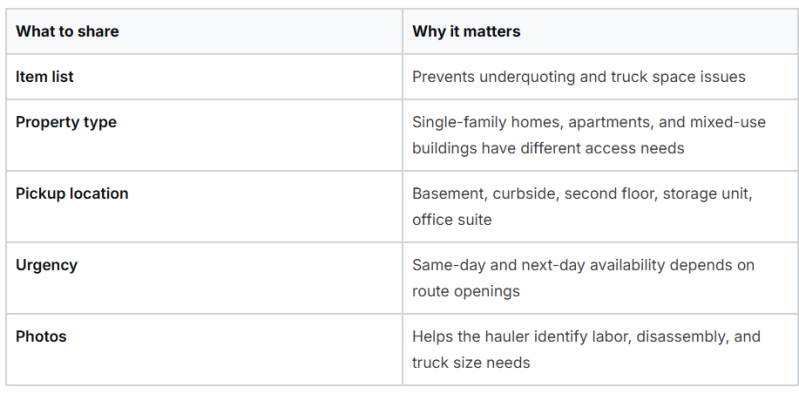
If you need a quote or want to line up a pickup window, the simplest move is to send the details through D&B Complete Home Services contact page.
The Right Way to Donate Recycle or Dispose
Getting furniture out of the house is only half the job. The other half is sending it to the right place.

Donate only what someone can use
A lot of furniture shouldn't be donated, even if you're hoping to keep it out of the landfill.
Good donation items are clean, stable, and ready for reuse without repair. That usually means a dresser with solid drawers, a table with no structural wobble, or chairs with intact frames and clean upholstery. If an item smells musty, has pet damage, has been stored wet, or shows signs of infestation, skip donation and move straight to disposal guidance.
Use a simple standard. If you'd hesitate to put it in a furnished rental or give it to a family member, it probably isn't a donation item.
Recycle what can be separated cleanly
Some furniture is a poor candidate for reuse but still worth breaking down for material recovery.
Metal bed frames, certain wood components, and some clean parts from tables or shelving units may be recyclable depending on local facility rules. Mixed-material upholstered furniture is harder. Foam, fabric, glue, wood, and metal all packed together usually means more sorting work and more rejection risk if the item arrives unsorted.
The easiest recycling jobs are the ones with clear material separation. The worst are damaged upholstered pieces with contamination, moisture, or unknown treatment history.
Be careful with older upholstered furniture
Regarding older upholstered furniture, generic advice often falls apart here.
Up to 85% of older upholstered furniture may contain chemical flame retardants, and improper disposal can create environmental contamination and fines. New York's 2024 ban on PBDEs adds another layer of compliance for handling these materials, according to this summary covering hazardous issues in furniture disposal.
That matters for homeowners. It matters even more for landlords, brokers, and property managers handling abandoned couches, office seating, nursery furniture, and older upholstered items from estate cleanouts.
Don't assume an old couch is just “trash.” With older upholstered furniture, disposal method matters.
A practical sorting order
Use this order when deciding what happens next:
- Reusable first
If it's clean, stable, and presentable, look at donation or direct reuse. - Material recovery second
If reuse isn't realistic but the components can be separated cleanly, explore recycling. - Special handling for questionable upholstery
Treat older upholstered pieces carefully, especially if the history is unknown. - Landfill only when needed
Some pieces are done. The goal is to avoid landfilling furniture that still has a better outlet.
For NY and CT property owners, the safest approach is usually to make the decision item by item, not load by load. A metal frame, a stained sofa, and a solid wood dresser shouldn't all be treated the same way.
A Guide for Property Managers and Real Estate Pros
For landlords, REO teams, and listing agents, furniture removal isn't a side task. It's part of turnover speed.
A room full of leftover furniture delays cleaners, painters, flooring crews, photographers, and showings. In a busy market, that lag costs more than the haul itself.
Where DIY breaks down in turnover work
DIY sounds cheaper until staff loses a day dealing with one unit.
A super, maintenance tech, or office assistant can spend hours arranging labor, moving oversized items, waiting at disposal sites, and circling back for what didn't fit on the first trip. That makes no sense when the unit still needs repair work and the next step is already waiting.
In fast-moving real estate settings, professional junk haulers can complete a full room cleanout in under 2 hours, versus a full weekend for DIY, and that speed matters even more when eviction turnovers have risen by 15% in counties like Orange, according to this overview of junk removal timing and turnover pressure.
Three situations where speed matters most
- Eviction and abandonment turnovers
The priority is clearing access for cleaners, lock changes, repairs, and photos without adding more liability. - Pre-listing furniture removal
Oversized or dated furniture makes rooms photograph smaller and distracts buyers from the layout. - Estate and foreclosure cleanouts
These jobs often mix salvageable pieces, obvious disposal items, and rooms that need immediate contractor access.
What real estate pros should ask for
Not every hauling job is just hauling.
If the property also needs light demolition, repairs, patching, or market prep, coordination matters. Working with separate vendors can create gaps between removal, cleanup, and the next trade coming in. A one-stop operation is useful because the handoff is cleaner and the property gets ready faster.
The best removal job for a property manager isn't the cheapest line item. It's the one that gets the unit ready for the next step without creating two new problems.
For Fairfield, Westchester, Putnam, Dutchess, and Orange work, that usually means looking at access, deadline, item mix, and what has to happen right after the furniture leaves.
Frequently Asked Questions About Furniture Removal
Can I leave furniture at the curb in my town?
Sometimes. Sometimes absolutely not.
Rules vary town by town, and they can change based on item type, pickup calendar, permit requirements, or whether bulk service is currently suspended or limited. Check your local sanitation or public works department before dragging anything outside. If you guess wrong, the furniture may sit there for days or trigger a complaint.
What's the fastest way to remove one heavy item?
If you're in a hurry, a full-service hauler is usually the fastest option.
That matters most for single items that are awkward, upstairs, or too heavy to curb yourself. A lone sleeper sofa or armoire can be more trouble than a whole pile of smaller junk.
Should I donate an old mattress or upholstered couch?
Only if it's clean and acceptable under the receiving organization's rules.
If there's staining, odor, bed bug risk, structural failure, or questionable age and upholstery condition, don't count on donation. For upholstered pieces in particular, older materials may need more careful handling.
What if the furniture has bed bugs or other contamination?
Don't move it through the house without containment planning.
Bag what can be bagged, avoid dragging infested fabric across clean floors, and tell the hauler exactly what they're dealing with. Hidden contamination changes handling and disposal decisions.
Do I need to disassemble furniture before pickup?
Not always.
If the item fits through the path safely, many pickups can happen as-is. But removing table legs, bed rails, glass shelves, or detachable sections can make the job cleaner and reduce the chance of property damage.
If you need help hauling away old furniture in Westchester, Putnam, Dutchess, Orange, or Fairfield, D&B Complete Home Services INC. handles single-item pickups, cleanouts, demolition, and property-prep work for homeowners, landlords, and real estate professionals. Send the item list, photos, and location details, and you can line up the right next step without turning a furniture problem into a bigger project.
Add comment
Comments