Struggling with post-move clutter? Learn how to get rid of cardboard boxes with our guide on recycling, donating, and professional removal in NY and CT.
How to Get Rid of Cardboard Boxes in NY and CT
So, you've got a mountain of cardboard boxes. What now? When it comes to how to get rid of cardboard boxes, you really have three paths you can take. You can recycle them through your local service, give them a second life through donation or repurposing, or just call in a professional junk removal crew for a fast, zero-effort solution.
The right choice really boils down to two things: how many boxes you have and how much time you're willing to spend on the job.
Tackling Your Cardboard Box Mountain
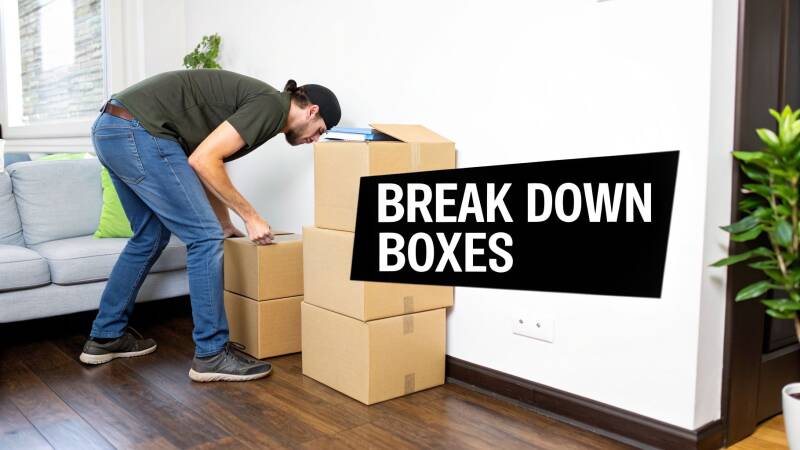
Whether it's the aftermath of a big move or a holiday season filled with online orders, that growing stack of cardboard can get out of hand fast. It takes over your living room, garage, or entryway, making your home feel cluttered and chaotic. The good news? Getting your space back is probably easier than you think.
Your first move, no matter what, is to break down every single box. Flattening your cardboard is the most crucial step. It instantly shrinks that mountain into a manageable stack, freeing up floor space and making the entire pile less intimidating.
Your Best Disposal Options
Once everything is flat, it's time to decide on their final destination. Your main options for getting rid of the cardboard are pretty straightforward, but each has its own pros and cons.
- Local Recycling Programs: Most towns have curbside recycling, and communities in areas like Westchester and Putnam counties make it simple to get rid of standard cardboard.
- Donation and Reuse: If your boxes are still clean and sturdy, someone else can definitely use them. You can pass them on to someone who is moving or even find some clever ways to reuse them yourself.
- Professional Pickup: For huge quantities that would bury your recycling bin or mean several trips to the local drop-off center, a junk removal service is easily the most convenient option.
Choosing the right method is about more than just getting your space back. With over 93% of corrugated cardboard being recycled in the U.S., making a smart choice helps support a massive sustainability effort. Every box you recycle cleanly keeps it out of a landfill and feeds the circular economy.
At the end of the day, you just want the post-move or post-holiday cleanup done without adding more stress to your plate. Whether you're a homeowner in Dutchess County or a property manager in Fairfield County, CT, knowing your options is the key. Let's dive into the specifics of each strategy so you can conquer that cardboard clutter for good.
Prepping Cardboard for Hassle-Free Disposal
Before you can think about recycling, donating, or hauling away that mountain of cardboard, you've got to prep it. This is the single most important part of the process, and skipping it is not an option. Proper prep work is what separates a smooth, easy disposal from a frustrating ordeal, and it’s what ensures recycling centers will actually take your stuff.
First things first: flatten every single box. This is non-negotiable. A pile of intact boxes is a logistical nightmare, but a stack of flattened cardboard is surprisingly manageable. This one simple step radically cuts down the volume. Plus, for any curbside pickup, it's a hard requirement. Unflattened boxes waste precious space in collection trucks and can jam up the machinery at recycling facilities.
Removing Contaminants
With everything broken down, it's time to get the non-cardboard junk off. Recycling plants are incredibly strict about contaminants because things like plastic and metal can ruin a whole batch of paper pulp. You'll need to give each piece a quick once-over.
- Packing Tape: Every bit of plastic tape has to go. A pro tip is to use a small utility knife to lift a corner, which makes it much easier to peel off in a single, satisfying strip.
- Shipping Labels: These plastic or vinyl stickers are a huge no-no. Peel them off completely. Don't sweat it if they leave a sticky residue; a small amount is usually fine.
- Staples: You often find heavy-duty metal staples in moving boxes or appliance packaging. Grab a pair of pliers or a flat-head screwdriver and carefully pry them out.
Think of it this way: you wouldn't cook with dirty vegetables. You wash and peel them first. Same logic applies here. Tape, labels, and staples are the "dirt" that needs to be removed before the cardboard can be processed.
Handling Different Box Types
I've seen it all, and not all cardboard is the same. A stack of boxes from a recent move is usually pretty straightforward, but a pile from an estate cleanout can be a real mixed bag. You have to know what you're dealing with.
The most common offender is waxy or coated cardboard, like the kind used for refrigerated or frozen food boxes. These are typically not recyclable in standard municipal programs because the coating prevents the paper fibers from breaking down. Unfortunately, these usually have to go right into the regular trash.
Once the contaminants are gone and you've sorted out any non-recyclable types, the last step is to bundle everything up. Check your local regulations first—many places, including towns in Dutchess County, NY, or Fairfield County, CT, require you to tie up your flattened cardboard.
Use a natural twine or string to create neat, manageable stacks, often no bigger than 2x3 feet. Never use plastic bags to bundle your cardboard. The bag itself is a contaminant and will get the whole bundle rejected. A proper bundle is easy for sanitation workers to grab and ensures your cardboard actually makes it into the recycling stream. For more advice on dealing with all sorts of household materials, check out our other junk removal tips and resources.
Recycling vs. Composting: The Best Ways to Go Green
Once your boxes are flattened and prepped, you have two great, sustainable options: recycling or composting. Both choices turn cardboard from a pile of clutter into a valuable resource, whether it's used to make new products or to supercharge your garden soil. Getting this step right is a huge win for the environment.
Recycling cardboard makes a massive difference. According to the American Forest & Paper Association, Americans recycled an incredible 93.6% of corrugated boxes in 2022. That’s more than 34 million tons of material that stayed out of landfills. Your simple act of putting a clean, flat box in the bin makes you part of that success story.
Getting Recycling Right: The Local Rules
While recycling sounds simple, the rules can vary from one town to the next. The one rule that never changes is that your cardboard must be clean and dry. Moisture ruins the fibers, making them useless for recycling. Grease or food residue is even worse—the oils can't be separated from the paper pulp and can contaminate an entire batch.
This brings us to the classic recycling dilemma: the pizza box. That greasy bottom half is a definite no-go for the recycling bin. If the top is clean, just tear it off and recycle that part. The greasy section, however, has to go somewhere else.
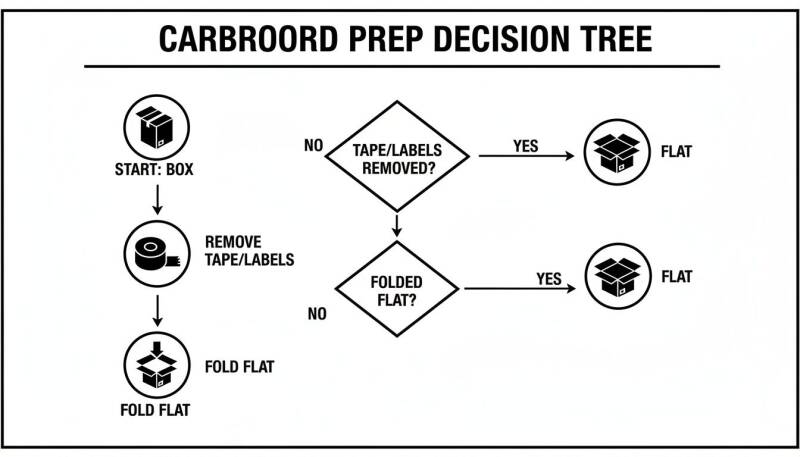
As you can see, a little prep work goes a long way. Taking a moment to remove contaminants and flatten your boxes is the key to successful recycling.
Turn Cardboard into "Black Gold" with Composting
So what do you do with the cardboard you can't recycle? Think greasy pizza box bottoms, small torn pieces, or wax-coated boxes. Composting is your answer. In a compost pile, cardboard is a fantastic source of carbon, or "brown" material. This is crucial for balancing out the nitrogen-rich "green" materials, like your kitchen scraps and grass clippings.
Pro Tip: A healthy compost pile needs a good mix of greens and browns. Adding shredded cardboard soaks up extra moisture and improves airflow, preventing your pile from turning into a slimy, stinky mess. It helps create the perfect home for all those beneficial microorganisms doing the hard work.
For cardboard to break down efficiently, you have to give it a head start by breaking it into smaller pieces. A larger surface area means a much faster decomposition time.
- Shred it: If you have a heavy-duty paper shredder, this is the fastest and easiest way.
- Tear it: Don't have a shredder? No problem. Just soak the cardboard in water for about ten minutes. It will become soft and incredibly easy to tear into small, compost-ready strips by hand.
- Mix it in: Once it's torn up, layer the cardboard with your green materials. I like to think of it as making lasagna—alternating layers will give you the best results.
By composting your non-recyclable cardboard, you’re not just ditching waste. You’re creating a nutrient-packed amendment for your garden, closing the loop right in your own backyard.
Giving Your Boxes a Second Life Through Reuse and Donation
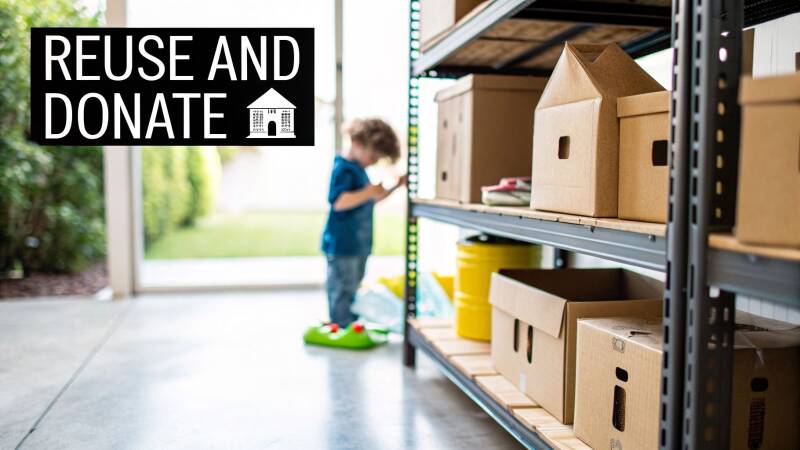
Before you flatten that entire mountain of cardboard, pause for a minute. Those high-quality moving boxes and sturdy product packages often have a lot more life left in them. Giving them a second chance is one of the best ways to clear out your space, help someone else out, and cut down on waste all at once.
Your pile of leftover boxes isn't a disposal problem. It's a goldmine of raw materials for organization, creativity, and community goodwill. You just have to shift your perspective.
Get Creative with Repurposing at Home
You don't have to be a DIY guru to find some surprisingly practical uses for old boxes right in your own home.
- Tame the Garage and Attic: Got a bunch of boxes that are roughly the same size? They're perfect for organizing holiday decorations, tools, or old paperwork. Just grab a thick marker and label them clearly so you're not digging through ten boxes next winter looking for the string lights.
- Build a Kid's Kingdom: A few large appliance boxes are the foundation for an incredible afternoon. They can become a castle, a spaceship, or a secret fort. Smaller boxes are great for all kinds of crafts—think robot costumes, dioramas for school projects, or even custom-built doll furniture.
- A Gardener's Secret Weapon: This is one of my favorite tricks. Flattened cardboard makes a fantastic, chemical-free weed barrier. Just lay it down directly on the soil in your garden beds, overlap the edges, and cover it with a thick layer of mulch. It smothers weeds and slowly decomposes, enriching the soil over time.
This way, you can figure out how to get rid of cardboard boxes without them ever leaving your property.
Think of it this way: every box you reuse is one less item you need to buy. Turning a sturdy box into a storage container is not just eco-friendly; it's budget-friendly, too.
Finding a New Home Through Donation
If you've got more boxes than you can possibly use, donating them is a fantastic move. Trust me, someone in your neighborhood is always on the hunt for free, sturdy boxes. Moving is expensive, and saving money on supplies is a huge help for a lot of people.
To make sure your boxes find a good home, presentation matters. Keep them clean and dry, flatten them, and bundle them together with some twine. This makes it easy for someone to just grab them and go.
So, where can you list your boxes?
- Online Community Groups: This is usually the fastest route. Post a free listing on Facebook Marketplace, Freecycle, or your local Buy Nothing group. These platforms are crawling with people who are actively looking for moving supplies.
- Local Charities and Food Banks: Organizations in areas like Orange County and nearby communities often need boxes for packing and distributing donations. It's always smart to call them first to see what their current need is.
- U-Haul Box Exchange: Not everyone knows about this, but U-Haul runs a great customer connect program on their website. You can post your available free boxes, and people in your area who need them can find your listing and arrange a pickup.
When you pass your boxes along, you're not just decluttering. You're participating in a small but meaningful act of community support, saving someone money while keeping perfectly good materials out of the landfill.
When It’s Time to Call in the Pros for Cardboard Removal
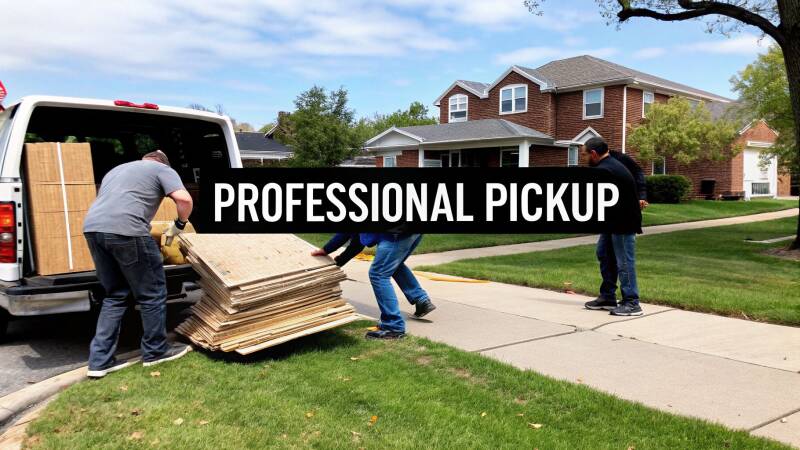
While recycling and donating are fantastic for a handful of boxes, let's be honest: sometimes the sheer volume is just overwhelming. This is when getting rid of cardboard boxes morphs from a simple task into a major project.
For homeowners staring at a mountain of boxes after a move, or businesses unpacking a massive shipment, there’s a definite tipping point where DIY disposal just isn’t practical. If your car is too small for the flattened pile or you're facing multiple trips to a crowded recycling center, it’s a good sign you need backup. Your time is valuable, and a weekend spent hauling cardboard can be more costly than you realize.
Scenarios That Scream "Get Help"
Some situations almost always call for professional assistance. It's not about taking the easy way out; it’s about being smart with your time and energy when a job outgrows your personal resources.
- The Post-Move Mountain: You did it. You unpacked your entire life. The last thing you want to do is spend another day breaking down and hauling the hundreds of boxes now crammed into your garage.
- Property and Estate Cleanouts: We see this constantly. Real estate agents and property managers in places like Fairfield County, CT, or Dutchess County, NY, know the drill. A tenant turnover or an estate clearing can leave a staggering amount of cardboard that has to disappear—fast.
- Commercial and Retail Overload: Opening a new store or receiving a large inventory shipment can create a literal wall of cardboard. Keeping your business space clear and safe is the top priority, making quick, efficient removal a must.
The true cost of DIY bulk disposal isn't just your time. It's the fuel for multiple trips, the physical strain of loading and unloading, and the sheer frustration of it all. A professional service is a clean, one-and-done solution.
Deciding on the Best Path: DIY vs. Professional
When you're buried in boxes, it can be tough to know whether to tackle it yourself or hire a service. This quick comparison should help you decide which route makes the most sense for your situation.
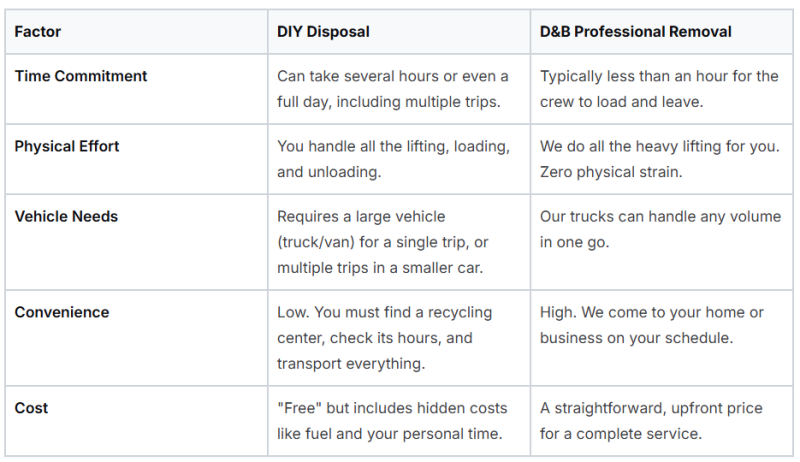
Ultimately, if the "DIY Disposal" column looks like a major headache, it's a clear signal that professional help is the more efficient and stress-free option.
The Clear Advantage of a Professional Service
Hiring a team like D&B Complete Home Services INC. completely changes the game. Instead of you doing all the work, our crew shows up, loads everything, and hauls it all away in a single visit. We handle everything from residential pickups in Westchester to large-scale commercial clear-outs in Orange County. It’s the definition of a hands-off approach.
This efficiency is a game-changer for property managers and landlords who need to get units ready for new tenants on a tight schedule. A professional service guarantees your bulk cardboard is gone right away and, just as importantly, is recycled properly. This has a huge positive impact, as recycling just one ton of cardboard saves over nine cubic yards of landfill space. To see the full environmental journey, you can explore the details on cardboard recycling at Greenmatch.
When a situation feels overwhelming, the right help provides more than just muscle; it delivers peace of mind. To see how we can help you reclaim your space without the hassle, learn more about our full-service junk removal options.
Your Cardboard Box Disposal Questions Answered
Even after you’ve broken down a mountain of boxes, a few nagging questions always seem to remain. It's easy to get bogged down in the details, especially when you're just trying to do the right thing without causing a headache for yourself or your local sanitation crew.
We get these kinds of questions all the time from homeowners staring at a garage full of cardboard. Let's clear up some of the most common ones.
Can I Recycle Pizza Boxes or Greasy Cardboard?
Ah, the pizza box. The ultimate recycling dilemma. The short answer is almost always no. Grease and food residue are the arch-nemeses of paper recycling. Once that oil soaks into the cardboard fibers, it can't be separated out, and it can contaminate an entire batch of recycled pulp.
But all is not lost! If the top lid of the box is totally clean and grease-free, go ahead and tear it off. That part can go right in the recycling bin. The greasy bottom half, however, belongs in the trash. Or, if you're a composter, you can tear it into small pieces and add it to your compost pile as a "brown" material.
Key Takeaway: When it comes to recycling, the golden rule is "clean and dry." Any food or grease contamination can get your whole bin rejected at the curb.
What Should I Do with Wet Cardboard Boxes?
Ever left a stack of flattened boxes outside, only to have a surprise rainstorm turn them into a soggy mess? Wet cardboard is a huge headache for recycling facilities. The moisture breaks down the paper fibers, making them weak and much less valuable for creating new products.
Worse yet, that mushy cardboard can gum up the sorting machinery at the plant, leading to expensive shutdowns and repairs.
Your best move is to let the boxes dry out completely before you bundle them for pickup. If a box is just too far gone—soggy, falling apart, or starting to get moldy—it's safer to just put it in your regular garbage. This prevents it from spoiling the rest of the clean recycling stream.
Is It Better to Burn Cardboard Instead of Recycling It?
Absolutely not. Please don't do this. Burning cardboard in a backyard fire pit might seem like a quick fix, but it's a surprisingly bad idea. Most boxes are held together with industrial glues and are often covered in inks or have plastic tape still attached.
When these materials burn, they can release harmful chemicals into the air. It’s a health hazard for you, your family, and your neighbors. The only truly safe and responsible options are recycling, reusing, or composting. If you're unsure about the best way to handle certain household materials, you can always find a professional's contact information to ask for guidance.
My Local Recycling Won't Take All My Boxes—What Now?
This happens all the time, especially after a big move or a spring-cleaning project. Many city or county services have strict limits on how many boxes they’ll take in a single curbside pickup. When you have a massive pile, you're often left with a few options. You could stuff your car and make multiple trips to a local recycling center, but that’s a real hassle.
For large volumes of cardboard, hiring a junk removal service is by far the most convenient solution. A professional crew can show up and clear out every last box in one quick trip. You don't have to worry about loading, driving, or unloading—it just disappears.
When the cardboard pile is just too big, D&B Complete Home Services INC. offers the fastest and most reliable solution. We handle all the heavy lifting and ensure your boxes are properly recycled, so you can reclaim your space without the stress. Schedule your pickup today!
Add comment
Comments