Tired of that branch pile? Learn how to handle tree trimmings disposal in NY and CT with our guide on composting, municipal rules, and pro removal.
A Homeowner's Guide to Tree Trimmings Disposal in NY & CT
You’ve done the hard work of trimming the trees, but now what? That big pile of branches in your yard isn't going anywhere on its own.
When it comes to tree trimming disposal, you really have three main paths you can take. You can go the do-it-yourself route with chipping or composting, rely on your town's curbside program, or hire a professional service to make it all disappear. Which one is right for you boils down to the size of the pile, your budget, and how much sweat equity you're willing to put in.
What to Do With That Pile of Branches
After a major pruning session or cleaning up after a storm, that mountain of debris can feel more intimidating than the actual yard work. I’ve seen it time and again with homeowners across Westchester, Putnam, and Fairfield counties—they’re left staring at a tangled mess, wondering where to even start.
The good news is that you have some very practical options. This flowchart breaks it down nicely, helping you see the decision-making process at a glance.
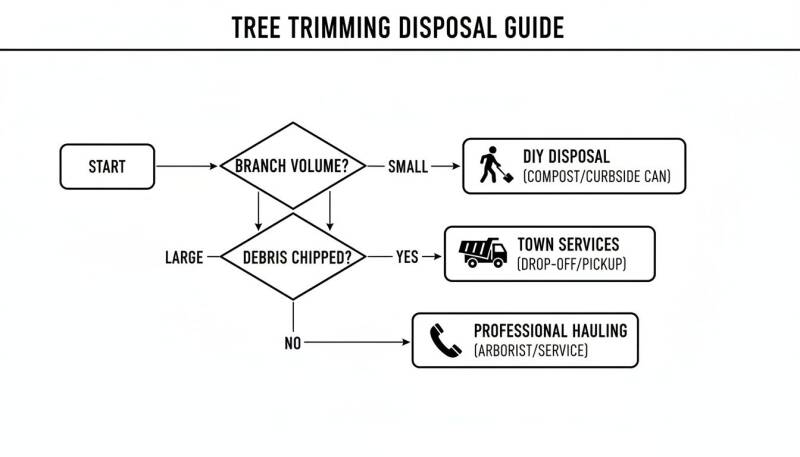
As you can see, the volume of debris and whether you can process it yourself are the key factors. Getting this choice right from the start saves a lot of headaches—and helps you avoid potential fines from improper disposal.
Comparing Your Disposal Options
To help you decide, let's lay out the pros and cons of each method. This quick-glance table compares the typical costs, effort involved, and the best-case scenarios for each approach.
Tree Trimming Disposal Options at a Glance
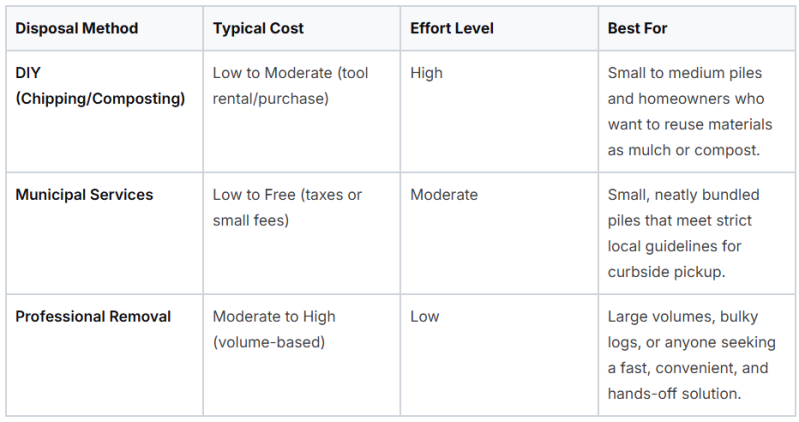
Ultimately, choosing the right path depends on your specific situation. A few neatly tied bundles are perfect for the curb, but a massive pile from a full tree removal is a job for the pros.
My Pro Tip: When you call for a professional removal quote, be ready to describe the pile's size (e.g., "it would fill the bed of a pickup truck") and location. A pile right on the driveway is always easier and cheaper to haul away than one tucked away in a sloped, hard-to-reach corner of the backyard.
It’s no surprise that more and more people are turning to professional services. The convenience is just hard to beat. In fact, the residential tree services market in North America was valued at $16.34 billion in 2025 and is on track to hit $21.34 billion by 2032. This growth shows just how much homeowners value expert help for jobs like this. If you’re interested, you can explore more data on the tree services market to see the trends for yourself.
The DIY Approach to Managing Tree Debris
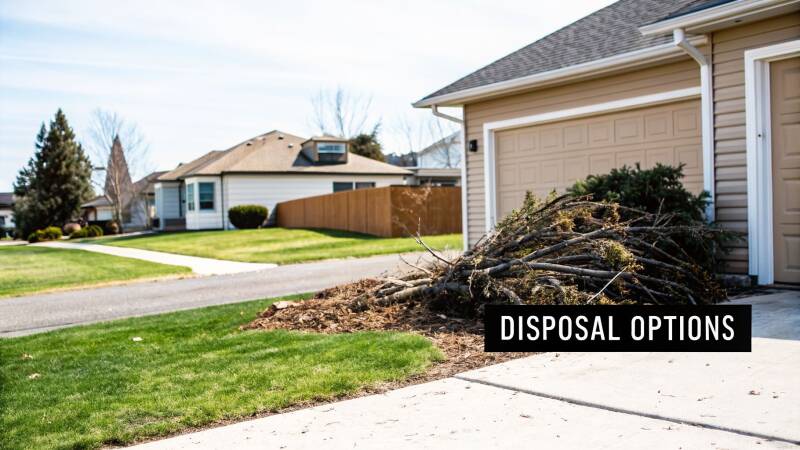
So you've done the hard work of trimming, and now there’s a small mountain of branches sitting on your lawn. If you're up for a little more work, tackling the disposal yourself can be incredibly satisfying. You get to turn that debris into something useful for your property, all on your own schedule.
Instead of coordinating with a removal service or waiting for the town's pickup day, you're in full control. Let's walk through the most practical ways to handle it.
Composting Woody Materials
Composting your branches is a fantastic, zero-waste solution, but it’s a long game. Woody debris is considered a carbon-heavy "brown" material in the composting world, meaning it breaks down much, much slower than "green" stuff like grass clippings. The key is to manage the process actively.
To get quality compost without waiting for years, you’ll need to do a few things:
- Shred or Chip First: This is non-negotiable. Whole branches simply won't decompose in a reasonable timeframe. You need to run them through a chipper or shredder to create small pieces, ideally no bigger than an inch or two. This gives microbes way more surface area to start working.
- Balance Your Browns and Greens: Wood chips on their own will just sit there. For every one part of wood chips, you'll want to add two or three parts of nitrogen-rich "greens" like fresh grass clippings, coffee grounds, or kitchen vegetable scraps.
- Keep It Damp: Your compost pile needs to stay consistently moist, about as damp as a wrung-out sponge. If it dries out, the decomposition process grinds to a halt.
- Turn and Aerate: Use a pitchfork to turn the entire pile every week or two. This injects crucial oxygen that the beneficial microorganisms need to thrive and break down the material.
A healthy, active compost pile will start to heat up, often hitting internal temperatures of 130-160°F. That heat is your friend—it speeds up decomposition and kills off any lingering weed seeds or plant pathogens. For more smart strategies on handling different kinds of household waste, check out our junk removal tips and resources.
Renting or Buying a Wood Chipper
If you have a larger property or find yourself dealing with branches every year, a wood chipper can be a fantastic investment. It turns a bulky, awkward pile of branches into a uniform mound of valuable wood chips in a matter of minutes.
A Personal Takeaway: From my experience, renting a chipper is the smartest move for a one-off cleanup. You can usually get a decent machine for a weekend for $100 to $200. That’s a fraction of the cost of buying a residential model, which can easily run from $600 to over $2,000.
Safety is paramount when operating a wood chipper. These are powerful machines. Always wear safety glasses and thick gloves. Never try to force-feed branches into the chute, and keep your hands, hair, and any loose clothing far away from the intake. The payoff is a ready supply of mulch that’s perfect for garden beds, helping soil retain moisture and keeping weeds down.
Burning Tree Trimmings: What You Must Know
Burning might feel like the fastest and easiest way to make a brush pile disappear, but it's a huge "maybe" at best. Here in our New York and Connecticut service areas, open burning is heavily regulated and, in many towns, completely illegal.
Local fire departments and municipalities have very strict rules to prevent air pollution and, of course, accidental fires.
Before you even think about striking a match, your first call must be to your local fire marshal and town hall. Many communities have a total ban on burning yard waste. In places where it is allowed, you will almost certainly need a permit and have to follow rigid guidelines about wind conditions, distance from buildings, and the size of the burn pile. Getting caught burning illegally can lead to some pretty hefty fines. It’s not worth the risk.
Navigating Your Town's Yard Waste Rules
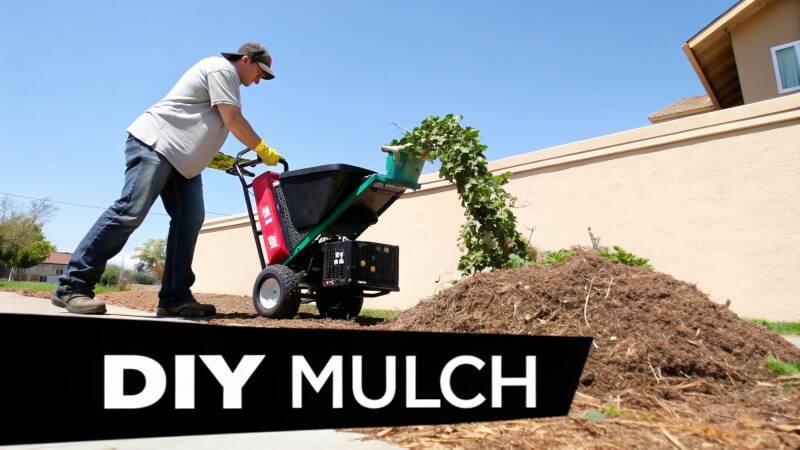
You might think your town's yard waste program is the easiest way to get rid of tree trimmings, but it's rarely that simple. From Westchester to Fairfield County, every municipality has its own unique playbook for curbside pickup and drop-off, and the rules can be surprisingly specific.
I’ve seen it happen plenty of times: a homeowner spends hours neatly stacking branches, only to have the pile left behind with a warning notice—or worse, a fine. The key to avoiding that headache is taking a few minutes to understand your local guidelines before you even start piling.
Decoding Curbside Pickup Rules
Curbside collection is the go-to for most people, but this is where the details really matter. Your town's Public Works Department (DPW) has these rules for a reason—they ensure their crews and equipment can handle the material safely and efficiently. A quick visit to your town's website is your first, and most important, step.
You'll almost always find strict regulations on how to prepare your debris. Pay close attention to these common requirements:
- Bundling Requirements: Branches typically need to be bundled with biodegradable twine. Expect a maximum bundle diameter of 18-24 inches and a weight limit, usually under 50 pounds.
- Branch Dimensions: This one gets a lot of people. Most towns won't take branches longer than 3-4 feet or thicker than 3-4 inches in diameter. Anything larger will likely be rejected on the spot.
- Containers: Loose debris like twigs and leaves often must be in biodegradable paper bags. Plastic bags are a universal "no" for yard waste. Some towns might even provide special bins.
- Collection Schedules: Pickup is almost always seasonal, usually running from spring through fall. Make sure you know the exact start and end dates, as well as any holidays that might throw off the schedule.
These municipal programs have become more critical as residential landscaping has grown, particularly with the rise of urban forestry initiatives. In fact, North America's residential tree services market accounted for 36.2% of the global share in 2025, partly driven by these government greening programs. You can read the full market analysis on residential tree services to see how these trends are shaping disposal needs.
Using Local Transfer Stations
So, what happens if your branches are too big or you missed pickup day? Your local transfer station or recycling center is your plan B. This is the DIY hauling option, but it comes with its own set of procedures.
I talked to a homeowner in Dutchess County who learned this the hard way. He drove to his local transfer station only to find out he needed a permit, had to pay a fee based on his truck's size, and that his load of mixed branches and an old painted fence post wasn't allowed.
Before you load up the truck, always call ahead or check the website to confirm:
- Permit and Fee Requirements: Do you need an annual resident permit? Is there a charge per visit?
- Accepted Materials: Will they take large logs and stumps, or is it only for smaller branches? Do they have separate piles for "clean wood" versus general yard waste?
- Vehicle Restrictions: Are there limits on the size of your truck or trailer?
A little bit of homework here can save you from a completely wasted trip and the frustration of being turned away with a full load.
When to Hire a Professional Disposal Service
While tackling yard work yourself is satisfying, there’s a tipping point with tree debris. Sometimes, the sheer scale of the cleanup calls for bringing in the pros. This isn’t about giving up; it’s about choosing the safest, fastest, and most responsible way to get your property back in order.
Knowing when to make that call can feel like a judgment call. A few branches from some light pruning? You’ve got that covered. But when a major storm leaves a disaster zone in your yard, or a big tree removal project creates a mountain of wood, the job can quickly become overwhelming.
Situations That Call for a Pro
Some scenarios are a clear signal that it's time to hire a professional disposal service. If you find yourself in any of these situations, picking up the phone is almost always the right move.
- Massive Volume: The simplest rule of thumb is this: if the pile of debris is bigger than what you could fit in the bed of a standard pickup truck, it's time for professional help. We're equipped to handle volumes that would mean multiple, time-consuming, and potentially expensive trips to the dump for you.
- Heavy Logs and Stumps: Don't underestimate the danger here. Trying to lift and move heavy logs is a classic recipe for a serious back injury. Our crews use the right equipment and proper lifting techniques to haul heavy wood safely, saving you from a world of pain.
- Tight Deadlines: Do you have a graduation party or a real estate showing this weekend? You can't beat the speed of a professional service when you need the debris gone fast. We can often clear an entire property in just a few hours—a job that could easily eat up your whole weekend.
- Accessibility Issues: Is the brush pile at the bottom of a steep hill, in a muddy part of the yard, or just a long way from the driveway? We have the gear and the experience to retrieve trimmings from those hard-to-reach spots without tearing up your lawn.
I remember a job we did in Westchester County right after a nasty thunderstorm. Three huge oak limbs had come down, landing across a steep, wooded slope in the client's backyard. The sheer weight and awkward location made it a non-starter for them. Our crew was able to get in, safely section the limbs, and haul everything away in less than two hours.
Preparing for Your Removal Service
To make the whole process as smooth as possible and to get the most accurate price, a little prep work on your end goes a long way. When you call a service, being ready with some key details helps us give you a solid, upfront quote.
Try to describe the pile in terms of volume. Is it "a small pile, about waist-high and a few feet wide," or is it "a massive heap that would fill a one-car garage"? Even better, just snap a quick photo with your phone and text it over. Also, let us know where it is—a pile at the end of the driveway is a much quicker (and therefore less costly) removal than one tucked away behind a shed.
This kind of information gives us a clear picture of the job before we even arrive. For homeowners and property managers who need a reliable cleanup solution, this is exactly what our junk removal services are built for.
Hiring a professional service also has a major environmental upside. We have established relationships with commercial recycling centers that process wood waste into valuable resources, like high-quality landscape mulch or biomass fuel. This is a much greener path than sending it to a landfill, where it would just rot and release methane gas. So when you hire a pro, you’re not just clearing your yard—you’re making a smarter choice for the local environment.
Why Eco-Friendly Disposal Is a Smarter Choice
That pile of branches gathering by your curb might look like a nuisance, but it’s really a valuable organic resource just waiting to be used. What many homeowners don't realize is that when tree trimmings end up in a landfill, they cause a real environmental headache.
Buried under heaps of other garbage and starved of oxygen, the branches and leaves can't decompose properly. Instead, they break down anaerobically and release methane—a greenhouse gas that’s over 25 times more potent than carbon dioxide when it comes to trapping heat in our atmosphere. Choosing a greener way to dispose of your yard debris is about more than just checking a box; it’s about making a direct, positive impact right here in our community.
Turning Waste into a Resource
The most rewarding way to handle tree debris is often right in your own backyard. By composting or chipping your trimmings, you can create nutrient-packed amendments that will make your soil and plants healthier than ever.
- Compost: When you shred smaller branches and mix them with "green" materials like kitchen scraps or fresh grass clippings, they break down into a dark, rich humus. This stuff is garden gold, feeding your plants and cutting down on the need for chemical fertilizers.
- Mulch: Chipping larger branches gives you a ready supply of wood chips. Spreading a layer of this mulch around your trees and garden beds is a game-changer. It helps the soil hold onto moisture (meaning less watering for you), keeps weeds from sprouting, and protects roots from extreme temperatures.
You're essentially closing the loop. The nutrients your trees worked so hard to pull from the ground are returned right back where they came from. It's the ultimate sustainable cycle, and it happens right in your own yard.
The Bigger Picture of Professional Recycling
What if you have too much debris for a DIY project? When you hire a professional removal service, you're not just getting rid of a problem—you're plugging into a large-scale recycling network that gives your branches a second life.
Instead of being hauled to a landfill, your trimmings are taken to commercial processing facilities. There, they're transformed from "waste" into essential products we use every day.
These operations convert clean wood debris into:
- High-quality landscape mulch sold at garden centers
- Certified safe playground surfacing materials
- Biomass fuel to generate renewable energy
This kind of professional tree trimmings disposal is a critical piece of the sustainability puzzle. Globally, we cut down around 15 billion trees each year, but only replant about 5 billion. Responsibly managing every branch we trim helps turn a potential waste product into a valuable commodity, easing the immense pressure on our landfills and forests. You can explore more on global tree cover trends on statista.com.
Common Tree Trimming Disposal Questions Answered
Even after you've made a plan, some specific situations always seem to pop up and leave you wondering what to do. We get calls all the time from homeowners across New York and Connecticut with these exact questions. Here are the clear, practical answers we give them.
Can I Dispose of Diseased Branches with Regular Yard Waste?
This is a big one, and the short answer is an emphatic no, you should not. Tossing branches from a diseased oak, ash, or maple tree into your regular pile is a recipe for disaster.
If you compost or make your own mulch, those pathogens can easily survive the process. Before you know it, you’ve spread them all over your healthy plants and shrubs. It's why many NY and CT municipal programs explicitly ban diseased wood—they're trying to prevent the spread of things like oak wilt and emerald ash borer.
The safest play is to keep diseased branches completely separate from everything else. When you call a professional removal service, be sure to mention you have contaminated wood. A good crew will know exactly how to handle and dispose of it properly to avoid any environmental harm.
How Much Does Professional Disposal Cost in NY and CT?
When it comes to professional disposal, the price almost always comes down to volume. It's simple: how much space will your pile of branches take up in the truck? A small, manageable stack is going to be cheaper than a massive debris pile from a major storm cleanup.
The other big factor that sways the cost is accessibility.
- Easy Access: A pile of branches right on the driveway is a straightforward, quick job. This is the most affordable scenario.
- Difficult Access: If the debris is scattered across a steep backyard, tucked behind a fence, or just far from the road, it takes our crew more time and labor to haul it out. That extra effort will be reflected in the price.
The easiest way to get an exact price is to just snap a photo of the pile and send it over. We can give you a free, no-obligation quote based on a picture or a quick look in person. That way, you get transparent, upfront pricing with no surprises.
What Is the Most Cost-Effective Way to Get Rid of a Huge Branch Pile?
If you're staring at a mountain of branches, "cost-effective" is about balancing your money, time, and physical effort. Renting a huge wood chipper might seem like a good idea, but it can get pricey ($200-$400+ per day) and it’s incredibly labor-intensive work. City pickup is cheap, but their strict limits on volume and size often make it a non-starter for big jobs.
For really large piles, hiring a professional junk removal service is often the most practical and efficient solution. We can clear what would take you multiple weekends and countless trips to the transfer station in a single visit. When you factor in your time and potential rental costs, it's often more affordable than you'd think.
What Tree Trimmings Can a Removal Service Not Take?
A professional service can haul away nearly any organic yard waste you have—branches, logs, stumps, leaves, and general brush. The single most important rule is to keep it separate from non-organic junk.
Try to avoid mixing your branches and leaves with things like:
- Household garbage
- Plastic pots or bags
- Rocks, soil, or sod
- Old treated lumber or construction debris
If your pile is already a mix of yard waste and other junk, don't worry! Just give us a heads-up when you call. We can absolutely still take it all. Knowing in advance just helps us plan for proper sorting so we can recycle everything correctly. It's just as important to handle other junk properly; you can read more in our guide on how to dispose of old lawn equipment.
Whether you’re cleaning up a small pruning job or dealing with the aftermath of a big storm, D&B Complete Home Services INC. has the team and tools to get your tree trimmings hauled away quickly and responsibly. Contact us today for a free, no-obligation quote and get your yard back. Visit us at https://www.dbcompletehomeservices.com.
Add comment
Comments