Learn how to dispose of yard waste with our expert guide. Discover smart ways to handle leaves, branches, and grass, from composting to curbside rules.
How to Dispose of Yard Waste The Smart Way
After a weekend of hard work, a well-manicured yard often leaves behind a not-so-pretty problem: piles of leaves, branches, and grass clippings. So, what do you do with it all? Your main options usually boil down to your town's curbside pickup, starting a home compost pile, hauling it to a local drop-off site, or hiring a pro for the really big jobs. The right choice really just depends on what you have and how much of it there is.
Your Guide to Smart Yard Waste Disposal
There’s nothing quite like the satisfaction of a freshly tidied yard. But the aftermath—those heaps of leaves, pruned branches, and mounds of grass clippings—can be a genuine headache. Figuring out how to get rid of it all is more than just a matter of neatness. It’s about following your local rules and, just as importantly, doing right by the environment.
When yard waste gets tossed into the regular trash and sent to a landfill, it decomposes without oxygen and produces methane, a potent greenhouse gas. Thankfully, you've got better options. This guide breaks down the most practical solutions, whether you’re dealing with a single bag of clippings or a mountain of debris from a storm.
Understanding Your Options
The first thing to consider is volume. Are we talking about a small, manageable amount, or a huge, overwhelming load? Your answer will point you in the right direction.
To make it simple, think of it this way:
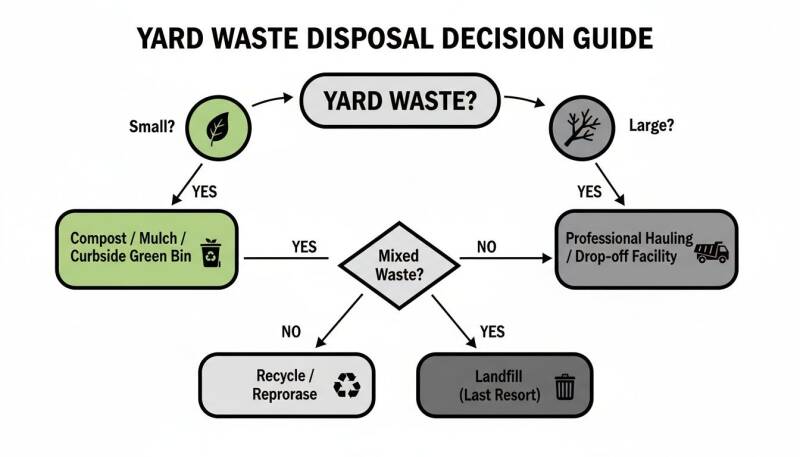
As you can see, smaller amounts of clean yard trimmings are perfect for DIY solutions like composting or using your municipal curbside service. But when the piles get big, a trip to a transfer station or calling in professional help is often the only realistic path. Choosing the right approach from the start will save you a ton of time and effort.
If you're tackling a major clear-out, you might find some useful strategies in our other junk removal tips and resources.
A Quick Comparison of Your Choices
To help you weigh your options, here’s a quick look at the most common disposal methods. Think about what matters most to you—convenience, cost, or environmental impact—to find the best fit for your situation.
Yard Waste Disposal Methods at a Glance
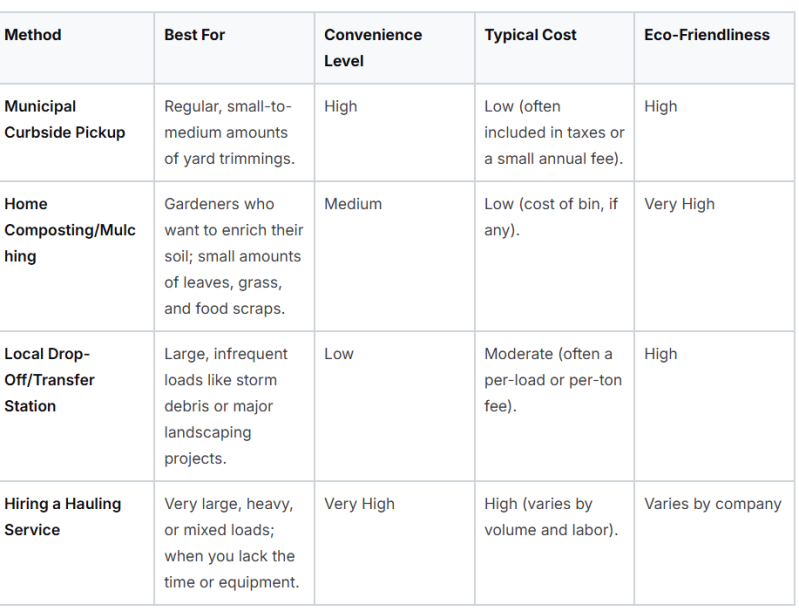
Each method has its place. For routine maintenance, nothing beats the ease of curbside pickup or the satisfaction of creating your own compost. For those bigger, one-off jobs, the cost of a hauling service or a trip to the drop-off center is often well worth it.
The Shift Toward Sustainable Practices
Over the past few decades, the way we handle organic waste has changed dramatically. What used to be seen as trash destined for the landfill is now recognized as a valuable resource, thanks largely to new environmental regulations and a growing public awareness.
Back in 1990, yard trimmings made up a staggering 35 million tons of the waste going into our landfills. Fast forward to 2018, and that picture looks much different. Thanks to state-level bans and a boom in composting, 22.3 million tons of that material was successfully recovered and composted instead.
That's a 63% success rate for composting programs nationwide—a huge win for our environment. This isn't just a trend; it's a fundamental shift in understanding that grass, leaves, and branches are resources, not garbage. By choosing one of these smarter disposal methods, you're doing your part to turn potential waste into something genuinely useful.
Getting to Know Your Town's Curbside Collection Game
Using your town’s curbside pickup is, without a doubt, the most straightforward option for everyday yard cleanup. But don't be fooled—it’s rarely as simple as just dragging your bags to the curb. Every town, from Putnam and Westchester in New York to across Fairfield County in Connecticut, plays by its own rulebook.
And you really do want to follow those rules. I’ve seen it a hundred times: a homeowner puts out their waste the wrong way and the truck just rolls on by, leaving them with a pile of leaves and a warning notice—or even a fine. Knowing the local requirements is the secret to making sure your yard waste actually disappears on pickup day.
The Art of Bagging and Bundling
Most of the time, when a pickup gets skipped, it comes down to how the waste was packaged. Towns have these rules for a reason: they keep the collection crews safe and the whole operation running smoothly.
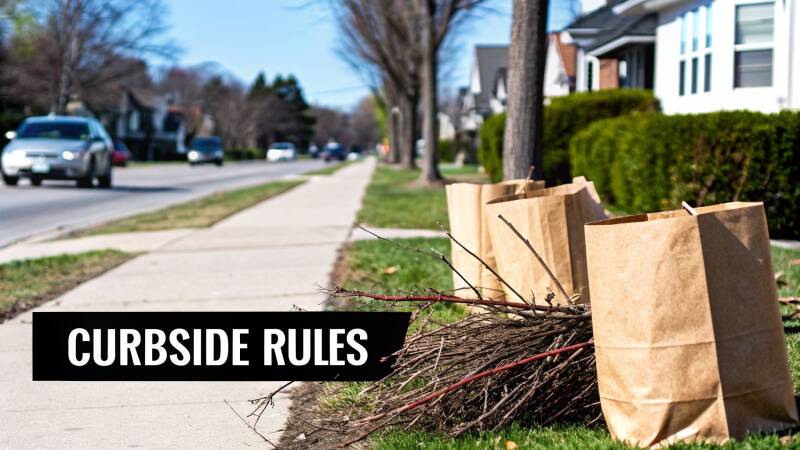
- Paper Bags are King: If there's one rule you'll see almost everywhere, it's the ban on plastic bags. Most towns in the Hudson Valley and Connecticut require you to use those big, brown biodegradable paper bags. The reason is simple: the bags can be thrown right into the compost pile with the leaves and grass, while plastic contaminates the whole batch.
- Don't Ignore the Weight Limit: It’s tempting to stuff a bag until it’s bursting, but resist the urge. There’s almost always a strict weight limit, usually around 50 pounds. A bag that’s too heavy is a major safety risk for the workers who have to lift hundreds of them a day. They will leave it behind.
- Taming Your Branches: When it comes to branches and brush, you can’t just throw them in a pile. You’ll need to cut them down to a manageable length, which is typically 4 feet or less. Then, tie them up with twine into neat bundles. Also, keep an eye out for diameter limits—most towns won't take anything thicker than 3-4 inches.
Think of it like you're packing a box to mail. It has to be secure, not too heavy, and sized just right.
Timing is Everything: Schedules and Special Pickups
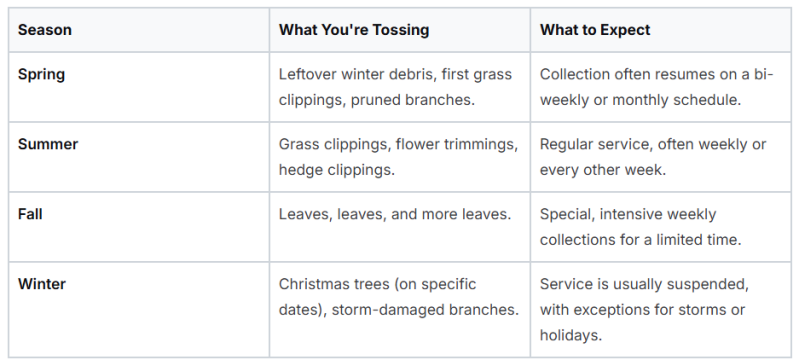
Unlike your regular trash, yard waste collection is rarely a year-round, weekly thing. The schedule ebbs and flows with the seasons, matching the rhythm of your yard work.
Your first step should always be to find the official schedule. Just search online for something like "[Your Town Name] yard waste calendar" or "[Your County] DPW," and you'll usually find what you need. Pin it to your fridge or set a reminder on your phone.
One of the most common mistakes is assuming yard waste day is the same as your regular trash day. Always check. Missing the last fall leaf pickup could mean you're stuck with a mountain of leaf bags until spring.
Many towns also run special collections to deal with the seasonal rush.
A Look at the Seasonal Schedule:
Whoops, I Missed the Truck. Now What?
It happens to the best of us. You lose track of the day, or a weekend storm leaves you with a mess right after the truck has made its rounds. Don't panic; you've got options.
If you only have a few bags, the easiest fix is to simply hold onto them for the next scheduled pickup. Just make sure to store them somewhere dry so the paper bags don’t fall apart in the meantime.
But what if you're dealing with a huge pile or just can't wait? Your next stop should be your local town dump or transfer station, where residents can often drop off yard waste themselves. If that’s not feasible—maybe the pile is massive or you don't have a truck—that’s the perfect time to call a professional hauling service. They have the equipment to handle it all and will make sure it's disposed of properly, saving you the headache.
Turning Yard Waste into a Garden Resource
Instead of seeing that pile of leaves and grass clippings as a chore, try looking at it as a free resource for your garden. This simple shift in mindset—from "yard waste" to "garden gold"—is the key to creating a healthier, more self-sufficient landscape. Home composting is really the ultimate form of recycling, letting you turn organic debris into a powerful, nutrient-rich soil conditioner that your plants will absolutely thrive on.
The concept is straightforward: rather than bagging everything up for the curb, you set aside a dedicated spot where these materials can break down naturally. With a little time, a whole ecosystem of microorganisms gets to work, turning it all into what gardeners call "black gold." This stuff is dark, crumbly, smells earthy, and does wonders for improving your soil's structure and fertility.
This approach doesn't just save you the hassle of dealing with bags and deadlines; it also makes a real dent in your environmental footprint. The scale of this is staggering—globally, food and yard materials contribute to a massive portion of the 2 billion metric tons of solid waste generated each year. By composting at home, you’re taking part in a proven solution. In fact, the U.S. was already composting 63% of its yard trimmings back in 2018. If you're curious about the bigger picture of global waste, the data on the World Bank's website is pretty eye-opening.
The Perfect Mix: Greens and Browns
The secret to fast, odor-free compost lies in getting the right balance of ingredients. I always tell people to think of it like a recipe with two main food groups for your microbes: "greens" and "browns."
- Greens (Nitrogen-Rich): This is all the fresh, wet stuff. We're talking grass clippings, green leaves from pruning, and even kitchen scraps like coffee grounds and fruit and veggie peels. These provide the nitrogen that helps the microorganisms multiply.
- Browns (Carbon-Rich): This is the dry, woody material. Think fallen dry leaves, twigs, small branches, straw, or even shredded cardboard and newspaper. Browns provide carbon for energy and, just as importantly, create air pockets so the pile can breathe.
For a fast-working, healthy compost pile, a good rule of thumb is to aim for a ratio of roughly two to three parts browns for every one part greens. This balance prevents the pile from becoming a slimy, smelly mess (too much green) or just sitting there, dry and inactive (too much brown).
Choosing Your Composting System
You don't need a complicated or expensive setup to get started. The best system for you really just depends on your space, your budget, and how much you want to mess with it.
- Open Piles: This is the old-school, no-fuss method. Just pick a corner of your yard and start layering your greens and browns. It’s free and easy, but it can look a bit untidy and might take longer to break down.
- Contained Bins: A great middle ground. You can build simple enclosures from wood pallets, wire mesh, or cinder blocks to keep things neat. They provide good structure and airflow. Of course, you can also find plenty of pre-made plastic compost bins at hardware stores.
- Compost Tumblers: These are sealed barrels on a frame that you can turn with a crank. Tumbling is the fastest way to make compost because it makes mixing and aerating a breeze. They're also fantastic for keeping pests out, though they usually hold less than a bin or open pile.
Troubleshooting Common Compost Problems
Everyone runs into a few hiccups when they first start composting. Don't worry, the fixes are almost always straightforward.
My Compost Pile Smells Bad
- The Problem: It’s almost certainly gone anaerobic, meaning it has too much "green" material (wet grass is a common culprit) and not enough oxygen.
- The Fix: Grab a pitchfork and give the pile a good turn to get air into the core. Then, mix in a healthy dose of "browns"—dry leaves, shredded cardboard, or wood chips work great—to soak up that excess moisture and restore the balance.
My Compost Isn't Breaking Down
- The Problem: Your pile is probably too dry, too small, or has way too many "browns."
- The Fix: Give it a light watering with a hose until it feels like a damp sponge, not soggy. If the pile is small, you just need more mass to build heat, so add more material. If it looks too woody and dry, mix in some fresh "greens" to give the microbes a nitrogen boost and get things cooking again.
Another Easy Option: Grasscycling
If setting up a full-on compost pile feels like too much of a commitment right now, try grasscycling. It’s incredibly simple.
All you do is leave your grass clippings on the lawn after you mow instead of bagging them up. Those clippings are mostly water and decompose in just a few days, returning valuable nitrogen directly to your soil. It’s a free, natural fertilizer that reduces your yard waste and feeds your lawn at the same time.
Using Municipal Drop-Off Centers and Transfer Stations
So the storm passed, and now your yard is littered with fallen branches. Or maybe you finally conquered that overgrown jungle in the back corner of your property. For these massive cleanups, your weekly curbside bin just isn’t going to cut it.
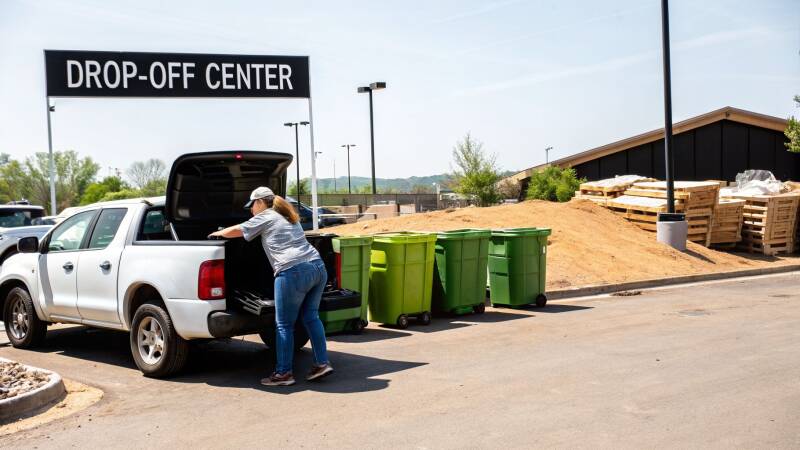
That’s where your local municipal drop-off center or transfer station comes in. These facilities are your best bet for handling large, infrequent loads of yard waste all at once. Instead of making dozens of little piles for the curb, you can load up your truck or trailer and get it all done in a single trip.
Know the Rules Before You Go
Trust me, there’s nothing worse than hauling a full trailer of brush across town only to get turned away at the gate. Every single facility has its own specific rules, and showing up unprepared is a recipe for a wasted afternoon.
Before you even think about loading up, pull up the facility's website or give them a quick call. Most centers, including those serving Westchester, Putnam, and Dutchess counties, post their guidelines online.
Here's what you absolutely need to confirm:
- Accepted Materials: They'll all take basics like leaves and grass clippings, but many will reject soil, large stumps, rocks, or any kind of treated lumber. Don't assume anything.
- Residency Requirements: This is a big one. You'll almost always need to prove you live in the area they serve. Have your driver’s license or a current utility bill handy.
- Operating Hours: These are rarely a standard 9-to-5. Hours can change with the seasons and are often limited on weekends, so double-check the schedule.
- Fees and Payment: Some towns offer free drop-off for residents, but many charge by weight or volume. Find out what it will cost and what kind of payment they take—some are cash-only.
Preparing and Sorting Your Load
The most common mistake I see people make is arriving with a tangled mess of everything thrown together in their truck bed. Most transfer stations require you to sort your waste because they process materials differently. Leaves and grass are typically composted, while branches and brush get chipped into mulch.
Do yourself a huge favor and pre-sort at home. Create a pile for leaves and soft plant matter and a separate one for woody debris like branches and twigs. It saves you from the miserable task of sorting through a messy load on-site, usually with a line of impatient people waiting behind you.
A crucial but often overlooked step is to properly secure your load. Flying debris is a serious road hazard and can lead to hefty fines. Use a sturdy tarp and tie it down securely with bungee cords or ratchet straps to ensure nothing escapes during transit.
Tips for an Efficient Visit
Once you've done your homework and sorted your debris, the trip itself can be surprisingly fast. A little bit of strategy goes a long way.
- Avoid Peak Times: Saturday mornings are a guaranteed traffic jam. If your schedule allows, aim for a weekday afternoon to breeze right through.
- Unload Systematically: Think about the unloading process as you load up. If the facility has separate piles for brush and leaves, put the material you'll drop off first at the back of your truck or trailer.
- Bring the Right Gear: A good pair of work gloves is non-negotiable. Tossing in your own rake or pitchfork can also make unloading loose leaves and clippings much faster.
By taking these few extra steps, the town drop-off center becomes a simple, cost-effective solution when you're figuring out how to dispose of yard waste.
When to Call a Professional Yard Waste Removal Service
Let's be honest—curbside collection and a backyard compost pile are fantastic for the usual stuff. A weekend of weeding, some grass clippings, a few pruned branches. But what happens when you’re facing a mountain of debris? There are moments when the sheer scale of a cleanup makes the DIY route impractical, unsafe, or just plain overwhelming.
That’s when calling in the pros isn't a luxury; it's the smartest call you can make. Knowing when to hand over the reins is key. For homeowners, real estate agents, and contractors, recognizing these situations saves time, prevents injuries, and guarantees the job gets done right.
Scenarios That Demand Professional Help
Some yard waste jobs are just too big for a rake and a handful of paper bags. If you find yourself staring at any of these situations, it's a clear sign you need more firepower.
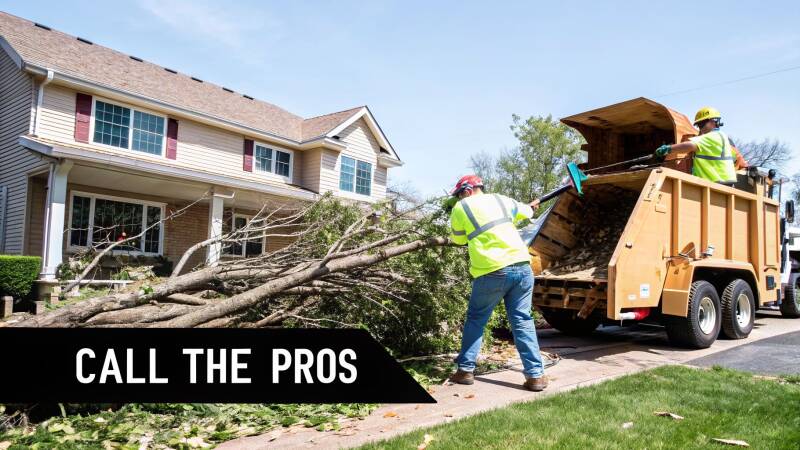
- Major Storm Aftermath: After a nasty storm, your yard can look like a disaster zone. We're talking about massive fallen trees, heavy snapped limbs, and a thick blanket of debris that would take you days—or weeks—to clear on your own.
- Large-Scale Landscaping Projects: Ripping out an old lawn or redesigning your entire backyard? Those projects create enormous piles of sod, soil, old shrubs, and tree trimmings that will quickly dwarf your disposal capacity.
- Clearing Overgrown Properties: I see this all the time with real estate agents prepping a neglected listing or homeowners finally tackling that "jungle" in the back. The sheer volume of thorny brush, tangled vines, and deadfall is way too much for standard disposal.
- Bulky and Heavy Items: Things like tree stumps, large logs, and thick branches are a non-starter. They’re heavy, awkward, and almost always banned from municipal pickup. A professional service shows up with the right equipment—think heavy-duty trucks and loaders—to get them gone safely.
The Unmistakable Benefits of Hiring a Pro
Bringing in a professional service for a huge yard cleanup gives you more than just a tidy property. It delivers a level of safety and efficiency that’s tough to match on your own, giving you some much-needed peace of mind.
The biggest benefit is safety. Trying to haul heavy logs or operate a wood chipper without experience can lead to serious injuries. A trained crew manages these risks every single day. They use the right techniques and safety gear to get the job done without anyone getting hurt.
Then there's the efficiency factor. A pro team can clear in a few hours what might take you an entire weekend of back-breaking labor. They arrive with the right-sized truck and a crew ready to work, turning a dreadful project into a completely hands-off experience. That speed is a game-changer for property managers or real estate agents working against a deadline.
A professional service provides the ultimate peace of mind. You won't have to worry about sorting materials, finding the right disposal facility, or whether you're complying with local regulations. The entire process, from pickup to final sweep-up, is handled for you.
What to Expect When You Hire a Removal Company
Working with a junk removal company is usually a refreshingly simple process, designed to be as easy as possible for you.
It almost always starts with a free, no-obligation estimate. You can describe the job over the phone or just text them some photos. Many companies, like our team at D&B Complete Home Services, can give you an upfront quote based on how much debris you have.
Once you approve the price, you just set a pickup time. On the scheduled day, the crew shows up, does all the heavy lifting, loads everything, and hauls it away for good.
Choosing an eco-conscious company also means your yard waste is handled responsibly instead of just being dumped in a landfill. Reputable services make it a priority to take organic materials to composting facilities. This is part of a major positive trend—nationally, about 63-69% of yard trimmings are now composted. It's especially important as U.S. waste collection costs jumped 9.8% in 2023, making efficient, green removal a critical concern for professionals in NY and CT. You can see more on how waste management is changing from insights on Sensoneo.com.
When you’re facing a mountain of debris, calling for professional junk removal services is the fastest and safest way to get your yard back.
Common Questions We Hear About Yard Waste Disposal
Even when you have a good handle on your yard cleanup, some tricky questions always seem to surface. We get calls all the time from homeowners across New York and Connecticut, so we've put together answers to the most common head-scratchers to help you out.
Can I Just Toss Yard Debris in My Regular Garbage Can?
It’s a tempting shortcut, but the answer is a firm no. In almost every municipality we serve—including those in Westchester, Putnam, and Fairfield counties—it is illegal to mix yard trimmings with your household trash. This isn't just local red tape; there's a serious environmental reason behind it.
When organic waste like leaves and grass clippings get dumped in a landfill, they're buried without access to oxygen. This causes them to decompose anaerobically, a process that releases methane gas.
Did you know methane is a greenhouse gas more than 28 times as potent as carbon dioxide? Diverting yard waste to composting facilities, where it breaks down with oxygen, completely avoids this problem.
That's why towns have separate collection programs. You have to use the proper yard waste bins or biodegradable paper bags. If you try to sneak it into your regular trash, you’ll most likely find your can left on the curb with a rejection sticker and could even get hit with a fine.
What's the Best Way to Get Rid of Big Branches and Tree Stumps?
Large branches, heavy logs, and stubborn tree stumps are in a league of their own. They are simply too big and bulky for your town's curbside pickup, and in fact, they're explicitly banned from municipal collection almost everywhere.
For a few small branches, you might be able to chop them down to size to meet local bundling rules. Typically, this means pieces no longer than 4 feet and no more than 4 inches in diameter.
But when you're facing a pile of large limbs, thick logs, or a tree stump, your realistic options narrow down to two:
- Rent a Wood Chipper: If you're dealing with a mountain of brush and branches, renting a chipper is a great way to turn that mess into a tidy pile of useful mulch. Just remember, these are powerful and potentially dangerous machines that demand respect and proper safety gear.
- Hire a Professional Removal Service: This is easily the safest and most efficient route for heavy-duty wood debris. A professional service has the right equipment—from heavy-duty trucks to loaders—to safely lift and haul everything away. You won't have to lift a finger.
Trying to wrestle with massive logs or stumps on your own is a surefire way to end up with a strained back, or worse. Professionals not only bring the muscle and machinery but also ensure the wood is properly recycled at a facility that will turn it into mulch or compost.
Is It Legal to Burn Yard Waste in My Backyard?
The thought of a bonfire to make a leaf pile disappear might sound appealing, but it's almost certainly illegal and definitely unsafe. In the vast majority of communities across New York and Connecticut, open burning of yard waste is either heavily restricted or banned outright.
There are two main reasons for this: air quality and fire safety. The smoke from burning leaves is full of fine particulate matter, a nasty air pollutant that can trigger asthma and other respiratory problems. Plus, there's always the very real risk of the fire spreading, especially on a dry or windy day, which could endanger your home and your neighbors' property.
In New York, for instance, burning leaves and brush is prohibited in most areas. Even in rural spots where it might be allowed, you'll likely need a permit from the local fire department and must follow strict safety rules. Between the legal risks, potential fines, and safety hazards, you're always better off choosing a responsible option like composting or using a local drop-off program.
Getting rid of other bulky yard items can be just as challenging. For more tips, take a look at our guide on how to dispose of old lawn equipment.
When your yard waste project becomes too big, too heavy, or just too much of a hassle, don't let it overwhelm you. The team at D&B Complete Home Services INC. is here to provide fast, professional, and eco-friendly removal. Whether you're cleaning up after a storm or tackling a massive landscaping overhaul with bulky logs and stumps, we have the tools and experience to clear it for you. Get your free estimate today at https://www.dbcompletehomeservices.com.
Add comment
Comments