Learn how to remove scrap metal for free with our simple, eco-friendly guide—find local options, prep steps, and avoid hidden costs.
Remove Scrap Metal for Free: remove scrap metal for free tips for quick disposal
Absolutely. Getting rid of that old junk metal for free isn't a myth—it's a real possibility. The whole "free" part comes down to a simple trade: the value of your scrap metal pays for the service of hauling it away. For this to work, you typically need a decent amount of metal or specific types that are high in demand, like copper or aluminum.
So, How Does Free Scrap Metal Removal Actually Work?
That old washing machine taking up space in your basement, the pile of rebar from a forgotten project, or that busted lawnmower rusting in the yard don't have to be a disposal nightmare. The entire idea behind free scrap metal removal is built on a straightforward economic fact: your junk is someone else's treasure.
When a scrapper or a company like D&B Complete Home Services INC. offers to pick up your metal for free, they're not just being nice. It's a business move. They collect your discarded items, haul them to a processing facility, and then sell the material by weight. The cash they get from the scrap yard covers their own expenses—gas, labor, and vehicle upkeep—and ideally, turns a profit. This is exactly why not every little piece of metal qualifies; the potential payout has to be worth the trip.
The Business Behind the "Free" Pickup
The global demand for recycled metal is enormous. Think about this: the market was valued at around $444.85 billion in 2025 and is only expected to climb. In the United States alone, a staggering 85 million metric tons of scrap metal get processed every single year. This constant, massive need for material is what makes a free pickup service a sustainable business model for those who can gather and sell it in bulk. You can dig into more data on the scrap metal market's growth to see just how big this industry really is.
The Bottom Line: Free removal isn't a charity. It's a transaction where the value of your scrap metal is the payment for the hauling service.
To figure out if your pile of metal is a good candidate, it helps to know what a collector is looking for. The table below breaks down the key factors.
Quick Guide to Qualifying for Free Scrap Metal Removal
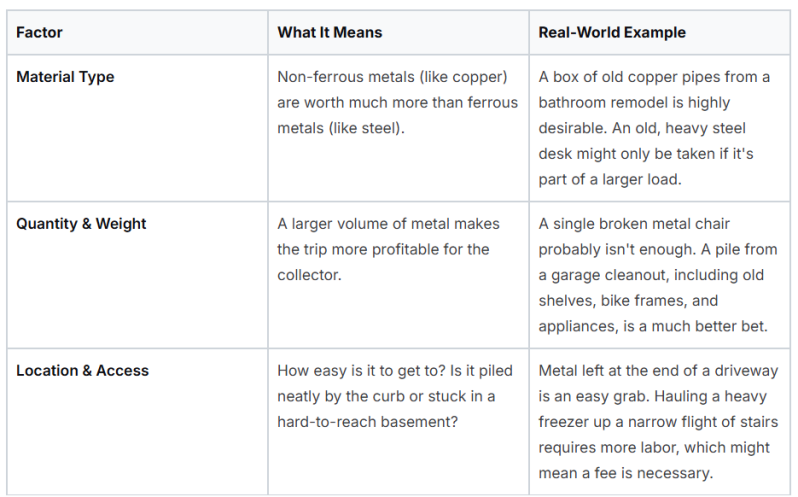
Ultimately, understanding these factors helps you see things from the collector's perspective. The easier you make it for them and the more valuable the material, the more likely you are to get it hauled away for free.
What Makes Your Metal Worth the Trip?
The two things that matter most are what you have and how much of it you have. High-value, non-ferrous metals are what really get collectors excited.
- High-Value Metals: We're talking about copper (found in pipes and electrical wiring), brass (think old plumbing fixtures), and aluminum (siding, window frames, and cans). Even a small pile of these can be enough to warrant a free pickup on its own.
- Lower-Value Metals: Ferrous metals like steel and iron are the heavyweights. They're found in large appliances, car parts, and construction beams. While valuable, they fetch a much lower price per pound, so you'll need a significant quantity to make it worthwhile.
For folks with a lot to get rid of, especially in areas like Westchester and Dutchess counties, turning to a professional service can be a huge time-saver. Companies that handle larger cleanouts can assess everything at once, making sure even mixed loads of high- and low-value metals are cleared out efficiently.
Prepping Your Metal for a Successful Pickup
Before you can even think about getting someone to remove scrap metal for free, you've got to know what you have and get it ready. A little prep work goes a long way. It makes your pile much more appealing to a collector and, just as importantly, keeps everyone safe during the process.
Your first move is a simple sorting game. All you need is a basic magnet. If it sticks, you have a ferrous metal—think iron or steel. These are the heavy hitters found in old appliances, car parts, and construction debris. If the magnet slides right off, you're looking at non-ferrous metal, which is where the real value often lies.
Identify Your High-Value Metals
Those non-ferrous metals are what make a free pickup a win-win. Even a small quantity can be enough to get a collector to your door without charging you. Here’s what you should be looking for:
- Copper: You can't miss its distinct reddish-brown color. It’s hiding in plain sight in electrical wires, plumbing pipes, and inside many old electronics.
- Brass: This is a heavy, yellowish metal you’ll often find in plumbing fixtures, old doorknobs, and even some decorative items.
- Aluminum: Lightweight and silvery, aluminum is everywhere. It’s in soda cans, window frames, siding, and even some car parts.
This quick flowchart shows the journey from junk to a valuable resource, which is exactly why free pickups exist in the first place.
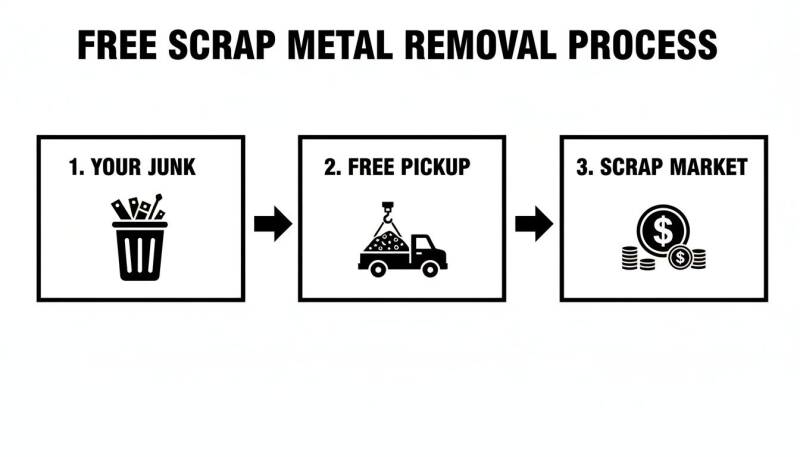
The value recovered from the scrap market is what covers the cost of the labor and transport for the removal service.
Sort and Separate for Safety and Value
After you've played detective with your magnet, it’s time to sort. This is probably the single most important thing you can do. Make separate piles for different types of metal. Put the steel appliances in one area, the aluminum siding in another, and keep your more valuable copper and brass in a separate, secure spot.
A collector who pulls up to a neatly sorted pile sees a quick, easy job. They know they can load up and go without spending an hour untangling everything. That makes them far more likely to take it all for free.
Let's say you're cleaning out a shed. You have an old steel push-mower, a stack of aluminum gutters, and a box of copper pipe cutoffs. By separating these into three piles, you've done most of the work for the collector. If you need a hand figuring out where to start with a big cleanout, our junk removal tips and resources guide can help you tackle the clutter.
Handle Materials and Appliances Safely
Finally, let's talk about safety and cleanliness—these are absolute musts. Anything that ever held fluids needs to be completely drained. This is a big one for items like old lawnmowers or car radiators, which can leak oil, gasoline, or antifreeze.
Appliances with refrigerants, like refrigerators and air conditioners, are a special case. They contain chemicals like Freon, which are hazardous and legally require professional evacuation before the appliance can be scrapped. Some services can do this for you, but be sure to ask if there’s a fee involved.
Lastly, make the pile safe to approach. If there are sharp edges or jagged pieces, try to remove them or at least turn them inward so they won't injure the crew coming to haul everything away.
Finding Reliable Free Removal Services Near You
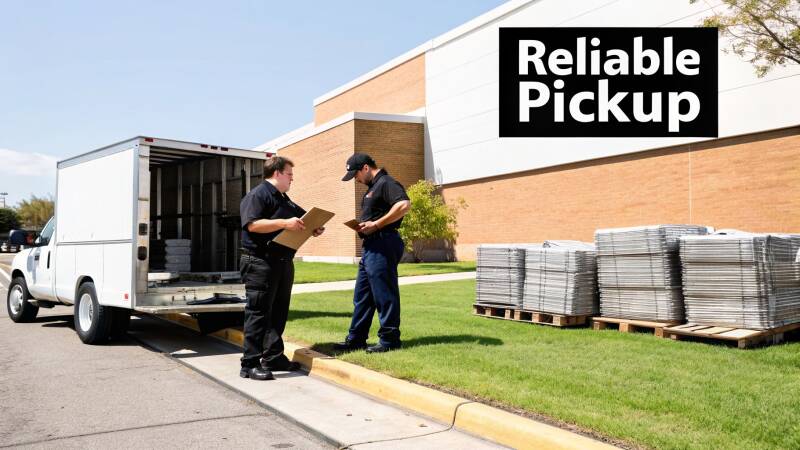
So, you've got your metal sorted and ready to go. The next step is finding the right person or company to haul it all away. You might be surprised by how many options you have to remove scrap metal for free, from local collectors on marketplace sites to full-service professional junk removal companies. The real trick is knowing how to find a reliable service that won't flake out, leave a mess, or hit you with a surprise bill.
This whole system of free pickups exists thanks to the huge economic engine behind recycling. The scrap metal industry in the U.S. is a powerhouse, generating an estimated USD 38.0 billion in revenue in the five years leading up to 2026. With a market that big, companies have a serious financial incentive to offer free pickups for materials they can turn into profit. You can get a deeper look at the scrap metal industry's economic impact on ibisworld.com.
Exploring Your Local Pickup Options
Where you should look for a pickup service really depends on what kind of metal you have and how fast you need it gone. Generally, there are a few well-trodden paths you can take.
- Independent Scrappers on Marketplace Sites: Hop on Facebook Marketplace or Craigslist, and you'll find plenty of individuals who collect scrap metal, either as a side gig or a full-time job. They're often quick to respond and are a great fit for smaller, high-value loads like a bundle of copper pipes or a stack of aluminum siding.
- Local Scrap Yards: Some scrap yards run their own pickup trucks, but be warned—they usually have steep minimum weight requirements. This is really only practical if you're dealing with a massive amount of heavy steel from something like a barn demolition or a major construction cleanup.
- Professional Junk Removal Companies: If you're tackling a bigger, more complicated project—think an estate cleanout or a garage overflowing with a mix of junk and metal—a professional service is almost always your best bet.
The Professional Advantage: Insurance and Reliability
Sure, an independent collector might be quick, but there's a certain level of unpredictability. Will they actually show up when they say they will? What happens if they scrape your siding or crack your driveway? This is where hiring a professional, insured company gives you some much-needed peace of mind.
For folks in New York and Connecticut, a company like D&B Complete Home Services INC. provides a legitimate, reliable option. Professional crews are set up to handle mixed loads, which means they won’t just cherry-pick the good stuff and leave you to deal with the rest. They come with the right gear and the muscle to get everything out safely and efficiently.
The biggest benefit of hiring a professional, insured company is accountability. You're not dealing with a random person from the internet; you're working with a registered business that has a reputation to protect and is liable for its work on your property.
If you’ve got a hodgepodge of items that includes more than just metal, checking out professional junk removal services is the most direct route. Instead of trying to coordinate with different people for different materials, one team can handle the entire cleanout, often in a single day. This streamlined approach saves you a ton of time and guarantees your space is left clean and clear—transforming clutter into a blank slate.
Watching Out for Hidden Costs and Other Headaches
The words "remove scrap metal for free" are music to anyone's ears, but it pays to be a little skeptical. While most free pickups are exactly that—free—some situations can lead to surprise fees. Knowing what to watch out for is the best way to make sure your "free" pickup doesn't end up costing you.
One of the most common snags is not having enough metal to make the trip worthwhile for the collector. Think about it from their perspective: an independent scrapper or even a professional service has to cover fuel, time, and labor. If your pile is too small or mostly low-value steel, the scrap value might not cover their costs. They may ask for a fee to justify the pickup.
Another big issue is contamination. If you've told a collector you have a pile of clean metal, that's what they expect to see. Finding it mixed with wood, plastic, old furniture, or other trash changes everything. They're in the business of recycling metal, not hauling garbage. In that case, you’ll likely be looking at an on-the-spot junk removal fee instead of a free scrap pickup.
What About Hazardous Materials?
This is where things can get tricky—and expensive. Many items that end up in a scrap pile contain hazardous materials that need special handling by law. You absolutely cannot just mix these in with your regular scrap.
Here are a few common culprits to be aware of:
- Refrigerants: That old air conditioner or refrigerator contains Freon, a regulated substance. It must be professionally evacuated before the unit can be scrapped, and this service almost always has a fee.
- Mercury: Some older appliances and thermostats have small amounts of mercury, which is a highly toxic heavy metal. It needs to be disposed of very carefully.
- Oils and Fuels: Lawn mowers, car parts, or old engine blocks must be completely drained of all fluids. If they aren't, a collector might refuse them outright or charge you extra for the hassle and risk.
These rules aren't just suggestions. They're legal requirements in place to protect our environment and health. Trying to skirt them can lead to fines.
Before you agree to anything, get clear confirmation. I always recommend asking two simple questions: "Is this pickup 100% free for the items I have?" and "Are there any materials you won't take or that will cost me extra?" A quick, direct conversation can save you from a major misunderstanding.
Don't Forget to Check Local Rules
Finally, take a minute to consider your local city or town ordinances. Just leaving a big pile of metal on the curb might not be allowed, especially if it's going to sit there for a few days. Some communities have strict rules about the size of debris piles or how long they can be left in public view before you get hit with a citation.
A quick visit to your municipality's website or a call to the public works department is all it takes to find out the rules. A little bit of prep work here ensures your effort to remove scrap metal for free actually succeeds without any unexpected costs or headaches.
The Environmental Impact of Your Scrap Metal
Getting that pile of old metal hauled away for free does a lot more than just clear out your garage. It's easy to see it as just getting rid of junk, but you're actually kicking off a major positive chain reaction for the environment.
When you opt for recycling, you’re actively conserving natural resources, saving incredible amounts of energy, and cutting down on pollution.
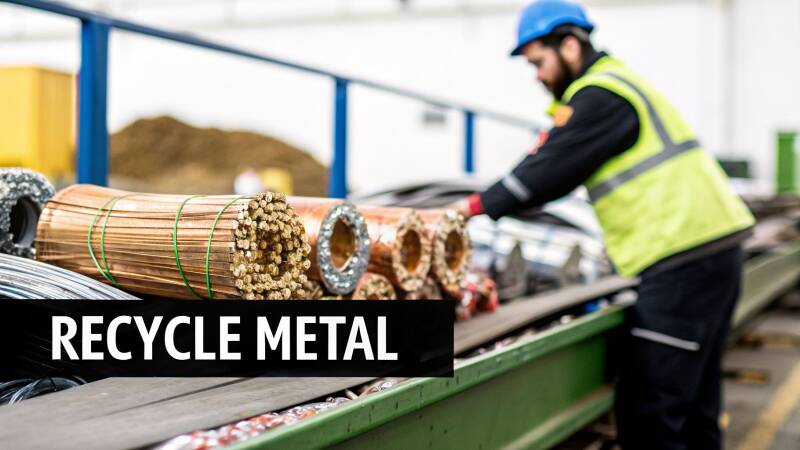
This simple choice completely changes the game. That rusty old appliance or pile of pipes is no longer waste—it becomes a valuable resource. By making sure it gets recycled, you’re helping to close the loop on the circular economy, where materials get used over and over again instead of being mined, used once, and then tossed in a landfill.
Conserving Energy and Natural Resources
The amount of energy saved by recycling metal is almost hard to believe. Making new products from raw ore is an extremely energy-heavy process that involves mining, transportation, and smelting. Recycling lets us skip most of those steps.
Just look at these numbers:
- Aluminum: Recycling aluminum saves a massive 95% of the energy it takes to make it from raw bauxite ore.
- Steel: Using recycled steel to create new products slashes energy consumption by about 74% compared to starting from scratch.
This isn't just a small tweak. It's a game-changer. Every ton of recycled steel saves roughly 2,500 pounds of iron ore and 1,400 pounds of coal. When you hire a responsible removal service, you're a direct part of those savings.
Your choice has a direct impact. By recycling, you’re preventing tons of greenhouse gases from entering the atmosphere and significantly cutting down on air and water pollution associated with mining and manufacturing.
This commitment to doing things the right way is a core value for reputable companies. For example, a service like D&B Complete Home Services, which operates from Fairfield County, CT, to Orange County, NY, puts recycling first to make sure as little as possible ever sees a landfill. For bigger items, it's worth checking out specific disposal methods, and our guide on how to dispose of old lawn equipment can give you some more ideas.
Strengthening a Sustainable Local Economy
All these environmental wins are powered by a strong and expanding recycling industry. North America is the fastest-growing region for metal recycling, and in the United States alone, we recycle over 100 million tons every year. In fact, scrap metal makes up about 72% of all steel produced in the U.S.
This huge domestic capacity, combined with modern technology, creates a solid local demand. That’s what makes free removal a viable business for service providers. You can learn more about metal recycling market trends on fortunebusinessinsights.com.
Ultimately, your old metal feeds a system that creates jobs and reduces our dependence on digging new resources out of the ground, making your own community more resilient and sustainable.
Common Questions About Free Scrap Metal Removal
Even with a solid plan, you're bound to have some questions when you start diving into the world of scrap metal. It’s a bit of an insider's game. Let's tackle some of the most frequent questions people ask when they’re trying to remove scrap metal for free.
How Much Metal Do I Need for a Free Pickup?
This is the classic "it depends" situation, but the real answer boils down to value versus effort. Think about it from the scrapper's perspective.
A small but heavy pile of high-value non-ferrous metal—like a bunch of copper pipes left over from a bathroom remodel—is often a golden ticket. That's usually more than enough to get someone to your door.
On the other hand, for heavier but less valuable ferrous metals like steel, it's all about volume. A single large appliance like a stove or washing machine is typically a big enough prize. But a small cardboard box of random steel bits and pieces? That probably won’t be worth a special trip.
A good rule of thumb is to ask yourself: would the scrap value cover someone's gas and at least an hour of their time? For professional services running a business, the minimum will likely be higher since they're dispatching a truck and crew. The best thing you can do is just call, be honest about what you've got, and see what they say.
Can I Get Cars or Large Machinery Removed for Free?
Absolutely, but this is a different league. This isn’t a job for your local scrapper with a pickup truck or a standard junk removal service.
For vehicles like cars, trucks, or vans, you'll want to find an automotive scrapper. Not only will they often haul it away for free, but they might even pay you for it, as long as you have the title to prove you own it. They’ve got the tow trucks and equipment to handle vehicles the right way.
Now, for something massive like an old tractor or heavy industrial equipment, you'll need to call in the heavy hitters: a heavy equipment dismantler. These specialists have the cranes, cutting torches, and flatbed trucks necessary for a job of that scale. Whether they do it for free or charge a fee will depend entirely on the scrap value of the machinery itself.
What if My Scrap Metal Is Mixed with Other Junk?
This happens all the time, especially with big cleanouts like a garage or an entire estate. What you do next depends on who you call.
An independent scrapper is there for one thing: the metal. They’ll meticulously pick out the valuable pieces and leave you to figure out what to do with the leftover wood, plastic, and other junk.
This is where a full-service junk removal company really shines. A crew like D&B Complete Home Services INC. is built to handle the whole mess in one shot. They’ll come out and give you a price for clearing out everything.
Key Takeaway: The value of your scrap metal is often deducted from the total price of a mixed-junk removal, which can lower your overall cost. Honesty is the best policy here. If you advertise a "free metal pickup" but the pile is half trash, expect to be quoted a removal fee when they arrive. A professional service gives you a single, clean-sweep solution.
Ready to get that junk and scrap metal out of your sight without the headache? The professional team at D&B Complete Home Services INC. can handle it all, from big appliances to entire property cleanouts. Visit our website to schedule your fast and reliable junk removal service today!
Add comment
Comments