Our guide to washer and dryer removal covers costs, DIY risks, and eco-friendly options. Learn how to handle old appliance disposal safely and efficiently.
A Homeowner's Guide to Washer and Dryer Removal
So, that old washer and dryer set is finally giving up the ghost. Now what? You’re staring at two very large, very heavy metal boxes, and the thought of moving them yourself is probably daunting—for good reason. Calling in a professional for washer and dryer removal isn’t just about convenience; it’s the smartest way to handle the job safely and efficiently, saving you from a world of potential headaches.
Why Professional Appliance Removal Is the Smartest Choice
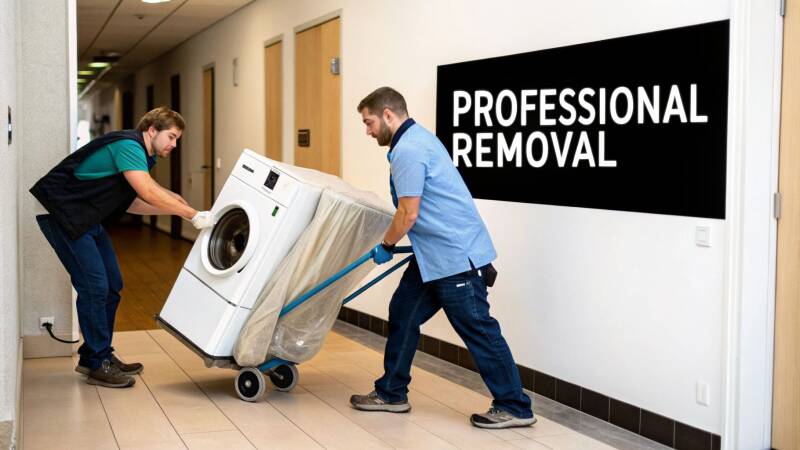
Let's be real for a moment: getting a washer or dryer out of your house is a surprisingly tough job. These things are monsters. Most weigh between 150-250 pounds each, and they’re not designed with easy carrying in mind. They’re just awkward, bulky boxes with no good place to grip.
Trying to wrestle one of these through a tight laundry room door, down a narrow hallway, or—worst of all—up a flight of basement stairs is a recipe for trouble. Without the right gear and know-how, you're risking more than just a sore back. We’re talking about serious personal injuries, like pulled muscles or crushed fingers, not to mention expensive damage to your home. Think deep scratches in your hardwood floors, dented walls, and busted doorframes. A professional crew shows up prepared with heavy-duty dollies, sturdy straps, and protective padding to get the job done right.
It’s More Than Just Muscle
Hiring pros to haul away your old appliances is about bringing in expertise, not just brawn. It’s also about protecting yourself. Any reputable removal service is fully insured. That means on the off chance something does go wrong and a wall gets dinged, you're not on the hook for the repairs. That peace of mind alone is worth its weight in gold.
Then there’s the question of what to do with the old machines. You can't just leave them on the curb. Each year in the U.S., we toss out roughly 5.16 million tons of major appliances, and washers and dryers are a huge part of that pile. Sadly, only about 60% of that waste is actually recycled. The rest just sits in landfills. For more perspective on this, Junk-King.com has some eye-opening stats on appliance disposal.
When you hire a professional service, you’re also hiring their knowledge of responsible disposal. They know exactly where to take working units for donation and how to get non-working appliances to a certified recycling facility, ensuring everything is handled by the book.
The Clear Advantages of Going Pro
When you weigh a modest service fee against the very real risks of a DIY attempt, the choice becomes pretty clear. The benefits of hiring an experienced team are hard to ignore.
- No More Injury Risks: Trained crews know the proper lifting techniques and have the right equipment to prevent the physical strain of moving heavy, awkward appliances.
- Your Home Stays Intact: Professionals are pros for a reason. They know how to maneuver bulky items without leaving a trail of destruction behind them.
- Get Your Weekend Back: Forget about renting a truck, finding a friend to help, and figuring out where the nearest disposal site is. The whole process is handled for you, saving you time and stress.
- Eco-Friendly Peace of Mind: Good removal companies prioritize recycling and donation, so you know your old appliances aren't just contributing to a landfill problem.
Handing this job over to the experts makes the entire process smooth, safe, and responsible. You can check out the details on our https://www.dbcompletehomeservices.com/junk-removal-services to see how we tackle even the most challenging items.
Breaking Down the Cost of Washer and Dryer Removal
When you decide it’s time to call in the pros for a washer and dryer removal, one of the first questions on your mind is probably, "What's this going to cost me?" It’s a fair question, but the answer isn't just a single number. Think of it less as a simple fee and more as an investment in a safe, efficient, and hassle-free service.
You're not just paying for a couple of strong backs; you're paying for expertise, the right equipment, proper insurance, and the guarantee that your old appliances will be handled responsibly once they leave your property. Let's pull back the curtain on how pricing works and what factors will shape your final quote.
How Removal Services Typically Price Their Work
Most professional removal companies stick to one of two main pricing models. The best one for your situation usually depends on whether you're just getting rid of the laundry pair or tackling a larger cleanout.
- Flat-Rate or Per-Item Fee: This is the most common approach for single-item jobs. You’ll get a set price specifically for the washer and dryer. It’s wonderfully straightforward and makes budgeting a breeze since the price is locked in, no matter how long it takes.
- Volume-Based Pricing: If your washer and dryer are just part of a bigger project—say, clearing out a basement or emptying a garage—companies often charge by how much space all your junk takes up in their truck. You’ll see prices quoted for a quarter-truck, half-truck, or a full truckload.
Pro Tip: Always ask which pricing model a company uses when you call for an estimate. Getting this clear upfront helps you avoid any surprises and lets you accurately compare quotes between different services.
Key Factors That Influence Your Removal Cost
Several variables can nudge the price up or down. A good company will always ask you a few key questions to give you the most accurate quote possible, because the little details really do matter.
To give you a clearer picture, here’s a look at the common variables that can affect the price of your appliance removal.
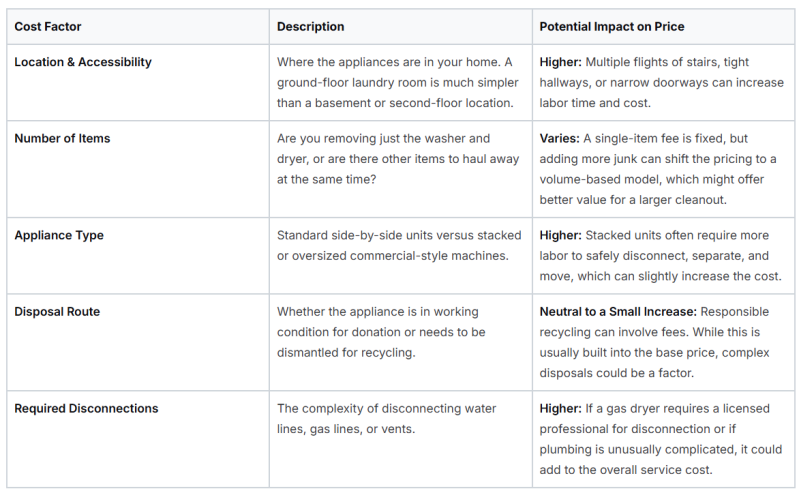
In the end, getting a fair and transparent quote is all about communication. The more details you can provide about your setup—where the machines are, if there are stairs, and what kind of units they are—the easier it is for a removal company to give you a precise estimate that truly reflects the work involved.
What to Expect on Your Appliance Removal Day
So, you’ve scheduled the removal. Now what? Knowing what the actual day looks like can take all the stress out of the equation. When you hire a professional crew, you're not just getting a couple of strong backs; you're getting a well-oiled machine designed to make this process disappear from your to-do list.
It all starts with good communication. You’ll get a clear arrival window, usually a two-to-four-hour block. No waiting around all day wondering. When the crew is heading your way, they’ll give you a courtesy call or text. It’s a small thing, but it lets you plan your day without being chained to the house.
The Arrival and Initial Assessment
When our uniformed team shows up, they’ll introduce themselves and do a quick walkthrough. This isn't just about being polite—it's about strategy. They're sizing up the job, checking the path from your laundry room to the truck, and spotting any tricky spots like tight hallways, sharp corners, or a dreaded flight of stairs.
This is also your chance to get a firm, final price. A reputable company will give you an all-inclusive, no-obligation quote right then and there, before a single tool is lifted. No surprises, no hidden fees. Once you give them the thumbs-up, they get right to it.
Safe Disconnection and Expert Removal
First things first: safely disconnecting the machines. Our crews are fully equipped to handle standard electric washers and dryers. They’ll unplug everything, shut off the water valves, and detach all the water and vent hoses. It's a routine part of the job for them.
Heads-up for gas dryers: For safety and liability reasons, a licensed plumber needs to disconnect the gas line before our team arrives. We can’t touch a live gas line—it's the law, and it's for everyone's protection.
Once everything is free, the real skill comes into play. You’ll see the crew break out heavy-duty appliance dollies, moving straps, and thick protective blankets. These aren't just for show; they’re essential for moving hundreds of pounds of metal without leaving a single scratch on your floors, walls, or doorframes.
This flowchart shows you exactly what our team is thinking about when they first arrive.
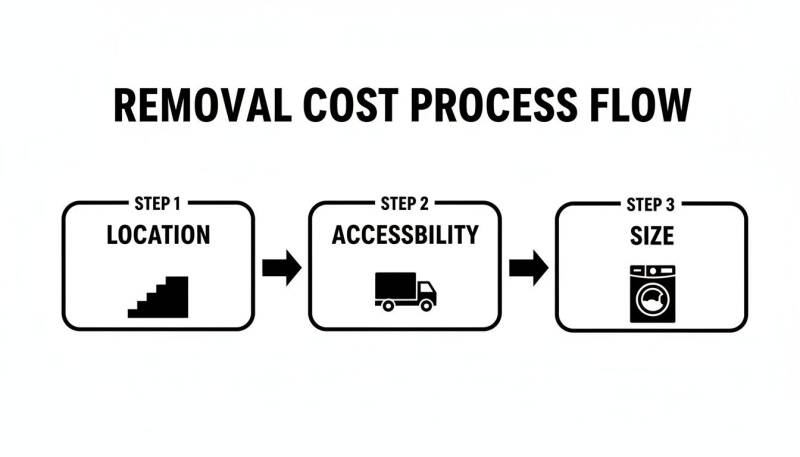
It’s a simple but effective process: figure out the location, check the access points, and account for the size of the units. A little planning goes a long way.
Your Pre-Removal Checklist
Want to make the day go even faster and smoother? There are a few things you can do to prep the area before the crew arrives.
- Empty Your Machines: Double-check that both the washer and dryer are completely empty. A forgotten load of wet towels can add a surprising amount of weight.
- Clear a Path: Make sure there's a wide, clear walkway from the laundry area to the front door. Move any furniture, area rugs, or stray toys that might be in the way.
- Secure Children and Pets: The last thing anyone wants is a trip-up. For everyone’s safety, it’s best to keep kids and pets in another room or a secure part of the yard while the crew is moving heavy equipment.
Think of it as a partnership. A few minutes of prep on your end helps our team work faster and safer, ensuring a perfect removal from start to finish.
The job isn’t done just because the truck is loaded. A true professional crew leaves the space better than they found it. They'll do a quick sweep-up of the area, getting rid of all the dust and lint that inevitably collects behind these machines. Before they leave, they’ll do one final walkthrough with you to make sure you're 100% satisfied. The goal is simple: leave you with a clean, empty space and a smile on your face.
What Really Happens to Your Old Washer and Dryer?
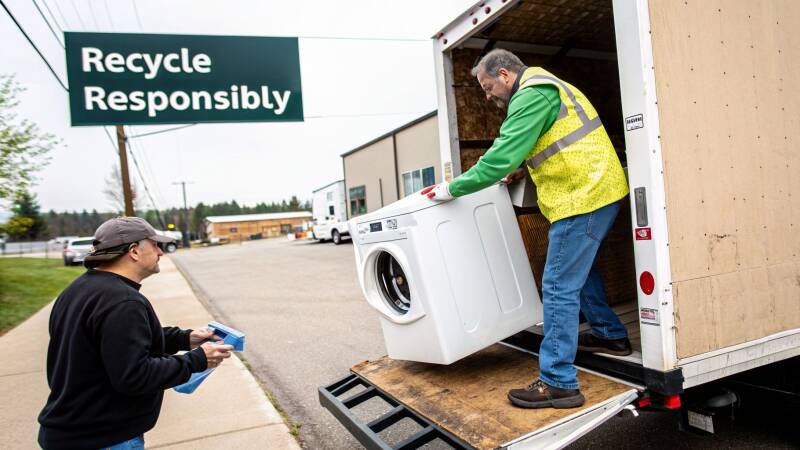
When your old washer and dryer finally give out, the immediate goal is just getting them out of the house. But what happens next matters. Just dragging a massive appliance to the curb isn't only an eyesore—it's often illegal in towns across Westchester and Fairfield counties, and it places a real strain on our environment.
These machines are more than just big metal boxes. They’re packed with steel, copper, and aluminum, but also contain hazardous materials like electronic circuit boards and lubricants. Proper washer and dryer removal is about more than just heavy lifting; it's about making a conscious choice to keep these materials out of local landfills and ensuring every part is handled the right way.
The Journey of an Old Appliance
The path your old washer or dryer takes after leaving your home depends on its condition and who you trust to haul it away. A reputable removal service doesn't just see a junk pile—we see a set of possibilities. We work through a simple, eco-friendly decision tree that always prioritizes reuse before recycling, and recycling before the landfill.
The first question we ask is a simple one: does it still work? If an appliance is still in safe, usable condition, its best destination is a new home.
We partner with local charities and donation centers across the Hudson Valley and Connecticut. Giving a working appliance a second life not only keeps it out of the waste stream but also helps a family in our community who may be in need.
If the machine is truly at the end of its life, its journey shifts toward deconstruction. This is where professional recycling centers come in, meticulously dismantling the unit to salvage every last valuable resource.
Deconstruction and Responsible Recycling
A broken-down appliance isn't just trash; it's a goldmine of raw materials waiting to be reclaimed. At a certified recycling facility, your old washer or dryer is carefully taken apart piece by piece. This process is way more complex than just tossing it into a metal crusher.
- Valuable Metals are Recovered: The steel drum, aluminum parts, and copper wiring are all separated. They’re then sent off to be melted down and used to make new products.
- Hazardous Materials are Isolated: Things like circuit boards, which can contain lead and mercury, are removed with extreme care. They’re processed under strict safety guidelines to keep those toxins from ever reaching our soil and water.
- Plastics and Glass are Sorted: Any plastic knobs, glass doors, or other non-metal parts are pulled out and sent to their own dedicated recycling streams.
Thanks to this thorough process, nearly 90% of an old appliance can be given a new life, feeding back into a circular economy where old products become the building blocks for new ones. For a deeper dive into managing household waste, check out our junk removal tips and resources for homeowners.
Navigating Local Disposal Rules
Let's be honest: the rules around appliance disposal have gotten a lot stricter over the years, which is why professional washer and dryer removal is so important. Programs like the EPA’s Responsible Appliance Disposal (RAD) set the standard for handling everything from foam insulation to hazardous materials. If you don't follow the rules, you could face hefty fines.
By hiring a professional service that knows the local regulations inside and out, you’re doing more than just clearing space in your laundry room. You're making a choice to protect our local environment, support the community, and ensure your old appliances are handled with the care they deserve.
The Hidden Dangers of DIY Appliance Removal
It's tempting to try and save a few bucks by tackling a washer and dryer removal yourself. How hard can it be? Unplug a few things, grab a friend, and haul them to the curb. But this kind of thinking can be a fast track to a costly and painful mess.
Think of it like DIY plumbing. Sure, a YouTube video can make it look easy, but one wrong twist of a wrench can lead to a flooded basement and thousands in repairs. The same idea applies here. When you hire a professional, you're not just paying for muscle; you're investing in your own safety, the protection of your home, and your time.
The Real Risk of Physical Injury
The most obvious danger in a DIY appliance move is getting hurt. A standard washing machine tips the scales at 150 to 200 pounds, and dryers aren't much lighter. These machines are a perfect storm of heavy and awkward—they have zero convenient handles or easy places to grip.
Trying to manhandle one of these without proper training is a recipe for disaster. Lifting with your back is a classic mistake that can lead to strained muscles or even a herniated disc. The danger skyrockets the second you have to deal with stairs. One misstep on a narrow basement staircase could mean a serious fall for both you and your helper.
Protecting Your Home From Damage
Even if you get through the move without a trip to the ER, your house might not be so fortunate. The sharp metal edges and sheer weight of a washer or dryer can wreak havoc on your floors, walls, and doorways.
- Scratched Floors: Just dragging a machine a few inches can leave permanent, ugly gouges in your beautiful hardwood, tile, or vinyl flooring.
- Dented Walls and Doorways: Trying to pivot a bulky appliance around a tight corner almost always results in chipped paint, dented drywall, or a splintered doorframe.
- Structural Damage: An uncontrolled drop, especially down a flight of stairs, can cause damage that goes way beyond a simple cosmetic fix.
There's a reason pros use specialized equipment. Appliance dollies with securing straps and heavy-duty moving blankets are the tools of the trade, designed specifically to manage the weight and protect every surface the machine comes near.
The Logistical Headaches You Haven't Thought Of
Getting the appliance out of the house is only half the battle. What do you do with it then? This is where the real logistical nightmare begins, turning what you thought was a simple Saturday project into a week-long ordeal.
First, you’ll need a truck, because these things aren't fitting in your SUV. Then you have to figure out where to take it. You can’t just leave it on the curb, and many local dumps and recycling centers across New York and Connecticut have strict rules and won't accept appliances from unlicensed individuals.
With so many people upgrading, this has become a bigger issue. Two-thirds of Americans have replaced a major appliance in the last five years, and for 50% of those replacements, it was for an upgrade, not because the old one broke. This constant turnover has forced towns to get stricter on disposal. You can learn more about appliance replacement trends and see how this demand impacts the rules.
Hiring a professional for your washer and dryer removal means you can sidestep every single one of these risks. It turns a dangerous, complicated job into a simple, hands-off solution.
Got Questions About Washer and Dryer Removal? We've Got Answers.
It’s completely normal to have a few questions, even after you’ve decided to hire a pro. After all, getting rid of a washer and dryer isn't something you do every day, so it makes sense to want to know exactly how it all works.
We put this section together to answer the most common questions we hear from homeowners across the Hudson Valley and Connecticut. Our goal is simple: to make sure you feel totally comfortable and know what to expect before our truck even pulls up.
Do I Need to Disconnect Everything Before You Arrive?
This is easily the #1 question we get, and the short answer is: it depends on your dryer.
For standard electric washers and dryers, you don't have to touch a thing. Our crew shows up with all the right tools to safely shut off the water, unplug the machines, and disconnect every hose. It’s all part of the service.
The big exception here is a gas dryer. For safety and insurance reasons, a licensed plumber or HVAC technician has to be the one to disconnect and cap the gas line. This absolutely must be done before we arrive. Our team is not permitted to work on live gas lines.
When you book your removal, just let us know if you have a gas dryer. We can point you in the right direction to get it taken care of. Handling it ahead of time means your removal day will go off without a hitch.
While you’re welcome to disconnect electric units yourself if you feel comfortable, it's definitely not required. We’re ready to handle the entire process from start to finish, making sure it’s done right.
What Actually Happens to My Old Appliances?
We’re serious about being responsible neighbors and stewards of the environment. Your old washer and dryer will never, ever be dumped in a landfill on our watch. We follow a strict, eco-friendly process for every single appliance we pick up.
First, our team takes a look at the condition of the units.
- If It's Still Working: Appliances that still have some life left in them are donated. We partner with local charities throughout Westchester, Putnam, Dutchess, and Fairfield counties to give your old machine a second life helping a family in need.
- If It's Beyond Repair: If a machine is truly at the end of its road, we haul it directly to a certified recycling facility. It will be properly and responsibly recycled, not trashed.
At the recycling center, the appliance is carefully deconstructed. Technicians break it down, separating materials like steel, copper, and aluminum to be melted down and used in new products. Any hazardous materials, like old circuit boards, are safely isolated and disposed of according to strict environmental regulations. This process ensures that nearly 90% of the old appliance is reclaimed and reused.
How Fast Can You Get Rid of My Old Washer and Dryer?
We get it. When you need an old appliance gone, you usually need it gone now. A broken-down machine can throw your whole household into chaos, especially if a new one is being delivered tomorrow. That’s why we make scheduling as quick and flexible as possible.
We can often provide same-day or next-day service, depending on our schedule and your location. The quickest way to lock in a time is to give us a call. Our coordinator will work with you to find a two-hour arrival window that doesn't disrupt your entire day.
To make things even smoother, our removal team will give you a call or text when they’re about 20-30 minutes away. No more waiting around wondering where they are.
Do You Take Stacked Units or Laundry Centers?
Absolutely. We have plenty of experience with every laundry setup imaginable, including stacked washer-dryer units and the single-piece "unitized" laundry centers you often see in apartments and tight closet spaces.
These jobs are a bit more involved than your standard side-by-side removal. They require a different approach to safely disconnect and maneuver them out of your home without leaving a single scratch. Our crews come prepared with the right equipment and know-how to handle these trickier removals.
Just give us a heads-up that you have a stacked unit when you book your appointment. That way, we can be sure the team is fully prepared for the job.
Can You Take Other Junk While You're Here?
Yes, we can! You might be calling us for a washer and dryer removal, but we are a full-service junk removal company. Our trucks have plenty of space, making it the perfect time to finally get rid of other clutter that’s been taking up room.
Think about other things you might want gone:
- Old couches, mattresses, or other furniture
- Outdated TVs and other electronics
- Boxes of clutter from the garage or basement
- Old lawn equipment or yard debris
It’s easy. When our team arrives to give you the on-site quote, just point out everything you want to add. They’ll calculate a single, up-front price for the whole lot before they start any work. It's a great way to knock out a few projects at once.
If you’re planning a bigger cleanout, you can learn more about how to get started when you contact our team for a consultation. We’ll make sure you have all the info you need to make the process a breeze.
Add comment
Comments