Getting rid of washer and dryer in NY or CT? Learn safe options to disconnect, donate, recycle, or sell your appliance with this practical guide.
Getting rid of washer and dryer in NY and CT: Your Step-by-Step Guide
Before you can even think about hauling that old washer and dryer out the door, there's some critical prep work to do. Safety is paramount here. We're talking about disconnecting water, power, and potentially gas lines—get this wrong, and you could be looking at leaks, electrical hazards, or worse.
Taking a few minutes to prep properly isn't just a suggestion; it's essential for a smooth, damage-free removal.
Safely Preparing Your Appliances for Removal
Trust me, trying to move a washer or dryer while it’s still hooked up is a disaster waiting to happen. You can flood your laundry room, fry your home's electrical system, or create a seriously dangerous situation. A little bit of careful prep makes the entire job infinitely safer and easier to manage.
The good news? You don't need a professional-grade workshop for this. A few basic tools you probably have lying around will do the trick.
Essential Tools for the Job
Getting your gear together first saves you from running back and forth to the garage. For most standard electric setups, you'll just need a few things:
- Slip-joint pliers or an adjustable wrench: These are for getting a good grip on the water supply hoses to loosen them up.
- A bucket and some old towels: Don't skip this. There's always leftover water in the hoses, and this will keep it off your floor.
- Duct tape or packing tape: You'll use this to neatly secure the power cords, hoses, and dryer vent to the back of the machines. This stops them from dragging, tripping you up, or getting snagged on a doorway.
That’s really it for most electric units. Having these items handy makes the whole process quick and clean.
Disconnecting an Electric Washer and Dryer
First things first: unplug both machines from the wall. This is the single most important safety step.
For the washer, find the hot and cold water valves on the wall behind it. Turn them clockwise all the way to shut off the water supply. Now, slide your bucket underneath the connections, get your towels ready, and use the pliers to unscrew the hoses from both the wall and the back of the washer. A bit of water will definitely spill out, so be prepared.
Next up is the dryer vent. It's usually a flexible, silver-colored tube running from the back of the dryer to a vent on the wall. You should be able to detach it easily, sometimes by hand or by loosening a simple clamp.
With everything disconnected, go ahead and tape the cords and hoses tightly to the back of their respective units. For more great advice, you can explore these junk removal tips and resources to make sure you're fully prepared.
A Critical Warning for Gas Dryers
If you have a gas dryer, the game changes completely. While you can still unplug it and detach the vent, do not touch the gas line yourself. Messing with a gas connection without the right training can lead to a dangerous gas leak. You’ll need to turn off the dedicated gas valve and call in a licensed plumber or an HVAC technician to handle that part. It’s not worth the risk.
Deciding What to Do With Your Old Washer and Dryer
Alright, the hard part is over—your old washer and dryer are officially disconnected and ready for a new home (or a responsible end-of-life). Now comes the big question: what’s the best way to get them out of your house?
You’ve basically got three paths you can take: selling, donating, or recycling. The right choice really boils down to the condition of your machines, how much time you're willing to spend, and whether you'd rather make a few bucks or do a good deed.
Selling Your Used Washer and Dryer
If your set is still chugging along just fine, selling it is a no-brainer. You can put a little cash back in your pocket to offset the cost of your new appliances. Online marketplaces like Facebook Marketplace and Craigslist are crawling with people hunting for a good deal on a reliable used set.
To get yours sold quickly, a little prep work goes a long way. Don't just snap a quick, dark photo in your basement. Clean the machines up and take several clear, well-lit pictures from all angles—don't forget the inside of the drum and any dings or scratches.
In your listing, be upfront and detailed:
- Be specific: Include the brand and model number, like "Kenmore 70 Series Heavy Duty Washer."
- Give the dimensions: This saves you and potential buyers a headache. They need to know if it'll fit in their space.
- Be honest about its history: Mention its age and condition. Pointing out a small scratch builds trust.
- Price it right: A quick search for similar models in your area will tell you what's fair. A solid, older Kenmore set, for instance, could easily fetch $150-$300.
And one last thing: make it crystal clear that the buyer is responsible for pickup. You've done the disconnecting; let them handle the heavy lifting.
A Pro Tip for a Quick Sale
Clean appliances sell so much faster. A simple wipe-down, cleaning the lint trap, and running a cleaning cycle shows you took care of the machines. It’s a small step that signals to buyers they’re getting a well-maintained item.
As a reminder, getting to this stage requires safely disconnecting your units first. This visual guide is a great reference for that initial step, especially for figuring out your dryer.
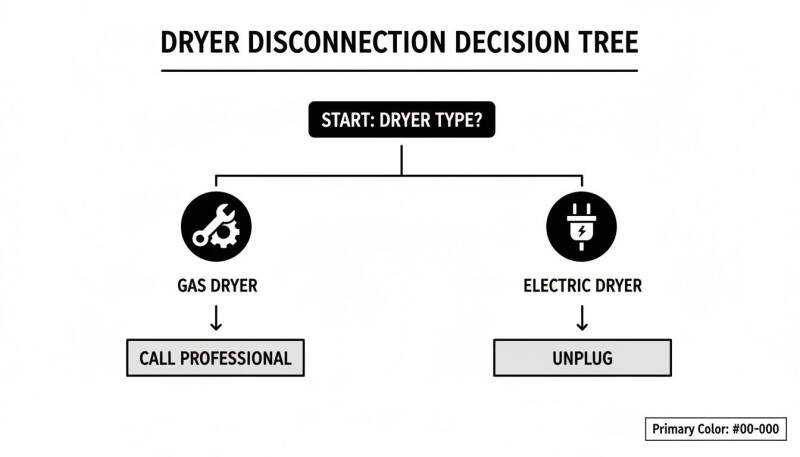
It’s a handy flowchart that shows while an electric dryer is a simple unplug, a gas dryer is a job best left to the pros for safety.
Donating to a Local Charity
If making money isn't the priority, donating your working appliances can make a huge difference in your community. Places like Habitat for Humanity ReStore are fantastic options; they'll resell your washer and dryer to fund their housing projects. You could also check with local shelters or community aid programs in NY and CT, which might give them directly to a family in need.
Before you haul anything over, always call them first. Most organizations have a few ground rules:
- The machines absolutely must be clean and in good working condition.
- They might have an age limit (like under 10 years old).
- Ask about their logistics—some offer pickup, but you may need to drop it off.
Donating is a great way to give your old appliance a second life and keep it out of the scrap heap.
Recycling Your Non-Working Appliances
So, what if your washer or dryer is completely kaput? Leaving it on the curb is the worst thing you can do. Not only is it an eyesore, but it's often illegal in many areas of NY and CT and terrible for the environment.
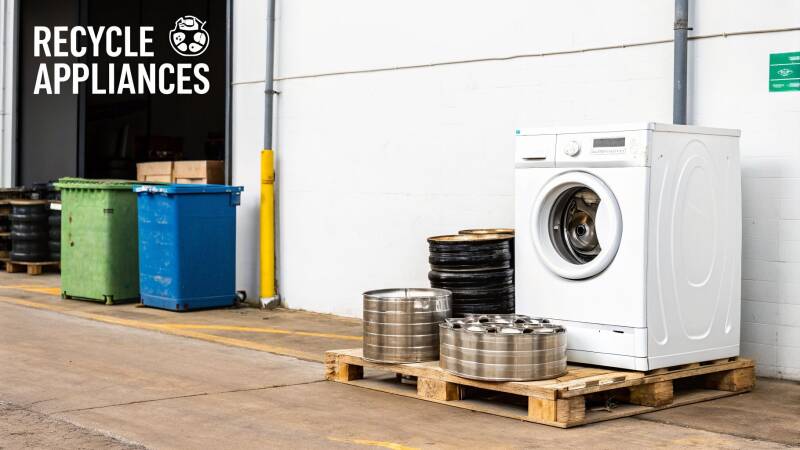
The right move is responsible recycling. These machines are packed with valuable metals like steel, aluminum, and copper that can be recovered and reused. Recycling just one washer and dryer set can recover enough steel for over 1,000 soda cans and $20-$50 worth of copper wiring. This is a big deal, as it reduces the need to mine for new raw materials. The Steel Recycling Institute has some great info on why this is so important.
Your best bet is to find a certified e-waste recycling center or a local scrap metal collector. It's also worth checking with your utility company; some even have "bounty" programs where they’ll pay you a small fee to take away and recycle old, inefficient appliances.
Washer and Dryer Disposal Methods Compared
Choosing the right disposal method can be tricky. This table breaks down the three main options to help you see which one aligns best with your situation.
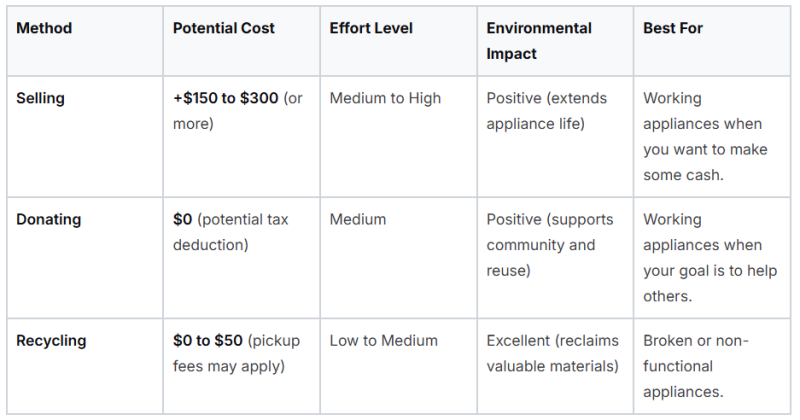
Ultimately, whether you sell for cash, donate to a cause, or recycle responsibly, you're making a better choice than sending your old appliances straight to the landfill. Each path has its own rewards, from financial gain to community support.
Why You Can't Just Toss Your Old Washer and Dryer
Let's be honest, when your old washer or dryer finally gives up the ghost, the first thought is usually, "How do I get this thing out of my house?" But it's not as simple as dragging an old chair to the curb. These heavy machines are a major contributor to what's known as electronic waste, or e-waste, and just dumping them can cause real problems.
When an old appliance ends up in a landfill, it does more than just take up a massive amount of space. It's a jumble of metals, plastics, and chemicals that can pose a serious threat to the environment if not handled the right way. Thinking about responsible disposal is about making sure we pull out the valuable materials for reuse and safely contain the hazardous ones.
The Staggering E-Waste Problem
Every year, Americans get rid of millions of large appliances, and it's fueling a huge e-waste crisis. Back in 2021, the U.S. alone generated an incredible 10 million metric tons of e-waste. That breaks down to about 70 pounds for every single person.
What’s truly shocking is that only 15% of it gets properly recycled. The other 85%? It’s piling up in landfills or, worse, being dumped illegally where it can leak toxic materials. You can find more eye-opening stats on the state of appliance recycling at United Electronic Recycling.
This isn't just about washers and dryers. The issue covers everything from old lawnmowers to office equipment. We actually put together a guide on how to dispose of old lawn equipment that dives into similar challenges. For homeowners in areas like Westchester or Dutchess County, trying to take an old appliance to the dump yourself can get expensive, with fees often hitting $50 to $100 per item. Plus, many states have outright banned e-waste from landfills, making it illegal.
The Hidden Dangers Inside Your Old Appliances
That washer that served you faithfully for 15 years might look harmless, but older appliances can be environmental time bombs. They’re often built with materials that are perfectly safe during operation but become hazardous once the machine starts breaking down in a landfill.
Here are a few of the culprits you might find lurking inside:
- Mercury: Used in older control panels and switches, mercury is a powerful neurotoxin that can work its way into our water supply.
- PCBs (Polychlorinated Biphenyls): These toxic chemicals were common in the capacitors of appliances made before 1979.
- Flame Retardants: Found in plastic components and insulation, these chemicals don't break down easily and can contaminate soil for decades.
Once these substances are exposed to the elements, they can seep into the groundwater and soil, creating a long-term risk for local ecosystems and, ultimately, our health.
By making the choice to dispose of your appliance responsibly, you are actively preventing these hazardous materials from poisoning the environment. It’s a simple action on your part that has a huge, lasting positive impact on your community.
The Upside: Recovering and Reusing Valuable Materials
The great news is that proper disposal isn't just about preventing harm—it's about doing good. A single washing machine is packed with resources that are just waiting to be recovered.
Think about all the steel in that machine. When you recycle it, that steel can be melted down and used to make new products, from car parts to the beams in a new building. This process uses significantly less energy and produces fewer carbon emissions compared to mining and processing brand-new iron ore.
By choosing to recycle, you become part of the circular economy. You’re helping to conserve our planet's natural resources, cut down on pollution, and give the materials in your old appliance a second life instead of letting them become a permanent problem in a landfill.
Common Mistakes to Avoid When Removing Old Appliances
Getting rid of an old washer and dryer seems straightforward, but we've seen a few simple missteps turn into major headaches time and time again. From damaged property to unexpected fines, a little know-how can help you sidestep the most common—and costly—blunders. The biggest one? Underestimating the job from the start.
Trying to Go It Alone
One of the most frequent mistakes we see is homeowners trying to wrestle with these machines by themselves. A standard washing machine tips the scales at 150-250 pounds, and its bulky, awkward shape is a nightmare to maneuver through tight hallways, around corners, and especially down stairs.
Without the right tools, like an appliance dolly and securing straps, you’re just asking for trouble. We've been called in after the fact to see the results: deep gouges in hardwood floors, dented drywall, and even serious back injuries that could have easily been avoided.
Ignoring Local Disposal Laws
It’s tempting to just roll the old units out to the curb and hope for the best, but this is a critical mistake. Most towns across NY and CT have strict rules against this. Leaving large appliances on the curb isn't just an eyesore; it’s often considered illegal dumping, which can come with some hefty fines.
This ties into a much bigger issue. The United States has a massive e-waste problem, and a lot of it comes from people not following proper disposal guidelines. By 2018, the amount of municipal solid waste generated each year hit a staggering 292 million tons, with appliances making up a significant chunk. Meanwhile, recycling rates fell to just 32.1%. You can learn more about the appliance waste problem and see why following the rules makes such a big difference.
Don't just assume the regular garbage truck will take it. You absolutely have to check your local municipality's website for their specific rules on bulk waste or appliance pickup. What works in Poughkeepsie might get you a fine in Fairfield.
Hiring the Wrong Kind of Help
Finally, be careful who you hire. You might find a listing on a local marketplace from someone offering to haul away your washer and dryer for a price that seems too good to be true. It probably is. These "under-the-table" operators often cut their costs by illegally dumping your appliances to avoid paying recycling center fees.
This creates a two-fold problem for you:
- Environmental Damage: Your old machines could end up in a ditch or a wooded area, where they can leak harmful chemicals into the soil and groundwater.
- Your Legal Liability: If those illegally dumped appliances can be traced back to you, you could be the one on the hook for cleanup costs and fines.
Your best bet is to always work with a reputable, insured junk removal service. A professional company gives you peace of mind, ensuring your old appliances are handled safely and recycled in line with all state and federal regulations. It completely protects you from any future liability.
When to Call in a Professional Removal Service
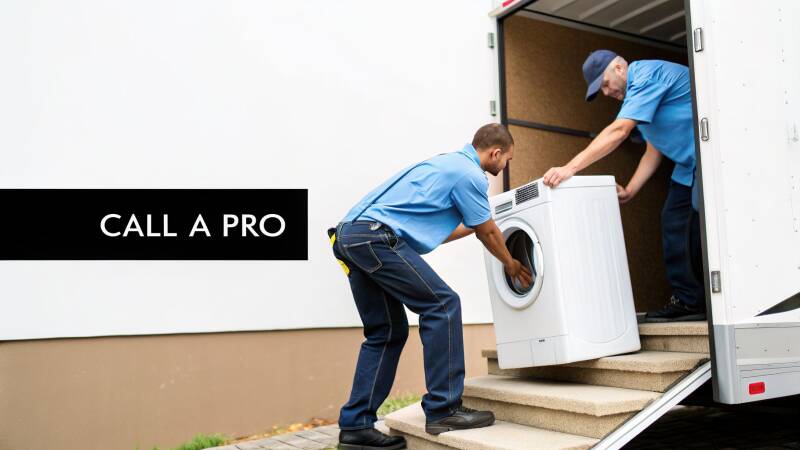
While you can certainly sell or donate a working washer and dryer, there are times when the smartest (and safest) move is to just let a professional handle it. Let's be honest, getting rid of these bulky appliances can be a real headache, and there are a few clear signs that it's time to call for backup.
Recognizing these situations can save you from a scratched-up floor, a pulled back muscle, or just a weekend of pure frustration.
Key Scenarios for Hiring a Pro
Certain logistical hurdles can quickly turn a DIY removal into a disaster waiting to happen. If your old appliances are lodged in a tricky spot, it's probably time to pick up the phone.
Think about these common situations:
- Challenging Locations: Is your laundry room tucked away in a cramped basement with one of those narrow, winding staircases? Or maybe it's on the second floor, meaning you have to wrestle it around tight corners and down a full flight of stairs.
- Lack of Proper Equipment: Moving a 200-pound machine safely takes more than brute force. The pros show up with the right tools for the job—appliance dollies, hoisting straps, and furniture pads to protect your walls and floors.
- Physical Limitations: These things are heavy. And awkward. If you don't have the strength or a reliable helper, trying to move one yourself is just asking for a serious injury.
Here's my rule of thumb: If you have even a shadow of a doubt about moving the machines safely, don't do it. The cost of a professional service is a small price to pay for your safety and peace of mind.
What to Expect from a Professional Service
Hiring a team like D&B Complete Home Services takes the chore of appliance removal completely off your plate. What could be a difficult, all-day project becomes a quick, hands-off experience.
A good service will give you a clear, upfront quote, so you aren't hit with surprise fees later. Most can even give you a solid estimate right over the phone. When the day comes, an insured and experienced crew shows up, does all the heavy lifting, and gets the appliances loaded onto their truck—sometimes in just a few minutes.
Most importantly, a professional junk removal service ensures your old appliances are disposed of responsibly. They already have connections with certified recycling centers, making sure every bit of metal and plastic is handled the right way. For anyone in the NY and CT area looking for a reliable solution, checking out professional junk removal services is easily the most efficient way to get the job done.
Answering Your Top Questions About Washer & Dryer Disposal
Even with a solid plan, a few questions always seem to pop up when it's time to get rid of a big appliance. It's completely normal. Based on my experience helping homeowners across New York and Connecticut, here are some straightforward answers to the things people ask most.
How Much Does It Really Cost to Haul Them Away?
For a typical two-piece washer and dryer set, you should budget somewhere between $75 and $150 for a professional haul-away service.
That price usually gets you two movers who will do the heavy lifting out of your home, load the units onto their truck, and cover the transportation and recycling center fees. Just keep in mind, a tricky removal from a tight basement or a long drive to your property could nudge that price up a bit. Always ask for a firm quote upfront so there are no surprises.
Can I Just Drag My Old Washer to the Curb?
I get this question all the time, and the answer is almost always a hard no. Most towns in our area have strict rules against leaving large appliances on the curb. It's often considered illegal dumping, and the fines can be a lot more painful than paying for a proper removal service.
Now, some municipalities do have special bulk pickup days, but you absolutely have to schedule it with them ahead of time. Don't ever assume the regular garbage truck will just grab a 200-pound machine. Before you do anything, pull up your local town’s public works website to see what their specific rules are.
A quick call or a 5-minute visit to your local sanitation department’s website is all it takes to avoid a hefty fine. It’s a simple step that keeps you on the right side of the law.
What’s the Move for a Completely Busted Machine?
If your washer or dryer is officially dead and not worth a dime to anyone, recycling is really the only responsible path forward. Charities can't take non-working appliances, so donating is off the table.
Your best bet here is to find a junk removal service that specifically works with certified e-waste recycling facilities. This ensures the machine is dismantled correctly—they'll safely handle any hazardous materials and recover valuable metals like steel and copper.
When you're dealing with the hassle of appliance removal, you need a team you can count on. D&B Complete Home Services INC. provides fast, reliable, and eco-friendly junk removal, making sure your old washer and dryer are handled professionally from the moment we arrive. Learn more about how we can make your appliance disposal effortless.
Add comment
Comments