Learn how to declutter a house fast with our actionable guide. Discover proven sorting methods, disposal strategies, and when to call for junk removal.
How to Declutter a House Fast A Practical Guide
When you need to declutter your house fast, the trick is to adopt a simple, time-boxed strategy. The goal isn't perfect organization; it's rapid removal. You need to gather your supplies, set up a staging area, and zero in on the high-impact zones first to get the ball rolling.
Your Game Plan For Rapid Decluttering
Staring at a mountain of clutter is paralyzing. When every surface is covered and closets are bursting at the seams, it's easy to feel so overwhelmed that you do nothing at all. That’s why having a clear, actionable game plan is your most powerful tool.
Right now, forget about meticulously organizing every drawer. This is about making swift, decisive moves to reclaim your space. Let go of perfection and embrace momentum. The rush you get from clearing just one countertop or filling that first donation box is often all the motivation you need to keep pushing forward.
Preparing For A Fast Declutter
Before you even touch a single item, spending a little time on prep will save you hours of headache later. Think of it as setting the stage for a successful performance. A bit of groundwork ensures you can work without interruption, keeping your focus and energy high.
To get your project off to a smooth start, run through this quick prep checklist. It covers the essentials you'll need to have in place before the real work begins.
Essential Decluttering Prep Checklist
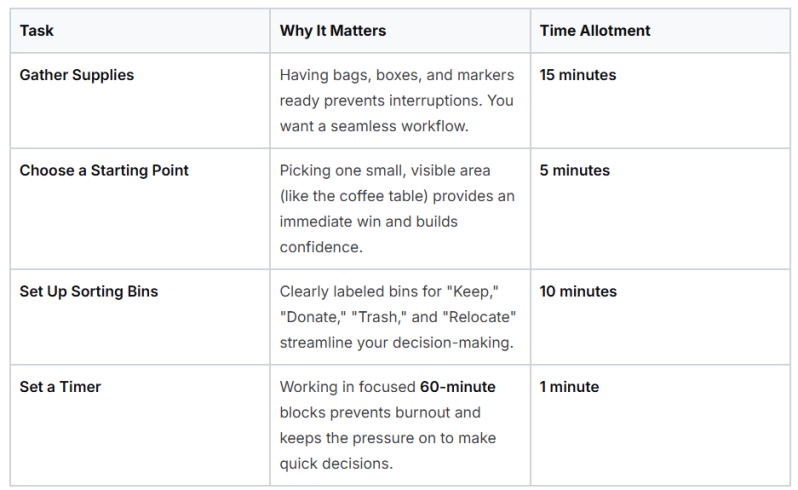
With these simple steps out of the way, you're ready to dive in without losing steam.
The most critical mindset shift is from "Where does this go?" to "Does this stay?" Answering this one question for each item is the engine that drives a fast-paced decluttering project.
The impact of a cluttered home is more than just visual mess; it can genuinely disrupt your life. Did you know that 60% of Americans report being late for school or work because of it? That's a huge number, showing a direct link between disorganization and lost productivity. You can read more about these decluttering statistics to see the real cost of living with too much stuff.
By committing to this fast-paced plan, you’re doing more than just cleaning—you’re reclaiming your time and dialing down your daily stress.
The Four-Box Method for Decisive Sorting
If you want to declutter a house fast, you have to get ruthless. Seriously. Lingering over every single item is a recipe for disaster—it’s how a one-day job turns into a one-month nightmare. This is where the Four-Box Method comes in. It’s a beautifully simple system I’ve seen work time and time again because it forces you to make a snap judgment and move on.
The concept is easy. Before you even touch a thing in a room, you set up four designated areas. You can use actual boxes, laundry baskets, or even just labeled trash bags. Just make sure they’re clearly marked:
- Keep: For things you genuinely use, love, and have a specific place for. No wishful thinking allowed.
- Donate/Sell: For anything in good shape that someone else could get use out of. Think clothes, books, and housewares.
- Trash: For the broken, the expired, the stained, and the truly unusable. Don't be shy here.
- Relocate: This is the "doesn't live here" pile. It’s for anything that’s perfectly fine but has wandered into the wrong room.
The magic of this system is that you only handle each item once. You pick it up, decide its fate, and put it in the right spot. There is no “I’ll deal with this later” pile. That’s just procrastination with a fancy name.
Asking The Right Questions
Making quick decisions gets a lot easier when you have the right questions to guide you. Your first gut instinct is almost always the correct one, so don't get stuck in analysis paralysis.
For every single item you pick up, ask yourself these three things:
- Have I used this in the last year? Be honest. If it’s not a seasonal item (like Christmas decorations), and you haven't touched it in 12 months, it’s a prime candidate for the donate box.
- Would I buy this again today? This is my favorite question because it cuts right through sentimental clutter. If you wouldn't spend your hard-earned money on it right now, why are you letting it take up valuable space?
- Do I own something else that does the same thing? You don’t need four corkscrews or a drawer full of nearly identical black spatulas. Keep the one you like best and let the duplicates go.
These questions reframe the entire process. You stop thinking about what you might lose ("What if I need this someday?") and start focusing on what you stand to gain ("How much space and peace of mind will I get back?"). That "just in case" mindset is the root cause of most clutter.
I always tell my clients to think of it this way: holding onto something "just in case" is like paying rent for it to live in your house. If you haven't used it in a year, you've paid 365 days of rent on that item for absolutely nothing.
Overcoming Emotional Roadblocks
Let's be real, some items are just plain hard to part with. Guilt is a huge one, especially for things you inherited or received as gifts. My advice? The gift was in the act of giving and receiving. You honored the giver when you accepted it. You are not obligated to store it for eternity if it doesn't fit your life.
Another big hurdle is money. The "But I paid so much for this!" feeling is powerful, but it’s a classic example of a sunk cost fallacy. That money is gone, whether you keep the item or not. Keeping it in a closet doesn’t bring the money back. Let it go so someone else can actually get some value from it, either by selling or donating it.
When you make these tough calls, you're doing so much more than just clearing out a room. You're lifting a mental and emotional weight you might not have even realized you were carrying. And that’s what this is really all about.
Executing the Weekend Decluttering Blitz
When you’ve only got a weekend to get your house in order, you need more than a to-do list—you need a battle plan. A weekend blitz is an intense, high-reward approach designed to reclaim your space, and fast. The whole idea is to work in focused sprints, be absolutely ruthless with your priorities, and sidestep burnout before it even has a chance to set in.
This isn’t your average tidying up; it's a full-on decluttering marathon. Think about this: the average American home is packed with over 300,000 items. That’s not a typo. A big reason for this is that almost 59% of what we buy is on impulse, not because we actually need it. Our homes quickly fill up with stuff that just takes up space.
Day One Morning: High-Impact Zones
Your first move should always be on the areas that hit you the hardest visually and functionally. Kick things off in the kitchen and living room—these are the command centers of your home. Getting these spaces clear first gives you an immediate psychological win and makes the rest of the job feel much less daunting.
Try working in focused 90-minute blocks. Seriously, set a timer. For that hour and a half, you're all in—no phone, no distractions. When the alarm rings, you must take a 15-minute break. Walk away, grab some water, and reset. This simple trick is your best defense against decision fatigue, which will derail a quick declutter faster than anything else.
Here’s a simple flowchart for making quick decisions on every single item you touch.
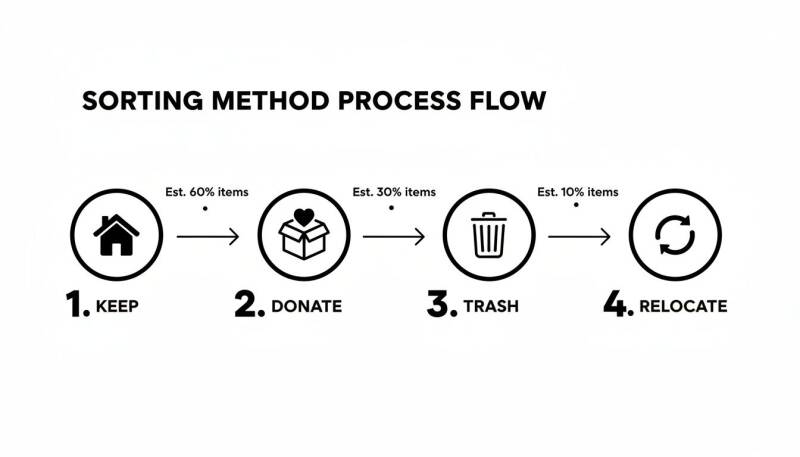
Stick to this process, and you'll avoid the dreaded "maybe" pile that just becomes a new form of clutter.
Day One Afternoon: Bedrooms and Bathrooms
Once you’ve refueled with some lunch, it’s time to pivot to the personal spaces—bedrooms and bathrooms. These spots are notorious for hoarding hidden clutter, from that collection of half-empty shampoo bottles under the sink to clothes you haven’t seen in years crammed in the back of your closet.
When you hit the closets, apply the one-year rule without mercy. If you haven't worn it through all four seasons, its time is up. Be brutally honest with yourself about what actually fits your life right now, not the life you might have "someday."
My go-to mantra for a weekend purge is simple: "Progress, not perfection." The goal here is to clear the clutter and reclaim your space, not to create a magazine-perfect showroom. Fine-tuning the organization can happen later, after the heavy lifting is done.
Day Two: The Final Push
Sunday is for tackling the final frontiers—those out-of-sight, out-of-mind storage areas like the garage, attic, basement, or home office. These are the places where forgotten things go to collect dust. Because you don’t see this stuff every day, it’s often easier to be objective and make quick decisions without getting bogged down by sentimentality.
If you have a partner or family member helping, divide and conquer. One person can take the garage while another sorts through the mountain of paperwork in the office. This tactic doubles your efficiency and stops you from tripping over each other. Just make sure everyone agrees on the sorting rules beforehand to keep things consistent. The results from a coordinated effort like this can be truly stunning, as you can see in some of our before-and-after home service transformations.
Smart Disposal: What to Do With Your Unwanted Items

Sorting everything into piles is a huge win, but let's be honest—the job isn't done until it's all out the door. This last step is what actually gets you your space back. Getting rid of everything quickly and responsibly is how you finish strong.
When you’re trying to declutter a house fast, those "Donate" and "Sell" piles need to disappear. Don't let them become the next generation of clutter in a different corner. Swift removal is the goal, so you'll want to take the path of least resistance for most of your stuff.
Handling Donations and Sales
For your donation pile, speed is everything. Get those items bagged or boxed up and check the websites for local charities. See if they have convenient drop-off hours or, even better, a pickup service. A quick call can save you a wasted trip by confirming what they’re actually accepting right now.
Selling things online sounds great, but it can be a massive time-suck. If speed is your main goal, you have to be ruthless here. Only try to sell high-value items that you know will move quickly on a platform like Facebook Marketplace.
- Quick Tip for Selling: Price your items to sell, not to sit. A slightly lower price usually means a much faster sale. When your real goal is to clear out space, that’s way more valuable than haggling over a few extra dollars.
For everything else—the clothes, the everyday kitchen gadgets, the stacks of books—donating is simply more efficient. The immediate reward of having that space back almost always outweighs the potential cash from a long, drawn-out selling process.
Responsible, Eco-Friendly Disposal
That trash pile needs a little more attention than just being chucked into a bin. So many common household items that we throw away can, and should, be handled differently. This isn't just about minimizing your environmental footprint; in many areas, it's actually required by law for certain materials.
Don’t let guilt over creating waste trick you into keeping things you don’t need. The most responsible thing you can do is dispose of items correctly. This gives them a chance at a new life through donation or recycling instead of just taking up valuable real estate in your home.
Many towns host special collection days for hazardous waste. Make sure to set aside things like old paint, batteries, and harsh cleaning chemicals. A quick search for your local municipality's waste management website will give you all the details you need. You can also check out our junk removal tips and resources for more in-depth guidance.
Here are a few common items that often end up in the trash when they shouldn't:
- Old Electronics (e-waste): Things like old phones, computers, and TVs contain harmful materials and should never be put in the regular garbage. Many big-box electronic stores have take-back programs.
- Textiles: Even clothing that's stained or ripped can be recycled. Keep an eye out for textile recycling bins in your community.
- Books: If charities won't accept your old paperbacks, look for local book recycling programs or services that buy used books.
Taking these few extra minutes ensures your decluttering marathon is both fast and conscientious.
When to Call in the Pros for Junk Removal
While tackling a decluttering project yourself can feel incredibly satisfying, there comes a point where some jobs are just too big, too heavy, or too urgent to manage on your own. Deciding to call in a professional service isn't admitting defeat—it's a smart, strategic decision that saves you time, back-breaking labor, and a whole lot of stress. When you're trying to clear a house fast, your time is the most valuable thing you have.
Think honestly about the scale of your project. Are you looking at a full estate cleanout, with rooms filled to the brim with a lifetime of possessions? Or maybe you're navigating a hoarding situation, which comes with its own set of emotional and physical hurdles. These jobs involve a staggering amount of stuff that could easily take one person weeks, if not months, to sort through.
A professional crew is built for exactly this kind of work. They can clear out an entire home in a day or two—a fraction of the time it would take you—freeing you up to handle everything else on your list.
Red Flags: When You Absolutely Need Professional Help
Some situations are just clear-cut signs that it's time to bring in reinforcements. If your decluttering job involves any of these challenges, calling a pro is hands-down the safest and most efficient choice you can make.
- Heavy or Awkward Items: That ancient sleeper sofa in the basement? The busted-up refrigerator? An old cast-iron tub? Trying to move these isn't just a hassle; it’s a recipe for injury or a damaged home. Professionals have the dollies, straps, and know-how to get these monsters out safely.
- Estate and Property Cleanouts: Clearing a loved one’s home or getting a rental property ready for the next tenant often comes with a tight deadline and a heavy emotional burden. A junk removal service can compassionately and efficiently handle the physical side of things.
- Construction and Renovation Debris: You can't just toss old drywall, pulled-up flooring, or scrap lumber in your weekly trash. There are local rules for disposing of construction debris, and a professional crew knows exactly how to handle it all legally and responsibly.
In these cases, just figuring out the logistics of disposal can be a nightmare. A professional service takes care of all of it—the sorting, the loading, the trips to the donation center, and the recycling drop-offs.
The real benefit of hiring a professional service isn't just seeing the junk disappear. It's the immense relief you feel knowing the entire job is being handled correctly and safely, without adding another ounce of stress to your life.
How the Professional Process Works
Bringing in a team like D&B Complete Home Services turns an overwhelming project into a straightforward one. It usually starts with a clear, no-pressure quote based on how much stuff you need gone.
Once you approve it, the team shows up ready to work. They do all the lifting and loading from wherever the items are—you don't have to drag anything to the curb. They're also trained to sort items for donation and recycling, making sure as little as possible ends up in a landfill.
After the truck is loaded, they'll even do a final sweep-up of the area. When you're buried under a mountain of clutter with the clock ticking, professional junk removal services are your best shortcut to getting your space back.
Common Questions About Decluttering Fast
Even the best-laid plans can hit a snag. When you're trying to clear out a house on a tight deadline, questions are bound to pop up, and hitting a wall can kill your momentum. Here are some quick answers to the problems I see people run into all the time.
How Do I Stay Motivated During A Long Day?
Keeping your energy up during a marathon decluttering session is tough, but it’s not impossible. The secret is to create small, visible wins right from the start. Don't look at the entire disastrous room; just focus on clearing one single surface, like a countertop or a bookshelf.
That little hit of instant gratification works wonders for your mindset. I also tell people to put on some high-energy music or a good podcast to keep the vibe positive.
Try working in focused 60-minute sprints, then take a mandatory 15-minute break to get some fresh air. Seriously, set a timer. One more trick? Snap a quick "before" and "after" photo of each small area you finish. It’s tangible proof of your progress and can be the fuel you need to keep pushing forward.
What Are The Biggest Decluttering Mistakes?
When you’re in a hurry, it’s easy to make a few classic mistakes that can totally derail your progress. The biggest one I see is diving in without a clear sorting system. You just end up moving piles from one spot to another, making a bigger mess than you started with.
Getting bogged down in nostalgia is another huge time-waster. Those sentimental items require more emotional energy than you can afford to spend right now.
The fastest way to lose momentum is to pause and reminisce over every old photo or keepsake. Create a single "Decide Later" box for these items and commit to reviewing it only after the main declutter is finished.
Another pitfall is trying to organize while you declutter. Your job right now is purging, not perfecting. The goal is to get things out, not to find the perfect home for what's staying. Lastly, people almost always underestimate how much stuff they actually have, leaving them with no plan for getting rid of it all. That's usually the moment the phone rings and they’re asking for professional help.
Should I Try To Sell My Items Or Just Donate Them?
If your main goal is to clear out the house fast, donating is almost always the right answer. Selling things takes an incredible amount of time. You have to take decent photos, write descriptions, answer a million questions from flaky buyers, and then arrange a time to meet or ship.
Your time is your most precious asset in a rapid cleanout. For a quick purge, that time is worth far more than the handful of dollars you might get for old kitchen gadgets or books.
The only exception? If you have a few high-value, in-demand items you’re positive you can sell in a day or two. For everything else—clothes, most furniture, decor—the real win is the immediate reward of getting your space back. Donating lets you clear it all out in one shot so you can move on.
When the piles are too big and the clock is ticking, D&B Complete Home Services INC. can clear it all out for you. Whether it’s an entire estate or just a few bulky items, we handle the heavy lifting, hauling, and responsible disposal so you can reclaim your space fast. Schedule your junk removal service with us today!
Add comment
Comments