Our expert guide to demolition and junk removal simplifies your project. Learn about costs, safety, and choosing the right NY & CT pros for a seamless cleanout.
Demolition and Junk Removal Done Right
It all comes down to one simple question: are you tearing something down, or just clearing things out?
Demolition is the heavy lifting—knocking down walls, tearing up old floors, or dismantling a backyard shed. Junk removal, on the other hand, is all about hauling away loose items, like old furniture, appliances, or boxes of clutter.
Think of it this way: demolition is the major surgery needed for a renovation, while junk removal is the thorough clean-up that gets the space ready for what's next.
Demolition vs Junk Removal: When to Call the Pros
On the surface, demolition and junk removal look pretty similar. Both leave you with a clean, empty space. But they solve completely different problems, and knowing which one you need is the first step to avoiding project delays, surprise costs, and a whole lot of frustration.
Let’s say you’re a homeowner in Westchester planning a full kitchen gut. You’re not just clearing out pots and pans; you're tearing out cabinets bolted to the walls, ripping up tile, and maybe even knocking down a pantry. That’s a demolition job. It’s a structural process that creates a pile of debris.
Now, picture a different scenario. A landlord in Fairfield County, CT, has a rental unit where the last tenants left everything behind—couches, mattresses, broken electronics, you name it. Nothing needs to be torn down; it just needs to be gone. That's a classic case for a professional junk removal service. The goal is simply to clear out unwanted stuff without touching the structure of the home.
Making the Right Choice for Your Project
So, how do you decide? It really hinges on whether your project involves taking apart something that’s built-in or just getting rid of things that are sitting around.
This quick decision tree can help you figure it out in a snap.
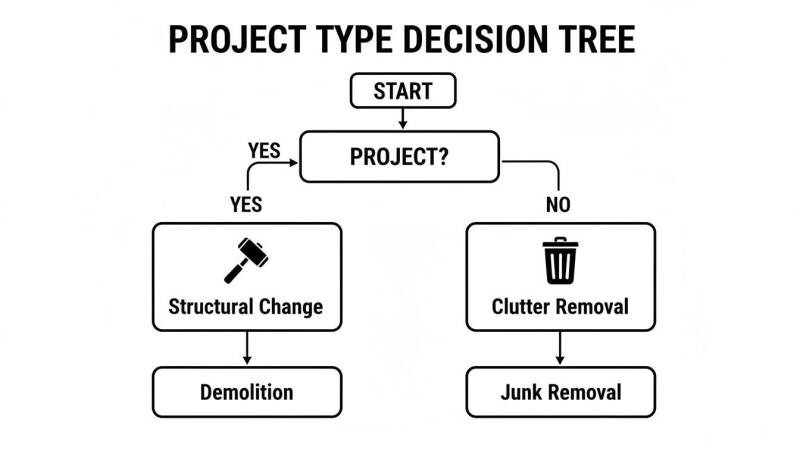
Here's a handy table to make the choice even clearer. Just find your project goal to see which service lines up with what you need to get done.
Quick Guide Demolition vs Junk Removal
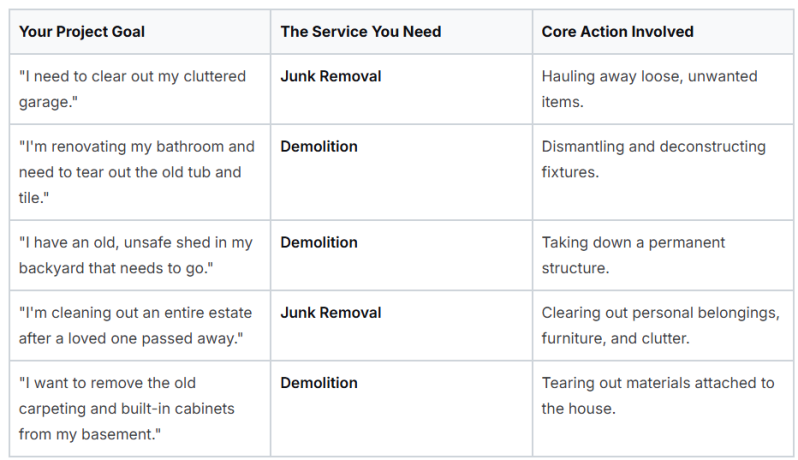
This table should give you a pretty good idea, but remember that many projects, especially big renovations or property cleanouts, will actually need both. A good contractor can handle the whole process from start to finish.
For example, a team might come in to demolish an old deck, and then they'll stick around to haul away all the splintered wood, rusty nails, and concrete footings. They handle the deconstruction and the clean-up, leaving you with a perfectly clear space to start fresh.
Knowing what to ask for upfront ensures you hire a team with the right tools, skills, and insurance for your specific job.
Your Guide to a Safe Demolition Process
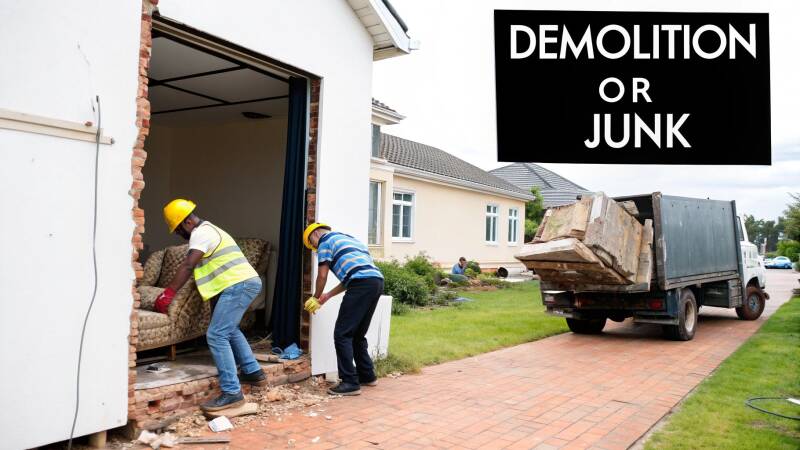
When you picture demolition, it's easy to imagine a wrecking ball and a cloud of dust. But in reality, a professional demolition project is far more about careful planning than brute force. It’s a precise, multi-step process designed to keep everyone safe, satisfy local codes, and get your property ready for its next chapter.
The whole thing kicks off with a detailed site walk-through. A good crew will come out to assess exactly what needs to be done, spotting potential hazards like asbestos or lead paint and figuring out the smartest way to take the structure apart. This initial visit is everything; it’s where a clear, actionable plan starts to take shape.
Part of that plan involves dealing with the maze of local permits. Every town, from Carmel in Putnam County to Stamford, CT, has its own rulebook for demolition. A seasoned contractor takes this headache off your plate, handling all the paperwork to make sure everything is filed and approved before a single hammer is swung. This is what protects you from nasty fines and legal trouble.
Soft Demolition vs. Hard Demolition
It's also important to know that not all demolition is the same. The method we use really depends on what you're trying to achieve, and it usually falls into one of two buckets.
- Soft Demolition: This is the more surgical approach. We’re talking about carefully removing interior elements without touching the building's main structure. Think of it as stripping a room for a remodel—pulling out old kitchen cabinets, taking down a non-load-bearing wall, or gutting a bathroom down to the studs.
- Hard Demolition: Now we're getting into the heavy-duty stuff. This involves taking down structural parts of a building. It could be removing a load-bearing wall, tearing down an old garage, or razing an entire house. This kind of work demands heavy machinery and a deep understanding of engineering and safety.
Knowing the difference helps you explain your vision and ensures the right team with the right tools shows up. It’s this kind of specialized work that’s fueling major growth in the demolition and junk removal world. In fact, the U.S. Demolition & Wrecking industry is expected to reach $11.2 billion in revenue by 2025, driven by redevelopment right here in places like New York and Connecticut. You can see more on this trend from market research by IBISWorld.
Safety and Cleanup: Finishing the Job Right
With the permits in hand and the plan locked in, safety on the job site is paramount. Professional crews live by strict protocols to manage dust, contain debris, and protect both the workers and your property. We'll use plastic sheeting to seal off the work area, water suppression to keep dust down, and make sure everyone is geared up with the right personal protective equipment (PPE).
The final stage isn't just about demolition; it's about restoration. A professional team doesn’t just knock things down—they meticulously clean the site, removing every last nail and scrap of wood, leaving you with a clean, safe, and truly blank slate for whatever comes next.
Mastering the Art of Junk Removal
Let’s be honest, professional junk removal is about a lot more than just grabbing stuff and throwing it in a truck. It’s really a specialized service built around being fast, safe, and efficient. Think of it as calling in a tactical team to help you reclaim your space without the back-breaking labor and logistical headaches.
The scope of what these services cover is huge. It could be a simple, one-off pickup for that ancient refrigerator in your Dutchess County garage, or it could be a massive estate cleanout for a realtor in Fairfield County, CT, who needs a property market-ready, fast. No matter the job size, the goal is always the same: get rid of what you don’t want, and do it quickly and carefully.
Picture that basement or attic that has slowly turned into a time capsule of forgotten things. A professional crew won’t just start chucking items aimlessly. They come in with a plan, sorting through everything to separate what can be donated from what can be recycled. This responsible approach is at the heart of quality demolition and junk removal.
The Process from Arrival to Haul-Away
So, what does a typical job actually look like? Let’s imagine we’re clearing out a cluttered commercial office in Orange County for a new business moving in.
- Initial Assessment: The moment the team arrives, they’ll do a quick walkthrough with you. This is their chance to confirm exactly what’s staying and what’s going, so there are no mix-ups and your grandmother's antique lamp doesn't accidentally end up in the truck.
- Strategic Loading: With a clear game plan, they get to work. The big, awkward items—like those heavy metal filing cabinets and old desks—usually go in first. They're placed carefully in the truck to make the most of the space and keep everything stable during transit.
- Careful Maneuvering: This is where the pros really shine. They know how to pivot a sofa through a tight doorway or carry a heavy appliance down a narrow flight of stairs without leaving a single scuff on your walls. It’s a skill that can save you a lot of repair headaches.
- Final Sweep-Up: A good junk removal company never leaves a mess in their wake. Once the truck is all loaded up, they'll do a final sweep of the area, leaving you with a clean, empty space that’s ready for whatever you have planned next.
This systematic process is what makes hiring a pro so different from trying to do it all yourself over a weekend. It's not just about brute strength; it’s about a smart, safe, and efficient system. For more tips on making your cleanout a success, check out our guide on junk removal tips and resources.
Beyond the Basics: Specialized Cleanouts
Junk removal services are also incredibly adaptable, often stepping in to handle sensitive jobs that require a little extra expertise and care.
- Estate Cleanouts: Professionals work alongside families and real estate agents, respectfully sorting through personal effects to prepare a property for its next chapter.
- Hoarding Situations: These projects demand compassion and a judgment-free attitude. The focus is always on creating a safe and healthy living environment for the occupant.
- Construction Debris Removal: This is a lifesaver for contractors. Keeping a job site in Westchester or Putnam County clear of wood scraps, old drywall, and other debris is essential for safety and efficiency.
At its core, professional junk removal delivers peace of mind. It’s the assurance that the heavy lifting, logistical planning, and responsible disposal are all handled, allowing you to focus on what comes next for your newly cleared space.
What Happens to All That Junk and Debris?
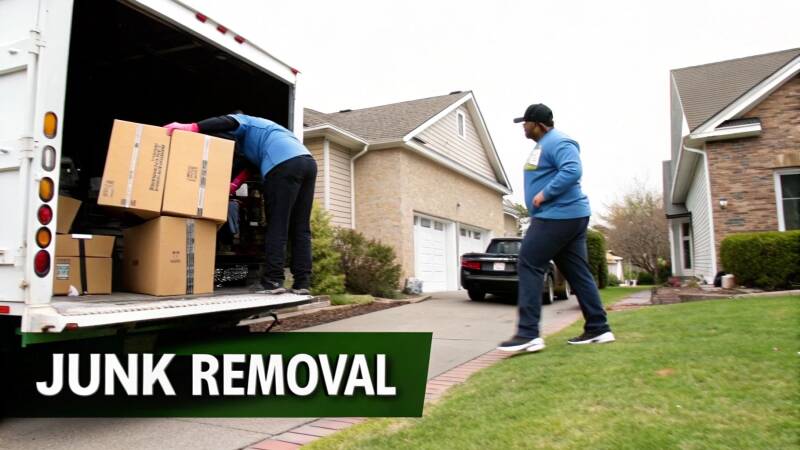
After our truck pulls away from your property, where does everything actually go? This is one of the most important parts of any demolition or junk removal job. It’s not just about getting clutter out of your sight; it’s about handling all that material responsibly for our environment and community.
Not too long ago, the answer was simple: everything went straight to the dump. But we’ve seen firsthand the staggering impact of that approach. The construction and demolition industry alone churns out about two billion tons of waste every single year across the globe. That’s roughly a third of all solid waste created worldwide, and it puts an incredible strain on our landfills.
Thankfully, the industry has made a major shift. Responsible waste management has become a huge global effort, with the market projected to hit an incredible $183.67 billion by 2032. Reputable companies are no longer just haulers; we're on the front lines of reducing what ends up in a landfill. You can dig into more of the data on this trend over at Fortune Business Insights.
Behind the Scenes: The Sorting Process
So, how do we make a real difference? It all boils down to a detailed sorting process that happens after we leave your site. Imagine a reverse assembly line where every single item is carefully evaluated and sent to its best possible next home. This is how we transform a messy pile of junk into a source of valuable, reusable materials.
Here’s a look at what that process typically involves:
- Donations and Salvage First: Before anything else, we pull out items that still have life left in them. Things like gently used furniture, working appliances, or household goods are set aside for donation to local charities right here in Westchester, Putnam, and our surrounding communities.
- Sorting for Recycling: Next, we get to work separating materials by type. Metals like steel and copper are easy wins. Concrete from a patio demo can be crushed and reused. Even clean, untreated wood can find a new purpose instead of rotting in a landfill.
- Handling the Tricky Stuff: Some things need special attention. Old electronics, or "e-waste," are full of materials that can't just be tossed. They have to be disposed of following strict regulations. For other specialty items, like that old mower in the shed, we have a whole guide on how to dispose of old lawn equipment.
When you hire a professional service, you're doing more than just saving yourself the hassle. You're making an investment in a cleaner, more sustainable community. By diverting tons of material away from landfills, you're actively helping build a circular economy where resources get a second chance.
This commitment to doing things the right way means your project has a positive ripple effect that goes far beyond your property line. Our goal is always the same: make sure as little as possible takes that final trip to the dump, helping protect our local environment for years to come.
Talking Money: How Demolition and Junk Removal Costs Work
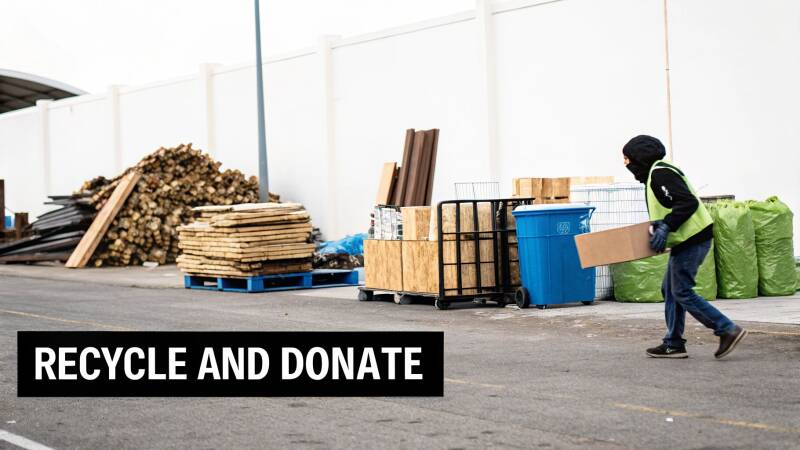
Let's get straight to it: what's this going to cost? Knowing what goes into the price is the best way to feel confident about the team you hire. While no two jobs are the same, the pricing for demolition and junk removal isn't pulled out of a hat. It's a straightforward calculation based on the labor, equipment, and disposal needed for your specific project.
For junk removal, the biggest factor is almost always volume. The easiest way to think about it is how much space your stuff will take up in our truck. We often price jobs by the truckload—a quarter-truck for a small cleanout, a half-truck for a bigger one, and so on. This makes it pretty simple to get a handle on the cost of clearing out a garage or basement.
Of course, the type of material matters, too. Super heavy debris like concrete, dirt, or old shingles can be priced a bit differently because of their weight and the special disposal fees they come with.
What Goes Into a Demolition Estimate?
When we shift gears to demolition, the pricing gets a little more detailed because the work itself is more involved. Tearing down a simple shed in a Dutchess County backyard is a whole different ballgame from a full interior gut of an old house in Westchester.
Here’s a breakdown of what a professional quote will cover:
- Size and Scope: This is the big one. The total square footage and how complex the structure is are the primary drivers of the final cost.
- Site Accessibility: How easy is it for us to get our crew and equipment to the job? A backyard shed with a wide-open path is far simpler (and less labor-intensive) than a third-floor bathroom remodel where everything has to go down tight stairwells.
- Hazardous Materials: This is a huge consideration. If we suspect the presence of materials like asbestos or lead paint, certified professionals have to handle their removal. It’s an extra step that adds to the cost, but it’s absolutely non-negotiable for keeping your family and our crew safe.
A good, transparent estimate will break all of this down for you. The mark of a reputable demolition and junk removal company is an upfront, all-inclusive price with no surprises. You should know exactly what you’re paying for before a single hammer swings.
How to Spot a Fair Price and Avoid Hidden Fees
The best thing you can do is get a detailed, itemized quote. Any pro worth their salt will insist on an on-site visit to see the job firsthand before giving you a hard number. Be very wary of any company that tries to give you a firm price over the phone, sight unseen.
At the end of the day, a fair price reflects the real-world costs of labor, responsible disposal, insurance, and the expertise needed to get the job done right. When you understand what goes into that number, you can compare quotes with confidence and choose a true partner for your project.
Finding the Right Local Pro for Your Project
Choosing who to hire for your demolition or junk removal job is probably the most critical decision you'll make in the whole process. It really is the difference between a project that runs smoothly and one that becomes a headache of hidden costs, delays, and potential liability. But finding a great local contractor in Westchester, Putnam, Dutchess, or Fairfield County doesn't have to be a shot in the dark. You just need to know what to look for.
First things first, let's cover the absolute must-haves. Don't even consider hiring anyone who can't prove they are fully licensed to work in your town and state. Along with that, ask for proof of both general liability and worker's compensation insurance. This isn't just about ticking boxes; it's what protects you from financial disaster if an accident happens on your property.
What Separates the Pros from the Rest?
Once you've confirmed the essentials like licensing and insurance, you can start looking for the signs of a truly professional and reliable company.
Here’s what to keep an eye out for:
- A Solid Local Reputation: Jump on Google and Yelp. Are people in your area saying good things? Look for reviews that talk about the crew being on time, professional, and charging what they quoted.
- Upfront, Honest Pricing: A pro will insist on seeing the job in person before giving you a clear, written, and itemized estimate. If you get a vague quote over the phone or feel pressured into a "cash-only" deal, walk away. Those are giant red flags.
- Good Communication: How do they handle your first call? Are they easy to get a hold of? A good team will answer your questions directly and keep you in the loop from start to finish.
Ultimately, you're looking for a partner, not just a service. A contractor who readily shows you their credentials and gives you a detailed quote isn't just being thorough—they're showing you from day one that they're committed to doing the job right.
This level of professionalism matters now more than ever. The global industrial demolition market is projected to reach $6.25 billion in 2025, largely because clients are demanding safer, more environmentally friendly methods. This trend influences everything, from how a team handles an interior gut job in Poughquag to a major cleanout in Connecticut. You can read more about the trends shaping the demolition industry.
By focusing on these key qualifications, you'll be able to confidently pick a true professional who will get your project done right.
Frequently Asked Questions
Even after you've made a decision, a few practical questions usually pop up. We get it. Here are some of the things homeowners and property managers across New York and Connecticut often ask us about demolition and junk removal.
Do I Have to Be Home for the Crew to Work?
Not always! If we're tearing down a shed in the backyard or just picking up a pile of junk from the curb, you don't need to be there. As long as we have clear access to the work area, our team can handle it without you having to change your schedule.
For interior projects, it’s a good idea for you or someone you trust to be there right at the beginning. This way, we can do a quick walkthrough together, confirm exactly what's going and what's staying, and make sure we’re all on the same page. We're flexible and can always work something out that fits your day.
So, Where Does All My Junk Actually Go?
We’re serious about keeping as much out of the local landfill as possible. Our process is much more thoughtful than just a one-way trip to the dump.
First, we sort through everything we haul away. We pull out any items that are still in good shape and can be donated to local charities. Then, we separate materials like metal, concrete, and wood for recycling. Only the small amount of true, non-salvageable trash that's left over goes to a proper disposal facility.
How Can I Get Ready for a Demolition Job?
A little prep work on your end goes a long way in making demolition day run smoothly. For any job happening inside, the biggest help is clearing out all your personal items, valuables, and anything small that's easy to move.
It’s also wise to throw some plastic sheeting over furniture in nearby rooms to keep the dust off. Don't worry, though—when we do our initial consultation, we'll give you a simple, specific checklist so you know exactly what needs to be done before our crew shows up.
Ready to clear the way for your next project? The experts at D&B Complete Home Services INC. offer reliable demolition and junk removal services to get the job done right. Learn more on our website
Add comment
Comments