Discover how foreclosure cleanout services work. Our guide covers the process, costs, legal rules, and how to hire the right pros for the job.
Your Complete Guide to Foreclosure Cleanout Services
When a bank forecloses on a property, what's left behind is often a chaotic scene. Furniture, trash, and forgotten personal items can litter every room, making the home impossible to show to potential buyers. That’s where foreclosure cleanout services come in.
These services are far more than a simple trash-hauling job. They are a specialized form of property restoration designed specifically for real estate professionals, banks, and investors who need to turn a distressed property into a marketable asset—fast. Think of it as the critical first step in transforming a financial liability back into a valuable investment.
What Exactly Are Foreclosure Cleanout Services?
Imagine taking over a property that’s been abandoned. It’s not just messy; it’s a legal and logistical puzzle. Foreclosure cleanout specialists are the experts who solve that puzzle. They methodically clear, clean, and secure the property, preparing it for the next chapter.
Unlike standard junk removal services, foreclosure cleanouts operate under a unique set of pressures. Professionals in this field know how to navigate the tight deadlines, legal requirements, and potential hazards common in bank-owned homes. They’re equipped to handle everything from piles of debris and old appliances to safely sorting personal belongings and deep cleaning every surface.
More Than Just a Cleanup Crew
A professional cleanout is a comprehensive, top-to-bottom process. The goal isn't just to empty the house; it's to make it safe, presentable, and ready for sale.
Here’s a quick rundown of what a typical foreclosure cleanout involves to get a property market-ready.
Foreclosure Cleanout Services At a Glance
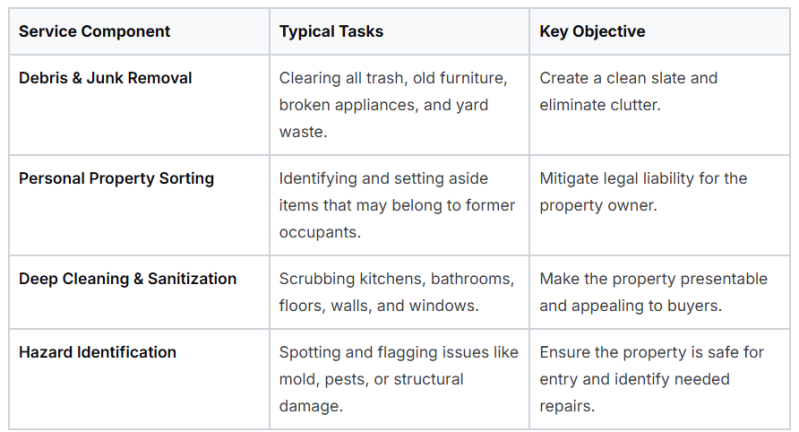
This complete approach ensures no stone is left unturned.
The need for this kind of meticulous work is growing. With foreclosure filings on the rise, getting properties back on the market efficiently is more important than ever. Recent industry data shows that 289,441 properties entered the foreclosure process nationwide, a jump of 14% from the year before. This trend, detailed by sources like ATTOM Data Solutions, highlights why having a reliable cleanout partner is so crucial.
A professional foreclosure cleanout isn't an expense—it's a strategic investment. By quickly turning a neglected property into a clean, market-ready home, you not only boost its final sale price but also drastically cut down on the time it sits empty, saving a small fortune in carrying costs.
For real estate professionals managing properties in New York and Connecticut, working with an experienced team means the entire process is handled correctly from start to finish. A team like D&B Complete Home Services INC. manages everything, from the initial walkthrough and quote to the final broom-sweep, making sure your asset is ready for its next owner.
The Foreclosure Cleanout Process: From Start to Finish
Walking into a foreclosed property for the first time can be a shock. It's often not just empty, but filled with abandoned belongings, trash, and a general sense of neglect. Tackling this seems like a monumental task, but for a professional crew, it’s a structured, methodical operation designed to efficiently turn a distressed property back into a valuable asset.
The whole project unfolds in clear, predictable stages. Think of it less like a chaotic free-for-all and more like a carefully planned mission. Every step, from the initial walkthrough to the final sweep-up, is executed with precision. This systematic approach is what allows us to meet tight real estate deadlines, navigate legal requirements in NY and CT, and ultimately maximize the property's market potential.
This visual guide shows just how dramatic that transformation can be.
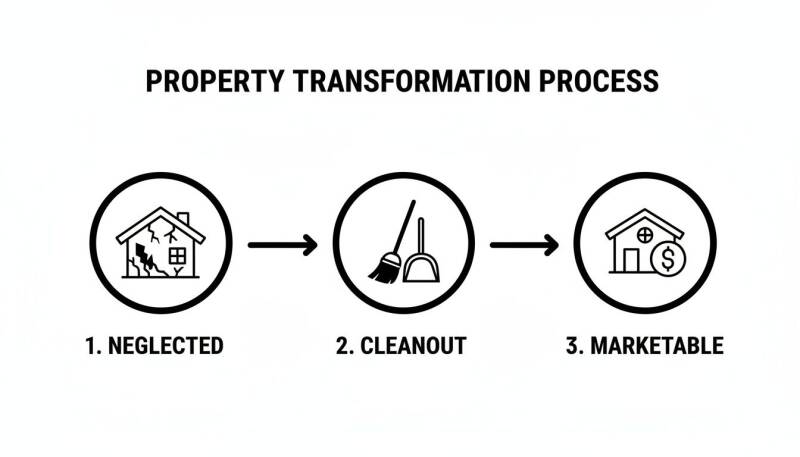
As you can see, the cleanout service is the bridge that takes a property from being a liability to a genuine opportunity.
Phase 1: Initial Assessment and Project Planning
Everything starts the moment we step on-site for a full assessment. This isn't just a quick look-around; it's a deep dive to understand exactly what we're up against.
During this first visit, our technicians are evaluating a few key things:
- Volume and Type of Debris: How much stuff is there? Is it just junk and old furniture, or are we dealing with construction debris? This helps determine the crew size, truck capacity, and equipment needed.
- Presence of Hazards: We’re trained to spot red flags. This includes looking for signs of mold, pest infestations, or hazardous materials like old paint and chemicals that require special disposal protocols.
- Personal Property Identification: We carefully identify anything that might be considered a personal belonging. These items have to be handled according to specific legal guidelines, so documenting them upfront is non-negotiable.
Once we have the full picture, we put together a detailed, transparent quote. This proposal clearly outlines the scope of work, a realistic timeline, and a complete cost breakdown. No hidden fees, no surprises.
Phase 2: Systematic Cleanout and Debris Removal
With the plan approved, the real work begins. This is the heavy lifting phase, but it’s done with strategy, not just brute force. Our crews work methodically, usually clearing the property room by room to make sure nothing gets missed.
Everything that comes out of the house is sorted into distinct categories—junk for the landfill, materials for recycling, items that can be donated, and any potential personal belongings set aside for documentation. This careful sorting isn't just about being eco-friendly; it's critical for staying compliant with local laws and protecting the property owner from liability.
The real skill in a professional foreclosure cleanout isn’t just hauling junk. It’s about creating order from chaos in a way that respects the property, the law, and the community.
Phase 3: Deep Cleaning and Final Preparations
Once the clutter is gone, the property is a blank slate. Now, the focus shifts to the deep cleaning and sanitization that truly make it shine. This is the stage that scrubs away the history of neglect and gets the property ready for showings. We thoroughly disinfect kitchens and bathrooms, vacuum or mop all the floors, and wipe down walls and baseboards.
This final phase often includes a few extra touches:
- Minor Repairs: We can often handle small fixes like replacing a broken light fixture, patching a hole in the drywall, or stopping a leaky faucet. These small details make a huge difference in perceived value.
- Odor Removal: Lingering smells can kill a sale. We use professional-grade deodorizers to neutralize any unpleasant odors, leaving the home smelling fresh and clean.
- Yard Tidying: Curb appeal is everything. A quick mow of the lawn, trimming back overgrown bushes, and clearing away any yard debris completes the picture.
After the job is done, we do a final walkthrough with you and provide comprehensive before-and-after photos. Seeing the transformation firsthand is always the best part; you can explore a gallery of completed projects to get a feel for the dramatic results. This final step gives you documented proof of the work and hands you back a clean, safe, and marketable property.
How Foreclosure Cleanout Costs Are Calculated

Let's talk about the bottom line. Getting a handle on what a professional cleanout will cost is the first step in making a smart business decision. The price for foreclosure cleanout services isn't just a number pulled out of a hat; it’s a carefully calculated figure based on several key variables that are unique to each property.
It's helpful to think of this as an investment, not just another expense. A fast, thorough cleanout directly bumps up a property's market value and can dramatically cut down its time on the market. In hot real estate zones like Westchester County, NY, and Fairfield County, CT, that speed can be the difference between a profitable flip and a property that bleeds money.
Common Pricing Models Explained
When you start getting quotes, you'll likely see one of two pricing structures. Neither is better than the other; the right one just depends on the scope and predictability of the job.
Here are the two most common models you’ll run into:
- By the Truckload: This is perfect for the more straightforward jobs where the main goal is just hauling junk. The price is based on how much space the debris fills in the truck—a quarter load, a half load, a full truckload, you get the idea. It's simple and easy to understand.
- Flat-Rate Project Fee: For more complicated projects that might involve deep cleaning, sorting personal effects, or dealing with potential hazards, a flat-rate fee makes more sense. This all-in price is set after an expert walks the property and covers everything from labor and disposal fees to equipment.
The flat-rate model gives you cost certainty, which is a huge advantage when you're trying to nail down a budget for a complex foreclosure project.
Key Factors That Influence Your Final Cost
No two foreclosed properties are ever the same, and the final bill will always reflect the specific challenges of the job. A good company will walk through the property with you to assess these factors and build a fair, accurate quote.
Here’s a breakdown of the common variables that drive the price up or down, helping you understand what goes into your total cost.
| Key Factors Influencing Foreclosure Cleanout Costs |
| :--- | :--- | :--- |
| Cost Factor | Description | Potential Cost Impact |
| Property Size & Condition | The total square footage and overall state of the property. A large, neglected home will require more labor and time than a small, lightly used condo. | High: Larger properties or those with significant damage or grime directly increase labor hours and the project's timeline. |
| Volume & Type of Debris | The sheer amount of junk to be removed. This ranges from a few pieces of furniture to a full-blown hoarder situation. Heavy items like concrete cost more to dispose of. | High: More volume means more truck space and more trips to the dump. Heavy or dense materials often incur higher disposal fees. |
| Hazardous Materials | The presence of items like mold, asbestos, chemicals, old paint, or biohazards. These require specialized handling, equipment, and disposal protocols. | High: Safety is paramount. Handling hazardous materials requires certified technicians and specific disposal methods, which adds significant cost. |
| Accessibility & Location | How easy it is to get to the property and move items out. A remote house with a tight driveway or a city apartment with no elevator adds complexity. | Moderate: Difficult access increases labor time and may require smaller vehicles or more manual work, which can raise the price. |
As you can see, a one-size-fits-all price just doesn't work in this business. A transparent quote should always outline these elements, so you know exactly what you’re paying for.
For more hands-on strategies to manage any removal project, you might find our guide with junk removal tips and resources helpful.
Navigating the Legal and Safety Tightrope
A foreclosure cleanout isn't just about hauling away trash. It's a delicate operation that balances property law, safety protocols, and smart logistics. Especially here in New York and Connecticut, where the rules are specific, you need someone who knows the landscape inside and out—not just a standard cleaning crew.
If you don't have a solid grasp of these regulations, it's easy for property owners, real estate agents, and asset managers to stumble into a mess of legal and financial trouble. That's why working with a fully licensed and insured company isn't just a good idea; it's essential protection for your investment and your professional reputation.
The Fine Line Between Junk and Personal Property
One of the trickiest parts of any foreclosure cleanout is figuring out what's trash and what's legally considered abandoned personal property. You can't just toss everything into a dumpster without a second thought—that's a quick way to get hit with a lawsuit.
Professional crews are trained to spot the difference. They know to look for items that could hold sentimental or monetary value, like family photos, official documents, jewelry, or other personal effects. These items have to be carefully set aside, inventoried, and documented, all while following state laws for handling abandoned property.
- Junk and Debris: This is the straightforward stuff. Think broken furniture, old mattresses, trash, and yard waste. These can typically be removed and disposed of without any legal hang-ups.
- Abandoned Personal Property: Anything that might have belonged to the former residents needs to be handled carefully. The law often requires these items to be stored for a set amount of time, giving the previous owner a fair chance to claim them.
Getting this part right protects you from costly legal headaches down the road.
Meticulous documentation is your best defense. A professional foreclosure cleanout service will create a detailed photographic and written inventory of the property's condition before, during, and after the cleanout. This paper trail is invaluable proof that the process was handled legally and responsibly.
Tackling On-Site Hazards and Safety Risks
Foreclosed properties are full of surprises, and not the good kind. Years of neglect can create dangerous conditions that put anyone who steps inside at risk. A huge part of the job is identifying these hazards and dealing with them correctly.
A professional team comes prepared to handle a whole range of common issues:
- Mold and Mildew: You'll often find mold lurking in damp basements, behind walls, or in bathrooms. Tackling it requires proper personal protective equipment (PPE) and containment to stop spores from spreading throughout the house.
- Pest Infestations: Rodents, roaches, and other pests don't just create a mess; they leave behind hazardous waste. Pros know how to safely clean and sanitize these areas to make them habitable again.
- Chemicals and Hazardous Waste: You never know what you'll find—old paint cans, forgotten cleaning supplies, pesticides. These materials can't just be thrown in the trash; they have to be disposed of according to strict environmental rules.
Taking care of these safety issues first means the property isn't just clean, it's genuinely safe for contractors, real estate agents, and potential buyers. The need for this kind of detailed, documented work is only growing. In a recent quarter, U.S. foreclosure filings hit one for every 1,274 homes, a 32% jump from the previous year, highlighting just how much demand there is for reliable partners in this field. You can find more insights on this growing industry over at PropertyVendors.com.
When you choose a fully licensed and insured company like D&B Complete Home Services, you're handing the keys to experts who know exactly how to manage these risks. It's the only way to be sure the job gets done safely, legally, and without exposing you to a world of unnecessary liability.
Choosing a Partner for Your Cleanout Project
Picking the right company for your foreclosure cleanout services is easily the most critical part of this whole process. It's what separates a smooth, legally sound project that boosts your property's value from a nightmare of delays and liabilities. The truth is, not every junk removal company is cut out to handle the unique demands of a bank-owned property.
You’re not just hiring someone to haul away trash. You're looking for a partner who gets the legal tightropes, safety issues, and logistical hurdles involved. A true pro will protect your asset and your interests from start to finish, ensuring the job is done correctly, on budget, and without any nasty surprises.
Verifying a Company’s Credentials
Before you even get to a price quote, you need to check off a few non-negotiables. Think of these as the absolute bedrock of a trustworthy company. Skipping this step is like hiring a builder without checking their license—a gamble you really can't afford to lose.
These credentials are your first line of defense against liability. If something goes wrong on your property, this is what protects you.
Here’s what you absolutely must see:
- Proper Licensing: First, are they a legitimate business registered to operate in New York and Connecticut? This is the bare minimum.
- General Liability Insurance: This is what covers any accidental damage to the property while they’re working. Always ask for a current certificate of insurance.
- Workers' Compensation: This one is huge. It protects their employees if they get hurt on your property, which in turn protects you from being on the hook for their medical bills.
If a company is missing any of these three things, you’re taking on a massive financial and legal risk.
A professional crew will have no problem showing you their license and insurance documents. If they hesitate or make excuses, that's a giant red flag. Just walk away.
Key Questions to Ask Before Signing a Contract
Once you’ve confirmed a company is properly licensed and insured, it’s time to dig a little deeper. How they answer a few specific questions will tell you everything you need to know about their experience and professionalism. A reputable provider will expect these questions and have straightforward answers ready.
Make sure to ask these questions to vet any potential provider:
- Do you have specific experience with foreclosure cleanouts? Hauling household junk is one thing. You need a team that knows how to properly handle abandoned personal items and document the property for legal reasons.
- Can you provide local references? There is no substitute for talking to past clients. Hearing from other real estate agents or property managers in your area is the best way to understand a company's reliability and the quality of their work.
- How is your pricing structured? A pro will give you a transparent quote, whether it's by the truckload or a flat project fee, with no hidden costs. They should be able to walk you through exactly what is and isn't included.
Getting clear, confident answers is how you tell a true partner like D&B Complete Home Services from a less-qualified operator. Taking the time to vet your provider properly ensures your property is in capable hands, setting you up for a faster, more profitable sale.
Foreclosure Cleanout FAQs
Even with a good grasp of the process, you probably still have a few lingering questions. That's completely normal. Getting straight answers is the best way to feel confident you're making the right call for your property. Here are some of the most common questions we hear from real estate agents, investors, and property managers in the field.
Let's clear up the details so you know exactly what to expect when you bring in a professional cleanout team.
How Long Does a Typical Foreclosure Cleanout Take?
This is usually the first question on everyone's mind, especially when a quick turnaround is critical. The honest answer? It depends. There’s no magic number, as the timeline is tied directly to the size of the property and, more importantly, the state it was left in.
A smaller home with just some leftover furniture and minor debris might be a one-day job, getting you ready to list in no time. But a larger estate with hoarding conditions, multiple sheds, and significant junk could easily take several days. A good company will walk the property with you and give you a realistic timeline upfront—no guesswork involved—so you can plan accordingly.
What Happens If Valuable Personal Items Are Found?
This is a big one, touching on both legal and ethical responsibilities. A true professional foreclosure cleanout service doesn't just treat everything like trash. We operate with a strict protocol when we come across personal belongings like family photos, official documents, or jewelry.
Here’s how it should always be handled:
- Items of potential value are immediately separated from the actual junk.
- Everything is inventoried and photographed to create a clear, official record.
- You, the client, are notified right away so you can decide on the next steps.
This isn't just good practice; it's about following the specific laws around abandoned property in states like New York and Connecticut. It protects you from liability and ensures the entire job is done with integrity.
A professional crew knows the difference between trash and treasure (or items that legally could be considered treasure). That’s a crucial distinction a standard junk hauler might miss, and it’s a key reason to hire a specialist.
Do You Handle Hazardous Materials Like Mold?
Safety always comes first, no exceptions. While we're equipped to handle typical household chemicals and other minor hazards, major environmental issues are a different ballgame. Things like widespread mold, asbestos, or serious biohazards require certified specialists.
A professional team will spot these red flags during the initial assessment. Instead of trying to tackle a job they aren't certified for, they will alert you to the problem and can often help coordinate with a licensed remediation company. This ensures the right expert handles each part of the job, keeping the site safe and compliant before the main cleanout resumes.
Do I Need to Be On-Site During the Cleanout?
Absolutely not. We know you're juggling a dozen other things, whether you're a property manager, agent, or investor. The last thing you need is to spend your day babysitting a cleanout crew.
You can trust a reliable team to handle everything from start to finish. We keep you in the loop with detailed documentation, including extensive before-and-after photos and a complete report once the job is done. This gives you the freedom to manage the project from anywhere, with total confidence that your property is in good hands.
Ready to turn that foreclosed property into a clean slate, ready for the market? The team at D&B Complete Home Services INC. specializes in comprehensive, legally sound foreclosure cleanouts across New York and Connecticut. Contact us today for a free, no-obligation estimate and let us help you get your property ready faster.
Add comment
Comments