Uncover the true cost of junk removal services. Our guide breaks down pricing models, hidden fees, and how to get an accurate quote for your project.
What Is the Real Cost of Junk Removal Services?
When you start looking into junk removal, the first question is always the same: "How much is this going to cost?" On average, you can expect to pay anywhere from $150 for a small pickup to over $600 for a full truckload of stuff.
Of course, that’s a pretty wide range. The final price tag really depends on how much you have, where you're located, and what kind of items you need to get rid of.
Your Quick Guide to Junk Removal Costs
Trying to pin down the cost of junk removal can feel a bit like trying to guess the price of a meal without seeing the menu. Sometimes you’re just ordering a single item, like getting a sofa hauled away. Other times, you’re clearing out the whole buffet, like with a full estate cleanout. This guide will break it all down so you can budget with confidence.
It's no surprise that professional junk removal is a booming business. It’s a service a lot of us need at some point. In fact, the U.S. junk removal industry pulled in an incredible $10.4 billion in revenue in 2023. That number alone shows just how many homeowners and businesses are happy to pay for a reliable way to clear out their clutter. If you're curious, you can explore more about junk removal industry trends and see how much the market is growing.
Junk Removal Costs at a Glance
To give you an immediate frame of reference, here's a quick summary of typical costs for common project sizes.
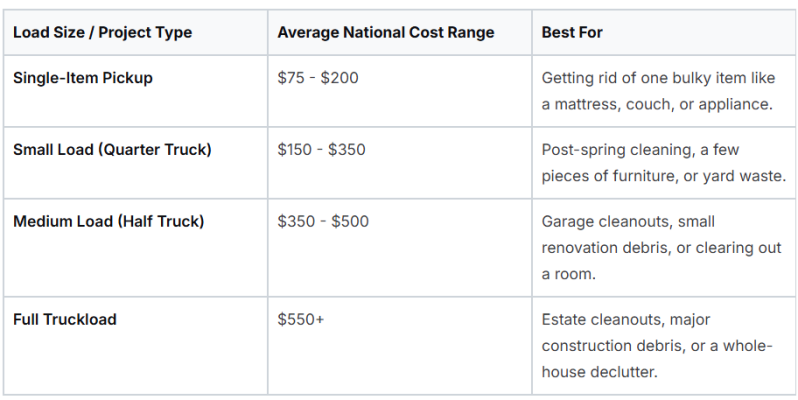
Think of this table as a starting point. Your specific quote will be tailored to your job's unique details.
Common Pricing Scenarios
Let's look a little closer at what those numbers mean in the real world. Keep in mind, these are national averages, so prices in places like Westchester or Fairfield County might be a bit different.
- Single-Item Pickup: Just bought a new fridge and need the old one gone? This is the service for you. It usually runs between $75 and $200 and is perfect for getting a single bulky item out of your way fast.
- Small Load (Quarter Truck): This is probably the most popular option. It’s great for clearing out a few pieces of furniture, a pile of boxes from the basement, or some accumulated yard debris. For this, you're typically looking at a cost between $150 and $350.
- Medium Load (Half Truck): If you're finally tackling that garage cleanout or have debris from a small bathroom remodel, a half-truck load is likely what you need. This size job generally costs between $350 and $500 and can handle a pretty serious amount of junk.
- Full Truckload or More: For the big jobs—clearing out an entire home, dealing with an eviction turnover, or getting rid of significant construction debris—you'll need a full truck. Pricing for this usually starts around $550 and can go up from there, based on the sheer volume and labor required.
Understanding these basic tiers is the first step. The amount of "stuff" you have is the single biggest factor in determining your junk removal cost, but it isn't the only one.
At the end of the day, every job is a little different. The final price is influenced by things like how hard it is to get to your items, whether anything needs special handling, and even how far you are from the nearest disposal site. We’ll get into all those details later in the guide so you can see exactly how a company puts together a quote.
How Junk Removal Companies Calculate Your Price
Ever wonder how a junk removal company comes up with your quote? It might seem like a mystery, but it's actually pretty straightforward. Most professional companies use one of a few common pricing models to give you a fair and accurate price, whether you're tossing a single old sofa or cleaning out an entire estate.
Think of it like getting your car repaired. The final bill isn't just one number; it's a combination of parts and labor. Junk removal is similar—the price reflects the space your stuff takes up, the work involved, and the costs of getting rid of it responsibly.
Pricing by Volume: The Most Common Method
Most of the time, you'll be quoted a price by volume. This is the industry standard for a good reason: it’s the simplest way to price a job with lots of different items. The cost is based on how much room your junk takes up in the truck.
Companies have pricing tiers that correspond to truck space. It usually breaks down something like this:
- Minimum Load: This is the base charge for just a couple of small items.
- Quarter-Truck Load: Perfect for getting rid of a few pieces of furniture, a pile of boxes after a move, or some yard waste.
- Half-Truck Load: A good fit for bigger jobs, like cleaning out a small apartment or the debris from a weekend renovation project.
- Full Truckload: This is for the big stuff—estate cleanouts, clearing out a packed garage, or hauling away significant amounts of construction debris.
This visual gives you a great snapshot of how these pricing models work in the real world.
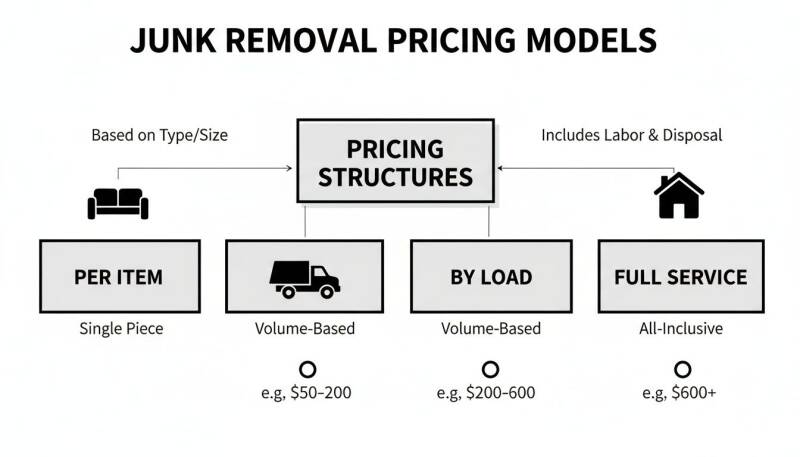
As you can see, the right model really just depends on what you need hauled away.
Flat-Rate Pricing for Single Items
Sometimes, pricing by volume doesn't make sense. If you just need one bulky thing gone—like an old fridge or a mattress—companies will typically give you a flat-rate fee. It’s one simple, all-inclusive price that covers everything.
This is the perfect solution when you've upgraded an appliance or piece of furniture and just need the old one out of your life.
For example: Let's say you finally bought that new king-size mattress you've been dreaming of. A junk removal company might quote you a single price, maybe $90 to $160, to come get the old one. That price is locked in, no matter what.
You'll almost always see flat-rate pricing for items like:
- Refrigerators and freezers
- Washers and dryers
- Sofas, couches, and sectionals
- Mattresses and box springs
- Hot tubs or large, heavy exercise equipment
The best part about this approach is the predictability. You know the exact cost of junk removal services before the truck even shows up. No guesswork, no surprises.
Hourly Rates for Complex or Unique Jobs
Finally, there are the jobs where the real challenge isn't the amount of junk, but the work required to get it out. For these situations, companies use an hourly rate. This model is reserved for labor-intensive projects that go beyond just loading and hauling.
Hourly pricing is the go-to for jobs like:
- Hoarding Cleanouts: These often require a ton of sorting, bagging, and careful work before anything can be removed.
- Light Demolition: Tearing down an old shed, a deck, or a swing set involves serious labor before the hauling even begins.
- Large-Scale Commercial Cleanouts: Clearing an entire office, warehouse, or retail store is a big project with many moving parts.
With an hourly model, you pay for the crew's time on-site, plus any disposal fees. It’s the most logical way to price complex jobs where the main cost is the crew's hard work and effort.
What Really Goes Into Your Junk Removal Quote?
Knowing the basic pricing models—by the truckload, by the item, or by the hour—is a great start. But that initial estimate is just one piece of the puzzle. Several other factors can shift the final price, and understanding them will help you see exactly what you’re paying for.
Think of it this way: ordering a pizza has a base price, but the cost goes up with extra toppings, a stuffed crust, or delivery to a remote location. Junk removal is similar. The final bill reflects the total effort, resources, and logistics needed to get the job done right.
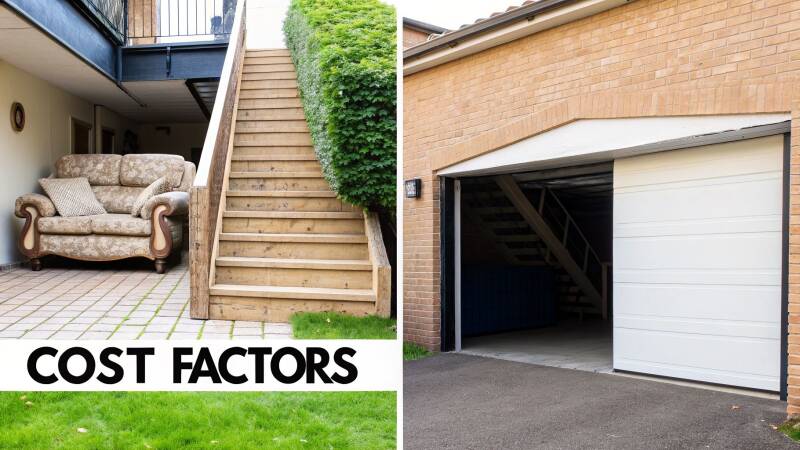
Let's break down these factors so you can get a much clearer picture of your potential costs.
Accessibility and Labor Intensity
This is one of the biggest drivers of cost. Where your junk is located and how difficult it is to get to the truck makes a huge difference. A pile of branches sitting neatly on your driveway? That’s an easy, quick job. But hauling a massive sleeper sofa out of a third-floor apartment with no elevator? That’s a whole different story, requiring more time, more muscle, and more crew members.
The more labor-intensive the job, the more it will cost. This includes things like:
- Stairs and Elevators: Every flight of stairs adds time and effort. Shared elevators in apartment buildings can also cause delays.
- Long Hauls: If our crew has to carry items from a backyard shed or a deep basement far from where the truck is parked, that extra walking time adds up.
- Tight Spaces: Getting bulky furniture through narrow hallways and around tight corners without scuffing the walls takes extra care and skill.
Essentially, you’re paying for the team's physical effort and time. If you can move items to a more accessible spot, like your garage or curb, you could see a nice drop in your quote.
Disposal Surcharges and Recycling Fees
Not everything we haul away can just be dumped at the local landfill. Many items need special handling, and the transfer stations and recycling centers charge fees for them. Those costs are a direct part of your junk removal bill.
Key Takeaway: A good chunk of your fee goes toward responsible disposal. This covers standard landfill "tipping fees," which can be $50 to $100 per ton, plus any specialized recycling or disposal costs for specific materials.
Here are some common items that carry extra fees:
- Appliances with Freon: Fridges, freezers, and AC units contain refrigerants that must be professionally and safely removed before the metal can be recycled.
- Tires: Landfills don't want them. Tires have to go to special facilities, and there's usually a per-tire fee of $5 to $15 each.
- Mattresses and Box Springs: They’re bulky, hard to compact, and some local regulations require them to be recycled, which costs extra.
- Electronics (E-waste): Your old TVs, computers, and printers contain materials that shouldn't be in a landfill, so they must be properly recycled.
Disposing of certain yard items can also be tricky. If you’re clearing out old mowers or trimmers, it helps to know what’s involved. You can learn more in our guide on how to dispose of old lawn equipment.
Light Demolition and Special Handling
Sometimes, getting rid of junk isn't as simple as just picking it up. Your project might need a bit of light demolition first, which is a separate service that adds to the cost. This could be anything from taking apart an old backyard swing set, tearing down a rotting shed, or even breaking up a small concrete patio.
These jobs require tools, safety gear, and more time, so they're priced differently than a standard pickup. If your job involves any takedown or demolition, make sure you mention it upfront to get an accurate quote.
Likewise, some items are just plain difficult. Think about moving a hot tub, an old upright piano, or a slate pool table. These items are exceptionally heavy, awkward, and require a bigger crew and specialized equipment like heavy-duty dollies and straps. Safely removing them is a project in itself, and the price will reflect that extra complexity.
Real-World Junk Removal Cost Scenarios
Pricing models and cost factors are helpful, but let's be honest—they're just theory. To really understand what you might pay, it helps to walk through some common jobs we see every day. Seeing how the numbers play out in real-world situations makes it much easier to picture your own project and set a realistic budget.
These examples show how the volume of junk, the amount of labor needed, and the specific types of items all come together to determine the final price on your quote.
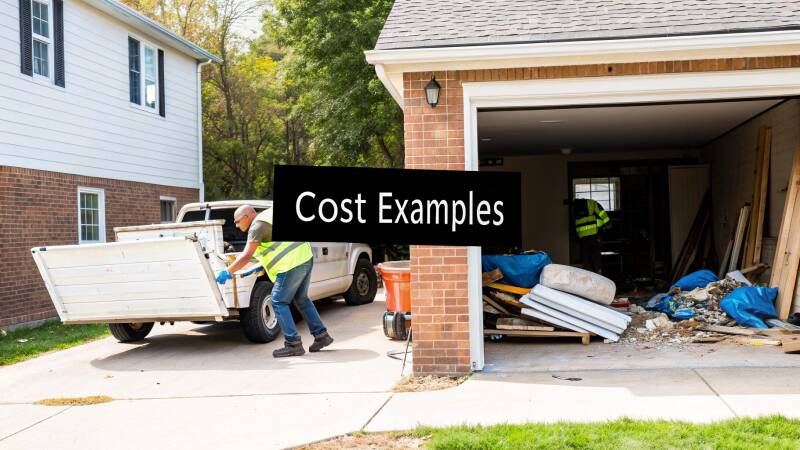
Scenario 1: The Full Garage Cleanout
This is probably our most requested job. Over the years, that two-car garage slowly becomes a graveyard for things you might need one day: old furniture, broken lawn equipment, countless boxes, and hobby supplies from a bygone era. The goal is simple: get the space back so you can park your car again.
A typical garage cleanout project might look something like this:
- An old loveseat and a couple of rusty filing cabinets
- A lawnmower that won't start and a broken weed whacker
- Several bags of old clothes and other household clutter
- A stack of old tires and a few half-empty paint cans
All of that stuff usually fills about half of a standard junk removal truck. The final cost isn't just about the space it takes up; it also includes the labor for our crew to sort and haul everything out. Plus, items like tires and paint have their own special disposal fees, which we handle.
Estimated Cost: For a cleanout of this size, you're likely looking at a cost between $350 and $500. That's an all-in price that covers the crew, the truck, and all the disposal and recycling fees. No surprises, just a clean garage.
Scenario 2: The Estate Cleanout
Clearing out a loved one's home is a tough job, both emotionally and physically. An estate cleanout for an average two-bedroom house means methodically removing everything—from furniture and appliances down to personal items and clutter tucked away in closets, the attic, and the basement.
This is a much larger-scale project that often fills an entire truck, sometimes more. The sheer volume of items is the biggest cost driver, but the detailed labor required to empty every room is also a major factor. As more people manage family estates and embrace decluttering, the demand for these services is rising. The junk removal market is valued at around $15 billion and is expected to keep growing, especially with the active home renovation market. You can read more about the growth of the junk removal market to see what's driving this trend.
For an estate cleanout, you can figure on a cost of $600+ per truckload. A complete two-bedroom home could easily need one to two full trucks, putting the total in the $600 to $1,200 range, and sometimes more if the home is particularly dense with items.
Scenario 3: Post-Renovation Debris Removal
So, you just finished that gorgeous bathroom remodel. The problem? You're now left with a pile of old drywall, broken tiles, the splintered vanity, and that ridiculously heavy cast-iron tub. Construction debris is a different beast—it's heavy and dense, which directly impacts the price.
Even if the pile doesn't look huge, its weight can be deceptive. A relatively small pile of renovation debris can easily take up a quarter-truck or half-truck load in terms of both weight limits and volume.
Here's what hiring a pro gets you in this situation:
- Heavy Lifting: We safely haul away heavy materials like concrete, tile, and tubs so you don't have to.
- Proper Disposal: We know exactly where to take construction and demolition (C&D) waste for proper recycling.
- Efficiency: We clear out the entire mess in one shot, letting you enjoy your new space without the lingering cleanup.
A typical bathroom renovation cleanup usually costs between $250 and $450. When you consider the back-breaking work and multiple trips to a special landfill you'd have to do yourself, it's money well spent.
Scenario 4: Single-Item Appliance Pickup
Sometimes, you just need one big, bulky thing gone. You finally got that new stainless steel refrigerator, but now the old one is sitting in your garage, taking up space. This is a classic example of a simple, flat-rate job.
Instead of charging by how much space it takes up in the truck, companies will give you a single, all-inclusive price for that one item. This fee covers the two-person crew needed to move the heavy appliance without scratching your floors or walls, transportation, and the special recycling fees for things like Freon removal.
For a single appliance pickup like a refrigerator, washing machine, or oven, you can expect to pay somewhere between $90 and $200. It’s a fast, straightforward fix for a very common headache.
How to Save Money on Your Next Junk Removal
Knowing what goes into a junk removal quote is one thing, but using that knowledge to your advantage is where you really start to save. Professional hauling is a huge time-saver, but that doesn't mean you can't be smart about it. A few strategic moves can make a real dent in your final bill.
With a little bit of planning, you can make your next cleanout project much more affordable.
Prepare and Consolidate Your Junk
Let’s be honest: one of the biggest costs in junk removal is labor. If a crew has to spend an extra hour hunting down items scattered between your attic, basement, and backyard, you're going to see that reflected in the price. The good news is, you have direct control over this.
Do the legwork ahead of time. Gather everything you want hauled away and put it all in one, easy-to-reach spot—think your garage, driveway, or even right at the curb. This one simple step can transform a complicated job into a quick and easy pickup, slashing the crew's on-site time and, more importantly, your final cost. For more great ideas on getting organized, check out our junk removal tips and resources.
Sort and Separate Your Items
Before the truck even pulls up, take a few minutes to sort what you have. Creating separate piles for donations, recyclables, and true trash makes the crew’s job a lot faster and can actually save you money.
Pro Tip: When a junk removal company can easily drop off items at a local donation center or recycling facility, they avoid expensive landfill "tipping fees." Smart companies often pass a portion of those savings on to you.
This isn’t just good for your wallet; it’s good for the planet. The best junk removal companies are moving away from a "dump-it-all" mentality. By prioritizing donations and recycling, they reduce what ends up in our local landfills. It's a win-win that's both environmentally responsible and often more economical for everyone involved.
Be Flexible with Scheduling
Think of junk removal like booking a flight. Everyone wants to fly on a Friday or a Sunday, so those tickets cost more. It's the same for junk haulers. Weekends and the first few days of the month are prime time, especially with people moving in and out.
If your cleanout isn't an emergency, ask about off-peak discounts. Booking a mid-week, mid-day slot might land you a better rate because you're helping the company fill a quiet spot in their schedule. It never hurts to ask!
Bundle Services for Better Value
Got a few different projects on your to-do list? See if you can bundle them. Many companies—including us here at D&B—do a lot more than just haul junk. Maybe you need an old shed torn down before it's hauled away, or you need a small wall repair after clearing out a room.
Tackling it all with one provider is almost always more cost-effective than hiring two or three different contractors. Ask about package deals for combining services like junk removal with light demolition or handyman repairs. You’ll save a headache, and you’ll definitely save some money.
Choosing a Reputable Junk Removal Partner
Once you have a good handle on how junk removal services are priced, the next crucial step is picking the right crew for the job. It's tempting to just go with the lowest price, but choosing a junk removal partner is really about trust and reliability. A rock-bottom quote from a shady operator can quickly turn into a nightmare of property damage, surprise fees, or illegally dumped items that come back to haunt you.
Think of it this way: you wouldn't hire an electrician or a plumber just because they were the cheapest. You'd want someone with credentials, experience, and a track record of doing good work. The same logic absolutely applies here. A professional junk removal team brings so much more than just strong backs—they bring accountability and expertise.
Look for Transparent No-Obligation Estimates
The first mark of a true professional is how they approach pricing. Any reputable company will offer a free, no-obligation estimate before they lift a single item. This quote should be clear and spelled out, so you know exactly what you’re paying for.
Be very skeptical of vague quotes given over the phone without the company ever seeing what you have. A dependable team will want to assess the junk in person to give you a solid, accurate price.
Key Takeaway: A firm, on-site estimate is your best defense against bait-and-switch tactics. If a company hesitates to provide one, that’s a huge red flag that hidden fees might be waiting for you down the line.
This upfront approach keeps you in the driver's seat, letting you make a decision without any pressure or last-minute surprises.
Verify Licensing and Insurance
This one is non-negotiable. A legitimate junk removal company must be fully licensed to work in your area and carry the right insurance—specifically, general liability and workers' compensation. Liability insurance is what protects your home and property from any accidental dings or scratches during the job. Workers' comp protects their crew if someone gets hurt.
Don’t feel awkward asking for proof of insurance. It's a smart, essential question. If they don’t have it, you could be on the hook for any damages or injuries that happen on your property. This simple check is often the clearest line between a real pro and a risky "guy with a truck" operation.
Check Customer Reviews and Reputation
These days, it only takes a few minutes to get a sense of a company's reputation. Hop on Google, Yelp, or Angi and see what past customers are saying. You're looking for patterns in the feedback. Do people consistently mention that the team was on time, friendly, and worked fast? Are there multiple comments about fair pricing?
Of course, one bad review isn't the end of the world. But a string of complaints about surprise charges, unprofessional behavior, or no-shows is a clear sign to steer clear. A long history of positive testimonials shows you a company that genuinely cares about doing a good job.
Prioritize Eco-Friendly Disposal Practices
Finally, ask them what happens to your stuff after it leaves your curb. A responsible company won't just make a beeline for the landfill. They’ll have a process for sorting through items, pulling out anything that can be donated to charity or recycled. This commitment to eco-friendly disposal doesn't just help the environment; it’s a sign of a more professional and conscientious operation.
When you choose a company that puts in the extra effort to dispose of things responsibly, you can feel good about where your unwanted items end up. Whether you need a single sofa hauled away or an entire estate cleaned out, a dependable partner can handle it all. To learn more about what a professional team can do for you, check out our complete home services.
A Few Common Questions We Hear About Junk Removal Costs
Even after breaking down the pricing models, you probably have a few more specific questions floating around. That's completely normal. Getting straight answers helps you feel confident you're making the right call for your home and your wallet.
Let's dive into some of the questions we get all the time from folks right here in Westchester, Putnam, and Fairfield counties.
Is It Cheaper to Rent a Dumpster or Hire a Junk Removal Service?
This is the big one, and the honest answer really boils down to what you value most: your money or your time and back.
- Renting a Dumpster: This can look cheaper on paper, especially if you have a big project that will take a few days and you don't mind doing all the work yourself. You pay for the dumpster, and then you’re the one doing every bit of the lifting and loading.
- Hiring a Junk Removal Service: Think of this as the all-inclusive option. The price might be a bit higher upfront, but it covers the entire crew and all the labor. We do the heavy lifting, the navigating through your house, the loading, and the hauling. It saves you from a sore back and a weekend spent working.
For most homeowners looking to clear out a garage or basement, the convenience and sheer physical relief of a junk removal service often deliver far more value than the few dollars you might save with a dumpster.
What’s the Difference Between Curbside and In-Home Pickup?
Where your stuff is located makes a real difference in the final price. We, like many companies, have different rates for items left at the curb versus items we have to retrieve from inside your home. It all comes down to the labor involved.
Pro Tip: If you can get your junk to the curb or at the end of your driveway, you can save a good amount of money. It dramatically cuts down on the time our crew needs to be at your property, which makes the whole job faster and more affordable for you.
When we do an in-home pickup, our team has to go into your house, carefully carry items down stairs or through tight hallways, and make sure nothing gets damaged on the way out. That extra time and care means the cost is naturally higher.
Are There Any Items You Can't Take?
Yes, absolutely. For both safety and legal reasons, there are specific things professional junk removal companies are not allowed to handle. These items need to be disposed of in a very particular way that's outside of what we do.
As a general rule, we can't take any hazardous materials. This includes things like:
- Chemicals: Leftover paint, solvents, pesticides, antifreeze, and strong household cleaners.
- Flammables: Things like propane tanks, gasoline, motor oil, or ammunition.
- Biohazards: This covers medical waste, anything containing asbestos, and other materials that are regulated by law.
If you're dealing with anything on that list, the best first step is to check with your local town or county's waste authority. They often have special collection days or designated sites for safe disposal. It's always a good idea to confirm with your junk removal company about their specific list of prohibited items before you book.
Ready to get that clutter gone for good? The team at D&B Complete Home Services INC. is here to make it happen with fast, professional service and clear, upfront pricing. You'll know exactly what to expect. Get your free, no-strings-attached estimate today by visiting us at https://www.dbcompletehomeservices.com.
Add comment
Comments