Learn how to dispose of an old dishwasher safely and responsibly in NY & CT. Our guide covers disconnection, removal, recycling, and professional junk removal.
Getting rid of an old dishwasher isn't as simple as dragging it to the curb. There's a right way to do it—a way that’s safe, follows local rules, and is kinder to the environment. Your main choices boil down to recycling, donation, resale, or calling in a professional junk removal service. This guide will walk you through the practical side of each option, with a special focus on what homeowners in New York and Connecticut need to know.
Your Guide to Smart and Safe Dishwasher Disposal
So, you've got a new dishwasher on the way. Fantastic! But what about the old one? This is often the last-minute detail that trips people up. Whether you're a homeowner doing a DIY upgrade, a landlord flipping an apartment, or a real estate agent staging a property, figuring out disposal ahead of time saves a major headache.
The decision you make isn't just about what's easiest. It has real impacts on your wallet, your local community, and the planet. This guide is your roadmap, breaking down the effort, costs, and green credentials of each disposal method. We’ll cover everything from local recycling programs to the specific rules you'll face in NY and CT, giving you the confidence to handle it responsibly.
Why Proper Disposal Matters Now More Than Ever
Let's face it, appliance upgrades are happening faster than ever. People want the latest, most efficient models. The global dishwasher market was valued at a staggering USD 7.55 billion in 2023 and is on track to hit USD 12.65 billion by 2033. You can see the full market trend report on Spherical Insights. That's a lot of old dishwashers needing a new home—or a proper end-of-life plan.
This trend puts the spotlight on a critical responsibility: keeping these old machines out of landfills. Your old dishwasher is packed with valuable materials like steel and copper, not to mention plastics that can be recycled and repurposed.
Choosing a sustainable disposal method isn't just a feel-good eco-friendly decision; it’s a smart one. It conserves resources, keeps potentially hazardous materials out of our soil and water, and can even support local charities.
Planning Your Dishwasher Removal Project
Before you pick up a single tool, a bit of planning can make all the difference. Ask yourself a few key questions to figure out the best approach:
- Does it still work? If the dishwasher is in good working order, you open up the door to donation or resale. One person's old appliance is another's perfect solution.
- Can you realistically move it? These things are beasts. Dishwashers are bulky, awkward, and typically weigh between 75 and 150 pounds. Be honest about whether you have the tools and the muscle for the job.
- What are the rules in your town? A quick call or visit to your local public works department website can save you a lot of trouble (and potential fines).
- How much time do you have? Sometimes, the sheer convenience of hiring a professional is worth every penny. If you'd rather skip the hassle entirely, you can always get in touch with D&B Complete Home Services for a straightforward quote.
To help you visualize your options, here’s a quick breakdown of the most common disposal methods.
Dishwasher Disposal Options at a Glance
This table gives you a snapshot of what to expect with each choice, helping you decide which path makes the most sense for your situation.
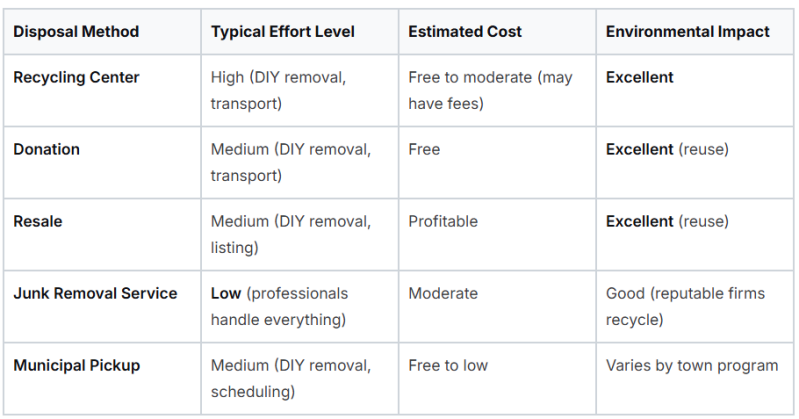
As you can see, the "best" option really depends on your budget, your timeline, and how much hands-on work you're willing to do.
Safely Disconnecting Your Old Dishwasher
Before you can figure out where that old dishwasher is going, you’ve got to get it out from under the counter. This is definitely the most hands-on part of the job, but it’s nothing you can’t handle with a bit of prep. The absolute priority here is safety—for you and for your kitchen. No one wants an electric shock or a flooded floor.
First things first: kill the power. Find your home's circuit breaker box and locate the switch for the dishwasher. Flip that sucker to the OFF position. If your panel is a mess of confusing labels, you can always shut off the main breaker, but it's much better to isolate the right circuit if you can.
With the power off, it’s time to tackle the water. Look under your kitchen sink; you should find a small shut-off valve on the hot water line leading to the dishwasher. Turn the handle clockwise all the way until it stops. This ensures no more water can get into the appliance while you’re working on it.
Dealing with the Water and Electrical Lines
Alright, power and water are secured. Now you can start disconnecting the lifelines. You’ll want a few simple tools on hand: an adjustable wrench, some pliers, and a screwdriver should do it. I also highly recommend grabbing a couple of old towels and a shallow pan or bucket. Trust me on this one.
Even with the main valve shut, there's still water trapped in the supply line and the drain hose. That pan and those towels will be your best friends, catching the inevitable drips and keeping your floor from turning into a puddle.
Here’s a breakdown of what you’ll be disconnecting:
- The Water Supply Line: Get your pan and towels in position under the connection. Take your wrench and slowly loosen the nut that attaches the flexible water line to the dishwasher.
- The Drain Hose: This is the ribbed hose running from the dishwasher to your sink drain or garbage disposal. It’s usually held on by a simple metal clamp. Use pliers or a screwdriver to loosen it, then wiggle the hose free.
- The Electrical Wiring: Pop off the front kickplate at the bottom of the dishwasher. You'll see a small junction box. Unscrew the cover, and inside you'll find the wires from your house connected to the dishwasher's wires with wire nuts. Carefully unscrew these nuts to separate the connections.
This flow chart gives you a quick visual of what comes next, once your machine is fully disconnected and ready to go.
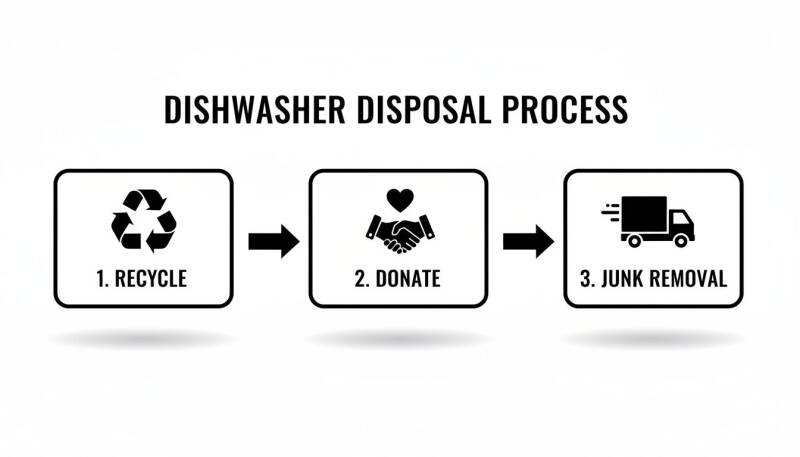
As you can see, you’ve got a few good options. You can recycle it, donate it if it’s still in working order, or call a professional junk removal service that can handle everything for you.
Getting the Dishwasher Out of Its Cubby
With all the lines free, the only things holding the dishwasher in place are a couple of small mounting brackets. These are what keep the appliance from tipping forward every time you open the door. They're usually screwed into the underside of your countertop.
Find the screws holding these brackets and remove them. In most cases, that’s all it takes. The dishwasher is now technically free.
Pro Tip: Sometimes installers use a bead of caulk or adhesive to get a really snug fit. If you've removed the screws and the unit still won't budge, carefully slide a utility knife along the seams where the dishwasher meets the countertop and cabinets. This should break any old seal.
Now you can start gently sliding the unit out. Be careful not to gouge your floors! A flattened cardboard box or an old blanket works perfectly as a protective runway. Keep in mind that these machines can weigh over 100 pounds, so this is a great time to call in a favor from a friend. Once it’s out, your old dishwasher is officially disconnected and ready for disposal.
What To Do With Your Old Dishwasher (Don't Just Curb It)
So, you’ve wrestled the old dishwasher out from under the counter, and now it's sitting awkwardly in your kitchen. What’s next? Your first instinct might be to drag it to the curb, but that's often a fast track to a local ordinance violation and a fine. The good news is you have several better, more sustainable options that keep these bulky machines out of the landfill.
Choosing a responsible disposal method is more than just a feel-good decision; it's part of a massive shift in how we handle waste. The market for garbage disposals, including appliances like yours, was valued at a staggering USD 4.2 billion in 2023 and is expected to climb to USD 6.7 billion by 2032. This isn't just a random statistic—it shows a real, collective move toward being more environmentally conscious. You can dig into the numbers in this in-depth market analysis on Maximize Market Research. When you dispose of your old dishwasher thoughtfully, you're part of that positive trend.
Give It a Second Life: Donate or Sell It
Is the dishwasher old but still gets the job done? Don’t send it to the scrap heap! Donating or selling a working appliance is the best way to extend its life and help someone out.
Donation: The Feel-Good Option
A working dishwasher can be a huge help to a family in need. Charitable organizations are often on the lookout for functional large appliances.
A fantastic place to start in our area (New York and Connecticut) is the Habitat for Humanity ReStore. They resell donated appliances and household goods, and the proceeds go directly into funding their home-building projects right here in our communities. Just be sure to call your local ReStore first to see what they're accepting.
Other great places to check include:
- The Salvation Army & Goodwill: Policies vary by location, so a quick call is always a good idea.
- Local Shelters or Churches: These community hubs often know families who could use an appliance like yours.
A quick tip from experience: Give it a good cleaning before you donate. A sparkling clean, fully functional machine is much more likely to be accepted and appreciated.
Selling: Put Some Cash Back in Your Pocket
If your dishwasher is relatively new and in good cosmetic shape, selling it is a no-brainer. You get some money back for your new appliance fund, and the buyer gets a great deal.
Platforms like Facebook Marketplace and Craigslist are go-to spots for this. To make a quick, hassle-free sale, be upfront and honest in your listing.
- Snap Good Photos: Get shots from every angle—inside, outside, and the control panel.
- List the Details: Include the brand, model, age, and measurements.
- Price it Right: See what similar models are going for in your area to find a fair price point.
- Clarify Pickup: Make it clear that the buyer needs to haul it away.
When It's Broken: Appliance Recycling Programs
What if the dishwasher is completely kaput? That’s when recycling becomes your best friend. A dishwasher isn't just junk; it's a goldmine of materials. Believe it or not, up to 95% of its parts can be recycled, from the steel body to the copper wiring. Recycling keeps all that metal and plastic out of landfills, where it can leach harmful stuff into the ground.
Finding a certified recycler in NY or CT is pretty straightforward. A great online tool is Earth911, where you can search for appliance recyclers by zip code. You should also check with your local Department of Public Works, as many towns have special drop-off days or locations for large appliances.
Deciding the best route for your old machine can feel like another chore, but knowing your options makes it simple. If you're decluttering more than just the kitchen, you can find more helpful advice in our junk removal tips and resources on our blog. Every choice makes a difference.
Navigating Local Disposal Rules in New York and Connecticut
So, you’ve wrestled the old dishwasher out of its spot under the counter. Now what? The next step—actually getting rid of it—can be surprisingly tricky. Here in New York and Connecticut, you can’t just haul it to the curb and hope for the best.
Every town and county has its own playbook for appliance disposal. Not following the local rules can get you a fine, or worse, you’ll find that old machine still sitting on your curb a week later. What works in Westchester County might be completely different from the process in Fairfield County, so a little local homework is your best first move.
A quick call or a visit to your town's Department of Public Works (DPW) website is all it takes to avoid a major headache.
Checking for Municipal Bulk Pickup Programs
Many communities, from Dutchess to Orange County, offer bulk waste pickup services for large items. It sounds convenient, but these programs are never a free-for-all. They come with a specific set of rules.
Most of the time, you'll need to:
- Schedule the pickup: You can't just leave an appliance out on your regular trash day. You almost always have to call and get on the schedule, sometimes weeks in advance.
- Pay a fee: While some towns might give you one or two free bulk pickups a year, appliances often come with a separate charge. Expect to pay anywhere from $15 to $50.
- Prep it properly: Some municipalities have safety rules, like requiring you to tape the door shut or remove certain parts before they'll take it.
I've seen it happen time and again: someone forgets to schedule the pickup or pay the fee, and the sanitation crew just drives right by. Always confirm the exact process for your address to make sure it goes smoothly.
Using Local Transfer Stations and Drop-Off Centers
If curbside pickup isn’t an option, your next bet is the local transfer station or recycling center. This is a great DIY solution if you have a truck or an SUV big enough to transport the dishwasher safely. But, just like with bulk pickup, there are procedures to follow.
Many transfer stations require a resident permit or sticker to even get in the gate, which you usually have to get from your town hall first. They also have specific hours and designated areas for "white goods" (a term for large appliances). And yes, you might have to pay a drop-off fee here, too.
Pro Tip: Before you load up the truck, check the transfer station's website or give them a call. Showing up without the right permit or trying to drop off an appliance outside of designated hours is a surefire way to waste your afternoon.
With so many kitchens getting upgraded, these local systems are more important than ever. North America's focus on modern conveniences has made it a leader in the garbage disposal market, meaning countless old appliances need a proper disposal path. This reliance on professional services that understand the ins and outs of local recycling networks is only growing. You can read more about these market trends on GlobeNewswire.
Taking a few minutes to understand these local rules is the final piece of the puzzle. It ensures all your hard work doesn't end with a compliance headache.
When to Call a Professional for Dishwasher Removal
Doing it yourself can feel empowering, but let's be realistic. When it comes to wrestling a bulky, 150-pound appliance out of a tight kitchen space, the DIY route isn’t always the smartest path. While you might save a few dollars upfront, the very real possibility of strained backs, scratched hardwood floors, or dinged door frames looms large. Knowing when to step back and call in the pros is the key to a smooth, stress-free kitchen upgrade.
This is where a professional junk removal service becomes your project's MVP. It’s not just about convenience—it’s about safety, efficiency, and genuine peace of mind. Let's walk through the real-world situations where hiring a team makes a world of difference.

When Time Is Your Most Valuable Asset
Let’s be honest, your weekend time is precious. The whole process of disconnecting, moving, and then figuring out where to legally dispose of a dishwasher can easily eat up an entire afternoon, if not more.
Imagine you're in the middle of a full kitchen renovation. Your schedule is already packed with coordinating contractors, choosing new fixtures, and making a dozen other decisions. The last thing you need is another time-sucking chore on your plate.
This is a prime moment to delegate. A professional team can have that old dishwasher out of your house in under an hour, freeing you up to focus on the parts of the project that actually need your attention.
Protecting Your Home and Yourself
Dishwashers are deceptively awkward. Their weight is unevenly distributed, and those sharp metal edges seem custom-made for catching on cabinets, walls, and floors. One wrong pivot can lead to costly repairs that easily eclipse what you would have paid for a professional removal service.
And that's not even mentioning the risk of personal injury. Lifting heavy, cumbersome objects incorrectly is a textbook cause of back strain and other painful musculoskeletal injuries.
Think about it this way: the cost of a single visit to a chiropractor after a lifting injury can easily surpass the fee for a professional crew. Hiring experts isn't just another expense; it's an investment in protecting your body and your home.
This is where a service like D&B Complete Home Services really shines. Our professional crews show up with the right equipment—dollies, moving blankets, and straps—to navigate tight corners and protect your property. This expertise is a core part of the comprehensive junk removal and home improvement solutions we provide.
Navigating Complex Living Situations
Not every home has a straight shot to the curb. Hauling a dishwasher out of a single-family home with a wide front door is one thing. Maneuvering it down a narrow apartment hallway or a tricky flight of stairs is a completely different ballgame.
These situations amplify the risk of both property damage and personal injury. Professional movers are trained to solve these logistical puzzles safely and efficiently every single day.
Consider these common scenarios where a pro is pretty much essential:
- Apartment Buildings: Navigating elevators, tight hallways, and multiple flights of stairs requires experience.
- Historic Homes: Older houses with narrow doorways and delicate, original woodwork demand extra care.
- Finished Basements: Getting an appliance up a steep set of basement stairs is a two-person job, at a minimum.
In these cases, the expertise of a trained crew isn't a luxury; it's a necessity for a successful, damage-free removal.
DIY vs Professional Dishwasher Removal
Deciding whether to tackle the removal yourself or call in the pros can be tough. This table breaks down the key factors to help you make the best choice for your situation.
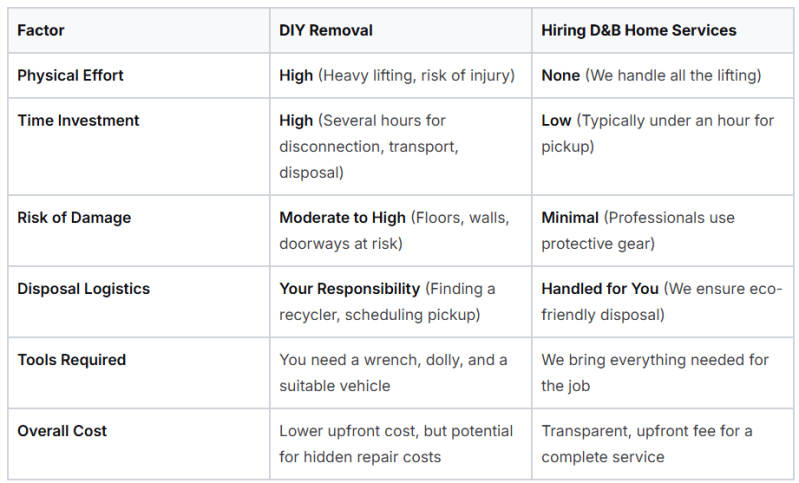
Ultimately, choosing to hire a professional is about buying back your time, ensuring your safety, and getting the job done right from start to finish. It transforms the disposal of an old dishwasher from a stressful chore into a simple, checked-off item on your list, leaving you ready for the next phase of your kitchen project.
Your Top Dishwasher Disposal Questions Answered
So, you’ve got the new dishwasher installed, and the old one is just… sitting there. What now? It’s a common scenario, and we hear the same questions time and again from homeowners across New York and Connecticut. Getting the final step right saves you a ton of hassle.
Let's clear up some of the most common uncertainties to make sure you handle this last part of your kitchen upgrade smoothly.
Can I Just Drag My Old Dishwasher to the Curb?
This is the number one question, and the short answer is almost always no. Just leaving a big appliance on the curb in places like Westchester, Putnam, and Fairfield counties is a big risk. Most towns consider it illegal dumping, and you could end up with a warning or even a fine.
Some municipalities do have special bulk pickup days, but you absolutely have to schedule it with them ahead of time. Don't just assume it’s okay. Your best bet is to check your local department of public works website or just give them a quick call to find out their exact rules.
What Should I Expect to Pay for Dishwasher Removal?
Having a professional haul away your old dishwasher is surprisingly affordable, especially when you think about the time and effort it saves. For a simple pickup where the machine is already disconnected and easy to get to, you're typically looking at a cost between $75 and $150.
A few things can nudge that price up or down:
- Accessibility: Getting it out of a tight spot or down a flight of basement stairs is more work than wheeling it out of a ground-floor kitchen.
- Disconnection: If you want the removal crew to handle the plumbing and electrical disconnection, that will usually add a bit to the cost.
- All-Inclusive Pricing: A good service will wrap labor, transport, and all recycling fees into one clear price, so you aren't hit with surprise charges later.
Think of the removal fee as more than just a pickup. You're paying to protect your floors from scratches, avoid straining your back, and guarantee the appliance is recycled legally and ethically.
Does a Dishwasher Need to Be Working to Be Donated?
Yes, absolutely. Charities like Habitat for Humanity ReStore need items they can turn around and sell to fund their housing projects. A broken-down appliance that doesn't run actually costs them money to deal with, so they simply can't take them.
If you’re thinking about donating, give the dishwasher a good clean and run a cycle to confirm everything is in working order. If it's on the fritz, recycling is the best and most responsible path forward.
How Can I Find a Good Appliance Recycler?
It's amazing how much of an old dishwasher can be repurposed. Up to 95% of its parts—the steel, copper wiring, and plastics—can be recovered and turned into new products. Keeping that out of a landfill is a huge win for the environment.
Finding a place to do this is pretty straightforward. You can start with online resources like the Earth911 search tool, which lets you find certified recycling centers near you just by plugging in your zip code. Your town or county’s solid waste authority website is another fantastic place to look.
But honestly, the easiest way is to let a junk removal service handle it. A reputable company already has connections with certified recyclers, ensuring your old appliance is handled the right way without you having to do any of the legwork.
Ready to skip the hassle and get that old dishwasher out of your way? D&B Complete Home Services INC. provides fast, reliable, and eco-friendly appliance removal across New York and Connecticut. Our professional team handles all the heavy lifting, transportation, and responsible disposal so you don’t have to. Visit us online to schedule your pickup and get your space back: https://www.dbcompletehomeservices.com.
Add comment
Comments