Discover the complete demo and removal process. Our guide covers costs, benefits, and how to choose the right professional for your home renovation project.
The Ultimate Guide to Demo and Removal Services
When you hear the word "demolition," it’s easy to picture a wrecking ball and a cloud of dust. But in reality, professional demo and removal is much more about precision and planning than pure destruction. Think of it as the first, crucial step in clearing the way for something new—a surgical process that preps your property for its next phase.
What Are Professional Demo and Removal Services?
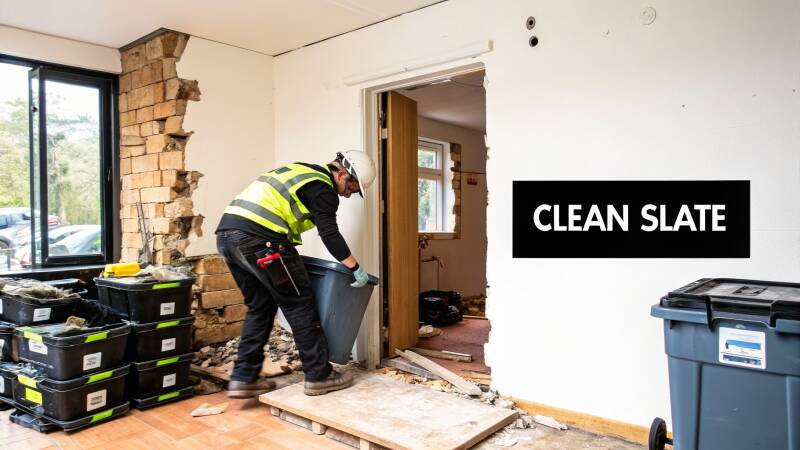
At its core, hiring a professional demo and removal service is like hitting the reset button on your property. It’s a specialized trade that tackles two jobs in one: the strategic dismantling of old structures and the thorough cleanup of every last bit of debris. This is the starting line for almost any major renovation, property flip, or cleanout project.
The "demo" half is all about controlled deconstruction. We're not just swinging sledgehammers wildly. A professional team carefully takes things apart to protect what’s staying, whether that’s preserving the structural integrity of a house during a kitchen gut or making sure a falling deck doesn't take out your prize-winning rose bushes.
Then comes the "removal" part, which is just as important. Once everything is down, you’re left with a heap of old materials. A pro service handles the entire cleanup, from sorting wood, metal, and drywall for proper disposal to hauling it all away. The goal is to leave you with a perfectly clean slate, not a new mess to deal with.
From Interior Guts to Exterior Teardowns
Demo and removal isn't a one-size-fits-all job. Different projects call for different skills and equipment. Here's a look at the most common types of work we handle.
- Interior Demolition: This is your classic renovation prep. We come in to selectively strip out non-load-bearing walls, old cabinets, flooring, and fixtures. It’s the perfect way to get a clean canvas for a new kitchen, bathroom, or open-concept living area without disturbing the bones of the house.
- Exterior Demolition: Need to get your yard back? This service focuses on outdoor structures. We can safely dismantle and haul away that rickety old shed, rotting deck, dilapidated fence, or unused hot tub that's become an eyesore.
- Junk and Debris Removal: This is our catch-all service for clutter. It can be as big as clearing all the leftover construction debris from your DIY project or as small as picking up a single bulky item like an old mattress or refrigerator you can't get rid of.
- Estate and Property Cleanouts: A more sensitive and comprehensive job, this service is designed to clear an entire property. We work respectfully with families and property managers to sort and remove the contents of a home, often to prepare it for sale or transfer.
To give you a clearer picture, here’s a quick breakdown of which service fits which scenario.
Common Demo and Removal Projects at a Glance
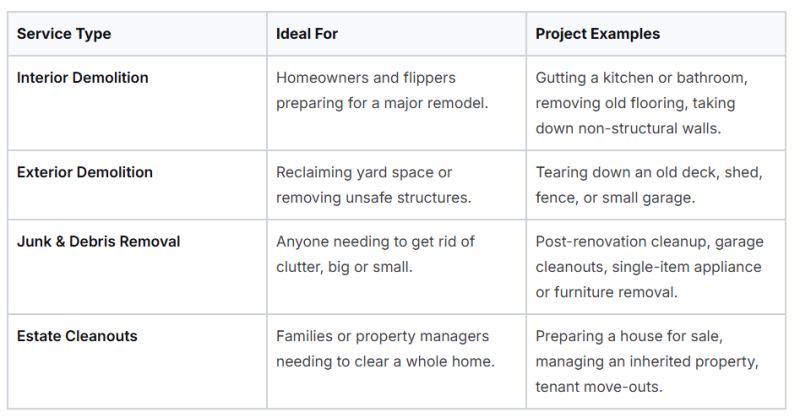
Whether you're taking on a full-scale renovation or just need to get rid of an old sofa, there's a professional service designed to make it happen smoothly and safely.
The Core Principle: At the end of the day, demo and removal is all about transformation. We take a space that’s cluttered, outdated, or unusable and get it ready for what's next—be it a modern kitchen, a beautiful backyard, or a home ready for the market.
Ultimately, bringing in a pro team saves you from a project that is often too big, messy, and even dangerous to handle yourself. With the right experience, insurance, and equipment, we can ensure your project’s foundation is set up for success from the very beginning.
The Demo and Removal Process: A Step-by-Step Breakdown
When you picture a demolition, "chaos" is probably the first word that comes to mind. But for a professional crew, it’s anything but. A successful demo and removal project is a finely tuned process, designed to be safe, efficient, and predictable.
Knowing what’s coming takes the anxiety out of the equation and helps you prepare. Let's walk through the entire game plan, from our first conversation to the final, clean sweep.
Stage 1: The First Call and On-Site Quote
It all starts with a simple conversation. When you first reach out, we’ll want to get a feel for what you have in mind. Are you finally gutting that dated bathroom for a spa-like retreat? Or do you need an entire property cleared out to get it on the market?
We’ll talk through the specifics, but the most critical step comes next: the on-site visit. This is non-negotiable for an accurate, all-inclusive quote. Seeing the project in person allows us to size up the real-world factors that you just can't see over the phone.
We’re looking for things like:
- Site Access: Is it a straightforward job with an easy-to-reach garage, or are we dealing with a third-floor condo with a tight stairwell? Access directly impacts labor and timing.
- The Materials Involved: There’s a big difference between hauling away old carpeting and breaking up a concrete patio. Heavier materials require more manpower and different equipment.
- Potential Hazards: Our experienced eyes are trained to spot red flags, like signs of old asbestos tiles, lead paint, or tricky plumbing and electrical lines that need special care.
After that walkthrough, you’ll get a detailed quote. It’s more than just a price—it’s a clear plan that outlines the exact scope of work, the timeline, and the total cost with no surprises.
Stage 2: Getting Ready for Demo Day
Once you give us the green light and we set a date, our focus shifts to prep work. A pro team doesn't just show up and start swinging sledgehammers. We take careful steps to protect your property and create a safe, contained work zone.
This means laying down protective coverings on floors and sealing off the entire area with heavy-duty plastic sheeting to keep dust from migrating through your home. For an interior job like a kitchen demo, this is essential. In fact, studies on construction dust have shown just how far those tiny airborne particles can travel, making professional dust control a matter of health, not just tidiness. We’ll also do one last walkthrough with you to confirm precisely what’s going and what’s staying.
Pro Tip for Homeowners: Before the crew arrives, do a quick sweep of the area. Clear out any personal items, small furniture, and valuables from the room and any adjacent spaces. While we’ll cover large items that can’t be moved, clearing the way yourself helps us get started faster and keeps your belongings safe.
Stage 3: The Main Event—Demolition and Hauling
This is where the transformation happens. With the site fully prepped and all safety measures in place, our crew gets to work. This phase is about controlled deconstruction, not just brute force. If we're taking out an old deck, for example, we'll dismantle it carefully to avoid damaging your home's exterior.
As materials come down, they’re immediately sorted on-site. This is a hallmark of an efficient demo and removal operation. Wood goes in one pile, scrap metal in another, and concrete or drywall in a third. Sorting as we go makes the hauling process much quicker and is key to our eco-friendly disposal, as it ensures we can recycle as much as possible.
Once everything is broken down, the hauling begins. We load all the sorted debris into our trucks, aiming to complete the demolition and the removal in one streamlined visit to minimize the disruption to your day.
Stage 4: The Final Cleanup and Handover
The truck may be loaded, but the job isn’t done. The final step is what separates the pros from the rest: the cleanup. We are committed to leaving your space in "broom-clean" condition. That means a thorough sweep-up of all remaining dust and debris, removing all our tools, and taking down the plastic barriers.
To wrap things up, our site manager will do a final walkthrough with you to make sure you are 100% satisfied with the result. The space will be completely empty, clean, and ready for whatever comes next—whether it's your contractor starting the rebuild or you simply enjoying your clean, open space.
How Much Do Demo and Removal Services Cost?
Alright, let's get right to the question on every property owner's mind: what’s this actually going to cost? While no two demo and removal jobs are ever the same, getting a handle on what drives the price helps you budget properly and see the real value behind a professional quote. You're not just paying someone to swing a sledgehammer; you're investing in safety, speed, and a clean slate for your property.
A professional quote isn't just a number pulled out of a hat. We look at a few key ingredients that all add up: the size of the job, the kinds of materials we'll be hauling, how easy it is to get to the site, and the manpower needed to get it all done safely and efficiently.
Breaking Down the Main Cost Factors
The first thing we look at is the sheer scope of the job. That's your biggest cost driver, hands down. Tearing down a small, rickety backyard shed is a world away from a full kitchen gut where we're taking out cabinets, countertops, old appliances, and layers of flooring. The more involved and time-consuming the work, the more it will cost.
What we're hauling away matters, too.
- Light Debris: Think old carpeting, drywall, or wood from a simple deck. This stuff is relatively easy for a crew to manage.
- Heavy Debris: Things like concrete, bricks, tile, and soil are a different story. They're dense, heavy, and often require more labor and specialized tools to break apart and load, which naturally adds to the cost.
Finally, we have to consider access. A garage cleanout on the ground floor with a big driveway is pretty straightforward. But an interior demolition on the third floor of a condo building with no elevator? That means every single piece of debris has to be carried down by hand, which takes a lot more time and effort from the crew.
A professional quote isn't just a fee for the demolition itself. It's an all-in price that covers experienced labor, the right equipment for the job, full insurance to protect your property, and responsible disposal—including all the dump and recycling fees.
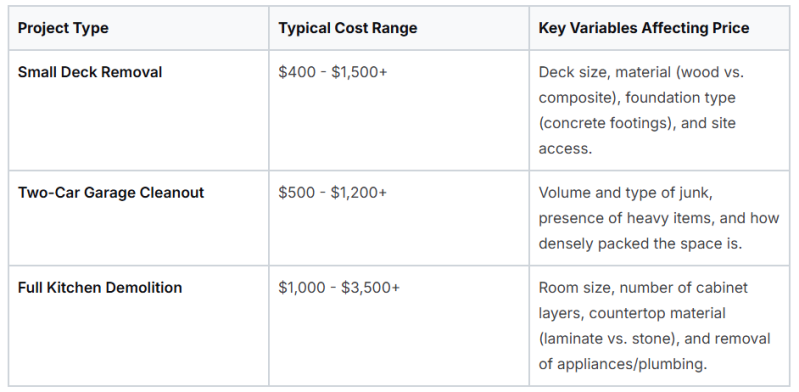
Sample Cost Ranges for Common Projects
To give you a better ballpark idea, here are some typical price ranges for projects we see all the time. Just remember, these are estimates. Your final quote will depend on the unique details of your job.
More and more homeowners and real estate investors are realizing it makes sense to hire out this kind of work. In fact, the whole construction demolition market is projected to grow by $14.50 billion between 2024 and 2029. Here in the U.S., revenue is expected to hit $11.2 billion by 2026. This boom shows just how much demand there is for pros who can safely and properly prep a space for whatever comes next. You can actually explore the full market analysis on Technavio to see how things like a growing focus on recycling are shaping our industry.
This simple graphic shows how a professional team turns a big, messy job into a predictable process.
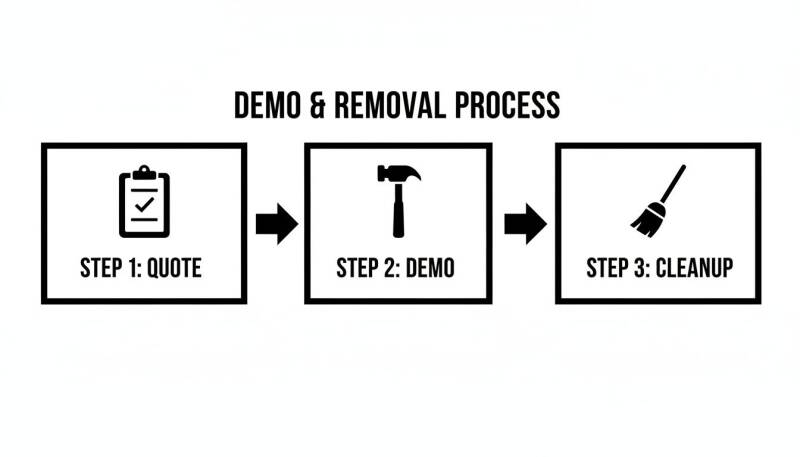
It really is that simple. We break down what feels like a chaotic project into a clear, three-stage workflow. This keeps everything efficient and transparent, from the moment we give you an estimate to the final sweep-up.
The Importance of Eco-Friendly Demolition Practices
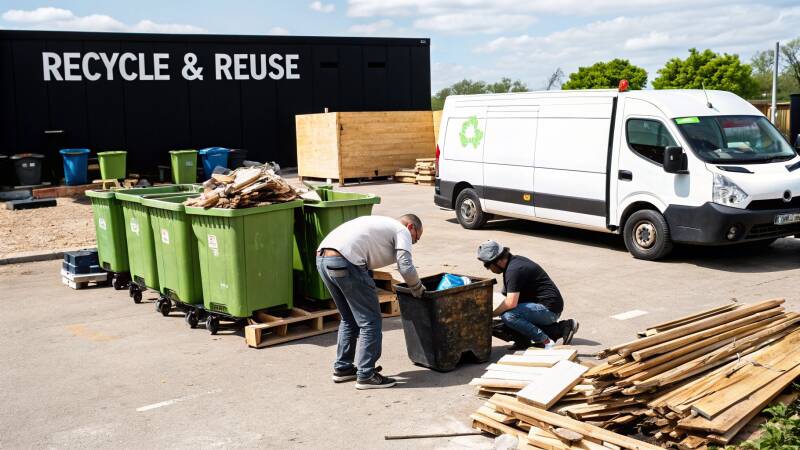
It wasn't that long ago that a demolition job meant one thing: sending everything straight to the landfill. Thankfully, that's not how responsible companies operate anymore. Today, modern demo and removal is about being smarter and more sustainable. We approach it more like deconstruction—a thoughtful process of dismantling a structure to salvage as much as we possibly can.
This isn't just about feeling good. It's a more efficient and intelligent way to manage project waste. The materials from an old bathroom, a worn-out deck, or even an entire building have inherent value. Instead of getting buried, these resources can find new life through recycling, repurposing, or reuse, which drastically shrinks a project's environmental impact.
From Waste to Resources
The sheer volume of waste from construction and demolition is hard to wrap your head around. These projects generate roughly two billion tons of waste across the globe each year, accounting for about a third of all solid waste. With a market for managing this debris projected to hit $31 billion by 2026, it's clear this is a major global issue. For property owners in Dutchess or Fairfield counties, working with a team that prioritizes eco-friendly practices isn't just a nice-to-have; it's a responsible necessity. You can get a sense of the scale of this issue by checking out the complete research about construction waste trends on MarketResearch.com.
At its core, eco-friendly demolition is about a change in perspective. An old deck isn't just a pile of rotten wood; it's a source of lumber for future projects. A concrete patio isn't rubble; it's aggregate that can be used to build new roads.
This sustainable mindset starts the moment we arrive on-site. Our crew sorts materials as they come down, creating separate, organized piles for different types of debris. This careful sorting is the secret to effective recycling and disposal.
Here’s what that looks like on a typical job:
- Metals: Scrap metal is a valuable commodity. We gather everything from old pipes and wiring to siding and appliances and send it all to a scrap yard for recycling.
- Concrete and Masonry: Instead of ending up in a landfill, broken concrete, bricks, and tiles are crushed down. This material is then repurposed as aggregate for new construction, like road bases or drainage beds.
- Wood: Any untreated lumber from framing or decking can be chipped for landscaping mulch. If it’s in good shape, we'll salvage it for reuse in other building projects.
By keeping these heavy, bulky materials out of the landfill, we not only save precious natural resources but also cut down on disposal fees—a cost savings we can pass right along to our clients.
The Compassionate Side of Cleanouts
This eco-friendly approach is just as critical for junk removal and estate cleanouts. When we're tasked with clearing out a home, our primary goal is to give every usable item a second chance. This is where our partnerships with local community organizations really shine.
Rather than just tossing everything in a dumpster, we follow a careful sorting process:
- Donation: We set aside any furniture, clothing, housewares, and working appliances that are in good condition. These items are donated directly to local charities, helping neighbors in need.
- Recycling: Things that can't be donated—like old electronics or heavily worn textiles—are routed to the appropriate recycling facilities.
- Disposal: The landfill is always our last resort. Only the items that are truly broken, unsanitary, or non-recyclable end up there.
This process turns what could be a wasteful, overwhelming task into a positive action that benefits both the environment and the community. If you’re looking for more ways to handle unwanted items responsibly, you’ll find great ideas in our guide to junk removal tips and resources.
Ultimately, when you choose a demo and removal company that’s deeply committed to sustainability, you’re doing more than just clearing out a space. You’re making a choice that truly matters.
Deciding Between DIY and Professional Demolition
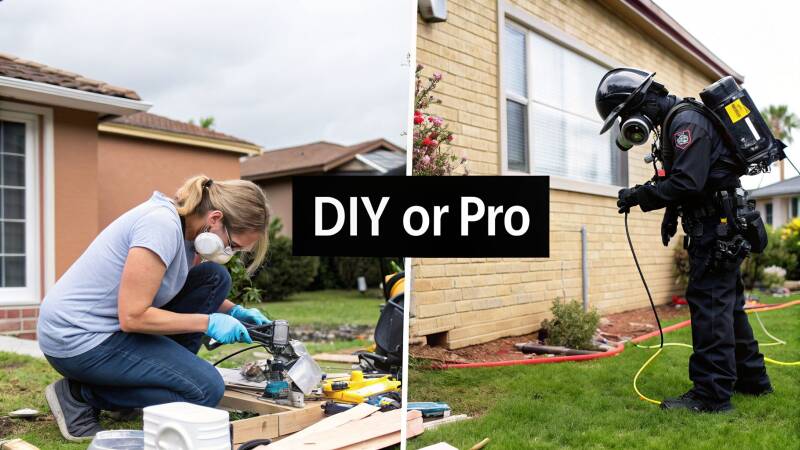
The appeal of a weekend warrior project is undeniable. Tearing out that old, stained carpet or taking a sledgehammer to a rickety, non-structural shed can feel incredibly satisfying—and hey, you save a few bucks. But the line between a simple DIY win and a project that goes sideways is much thinner than you'd think.
When it comes to most demo and removal jobs, what appears straightforward on the surface can hide a surprising number of risks. Choosing between doing it yourself and calling in a pro isn't just about saving money; it’s a crucial decision that affects your safety, your home's structural integrity, and your final budget.
The Hidden Dangers of DIY Demolition
That "simple" demo job can spiral out of control fast. Beyond the sore muscles, there are some serious issues that can turn a weekend project into a months-long nightmare.
First and foremost is safety. If your home was built before the 1980s, there's a good chance it contains hazardous materials. We're talking about things like asbestos in old vinyl flooring, insulation, and "popcorn" ceilings, or lead in layers of old paint. Disturbing these without proper gear and containment protocols can release toxic particles into your home's air, posing a serious health risk to your family.
Then there’s the very real risk of structural damage. It is terrifyingly easy for an untrained eye to mistake a load-bearing wall for a simple partition you can just knock down. Making that one mistake can compromise your entire home, leading to catastrophic damage and repairs that can cost tens of thousands of dollars. Suddenly, that DIY project doesn't seem so cheap.
A professional crew isn't just a couple of people with strong backs. They are trained to identify critical structural components, spot hidden hazards, and get the job done without compromising the property or endangering anyone inside.
Finally, think about the logistics. You’ll need to rent the right tools and a proper dumpster. Then you have to figure out how to legally dispose of all that debris, which involves navigating local dump regulations and fees. These "hidden" costs and the sheer time involved catch even the most prepared DIYers off guard.
DIY vs. Professional Demolition: A Head-to-Head Comparison
To help you make the right call, we've broken down the realities of each approach. Use this breakdown to determine the best approach for your project's safety and success.
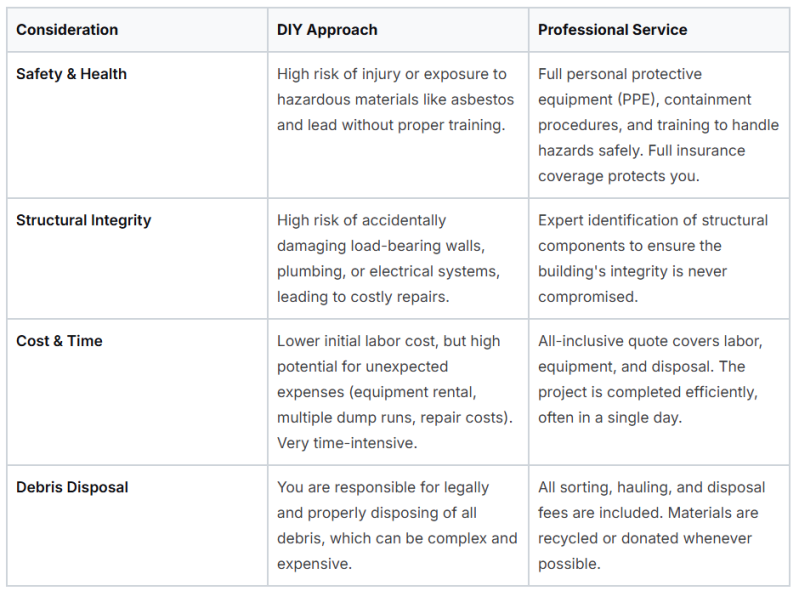
In the end, while the urge to get your hands dirty is completely understandable, most demolition work carries risks that only a trained and properly equipped team can manage. For anything more involved than minor cosmetic removal, investing in a professional demo and removal service is the smartest path to a safe, efficient, and successful project.
Finding Your Local Demo and Removal Partner
You've done the research and have a clear vision for your project. Now comes the final, most important piece of the puzzle: choosing the right team to bring that vision to life. This is where all the planning pays off. Finding a great local partner is what turns a potentially messy, stressful job into a smooth, hands-off experience.
Think of it this way: hiring a pro is about more than just muscle. You’re looking for someone who guarantees efficiency, safety, and responsible disposal. It all starts with the non-negotiables: licensing and insurance. This is your safety net, protecting you from any liability if an accident or property damage occurs. A company with deep roots in the community, like us at D&B Complete Home Services, also brings an invaluable local advantage. We know the specific municipal codes and have established relationships with local disposal and recycling centers, which often makes the whole process faster and more cost-effective.
What to Look For in a Pro
So, what separates the good from the great? When you're getting quotes, keep an eye out for these key signs of a true professional:
- Transparent, On-Site Quotes: A pro will want to see the job in person before giving you a price. This ensures their quote is accurate and that you won’t be surprised by hidden fees down the road.
- A Full Range of Services: The best companies can pivot from a simple hot tub removal one day to a full interior gut-out the next. This versatility shows they have the right equipment and a crew with broad expertise.
- A "Broom Clean" Finish: A job isn't done until the site is completely clear and ready for whatever comes next. A top-tier crew doesn't just knock things down; they haul everything away and leave your space spotless.
The demand for skilled demolition teams is only growing. Projections show the global industrial demolition market hitting $7.95 billion by 2029, a surge driven by redevelopment projects and a greater focus on sustainable deconstruction. This growth highlights just how critical it is to hire seasoned professionals who know how to get a property prepped safely and on schedule. You can read more about the market trends shaping our industry and see why experience matters so much.
Peace of Mind is the Ultimate Goal: When you hire the right local team, you're not just paying for labor. You're investing in a predictable, straightforward process that respects your property, your schedule, and your budget.
If your project is a mix of demolition and clearing out years of accumulated clutter, you’ll want a partner who can handle both seamlessly. To get a better idea of how we manage different materials, take a look at our professional junk removal services. Choosing a single, versatile team simplifies everything.
Your Top Questions About Demolition and Removal, Answered
Planning a demolition or major cleanout project can feel a bit overwhelming, and it's natural to have questions. We get asked a lot of them! Here are some straightforward answers to the things homeowners and property managers wonder about most.
Do I Need a Permit for My Demolition Project?
This is probably the number one question we hear, and the honest answer is: it depends entirely on the job and your local town's rules.
For smaller, cosmetic jobs inside your home—think ripping out old kitchen cabinets or tearing up flooring—you typically won't need a permit. These projects don't touch the building's structural integrity, so the town doesn't need to get involved.
However, a permit is almost always a must for bigger projects. You'll definitely need one if you're:
- Altering the building's structure, like removing a load-bearing wall.
- Changing the home's exterior, such as tearing down an old deck or porch.
- Touching any utility lines, including plumbing, gas, or electrical.
This is where hiring a professional really pays off. We know the local codes like the back of our hand and can tell you right away if a permit is needed. It’s the best way to avoid fines or a stop-work order down the line.
What Happens to Items From an Estate Cleanout?
Estate cleanouts are sensitive, and we handle them with the care and respect they deserve. It's not just about emptying a house; it's about responsibly managing a lifetime of possessions.
We work side-by-side with you to sort through everything. Items that are still in good condition—like furniture, clothing, and kitchenware—are set aside for donation to local charities. We make sure they get a second chance to be used by someone in our community.
Anything that can be recycled, like scrap metal, wood, or old electronics, is sent to the proper facilities. Only the items that are truly at the end of their life go to the landfill. It’s a process that helps turn a difficult situation into something more positive and sustainable.
How Long Does a Typical Job Take?
The timeline really comes down to the size and complexity of the work. For something simple like a single-item pickup, we could be in and out in less than an hour after we arrive.
A bigger junk removal job, like clearing out a whole basement or a packed garage, might take a few hours. If we're talking about interior demolition, a full bathroom gut—from teardown to final sweep-up—can usually be done in a single day.
Our crews show up with the right number of people and all the necessary tools to work efficiently. We aim to get the job done right and fast, minimizing disruption to your daily life. Some specialty items, like old mowers or trimmers, have their own disposal rules. For more on that, check out our guide on how to dispose of old lawn equipment.
When you’re ready to get started with a team that puts safety, efficiency, and your peace of mind first, give D&B Complete Home Services INC. a call. You can get a free, no-obligation estimate today by visiting us at https://www.dbcompletehomeservices.com.
Add comment
Comments