Learn how to handle recycling old appliances in NY & CT. This guide covers donation, scrap yards, and professional haul-away services for responsible disposal.
Recycling Old Appliances in NY & CT a Homeowners Guide
So, that old refrigerator has finally given up the ghost, and now it's just taking up valuable space in your garage. Or maybe you've upgraded your laundry room, and the old washer and dryer are collecting dust in the basement. Getting rid of them is about more than just reclaiming your space—it's about doing it the right way, especially here in NY and CT.
Properly recycling old appliances is a big deal. It keeps hazardous junk out of our local environment and puts valuable materials back into circulation.
Your Smart Guide to Appliance Disposal in NY and CT
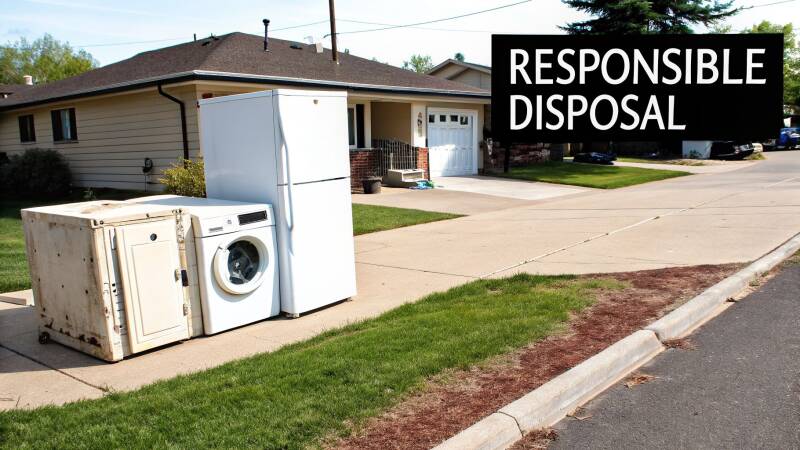
That hulking appliance might look like a single piece of junk, but it's actually a complex bundle of resources—some valuable, some hazardous. Choosing the right disposal method is your chance to make a smart, eco-friendly decision that benefits our community.
What most homeowners in Westchester and Putnam County don't realize is just how much good stuff is locked inside these old machines. Your average refrigerator, for example, contains over 120 pounds of recyclable steel. When handled correctly, a staggering 95% of an appliance's components can be recovered and turned into new products. That's a huge win for conservation.
More Than Just Metal
It’s not just about the steel and aluminum, though. Many older appliances contain substances that need to be handled with care. If you have a refrigerator or an air conditioner that was made before 2010, it likely uses refrigerants like Freon, which is a powerful greenhouse gas.
The core issue is that improper disposal releases harmful materials. Professional recyclers are equipped to safely capture these substances, protecting our local New York and Connecticut environment from contamination.
This guide will walk you through the entire process, demystifying appliance recycling. We’ll cover everything from local municipal programs to professional services that do all the heavy lifting for you. By the end, you'll know exactly why responsible disposal matters and how to choose the best option for your situation, whether you're just upgrading or clearing out an entire property.
- Environmental Protection: You’ll prevent harmful materials like refrigerants and oils from seeping into our soil and water.
- Resource Conservation: Valuable metals get a second life, which reduces the need to mine for new materials.
- Community Compliance: You’ll stay on the right side of local disposal laws in Dutchess, Fairfield, and surrounding counties and avoid potential fines.
Deciding what to do with an old appliance can feel like a chore, but making the right choice turns it into a genuinely positive action. To see the kind of difference a professional cleanout can make, check out the transformations in our before and after gallery.
Comparing Your Appliance Disposal Options
To help you decide, here’s a quick breakdown of the most common disposal methods. Each has its own pros and cons when it comes to cost, convenience, and environmental responsibility.
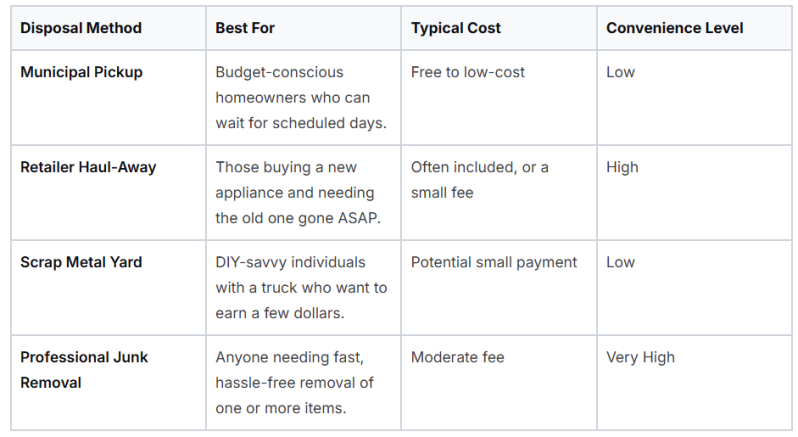
Ultimately, the best path depends on your budget, your timeline, and how much work you're willing to put in yourself. No matter which you choose, you're taking a crucial step toward responsible homeownership.
How to Prepare Appliances for Safe Removal
Before we can haul that old appliance away, a bit of prep work on your end makes all the difference. Taking a few simple steps protects your home from dings and water damage, keeps everyone safe, and helps the whole removal process go off without a hitch.
First things first: you have to completely disconnect the unit from power and water. With a fridge or a small chest freezer, that's usually as easy as pulling the plug from the wall. For a washing machine, though, you'll need to shut off the hot and cold water valves—they're typically right behind the machine—and then undo the hoses. It's a good idea to have a bucket handy to catch any water still in the lines.
Dryers are similar; just unplug the power cord and detach the big, flexible exhaust vent. And here's a pro tip for refrigerators and freezers: let them sit unplugged for at least 24 hours to fully defrost. Trust me, this single step prevents a massive, watery mess on your floors during the move.
Securing the Appliance for Transport
Once everything is disconnected, take a moment to secure the appliance itself. Pull out any loose shelves, drawers, and racks. You can pack these separately or use a good amount of tape to hold them securely inside the unit. This stops them from rattling around, breaking, or worse, falling out and becoming a tripping hazard.
Taping the main door shut is one of those small details that’s easy to forget but incredibly important. A swinging refrigerator door can do a surprising amount of damage to a doorframe or wall—not to mention the person moving it. Use strong packing tape or duct tape for this.
Little preparations like these are crucial, especially when we’re navigating the tight hallways and staircases we often see in homes across Dutchess County. For more insider tips on getting your home cleared out, check out our junk removal tips and resources.
Handling Appliances with Hazardous Materials
This is where things get serious. Certain appliances, like refrigerators, air conditioners, and dehumidifiers, contain chemical refrigerants that are regulated by the EPA. These substances can damage the ozone layer, so they have to be recovered by a certified technician before the appliance is scrapped.
Under no circumstances should you ever try to cut refrigerant lines or drain the chemicals yourself. It's illegal, dangerous, and harmful to the environment. When you're looking to recycle an appliance with refrigerants, you need to be sure the service you hire follows proper disposal protocols. This usually means working with a professional junk removal company that partners with certified recyclers.
A few other hazards to be aware of include:
- Refrigerators & AC Units: Require certified refrigerant recovery.
- Older Fluorescent Lights: Some older appliances have light fixtures containing mercury.
- Capacitors & Transformers: Found in appliances made before 1979, these can contain highly toxic PCBs.
Choosing a removal service that understands these rules is key. It's your guarantee that the hazardous components are managed responsibly, protecting our local environment here in New York and Connecticut.
Where to Recycle Appliances in New York and Connecticut
So, your old appliance is unplugged, disconnected, and ready for its final journey. Now for the most important part: figuring out where it should go. If you’re in Westchester, Putnam, Dutchess, or Fairfield County, you've got a few solid choices for recycling old appliances. The real trick is matching the right disposal method to your specific appliance and situation.
For many of us, the local town or city transfer station is the first thought. They're often a pretty affordable option for dropping off bulky items yourself. But here’s the thing—the rules can be wildly different from one town to the next. Before you even think about loading up the truck, a quick phone call or a visit to their website is a must.
Local Municipal and Retailer Programs
Your local government often has dedicated programs just for handling appliance disposal. Some towns have "bulk pickup" days where they'll grab appliances right from your curb, which is incredibly convenient. Others require you to haul the item to a designated drop-off point. Just be ready for potential fees, especially for anything with refrigerants like a fridge or air conditioner, as those require special handling.
Here are a few common local options to look into:
- Transfer Stations: Most counties, including Fairfield and Dutchess, operate central waste facilities that take appliances. You can usually expect a small fee, which often depends on what you’re dropping off and whether you're a resident.
- Special Collection Events: Keep an eye on your town's calendar for e-waste or scrap metal recycling events. These are often free and are a perfect, hassle-free way to get rid of smaller appliances like microwaves, toasters, and blenders.
- Retailer Take-Back Programs: Buying a new appliance? This is your golden ticket. The retailer will almost always offer to haul away your old unit for a small fee—sometimes even for free. It’s easily the most seamless option, solving your disposal problem on delivery day.
Before your appliance goes anywhere, make sure you've covered these essential prep steps.
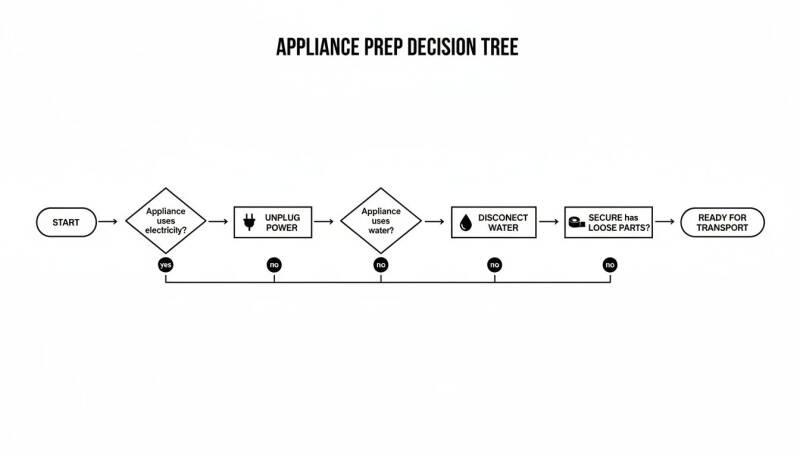
This simple flowchart is a great reminder of the prep sequence to ensure everything is safe and ready for a smooth handoff.
E-Waste Recyclers and Scrap Metal Yards
If you're dealing with several appliances at once or managing a property cleanout, going straight to a specialized recycler is almost always the most efficient path. Certified e-waste recyclers and scrap metal yards are the true professionals in this field.
Let’s say you’re a property manager in Fairfield County emptying an apartment. You've got a refrigerator, a stove, and a dishwasher to deal with. A scrap metal yard will likely pay you for the weight of the steel in the stove and dishwasher. However, they might turn away the fridge unless the refrigerants have already been professionally removed and certified.
That’s where a certified e-waste recycler comes in. They have the proper equipment and certifications to handle the entire job, from safely draining hazardous materials to making sure every last component is responsibly processed. For total compliance and peace of mind, this is your best bet.
The global recycling market is a fascinating and complex system. Refrigerators alone hold a massive 45% share of the scrapping market because they are packed with valuable materials like steel and aluminum. In fact, recycling the aluminum from a single fridge can slash energy consumption by an incredible 95% compared to producing it from raw materials.
Working with a professional service ensures these resources are actually recovered, which is more important than ever as regulations get stricter and landfill costs continue to climb. You can learn more about the economic drivers of recycling to see the bigger picture.
Understanding the Costs of Appliance Recycling
So, what's this actually going to cost you? When it’s time to get rid of an old appliance, the price can be all over the map. You might pay a small fee, or you could even walk away with a little cash in your pocket. It all comes down to the route you choose.
Most people first think of their local town or municipality, and for good reason—it’s often the cheapest way to go. Your local transfer station will likely take that old freezer or washing machine for a modest fee, usually somewhere between $15 and $50. That fee typically covers the extra work needed to handle hazardous materials like refrigerants.
But don't forget the hidden costs of the DIY approach. You have to factor in your own time, the gas to get there and back, and the sheer muscle it takes to haul a clunky, 200-pound dryer out of the basement and into a truck.
Paying for Convenience Versus Earning from Scrap
This is where you start to weigh what your time and effort are worth. A full-service junk removal company will obviously cost more than a trip to the town dump, but that fee buys you a whole lot of convenience. They handle all the heavy lifting, transportation, and ensure everything is disposed of correctly.
For a single appliance, you can expect to pay anywhere from $75 to $200, depending on how big it is and whether it’s stuck in a tight spot. For many people, paying to avoid a thrown-out back or a freshly gouged wall is money well spent.
On the other hand, you could actually get paid for your trouble. If you’ve got a heavy, refrigerant-free appliance like an old stove or a busted water heater, a local scrap metal yard will pay you for its weight in steel, copper, and other metals.
Just remember that scrap prices change daily with the market. You won't get rich off one appliance, but you could pocket $10 to $30—usually enough to cover your gas with a little left over.
The catch? Scrap yards won't touch anything with refrigerants unless a certified technician has professionally drained and tagged it. That adds a whole other layer of cost and coordination.
The Value of Professional Recycling
When you hire a professional service, you’re not just paying someone to make a problem disappear. You’re plugging into a surprisingly valuable resource stream. The U.S. electronic goods recycling industry, which includes large appliances, hit a staggering $28.1 billion in revenue in 2024, all thanks to the high demand for recycled metals. You can see the full scope of this growth in industry data from IBISWorld.
For anyone living in areas like Putnam or Orange Counties, this really highlights the importance of professional removal. It guarantees your old appliances are handled safely and become part of that valuable resource chain instead of just taking up space in a landfill.
Ultimately, the right financial path depends on your priorities. If you have a truck and a strong back, hauling it to the municipal station yourself is the cheapest option. If you’d rather have it gone with zero effort, a professional service is the way to go. And if you have a heavy, steel-rich appliance and a little extra time, the scrap yard might just put a few bucks in your wallet.
Giving Your Old Appliance a Second Life Through Donation
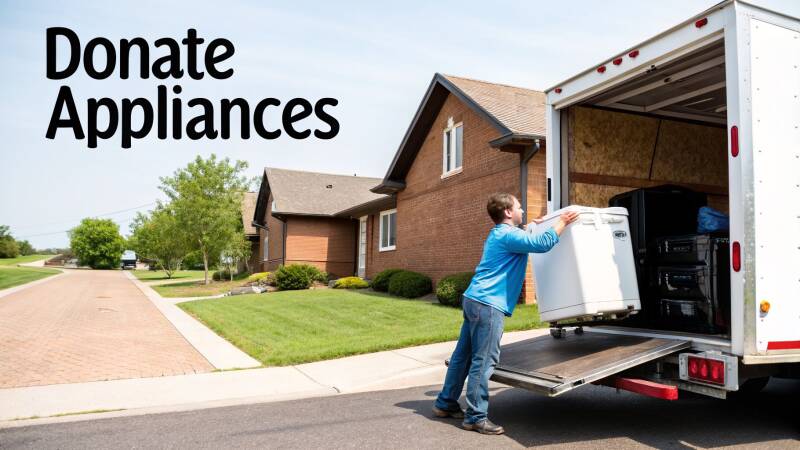
Before you start hunting for scrap metal prices or planning a trip to the dump, let's talk about the best-case scenario for that old appliance: donation. While recycling old appliances is certainly a responsible move, giving a functional unit a new home is even better. It keeps a massive item out of the waste stream and directly helps someone in your own community.
It’s easy to assume an old appliance is just junk, but that’s rarely the whole story. If your old refrigerator, washer, or stove still works reliably, it could be a game-changer for a local family or a nonprofit. Finding it a second home extends its life, making the most of the energy and materials that went into building it.
Is Your Appliance a Good Candidate for Donation?
Of course, not every used appliance is a good fit for donation. Charities and secondhand shops need to be sure the items they pass on are safe, clean, and in working order. Before you start making calls, ask yourself a few quick questions:
- Does it actually work? This is non-negotiable. The appliance has to perform its main job without any major glitches.
- Is it clean and presentable? Give it a good cleaning. A little dust is one thing, but it shouldn't have caked-on grime, significant rust, or big dents.
- Are all the essential parts there? A fridge needs its shelves and drawers. A washing machine should have its hoses. Make sure it's a complete package.
If you can confidently say "yes" to these, you've likely got a perfect donation candidate on your hands.
Giving a working appliance a second home is the ultimate form of recycling. It avoids the energy-intensive process of breaking it down and helps a local family get an essential item they might not otherwise be able to afford.
Finding a Home for Your Donated Appliance
Here in New York and Connecticut, you have some great options. Organizations like Habitat for Humanity ReStores in Westchester and Fairfield Counties are fantastic places to start. They're often looking for exactly these kinds of items and frequently offer free pickup for large appliances, which makes your life a whole lot easier.
Don’t forget about local thrift stores or community assistance programs, either. Your best bet is to call them first to confirm they accept appliance donations and to check on their drop-off rules or pickup availability.
And hey, even if your appliance is slightly on the fritz, don't give up on it just yet. You might be able to sell it for a small amount to someone who needs it for parts, keeping it out of the landfill for a bit longer.
Hiring a Pro for Hassle-Free Appliance Removal
Let's be honest. When you’re staring down a bulky refrigerator or an old, heavy washing machine stuck in a tight basement, the do-it-yourself spirit can fade pretty quickly. This is exactly when calling in a professional for the recycling of old appliances isn't just a convenience—it’s the smartest and safest move you can make. It’s less about avoiding the heavy lifting and more about getting your time back and knowing the job will be done right.
Turning this chore over to a full-service junk removal company makes the whole problem disappear with a single phone call. The process is straightforward: you get a clear, upfront quote, pick a time that works for your schedule, and a professional crew shows up to handle absolutely everything. You don't have to wrestle that old freezer out of the house; they do all the tough work.
This is a game-changer for landlords flipping a rental, real estate agents staging a home for sale, or anyone in the middle of a major renovation who just needs the old stuff gone.
What to Expect on Removal Day
When the appointment day arrives, the team comes prepared to get that appliance out, whether it's in your kitchen, basement, or garage. They’ll have the right equipment—dollies, straps, and protective gear—to make sure your floors, walls, and doorframes stay pristine.
We've all heard the horror stories. A simple appliance removal turns into a costly repair project because of a gouged hardwood floor or a dented wall. Professionals bring the speed and experience to avoid those headaches entirely.
The real value of hiring a pro is the peace of mind. You don't have to stress about local disposal laws, find a certified recycler, or figure out how to transport a 250-pound freezer. The entire process is managed for you from start to finish.
Ensuring Responsible Recycling
When you hire a professional hauler, you're also doing your part for the environment. Globally, the market for recycling waste home appliances handled over 100 million units in 2024 and is on track to hit 200 million by 2033. For homeowners in Westchester or Dutchess County, that means getting rid of your old appliances is part of a massive resource recovery effort. You can discover more about the growing appliance recycling market and see the bigger picture.
With bulky items like refrigerators (45%) and washing machines (30%) making up the bulk of appliance waste, professional junk removal is a key part of responsible disposal. These companies have established partnerships with certified facilities, ensuring every item is handled correctly.
Here’s what a good service provides:
- Safe Removal: Experienced crews who can navigate tight corners and steep stairs without leaving a scratch on your property.
- Eco-Friendly Disposal: Your old appliances are sent to certified recycling centers, not dumped in a landfill.
- Full-Service Convenience: You don't lift a finger. They handle the pickup, hauling, and proper disposal.
For homeowners in New York and Connecticut, using a professional service is the most reliable way to ensure your old appliance is recycled correctly and safely. If you're ready to clear out the clutter with zero hassle, learn more about our dedicated junk removal services.
Got Questions? We've Got Answers
No matter how many times you've done this, a few tricky questions always pop up when it's time to get rid of an old appliance. Let's tackle a couple of the big ones we get asked all the time by folks around here.
What About Old Freezers and Freon?
This is a big one, and for good reason. Old freezers, refrigerators, and air conditioners often contain refrigerants like Freon, which is a hazardous material.
The last thing you want to do is try and drain it on your own—it’s illegal, bad for the environment, and can be dangerous. The only safe and legal move is to have a professional handle it. A reputable junk removal service is equipped to transport these items to a certified facility where the refrigerant can be properly and safely recovered.
Can I Just Drag My Old Washer to the Curb?
I wish I could give a simple "yes" or "no," but it really comes down to the local rules here in NY and CT. Some towns have specific bulk pickup days where this might be okay, but many others will hit you with a fine for leaving a bulky appliance on the curb.
It’s considered illegal dumping in a lot of places. Your best bet is to always check your town's sanitation department website or give them a quick call first. To completely avoid the guesswork and the risk of a fine, scheduling a pickup with a hauling service is the way to go.
Add comment
Comments