
A practical, compassionate guide to hoarder house cleanout: safety, sorting tips, and emotional support for families and professionals.
Hoarder House Cleanout: A Practical Guide (hoarder house cleanout)
When you first step into a property overwhelmed by hoarding, it's easy to get sidetracked by the sheer volume of stuff. But the two most important things to bring with you have nothing to do with bags or boxes: they're compassion and a safety-first mindset.
Before a single item gets moved, the entire project has to be framed around creating a secure worksite. This isn’t just about cleaning; it's about navigating a potentially hazardous environment with a clear, methodical plan.
Your First Steps in a Hoarder House Cleanout
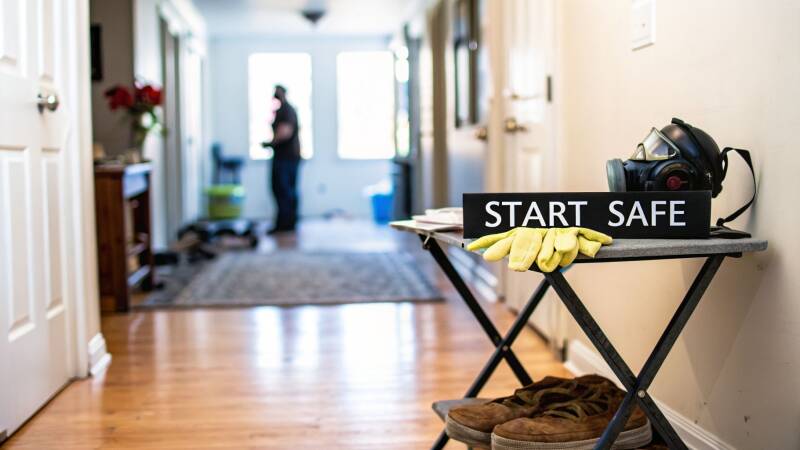
That first walk-through isn't for sorting. It's a fact-finding mission to figure out what you’re up against. Think of it as a pre-project safety briefing. Your goal is to identify and document every potential danger lurking beneath the clutter.
Take plenty of notes and photos. This visual record is gold, whether you're tackling the job yourself or hiring a professional crew like ours. It helps everyone understand the scope and prepare for the realities of the job.
Conduct a Thorough Safety Assessment
The number one priority is spotting immediate threats. Move slowly and deliberately—paths will likely be obstructed, and visibility can be poor. You’re looking for problems that could injure someone or compromise the building itself.
Keep an eye out for these common hazards we see on job sites:
- Blocked Exits and Pathways: Can you get out in an emergency? Make sure all doors and windows are clear and functional. This is non-negotiable.
- Structural Red Flags: Look for sagging ceilings, bowed floors, or significant cracks in the walls. The immense weight of possessions can seriously strain a home’s structure, and water damage from hidden leaks often makes it worse.
- Fire Hazards: Towers of paper, textiles, and other flammable materials create a tinderbox, especially if they’re near electrical outlets, frayed wiring, or heat sources.
- Pest Infestations: Obvious signs like droppings and nests are a dead giveaway, but so are chewed wires or fabrics. Rodents and insects carry disease and create unsanitary conditions.
From our experience, it's crucial never to underestimate the scale of the problem. Hoarding impacts an estimated 2% to 6% of people. One study found that even professional crews needed an average of 40 person-hours just for the initial decluttering, which reduced the total volume by over 50%.
Gear Up: Essential Personal Protective Equipment (PPE)
Never, ever walk into a hoarding situation unprotected. The air can be thick with dust, mold spores, and bacteria. Worse, you have no idea what sharp objects, biohazards, or chemical waste might be hidden in the piles.
The table below outlines our go-to safety gear. We don't start a job without it.
Initial Hoarder Cleanout Safety Checklist
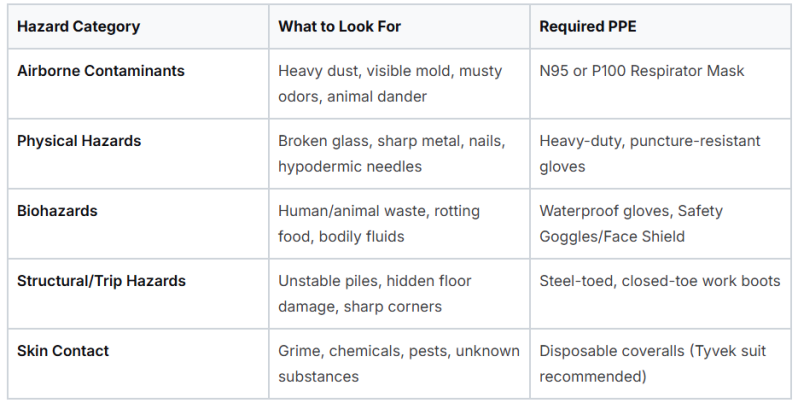
Having the right gear isn't just a suggestion; it's a requirement for keeping everyone safe and healthy. For more tips on getting ready for a big job, check out our guide on essential junk removal tips and resources. Getting this part right from the beginning sets the entire project up for success.
Understanding the Human Side of Hoarding
The biggest mistake anyone can make with a hoarder cleanout is thinking it’s just about trash removal. When you approach it as a simple disposal project—what we call a "stuff-centered" cleanout—you're almost guaranteed to fail. You're ignoring the person at the heart of the situation, which often makes the experience traumatic and leads right back to where you started.
For a solution to actually stick, you have to see hoarding for what it is: a recognized and complex mental health condition. This isn't a character flaw or a simple choice. Whether you're a family member in Orange County trying to help a loved one or a property manager in Connecticut facing a difficult unit turnover, understanding this is the first and most critical step.
Why a Compassionate Approach Is the Only Approach
Forcing a cleanout on someone often feels like a personal attack, causing them to dig in their heels and amplifying their distress. The real goal isn't just to empty the house. It's to make the space safe and livable again, and you can't do that without respecting the individual's emotional reality. This is where a professional strategy of harm reduction comes in.
Instead of aiming for a sterile, empty space overnight, harm reduction focuses on making immediate safety improvements. We start with the small, critical wins.
- Can we clear a safe path from the bedroom to the bathroom?
- Can we get to the stove and make sure it’s not a fire hazard?
- Are all the doors and emergency exits completely clear?
This approach slowly builds trust. It shows the person you’re there to help, not to judge or punish. It reframes the entire process as a collaborative step toward getting better, which is the only way to create lasting change.
One of the toughest lessons in this business is seeing the near-100% recidivism rate when a cleanout is forced without psychological support. A purely 'stuff-centered' approach doesn't help the person; it just treats a symptom, and the problem almost always comes roaring back.
The Overwhelming Reality of Living with Hoarding
The functional impact of hoarding is devastating. It turns a home from a place of comfort into a dangerous obstacle course, creating constant stress and very real hazards. The statistics on daily life inside a hoarded home are grim.
Research shows an overwhelming 92% of individuals diagnosed with Hoarding Disorder also struggle with at least one other mental health condition, such as major depression or crippling anxiety. The physical consequences are just as stark. In a typical caseload, 80% of residents can't move freely through their own homes.
Think about what that actually means for daily life:
- 70% can no longer use their own sofa.
- Over 50% are unable to prepare food in their kitchen.
- 45% can’t even open or access their refrigerator.
- 42% have a kitchen sink or bathtub that is completely unusable.
- A shocking 20% cannot use their own toilet.
These aren't just numbers to us. When our crews see a blocked kitchen in a Dutchess County home or an inaccessible bed in a Fairfield County apartment, we don’t just see clutter. We see an immediate threat to a person’s well-being and basic dignity. You can learn more about the challenges faced in hoarded homes and the need for new approaches to help. This deeper understanding changes a hoarder house cleanout from a messy job into a meaningful act of restoration.
A Practical Workflow for Sorting and Decluttering
Once the safety checks are done, it's time to roll up your sleeves and start the real work. This is where most people get stuck. Staring at years of accumulation is overwhelming, and without a solid plan, it's easy to burn out before you've even made a dent.
The trick is to have a system. We’ve learned from countless cleanouts that the best way forward is to work room by room, starting with the one that gives you the quickest win. Usually, that’s the least cluttered space or a critical area like a hallway you need for access.
Setting Up Your Sorting Stations
Before you move a single thing, get your sorting station ready. This isn't just a suggestion; it's the core of an efficient cleanout. We rely on a simple four-category system that works for just about everything you'll come across.
Get large contractor bags or clearly labeled bins for each category:
- Keep: Items the owner wants to save, plus any valuables, important documents, or family heirlooms you unearth.
- Donate: Anything in good, usable condition that can go to a new home—think clothes, books, furniture, and kitchenware.
- Recycle: Paper, cardboard, glass, certain plastics, and metals that your local service will accept.
- Dispose: This is for the real trash. Broken items, expired food, and anything unsanitary or damaged beyond repair goes here.
Set these stations up in a cleared-out area, like the driveway or the first room you finish. This gives you a central staging ground and keeps sorted piles from getting mixed up again.
One of the biggest mistakes we see people make is trying to sort items right where they find them. You have to move things to a neutral, designated sorting zone. Taking an object out of its environment helps break the emotional attachment and makes it far easier to make a clear-headed decision.
Gaining Momentum, Room by Room
Trying to clean out the whole house at once is a surefire way to fail. The psychological boost from completely clearing even one small space is huge—it gives you the motivation to keep going. If you're a real estate agent in Putnam County on a tight deadline, this focused approach is the only way to show real, tangible progress quickly.
First, clear a path. You need a safe walkway from the front door to the room you're starting in so you can carry out bags and bring in supplies. If the entryway itself is buried, well, that's where you begin. Access and safety always come first.
Next, pick a room and stick with it. We often recommend starting with a bathroom or a small bedroom. These spaces tend to have fewer items with deep emotional connections and can often be cleared in a day. That feeling of accomplishment is powerful. You can see just how dramatic the results of a methodical cleanout can be in our before-and-after project gallery.
How to Handle the Inevitable Burnout
A hoarding cleanout is as much an emotional marathon as it is a physical one. You're going to be mentally exhausted from making thousands of little decisions, and you’ll uncover things that can bring up a lot of memories.
The key to surviving it is to set small, manageable goals. Don't say, "We'll clear the whole bedroom today." Instead, aim for something specific: "Let's clear a three-foot path along the back wall." This turns an impossible job into a series of achievable tasks.
Here are a few more tips from the field to keep things moving:
- Take real breaks. Work in focused sprints of 45-60 minutes, then step outside or go to a clean room for at least 15 minutes. Your brain needs a rest from the clutter.
- Fuel your body. It’s so easy to forget to eat or drink. Keep water and snacks handy. You'll burn more energy than you think.
- Keep an eye out for important papers. Always be on the lookout for deeds, wills, bank statements, social security cards, and passports. Have a secure "valuables box" ready and put these items in it the second you find them.
- Allow for emotions, but don't get stuck. When a difficult item surfaces, it's okay to take a moment. Acknowledge the feeling, but have a gentle plan to get back on task. Progress is the goal here, not perfection.
How to Safely Handle Biohazards and Hidden Dangers
Let’s be blunt: the piles of stuff you can see are only half the problem in a hoarding cleanout. The real trouble starts with what you can’t see. Lurking beneath the clutter are often serious health risks that can turn a big job into a dangerous one if you’re not prepared.
This is the point where a hoarder house cleanout stops being about decluttering and becomes a hazardous materials situation. You have to know what you're looking for and, more importantly, when to back away and call for help.
Identifying Common Biohazards and Risks
Dust and dirt are a given, but a hoarding environment is a perfect breeding ground for all sorts of nasty biological and chemical contaminants. I’ve seen it all, and each hazard requires a specific, careful approach. Going in without the right gear and knowledge is a recipe for getting sick.
Keep an eye out for these common red flags:
- Mold Growth: Black, green, or white patches of mold are almost guaranteed, especially where moisture is trapped. Poor ventilation turns walls, floors, and even the items themselves into a petri dish. Breathing this in can cause serious respiratory problems, especially for anyone with asthma or allergies.
- Rodent Droppings and Nests: Mice and rats aren't just unsettling; their droppings and urine can carry things like Hantavirus, a severe respiratory illness. Their nests are also often infested with fleas and other parasites.
- Decaying Organic Matter: Forgotten trash, spoiled food, and other organic waste break down and become a buffet for bacteria. The smell alone is a warning sign, but the real danger is the pathogens you can't see.
- Human and Animal Waste: In the most difficult cases, bathrooms become unusable, and waste accumulates elsewhere. This is a severe biohazard, teeming with dangerous bacteria and viruses like E. coli and C. diff.
- Unmarked Chemicals: You never know what's hiding in old, unlabeled bottles. Over time, household cleaners, pesticides, and other chemicals can degrade, leak, or create toxic fumes if accidentally mixed.
Once you're absolutely certain an area is free from these immediate health threats, you can begin the sorting process. This simple breakdown can help guide your decisions for every single item.
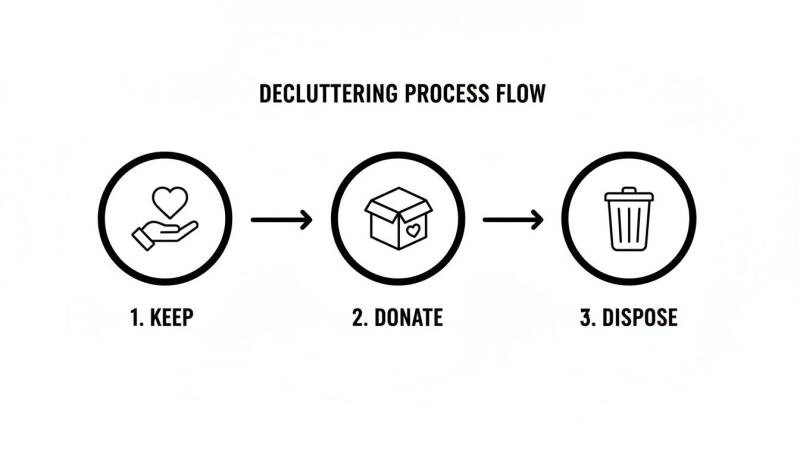
Remember, this visual is for sorting clutter, not for handling hazards. Safety always, always comes first.
When to Immediately Call Professionals
If you run into any of the situations below, stop what you are doing immediately. It’s time to call in a professional biohazard remediation team. These scenarios are far beyond a DIY job and demand specialized training, equipment, and disposal methods that comply with local NY and CT regulations.
Your health is not worth the risk. Trying to clean up major biohazards without proper certification is a serious gamble. Widespread mold, any amount of human or animal waste, or unknown chemical hazards are clear signals that you need a professional crew.
Here are the signs that you’re in over your head:
- Widespread Mold: If you spot mold covering more than 10 square feet, you can bet it has penetrated the drywall and possibly the HVAC system. This is no longer a surface-level problem.
- Signs of Deceased Animals: Finding animal remains is a significant biohazard that requires professional handling and disposal.
- Bodily Fluids or Human Waste: Never, ever try to clean up blood, feces, or urine yourself. This is a job strictly for certified pros.
- Heavy Pest Infestations: Seeing live rodents or signs of a massive infestation (thick layers of droppings, multiple nests) means an exterminator must be your first call before any cleanup can even begin.
- Chemical Spills or Strong Odors: A sharp, chemical smell or mystery liquids leaking from containers is a major red flag. You could be dealing with a hazmat situation.
A professional hoarder cleanout service has the right personal protective equipment (PPE), containment strategies, and commercial-grade sanitizers to neutralize these dangers. They ensure the property isn't just tidy, but truly sanitized and safe—a critical step for protecting property managers in Westchester and homeowners in Orange County from any future liability.
Restoring Property Value After the Cleanout

Finally getting a hoarder house completely cleared out feels like a massive victory. But for property owners, managers, and real estate pros, that’s really just the halfway point. With the clutter gone, you’re getting the first real, unobstructed look at the property’s true condition. This is where the work of restoring its value truly begins.
Clearing the space does more than just make it look better—it exposes the home's potential and, just as importantly, uncovers the damage that's been hidden, sometimes for years. You’re making a critical pivot from junk removal to full-on restoration.
Uncovering the Hidden Damage
Hoarding situations are incredibly tough on a home's structure. We’ve seen it all. The sheer weight of possessions can literally strain floor joists and walls, while trapped moisture and zero airflow create a perfect breeding ground for mold and rot. As the last of the junk is hauled away, you’re almost guaranteed to find a long list of issues demanding immediate attention.
This is the moment of truth. Years of clutter often go hand-in-hand with serious neglect, leading to hidden problems that tank a home's value and can even impact the appeal of neighboring properties. Once you can see the floor again, the home instantly feels larger and more inviting, but it’s the repairs that really drive up its market price. You can get a deeper dive into this by reading about how hoarder cleanouts impact property perception on loadrunnersjunk.com.
Some of the most common things we find after a cleanout include:
- Widespread Mold: With walls and floors finally exposed, you can see the full extent of the mold. This isn’t a DIY job; it almost always requires professional remediation.
- Rotten Flooring: We frequently find that sustained moisture from leaks, spills, or just condensation has rotted out subfloors, especially under piles of old paper or clothing.
- Pest Damage: Once the clutter is gone, you can spot the evidence—chewed wiring, destroyed insulation, and structural wood compromised by termites or rodents.
- Hidden Leaks: Plumbing issues that went completely unnoticed for years can finally be found and fixed before they cause even more water damage.
It’s incredibly tempting to just throw a fresh coat of paint on the walls and list the property. Trust me, that’s a huge mistake. Fixing these core issues isn’t just a repair; it’s a direct investment that translates into a higher selling price and a much faster sale. Buyers in competitive markets like Fairfield County, CT, or Westchester County, NY, have a sharp eye for homes that are genuinely move-in ready.
From Cleaned Out to Market Ready
A professionally cleaned and properly repaired property sends a powerful signal to potential buyers: this home has been cared for and is a solid investment. The transformation from a hoarded space to a true market-ready asset is nothing short of dramatic.
For real estate agents and property managers, the "before and after" is about more than just aesthetics—it's about market position and profitability.
Cleanout Impact on Property Readiness
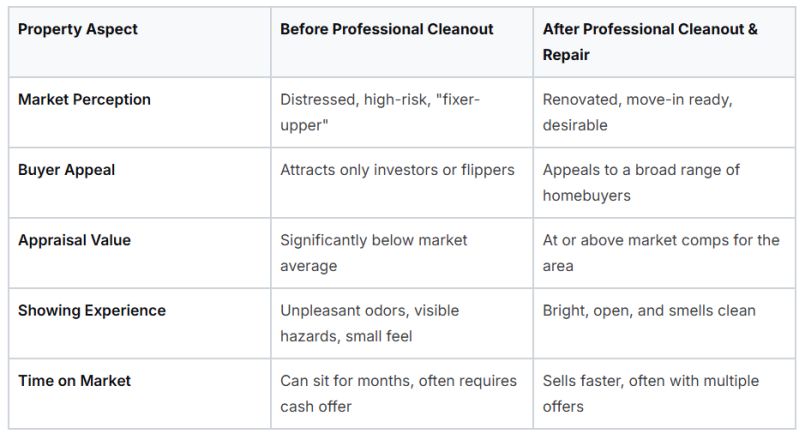
Ultimately, whether you're a property manager in Dutchess County or a real estate agent in Putnam, a complete cleanout and restoration turns a massive liability into a valuable opportunity. You get to completely reset the property's story from one of neglect to one of renewal, maximizing the ROI for the owner. A proper hoarder house cleanout isn't just a junk removal service; it’s the first and most critical step in unlocking a property's full financial potential.
Deciding Between DIY and a Professional Crew
Once you've sized up the situation, you’re at a major fork in the road: do you tackle this cleanout yourself, or is it time to call in a professional crew? The knee-jerk reaction for many is to go the DIY route to save some money. But before you start renting a dumpster, it’s crucial to understand what you’re really getting into.
Tackling a major cleanout on your own is a massive undertaking. The sheer physical work is one thing, but the logistics can quickly become a nightmare. You're suddenly responsible for everything—sourcing the right protective gear, renting a dumpster that's actually big enough, and navigating local disposal rules for everything from old paint cans to electronics. These regulations can be surprisingly tricky, especially across towns in Westchester, Dutchess, and the surrounding counties.
The True Cost of a DIY Cleanout
Going it alone costs a lot more than just sweat. The real price is often paid in time, money, and emotional energy—things people rarely budget for. You have to be brutally honest with yourself about whether you have the bandwidth for a project of this magnitude.
Think about what’s really involved:
- Time Investment: What a professional crew can knock out in a couple of days could easily turn into weeks or even months of your nights and weekends.
- Physical and Emotional Drain: This work is incredibly taxing. It’s physically hard, and if you have any personal connection to the home, the emotional toll can be overwhelming.
- Hidden Expenses: Dumpster rental fees are just the start. Factor in fuel for dump runs, special disposal fees for certain items, and even potential damage to your own vehicle. It all adds up, fast.
- Safety Risks: Without the right training and equipment, you’re exposing yourself to potential injuries from heavy lifting or, even worse, unseen biohazards.
When you bring in a professional team, you're not just paying for a few strong backs. You're investing in experience, efficiency, and—most importantly—safety. A seasoned crew knows exactly how to work through a hazardous space, sort items efficiently, and manage the entire disposal process so you don't have to.
Why Professionals Offer Peace of Mind
An experienced hoarder cleanout company brings a proven system, not just muscle. They show up with all the necessary equipment, full personal protective equipment (PPE), and a clear understanding of how to handle what is often a very sensitive situation with discretion and compassion. For property managers and real estate agents especially, this level of speed and professionalism is a game-changer.
A reputable company takes care of it all, getting the property cleared out quickly and, above all, correctly. This expertise becomes absolutely critical when you run into hazardous materials or biohazards, as they are trained to follow strict protocols for safe containment and disposal. To make sure you’re hiring the right people, you need to ask some direct questions before you sign anything.
Checklist for Vetting a Cleanout Company:
- Are you fully insured and licensed to work in my specific town/county?
- Can you share examples of your experience with hoarding situations specifically?
- What’s your process for finding and setting aside personal valuables like photos or documents?
- How do you manage the disposal of hazardous materials?
- Is your quote all-inclusive? Does it cover all labor, hauling, and disposal fees?
Making an informed decision here is your best protection, both legally and financially. It’s the only way to ensure the job gets done right. If you’ve decided the project is too much to handle and need a reliable team for the heavy lifting, you can learn more about our comprehensive junk removal services and how we can restore the property safely and efficiently.
Common Questions About Hoarder House Cleanouts
Even with a solid plan in place, tackling a hoarder house cleanout for the first time will bring up a lot of questions. It's a complicated job, and it’s completely normal to feel uncertain about the costs, timeline, and how to protect important family belongings.
We get these questions all the time from homeowners and property managers. Getting clear, straightforward answers helps take the mystery out of the process, making it feel much less overwhelming.
How Much Does a Professional Hoarder House Cleanout Cost?
This is probably the number one question we get, and the honest answer is: it depends. The cost can swing dramatically based on the sheer volume of stuff and the safety hazards involved. A relatively contained situation might only be a few thousand dollars.
For a severe, multi-level hoard that involves biohazards and blocked access, the price can climb to $15,000-$25,000 or even more. The final price is really a function of labor, the number of dumpsters needed, and any specialized handling for hazardous materials. Any reputable company will insist on a free, no-obligation onsite visit to give you an exact, all-inclusive quote.
Always get a firm, written quote before any work begins. A transparent estimate is your best protection against surprise fees and ensures everyone is on the same page about the full scope of the job.
What Happens to Valuables Found During the Cleanout?
One of the biggest fears we hear is, "What if you throw away something important?" A professional, compassionate crew runs on a strict protocol for this very reason. Our teams are trained to spot and immediately set aside items that have potential monetary or sentimental value.
This includes things like:
- Jewelry, cash, and coin collections
- Photo albums and family videos
- Important documents like deeds, wills, or financial records
Anything we find is placed in a secure, designated "save box" for the family or property owner to review later. When you're vetting companies, ask them directly about their process for handling valuables. Their answer will tell you a lot about their integrity.
How Long Does a Hoarder House Cleanout Take?
Just like cost, the timeline is tied directly to the hoarding level. A professional crew can often clear out a one or two-room situation in a single day. On the other hand, a full-house, high-level hoard can easily take several days to a full week.
It’s never just about hauling junk. The job includes a careful sorting process, bagging and organizing, and then the actual removal. Sometimes it also involves deep cleaning or even light demolition to remove soiled carpets or drywall. An experienced team leader can give you a realistic timeline after seeing the property in person.
When the job is too big, too complex, or too emotionally taxing to handle alone, it's time to bring in the experts. D&B Complete Home Services INC. provides the efficient, compassionate, and thorough cleanout services you need to restore safety and value to any property. Visit us at https://www.dbcompletehomeservices.com to get your free estimate.
Add comment
Comments