
Discover how to conduct an estate sale with our expert guide. Get practical tips for pricing, staging, and cleanout for a successful event in NY or CT.
How to Conduct an Estate Sale a Guide for NY & CT Homeowners
Getting ready for an estate sale is a marathon, not a sprint. From the first day of sorting to the final cleanout, you should realistically set aside 4-6 weeks. Rushing the process is the fastest way to leave money on the table and burn yourself out.
Your Estate Sale Game Plan: From Prep to Profit
Taking on an estate sale can feel like an impossible task, especially when you're already dealing with a major life change. Looking at a lifetime's worth of possessions is often overwhelming. Before you even think about pricing a single teacup, you need a solid game plan. This initial strategy is what will keep the chaos at bay and guide you toward a successful, less stressful event.
The first big question I always hear from families is whether to run the sale themselves or hire a professional company. There's no one-size-fits-all answer here. The right choice really comes down to your available time, your emotional state, and what you hope to achieve financially.
DIY vs. a Professional Company
Going the DIY route means you keep 100% of the profits, which is obviously a huge plus. But it also means you’re the one responsible for everything. We're talking every single detail—sorting, pricing, advertising, managing crowds, and handling security. This can work if you have plenty of free time, a good group of friends or family to help, and at least some idea of what things are worth.
On the other hand, hiring an estate sale company takes the entire burden off your shoulders. These pros typically charge a commission between 25-50% of the total sales, but they bring a ton of experience to the table. They know how to price everything from antique dressers to half-used bottles of cleaning supplies, and they have a built-in following of buyers. For many, trading a percentage of the profit for that kind of peace of mind is well worth it.
A Little Expert Insight: The decision to DIY or hire a pro often has more to do with your emotional bandwidth than your budget. If the thought of sorting through a loved one's personal belongings is just too painful, letting a professional manage the process is a form of self-care.
The All-Important Sorting Phase
Once you’ve decided on your path, the real work begins: sorting. This is almost always the most time-consuming part of the job. Don't make the mistake of rushing it. You should give yourself at least two or three solid weeks just for this task.
To keep yourself from getting bogged down, use a simple four-category system. Grab some boxes or bins and label them clearly:
- Sell: These are the items you'll be pricing for the estate sale.
- Keep: Anything you or other family members want to hold onto. Try to be selective here—you don't want to just move clutter from one house to another.
- Donate: Items that are in good shape but might not have enough value to sell.
- Discard: This is for anything truly broken, expired, or just plain trash.
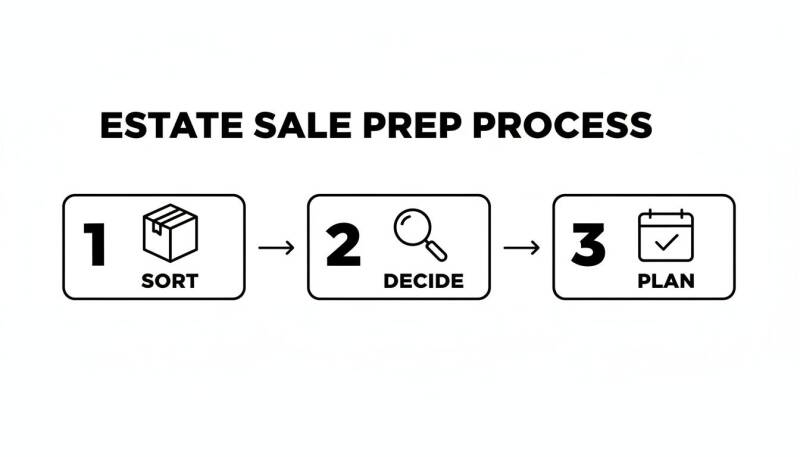
Looking at the prep work this way helps turn a mountain of a project into a clear, step-by-step process. You start with sorting, make your key decisions, and then build your plan from there.
One of the most common pitfalls I see is people throwing things away too quickly. What looks like junk to an untrained eye could be a treasure to a collector. A good rule of thumb is to never toss anything you're unsure about until you've had a chance to look it up or get it assessed.
For help figuring out what to do with the items that don’t make the "sell" cut, check out our junk removal tips and resources for some guidance on responsible disposal. Thinking through this early on is a key part of running an effective estate sale.
The Art of Pricing Your Items to Sell

Here's where the rubber meets the road. Pricing is, without a doubt, the trickiest part of running your own estate sale. It's an emotional tightrope walk—you have to separate what an item meant to your family from what it’s actually worth to a buyer today.
The goal isn't just to make the most money; it's to sell as much as possible so the house is empty when the sale is over. Price too high, and you'll be staring at a full house on Sunday evening. Price too low, and you're leaving cash on the table. You have to put on your researcher hat and take off your owner hat.
Researching Fair Market Value
Before you even think about grabbing a price gun, it’s time to play detective. This isn't optional—it's the foundation of a profitable sale. I always suggest starting with a rough inventory, focusing on your big-ticket or unusual items first.
For collectibles, antiques, and artwork, the internet is your best tool. Hop on eBay but make sure you filter for "Sold Items." This shows you what people actually paid, not the fantasy prices sellers are asking for. A quick browse through local listings on Facebook Marketplace will also give you a great feel for what furniture and everyday household goods are going for in your specific area.
Here are the resources I turn to again and again:
- Online Marketplaces: Use eBay's "Sold" listings and WorthPoint (which has a subscription fee but is invaluable for serious research) to find real-world comps.
- Replacement Sites: For china, silver, and crystal, check a site like Replacements, Ltd.. Just remember, their prices are full retail. A good rule of thumb for an estate sale is to price your items at 25-40% of that replacement cost.
- Formal Appraisals: If you suspect you have something truly special—fine jewelry, a rare piece of art, a significant antique—don't guess. Hire a certified appraiser. The fee you pay upfront could save you from making a thousand-dollar mistake.
Pricing Strategies That Actually Work
With your research done, it’s time to set prices that get people buying. A well-run estate sale can pull in anywhere from $5,000 to $10,000 on average, and smart pricing is what gets you there. With thousands of sales happening nationwide every week, your pricing strategy is what will set you apart. You can discover more about the financial side of the estate sale industry to see how the numbers break down.
Think like a shopkeeper. Every item needs a clear, easy-to-read price tag that’s securely attached. If shoppers have to hunt for a price or ask you about every other item, they’ll get frustrated and leave.
My Personal Insight: Don't get hung up on pricing everything to the exact dollar. The goal is to clear the home. It’s far better to sell a serving dish for $8 than to have it sit unsold at $12 and end up in a donation box.
A great tactic is to use color-coded tags for progressive discounts. You can announce that on day two, anything with a yellow tag is 25% off, and by the final day, it's 50% off. This builds a sense of urgency and clears out merchandise without forcing you to re-price hundreds of items overnight.
Another pro tip is to bundle. Group small, low-value items to make them more appealing. Nobody wants to haggle over a 50-cent coffee mug, but a set of six mugs for $3 is an easy sell. This works beautifully for kitchen utensils, books, linens, and office supplies, turning tiny items into sales that really add up. Mastering this is a key part of learning how to conduct an estate sale that succeeds.
Staging and Marketing to Attract Eager Buyers
Now that you've priced every last item, the real challenge begins: getting a steady flow of eager buyers through the door. I’ve found that a truly profitable estate sale feels less like a yard sale and more like a pop-up boutique. To pull that off, you need to tackle two things at once: smart marketing to build buzz and thoughtful staging to create an incredible shopping experience.
Think of it this way—your marketing is what gets people to show up, but your staging is what convinces them to stay, browse, and actually buy. If you skimp on either one, you're leaving money on the table.
Creating an Irresistible Online Presence
These days, your sale really starts online. The vast majority of serious shoppers—the ones who show up early with cash in hand—find sales through dedicated listing websites. A few signs on the corner just don't cut it anymore.
Your first job is to build a detailed, photo-heavy listing on platforms like EstateSales.net or even Facebook Marketplace. This is your digital storefront, and you only get one chance to make a first impression.
- Take Great Photos: You don't need a fancy camera; just use your phone's best settings and make sure the lighting is good. Capture wide shots of each room to give people a sense of the sale's scale. Then, zoom in on your money-makers: antiques, designer furniture, collectibles, and anything unique.
- Write a Compelling Description: Don't just list what's there. Tell a story. Use keywords that get people excited, like "Mid-Century Modern Furniture," "Extensive Collection of Vintage Pyrex," or "Packed Garage with Power Tools." It creates a sense of discovery and urgency.
- Be Specific and Honest: If you have a strict "no early birds" policy, put it in bold. State your accepted payment methods (cash, Venmo, credit cards) right in the listing so buyers come prepared. A little transparency goes a long way in preventing headaches on sale day.
Staging the Home Like a Pro
Once buyers arrive, you want to make it as easy and enjoyable as possible for them to shop. A cluttered, disorganized house is not only overwhelming, it's a safety hazard. Your goal is to turn the home into a temporary shop where every item is visible and easy to get to.
First things first: rent tables. I can't stress this enough. Don't make the classic mistake of leaving items on the floor or piling them on beds. Covering some simple folding tables with tablecloths instantly makes everything look more valuable and organized.
Next, think in terms of "departments." Grouping similar items together creates logical shopping zones that just make sense to a buyer.
- All kitchenware, gadgets, and small appliances go in the kitchen.
- Linens, towels, and bedding get their own space in a bedroom.
- Books, movies, and records can be arranged in the living room.
- Tools and outdoor gear belong in the garage.
This kind of intuitive flow helps shoppers find what they're looking for and encourages them to wander through the entire house, which is exactly what you want.
A well-staged home doesn't just look better—it sells better. By creating clear, walkable paths and grouping items logically, you encourage shoppers to stay longer. The longer they stay, the more they tend to buy.
Effective Signage and Display Tactics
Your physical signs are just as critical as your online ads because they capture all that valuable drive-by traffic. My advice? Make them big, bold, and dead simple. Use a thick black marker on a bright, neon-colored poster board. All it needs to say is "ESTATE SALE" with a huge, clear arrow pointing the way. Place one at every major intersection leading to the house.
Inside, use lighting to your advantage. Open all the curtains, turn on every light, and even bring in extra lamps for dark corners. A spotlight on a display case with jewelry or collectibles draws the eye. A well-lit item is always more appealing.
Finally, a few small touches can make a surprising impact. I always recommend placing small, high-value items in a locked display case near the checkout area. This prevents theft while keeping them visible. Once the hard work of staging is done, the change is often stunning. You can see how a professional touch can completely reset a property by viewing these before and after project photos.
Handling the Paperwork: Permits and Taxes in NY & CT

Let’s talk about the not-so-fun but absolutely critical part of running an estate sale: the legal and financial paperwork. It’s easy to get caught up in staging and pricing, but ignoring permits and sales tax can turn a successful sale into a major headache. Once you understand the rules, though, they’re pretty straightforward to manage.
First Stop: Your Local Town Hall
The rules for an estate sale can change dramatically from one town to the next, especially in places like Westchester County, NY, or across Fairfield County, CT. Your first move should always be to get in touch with your local town or city clerk's office. A simple phone call or a visit to their website is usually all it takes to find out if you need a permit.
Some towns couldn't care less. Others are surprisingly strict, limiting how many sales you can hold per year or how you can advertise. For instance, a town might charge a small permit fee and only allow your signs to be up for 48 hours before the sale. Don’t skip this step—ignoring local ordinances can lead to fines, and nobody wants that.
You're a Retailer Now: The Deal with Sales Tax
This is the one that trips up almost every first-timer. The money you collect is generally subject to sales tax in states like New York and Connecticut. It helps to think of your sale as a temporary retail shop, because that’s how the state sees it.
To stay on the right side of the law, you'll almost certainly need to:
- Get a Certificate of Authority: Before a single item is sold, you have to register with the New York State Department of Taxation and Finance or the Connecticut Department of Revenue Services. This certificate is your legal permission to collect sales tax.
- Charge the Right Amount: You're responsible for adding the correct state and local sales tax to every single transaction. I recommend posting a clear sign at the checkout so there are no surprises for your shoppers.
- File and Pay Up: After the sale is over, you must file a sales tax return and send the tax you collected to the state. For a one-off event like this, it’s usually a simple, one-time filing.
Trust me, failing to collect and remit sales tax can bring on serious penalties and back-tax bills. It’s a non-negotiable part of the process.
The biggest mistake people make is thinking an estate sale is just a glorified garage sale and the tax rules don't apply. State tax authorities see no difference. Registering beforehand and collecting the tax is a simple way to protect yourself.
A Quick Word on Income and Estate Taxes
So, what about income tax? For most people clearing out personal household items, there’s no federal income tax to worry about. Why? Because you're typically selling used goods for far less than what you paid for them. Since there's no "gain" or profit, there's nothing to report.
The exception is if you sell a high-value item—like a rare piece of art or a collectible—for much more than its original cost or appraised value. That profit could be a capital gain.
And if the sale is part of settling a loved one's estate, the rules can get more complex. In that situation, it’s always best to have a quick chat with a tax professional or the estate’s attorney. A little professional advice goes a long way in making sure your successful sale is also a legally sound one.
Managing Sale Days for Safety and Success
Alright, the sale day is here. This is where all your planning really pays off. The moment the doors open, it’s a whirlwind of activity—you're a crowd manager, a salesperson, a negotiator, and a security guard all at once. Having a game plan for these few days is what makes the difference between a smooth, profitable sale and a chaotic, stressful mess.
Think of it less like a garage sale and more like managing a live retail event inside a private home. The first hour is always the most intense. You’ll get a flood of seasoned collectors and die-hard bargain hunters who know exactly what they're looking for. How you handle that initial rush sets the tone for the entire day.
Staffing for Control and Service
First things first: you can't run a sale of any decent size alone. It's not just impractical; it’s a huge security risk. I’ve seen it tried, and it never ends well.
A good rule of thumb is to have one helper for every one or two rooms that are open to the public. This ensures you have eyes everywhere, especially on smaller, high-value items that can easily walk away.
Give everyone on your team a specific job:
- Floaters: Assign one person to roam through a specific zone (like the main floor or the upstairs bedrooms). Their job is to answer questions, keep an eye out for theft, and gently remind people of the rules.
- Checkout Pro: Put your most organized person at the cash table. They need to be good with numbers, quick with payments, and comfortable under pressure. They should never, ever leave the cash box alone.
- The Muscle: Make sure you have at least one person who can help customers carry furniture and other heavy items to their cars. This is a huge help and can seal the deal on a big sale.
When your sale looks well-staffed and organized, it sends a clear message to potential shoplifters: we're watching.
Secure Payments and Cash Handling
In the fast-paced environment of an estate sale, you have to make paying easy and secure. While it might feel simpler to be "cash only," you could be leaving a lot of money on the table. Accepting credit cards can boost your total revenue by 20% or more. Plenty of people don't carry hundreds of dollars in cash but will happily swipe a card for that perfect piece of furniture.
Get a mobile credit card reader from a service like Square or PayPal. They're incredibly easy to use with any smartphone or tablet. For handling cash, get a proper lockable cash box and start the day with a "bank" of small bills and change. As the day goes on, don't let cash pile up. Periodically and discreetly, have someone skim the large bills and move them to a secure spot away from the checkout area.
Key Takeaway: Control the flow of traffic. Have everyone enter through one door and exit through another, right past the checkout table. This simple layout is your single best defense against theft.
The Fine Art of Haggling
Haggling is part of the fun for many shoppers, so don't be surprised or offended when it happens. The trick is to go in with a strategy. Decide on your discount policy before the doors open. A common approach is to hold firm on prices the first morning, then consider offers of 10-15% off in the afternoon or on the second day.
When someone makes an offer, be polite but firm. If it's just too low, you can smile and say, "That's a bit less than I can do right now, but I could meet you at X." This keeps the conversation positive and shows you’re willing to negotiate. The goal, after all, is to sell everything while getting a fair price. A good negotiation ends with both you and the buyer feeling like you got a good deal.
The estate sale business has grown tremendously, with about 14,000 professional companies in the U.S. generating up to $5 billion in revenue each year. That shows just how much value can be locked inside a home's four walls, and why managing your sale days like a pro is so critical, especially for homeowners in places like Westchester and Putnam counties. You can find more surprising facts about the estate sale business and see just how big this industry has become.
The Final Cleanout: What to Do With Unsold Items
The sale is over. The last customer has gone home, and a deceptive quiet settles over the house. While the main event has wrapped up, this final phase is often the most physically and emotionally draining part of the entire process. You’re left staring at a collection of unsold items, and the finish line still feels frustratingly far away.
Don't let the post-sale mess overwhelm you. With a clear strategy, you can get the property completely empty and ready for its next chapter without losing steam. The trick is to work methodically and, most importantly, know when to call for backup.

Creating Your Post-Sale Plan
Your first move should be a quick triage. Go through what’s left and immediately pull aside anything with significant value that you couldn’t sell at your target price. This is usually high-end furniture, specific art, or rare collectibles. These pieces might be perfect for consignment shops or online auction houses, where a more specialized audience might be willing to pay what they're truly worth.
With the high-value items set aside, you can start consolidating everything else. Group items for donation—think clothing, usable kitchenware, and books—so they’re ready for a single pickup or drop-off. Remember to get a receipt; documenting your donations for a potential tax deduction can be a small but welcome financial silver lining.
At this point, you'll likely feel exhausted and overwhelmed by the remaining volume of "stuff." This is the moment where trying to do it all yourself stops being cost-effective and starts costing you time and sanity.
Bringing In the Professionals
This is where the real game-changer comes in: hiring a professional estate cleanout service. This isn't just about hauling away junk; it’s about efficiently and responsibly clearing the entire property. A skilled crew can accomplish in a few hours what might take you days, or even weeks, of back-breaking labor.
A full-service team will handle everything that's left behind, including:
- Hauling away large, bulky furniture that didn't sell.
- Bagging up miscellaneous small items, debris, and trash.
- Sorting materials for recycling and proper disposal to minimize landfill waste.
- Often, they'll even perform a final "broom swept" cleanup, leaving the space tidy.
By bringing in an experienced team, you are essentially purchasing peace of mind. For homeowners in Westchester, Putnam, and Dutchess counties, knowing that everything will be handled in a single day is an enormous relief. You can see how professional junk removal services finalize an estate sale, leaving the property truly empty and ready for whatever comes next.
Frequently Asked Estate Sale Questions
Even with the best plan, you're bound to have questions pop up as you get into the thick of planning an estate sale. We get calls all the time from families in NY and CT facing the same uncertainties. Here are the straightforward answers to the questions we hear most often.
How Long Does a Typical Estate Sale Process Take?
From start to finish, you really need to budget 4 to 6 weeks. I know it sounds like a lot, but trying to cram everything into a shorter timeframe is a recipe for stress and lost profits.
Here’s a realistic breakdown of that timeline:
- Sorting & Pricing (2-3 weeks): This is the most labor-intensive part. It involves going through every single item, researching its value, and pricing it correctly. You can't rush this.
- Staging & Marketing (1 week): Once everything is priced, you'll need time to arrange the home like a retail space and get the word out with good photos and advertising.
- The Sale (2-3 days): Most sales run over a weekend, from a Friday to a Sunday.
- Post-Sale Cleanout (A few days): Dealing with what’s left over.
Trust me, rushing leads to sloppy pricing and overlooked valuables. Every time we see a sale that feels chaotic or unprofitable, it's almost always because the timeline was too compressed.
Remember this: The time you invest in preparation directly impacts your financial return. A rushed sale is a sale that leaves money on the table.
Should I Throw Away Junk Before Calling for Help?
This is a big one, and the answer is an emphatic no. Please, don't start "pre-cleaning" by tossing things you think are junk. It’s one of the costliest mistakes we see people make.
What looks like a rusty pile of tools, a box of old kitchen gadgets, or even half-used bottles of cleaning supplies can be surprisingly valuable to the right buyer. Collectors and professional resellers look for these exact kinds of things. It's our job to know what sells.
The only things you should ever remove beforehand are:
- Personal family photos, mail, and sensitive documents.
- Hazardous waste like old paint cans or chemicals.
- Obvious garbage and food waste.
Everything else? Leave it. You'd be absolutely amazed at what people will line up to buy.
What Happens to All the Stuff That Does Not Sell?
It's a simple fact: not everything will find a new home during the sale. When the doors close for the last time, you’ll be left with a mix of unsold items. For high-value pieces, a consignment shop might be a good next step.
But for everything else, you need to decide how much more of your own time and energy you want to spend. You could spend days listing things online or hauling load after load to a donation center.
Frankly, the most efficient route is to hire an estate cleanout service. A professional crew can come in and clear the entire property in just a few hours. They handle all the sorting for donation, recycling, and proper disposal, saving you an incredible amount of physical work and hassle.
When the sale is over and you're staring at what's left, don't let the final clear-out become another major project. D&B Complete Home Services INC. offers fast, professional estate cleanout services throughout New York and Connecticut. We handle it all, from removing furniture to hauling away the last bits of debris. Get your property empty and ready for its next step today.
Add comment
Comments