Learn how to dispose of a gas grill safely and responsibly. Our guide covers propane tank safety, recycling, scrap yards, and junk removal options.
How to Dispose of a Gas Grill The Right Way
So, that trusty old gas grill has finally cooked its last burger. Now it's just a rusty monument taking up space on your patio. What's next? You can't just drag it to the curb with the rest of your trash. Most municipal services won't touch them, and for good reason.
Getting rid of a gas grill the right way is about more than just making space. It involves handling potentially hazardous materials and bulky parts that need special attention. It's a matter of safety, environmental responsibility, and following local rules.
Your Quick Guide to Gas Grill Disposal
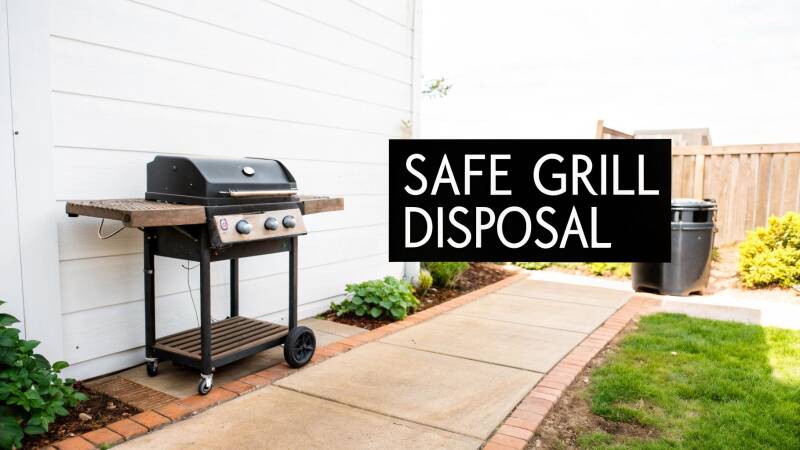
If you're in Westchester, Putnam, Dutchess, or a neighboring county, you already know that weekly garbage pickup has its limits. A gas grill, especially with the propane tank still attached, is a definite no-go for them.
Improperly discarded grills and their tanks can pose a genuine fire risk. Think about it—a pressurized tank left in the wrong place is a ticking time bomb. On top of that, these bulky items contribute to landfill overflow, a problem we all need to take seriously.
Why Proper Disposal Matters
Let's talk numbers for a second. The US generates a staggering 292.4 million tons of municipal solid waste every year. The tough part? Only 32.1% of that gets recycled or composted. That means a massive 146.2 million tons of junk ends up buried in landfills annually.
Choosing to dispose of your grill responsibly helps chip away at that number. You can find more details about the importance of recycling bulky items from the EPA data.
This guide is designed to make the process straightforward for homeowners, property managers, or anyone who just needs to get the job done. We'll walk you through everything you need to know:
- Safely disconnecting and dealing with the propane cylinder. This is the most critical first step.
- Cleaning the grill so that recycling centers or scrap yards will actually accept it.
- Figuring out your best disposal option, whether that's a trip to the scrap yard or calling in a junk removal pro.
For many people, especially busy homeowners or real estate agents clearing out a property, the time and effort of DIY disposal just isn't worth it. A professional junk removal service handles everything—safely, legally, and without you having to do any of the heavy lifting.
To help you decide which path is right for you, here’s a quick breakdown of your options.
Gas Grill Disposal Options at a Glance
This table sums up the most common ways to get rid of your old gas grill, giving you a clear picture of what each method involves.
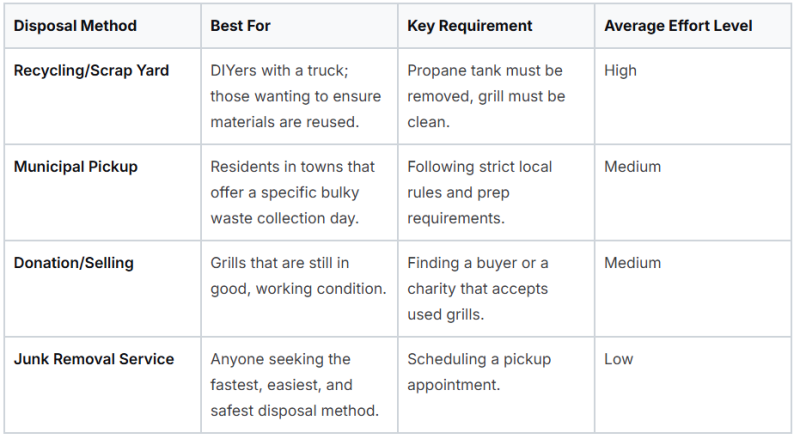
Each option has its pros and cons, from the cost and effort involved to the environmental impact. The best choice really depends on your specific situation, the condition of your grill, and how much time you're willing to invest.
Getting Your Old Grill Ready for the Road
Before you can haul your old grill away, there are a few crucial prep steps you can't skip. This isn't just about making it easier to move; it's about safety. Wheeling it to the curb as-is is a definite no-go. Taking the time to prep protects you, sanitation workers, and the folks at the recycling facility from some pretty serious hazards.
The absolute first thing you need to deal with is the propane tank. This is the most dangerous part of the whole setup and is officially considered hazardous waste. Never, under any circumstances, toss a propane cylinder—even one you think is empty—into your household trash or recycling bin.
First Things First: Secure That Propane Tank
Start by closing the valve on top of the tank. Turn it clockwise all the way until it’s good and tight. This seals off any gas that might be left inside. Now, you can unscrew the pressure regulator (that's the round gadget with the hose attached) from the tank valve. It should twist off counter-clockwise.
With that, the tank and grill are two separate things. The tank itself needs to be disposed of following your local hazardous waste rules, which we'll dive into next. For now, just move it to a safe spot. Keep it upright, outdoors, and away from direct sun or anything that could spark a flame.
Get Rid of the Grease and Grime
With the tank safely out of the picture, it’s time to clean the grill. This might sound like a pain, but scrap yards and recycling centers can—and often do—turn away grills that are caked with old food and grease. That gunk attracts pests and is considered a contaminant in the metal recycling process.
It doesn’t need to be sparkling new, but a solid cleaning is a must.
- Pull Out the Guts: Take out the cooking grates and the burner covers (the metal tents over the burners). A good wire brush will make quick work of scraping off the big stuff.
- Scrape the Cook Box: Use a putty knife or a simple scraper to get all the baked-on gunk off the bottom and sides of the grill's main body.
- Wipe it Down: A decent degreaser and some paper towels or old rags will handle the rest.
This not only makes the grill acceptable for recycling but also makes the next step—taking it apart—a whole lot less disgusting. The process feels a lot like the end-of-season cleaning you're supposed to do, and you'll quickly see the consequences if you've been skipping it when you have to get rid of old lawn equipment, too.
Expert Tip: Don't underestimate the importance of cleaning. A scrap metal dealer is looking for clean metal. Show up with a greasy, food-covered grill, and you'll likely be turned away and have to drag it all the way back home.
Break It Down for Easy Transport
Dismantling the grill isn't always a requirement, but trust me, it makes life so much easier. It's less awkward to transport, and many scrap yards insist on it. Plus, separating the different types of materials—metal, plastic, etc.—ensures as much of it as possible gets recycled properly.
Your goal here is to strip off all the non-metal parts.
Look for and remove these items:
- Plastic side shelves or trays
- Control knobs
- The igniter button and its wiring
- The wheels
- Any thermometers or plastic handles
A basic screwdriver and a wrench are usually all you need. Once you’ve removed the plastic and electronic bits, you'll be left with the metal frame, lid, and grates. This is the stuff the scrap dealer actually wants. By breaking it down, the grill is lighter, fits better in your vehicle, and is ready for its final destination.
How to Handle That Propane Tank—The Right Way
Let's start with the most critical part of the whole process: the propane tank. This isn't just another piece of metal; it's a pressurized container holding flammable gas, and you absolutely can't just toss it out with the trash. Treating it carelessly is a major safety hazard and, frankly, against the law.
Propane tanks are considered hazardous material for a good reason. They're a key factor in a portion of the 9,287 home fires involving grills that the National Fire Protection Association (NFPA) tracks each year. A leaky or mishandled tank can turn a simple disposal job into a dangerous emergency.
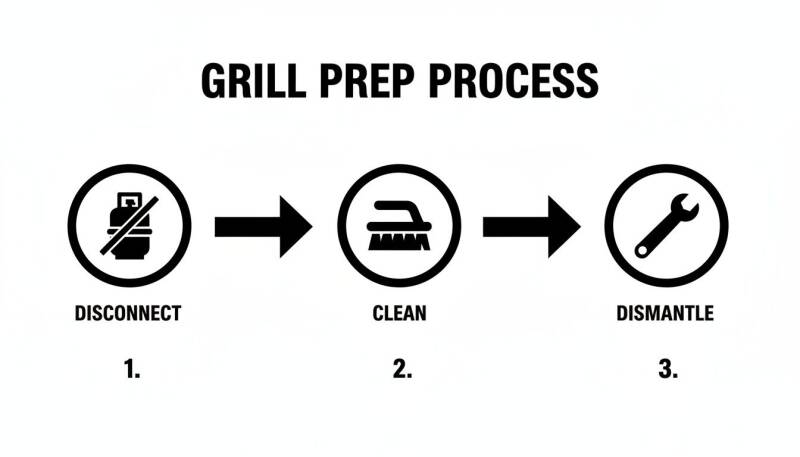
Getting the tank disconnected is always the first step. From there, you'll clean the grill and then break it down.
Where to Take Your Old Propane Tank
So, what do you do with this tank once it's disconnected? Luckily, there are plenty of safe, legal, and convenient options right here in Westchester, Putnam, Dutchess, and the surrounding areas.
- Tank Exchange Programs: This is by far the easiest method. Places like Home Depot, Lowe's, and even many gas stations or grocery stores that have those Blue Rhino or AmeriGas cages out front will happily take your old tank when you buy a new one. Some might even take it without a purchase, but it's always smart to call first and ask.
- Hazardous Waste Collection Days: Keep an eye on your town’s website. Most municipalities in our area host special collection events for hazardous household waste a few times a year. These are the perfect place to drop off items like propane tanks, old paint, and chemicals, as they're set up to handle them properly.
- Scrap Metal Yards or Recycling Centers: Some scrap yards will accept empty propane tanks, but they have strict rules. You'll almost always need to have the valve completely removed to prove it's empty and depressurized. This can be tricky and dangerous if you're not experienced, so call ahead to understand their exact requirements before you even think about heading over.
A Quick Word of Warning: Never, ever try to puncture a tank to empty it yourself. Even a tank that seems empty can have enough residual propane to ignite. This is a job best left to professionals at a proper facility.
Getting the Tank There Safely
Once you have a destination, transporting the tank is the final piece of the puzzle. The goal is simple: keep it from tipping, rolling, or leaking in your car.
The cardinal rule is to always keep the tank upright and secure. A milk crate works perfectly, or you can use bungee cords or even the seatbelt to strap it in place in the back of your SUV or truck bed. Don't ever let it lie on its side—this can damage the pressure relief valve.
And one last tip: crack a window. Good ventilation prevents any potential fumes from building up inside your vehicle. It’s a small step that makes the short trip to the drop-off location much safer for everyone.
Finding the Right Disposal Method for Your Grill
Once your grill is clean and the propane tank is safely out of the picture, it's time to figure out how to get it off your property for good. Let me save you some trouble: just dragging it to the curb and hoping for the best is a recipe for disappointment.
Most municipal trash services across Westchester, Putnam, and Dutchess counties simply won't pick up an old gas grill. They’re bulky, filled with mixed materials, and fall outside the scope of regular residential collection. While you might hear about rare exceptions—like an annual "Special Residential Pick-Up" day some towns offer—you can't count on it. My advice? Always double-check your town's regulations, but have a solid backup plan ready.
H3: Can You Take It to the Scrap Yard?
If you've got a truck and don't mind getting your hands dirty, heading to a local scrap metal yard seems like a smart move. After all, a grill is mostly steel and aluminum, and recycling it is the right thing to do for the environment.
It’s a great way to ensure the metal gets a new life. In 2018, the U.S. generated a staggering 292.4 million tons of municipal solid waste, but the recycling rate for metals was a measly 23.4%. Big, awkward items like grills often fall through the cracks and end up in landfills. You can discover insights about recycling bulky appliances from Angi.com to learn more.
Just know what you're getting into. Most scrap yards will want you to strip off all the non-metal parts first—that means the plastic wheels, side shelves, rubber hoses, and knobs all have to go. After all that work, the payout is usually pretty small, often just $5 to $10, depending on the grill's weight and the day's metal prices. For a lot of people, the time and effort just don't add up.
H3: Selling or Donating a Working Grill
Is your grill still in pretty good shape? If it fires up safely and just needs a little TLC, the best and most eco-friendly option is to pass it on. This keeps a perfectly good appliance out of the waste stream and in the hands of someone who'll get more use out of it.
Here are a few great places to try:
- Facebook Marketplace: This is my go-to for finding local buyers. A clean, working grill can sell surprisingly fast, especially right before barbecue season kicks off.
- Craigslist: It's still a reliable platform for quick, local, cash-in-hand sales.
- Buy Nothing Groups: These hyper-local community groups are fantastic for gifting items to your neighbors. You know it's going to a good home nearby.
- Charity Organizations: Some local charities or thrift stores might take grills, but definitely call them first to see what their policy is.
A quick tip from experience: Before you list it, give it a good scrub and take some clear, well-lit photos. A little bit of presentation goes a long way and can be the difference between a quick sale and having it sit on your patio for weeks.
Comparing Grill Disposal Methods
Deciding between doing it yourself and calling in the pros? It really comes down to how much time and effort you're willing to spend. This table breaks down the key differences to help you choose the right path.
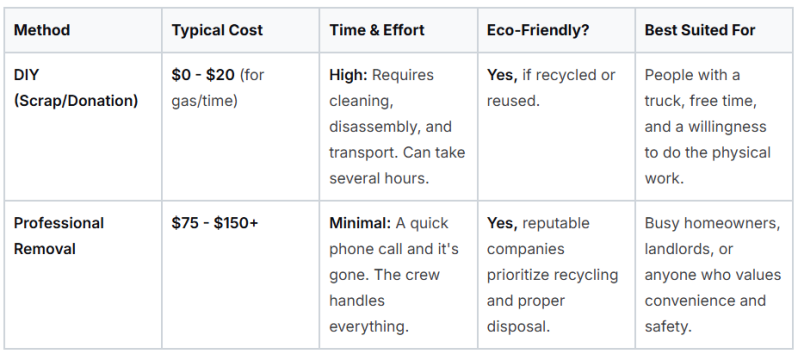
Ultimately, while the DIY approach can save you a few bucks, the convenience and peace of mind that come with a professional service are often well worth the cost.
H3: The Hassle-Free Junk Removal Solution
For most homeowners, landlords, and real estate agents I work with, the time and physical labor of DIY grill disposal just aren't practical. This is where a professional junk removal service is the clear winner. It’s hands-down the most efficient, straightforward, and safest way to get rid of an old gas grill.
When you hire a pro team, you literally don't have to do a thing. No dismantling the greasy frame, no scrubbing off caked-on residue, and no wrestling a heavy, awkward object into a vehicle. The crew shows up, carries it out of your backyard, and makes sure it's handled responsibly.
This service is a lifesaver in a few common situations:
- Busy Homeowners: Get your weekend back. Instead of spending hours on a dirty, frustrating project, you can have the grill gone in a matter of minutes.
- Landlords & Property Managers: When you're turning over a rental, time is money. A junk removal service gets that old grill out fast, so the property is clean and ready for the next tenant.
- Real Estate Agents: Prepping a home for sale often means clearing out all the clutter left behind. A professional crew can help you declutter the yard or patio quickly, boosting curb appeal for potential buyers.
A good service ensures every piece of the grill is managed according to local and federal rules. If you’re looking for more ways to clear out your space, we've got plenty of other junk removal tips and resources.
When a Professional Service Is Your Best Option
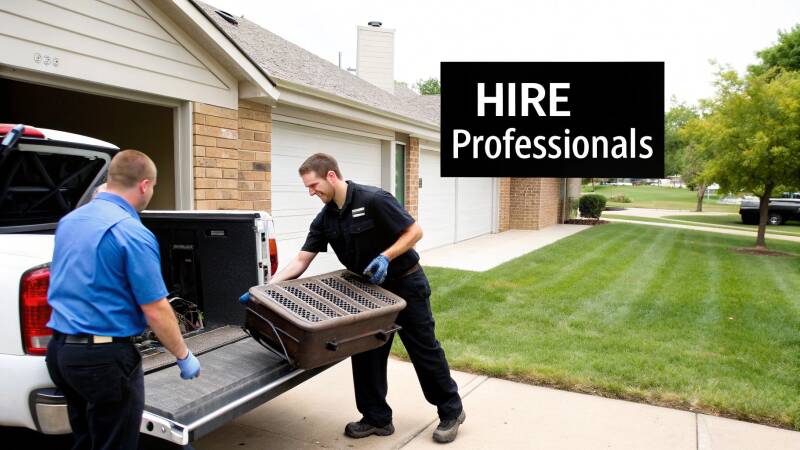
Let's be honest—sometimes the hassle of getting rid of an old gas grill just isn't worth it. The time, the mess, the safety risks... it all adds up.
For many homeowners, property managers, and real estate agents I've worked with, calling in a professional junk removal service is simply the smartest move. It's the go-to solution when your time and peace of mind are worth more than the struggle.
This route takes every single headache out of the equation. You won't have to sacrifice your Saturday scrubbing away years of caked-on grease, hunting for a wrench to fight with rusty bolts, or worrying about how to safely transport a propane tank. A trained crew handles everything.
Guaranteed Safety and Zero Liability
The single biggest reason to hire a pro is safety. Even a propane tank you believe is empty can be a real hazard if handled incorrectly. Improper transport or disposal can create genuinely dangerous situations, and that’s a liability you just don’t want.
A professional team is trained to deal with these components properly. They follow strict safety protocols for handling the tank, completely removing the risk and legal responsibility from your shoulders. This is especially important for landlords and real estate pros who need to ensure a property is cleared out safely and by the book.
When you outsource the job, you transfer the liability. A reputable service is insured and bonded, which means you’re protected from any potential mishaps during the removal. Your property is safe, and the job gets done right.
The Unmatched Convenience of Full Service
Your weekend is valuable. The sheer convenience of a junk removal service is what seals the deal for most people. Think about it: instead of a messy, multi-step project, you just make one phone call.
- No Prep Work Needed: Just leave the grill where it is. There’s no need to clean it or take it apart. The crew will manage the entire process.
- All Heavy Lifting Included: Don't risk throwing your back out. The team will safely haul the grill off your patio, deck, or out of the backyard, no matter how heavy or awkward it is.
- Fast and Efficient Removal: Professionals are quick. A job that could eat up your entire afternoon is often done in just a few minutes, freeing you up for better things.
A Commitment to Eco-Friendly Disposal
When you hire a service that takes responsible disposal seriously, you're also making a good choice for the environment. Instead of just dumping your old grill at the nearest landfill, a conscientious company will work to recycle and salvage as much as possible.
This means the metal components are sent to a proper scrap facility to be melted down and repurposed, which keeps bulky, reusable materials out of our local landfills. If the grill or its parts are still in usable shape, they'll work to find it a new home.
You can learn more about our commitment to these practices by exploring our professional junk removal services.
Answering Your Grill Disposal Questions
When you're ready to get rid of an old gas grill, a few last-minute questions always seem to pop up. Getting the right answers can save you a ton of hassle and make sure you’re doing things the right way. I've heard these same questions from homeowners all over the Hudson Valley, so let's clear them up.
Can I Just Haul My Old Grill to the Curb?
I get this one all the time, and the short answer is a hard no. Your local municipal trash service—whether you're in Westchester, Putnam, Dutchess, or across the border in CT—is almost certain to leave it right where you put it.
Gas grills are considered bulky items with mixed materials, and the big red flag for sanitation crews is the potential for a hazardous propane tank. Even if you've already removed the tank, the greasy, clunky frame is usually still a no-go. It's always a good idea to double-check your town's specific rules, but I'd plan on using another method from the get-go.
How Much Cash Can I Get for Scrapping It?
It's tempting to think you're sitting on a goldmine of steel and aluminum, but the reality is a bit different. After all the effort of cleaning it up, taking it apart, and driving it to a local scrap yard, you'll likely walk away with $5 to $10. It all depends on the grill's weight and what scrap prices are on that particular day.
Honestly, for most people, the time and backache just aren't worth the small payout. Think of scrapping your grill less as a money-making venture and more as a responsible way to recycle.
The real win in scrapping your grill isn't the few bucks you'll pocket. It's knowing you kept a big hunk of metal out of the local landfill. It’s an environmental victory, even if it's not a financial one.
What if My Grill Still Works Fine?
If your grill is still in good, safe working order, then disposal should be your last resort. Tossing a perfectly functional appliance is a waste, and you'd be surprised how many people would be thrilled to have it.
Here are a few ways to give your old grill a second chance:
- Sell it. Jump on Facebook Marketplace or Craigslist. A clean, working grill can get snatched up fast, especially when grilling season starts.
- Donate it. Give a local charity or thrift store a call. Some are happy to take used grills in good condition, but always check their policy first.
- Give it away. Post it on a local "Buy Nothing" group on Facebook. It's a fantastic way to help out a neighbor and know your grill is getting more mileage.
Is It Okay to Keep the Old Propane Tank in My Garage?
This is a huge safety issue: absolutely not. You should never, ever store a propane tank in an enclosed area like a garage, shed, or basement. It's a major fire hazard. As temperatures change, the pressure inside the tank can build, and a tiny, slow leak could fill the space with highly flammable gas.
Propane tanks—full, partially full, or what you think is empty—must be stored outdoors. Keep them upright, in a well-ventilated spot, and away from direct sun or anything that could create a spark. The best practice? Just get rid of it properly as soon as it's disconnected.
When you need that old grill gone without the guesswork, heavy lifting, or safety concerns, D&B Complete Home Services INC. makes it simple. We handle everything from pickup to responsible disposal and recycling, so you don’t have to lift a finger. Schedule your fast and easy junk removal pickup today!
Add comment
Comments