Your guide to landscaping debris removal in NY & CT. Learn how to handle yard waste, compare DIY vs pro services, and navigate local disposal rules.
Landscaping Debris Removal A Complete Guide for NY and CT
When it comes to landscaping, most of us focus on the "before and after"—the lush new lawn or the pristine new patio. But what about the "in-between"? That's where you'll find the mountain of yard waste, leftover materials, and general mess that every outdoor project generates. Getting rid of all that stuff is what landscaping debris removal is all about.
It's not just about bagging up a few leaves. True debris removal is essential for keeping your yard safe, looking great, and staying on the right side of local rules.
What Counts as Landscaping Debris?
Think of a major yard overhaul like a kitchen remodel. You wouldn't just leave the old cabinets and ripped-out countertops sitting in your living room, right? The same principle applies to your outdoor space.
Landscaping debris is everything left behind after seasonal cleanups, storm recovery, or ambitious backyard projects. It’s far more than just a tidy pile of grass clippings. Understanding what you're dealing with is the first step toward getting your yard back.
We can generally split this waste into two main camps: the natural stuff (organic) and the man-made stuff (inorganic). Each needs its own game plan for disposal.
Organic Yard Waste
This is all the natural material that comes from the living parts of your landscape. For most homeowners in NY and CT, this is the most common type of debris, especially after a big storm or during fall cleanup. Handling it properly keeps pests away and your property looking sharp.
- Green Waste: This covers the basics—grass clippings, leaves, pulled weeds, and old, spent mulch.
- Woody Debris: Think bigger. We're talking fallen branches, tree limbs, old stumps, and logs.
- Soil and Sod: Any excess dirt from digging, old turf you've pulled up for a new lawn, or even soil that's been contaminated.
Inorganic and Construction Debris
This second category includes all the structural and man-made materials you pull out during a landscape renovation. These items are typically heavy, bulky, and definitely can't be tossed in your compost bin or left for the town's yard waste truck. They require a more serious landscaping debris removal plan.
A good rule of thumb: If it was built or installed in your yard, it’s probably inorganic debris. This means old fencing, dismantled sheds, broken concrete from a walkway, or those pavers you pulled up from the old patio.
To give you an idea of the scale, the landscaping industry is massive and growing, projected to expand from $315.32 billion to $528.59 billion by 2035. Even a standard residential yard renovation can easily produce 5-10 cubic yards of waste, including up to three tons of green material alone. You can find more landscaping industry statistics and trends over at RealGreen.com.
The junk doesn't stop there. Old, broken-down tools and equipment are also part of the cleanup. Knowing how to properly dispose of old lawn equipment, for example, is key, since mowers and trimmers often contain oil, gas, and other fluids that need special handling.
Here’s a quick breakdown of the common types of debris we haul away all the time.
Common Types of Landscaping Debris We Remove
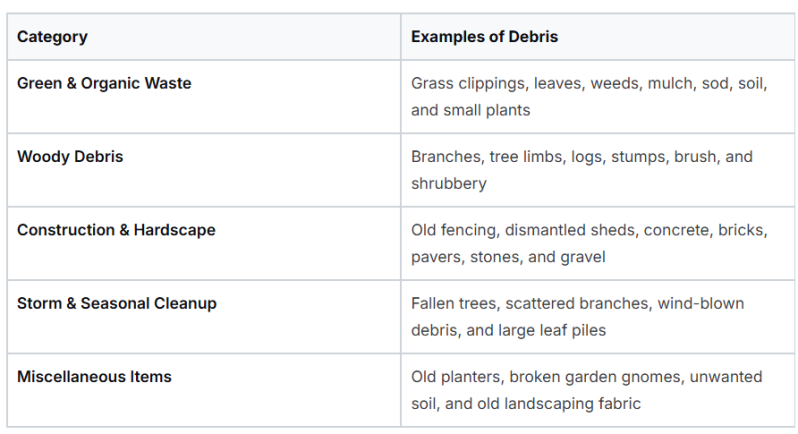
Ultimately, figuring out exactly what you have is what allows you to plan your next move. Whether that means bundling a few branches for curbside pickup or calling in a pro to haul away the heavy-duty stuff, a clean slate is the goal. Knowing your debris is the first step to getting there.
DIY Removal vs. Hiring a Professional Service
After a big yard project, you’re usually left with two things: a great sense of accomplishment and a massive pile of debris. Now comes the real question—should you tackle the cleanup yourself or call in the pros? The best answer isn't always about saving a few bucks; it's about what makes the most sense for your specific situation.
Making the right call means being honest about the scale of your project. A few bags of grass clippings and leaves from weekend gardening is one thing. But a tangled mess of heavy tree limbs, busted-up concrete from an old patio, or splintered fencing? That's a whole different beast.
Ultimately, the decision comes down to balancing your time, your budget, and what you’re physically up for against the sheer volume and weight of the debris. For small, manageable amounts of light, organic waste, a DIY approach can be the perfect fit. But as the job gets bigger, the challenges start to pile up, too.
This simple decision tree can help you quickly figure out what kind of mess you're dealing with, from simple organic stuff to heavier, bulkier materials.
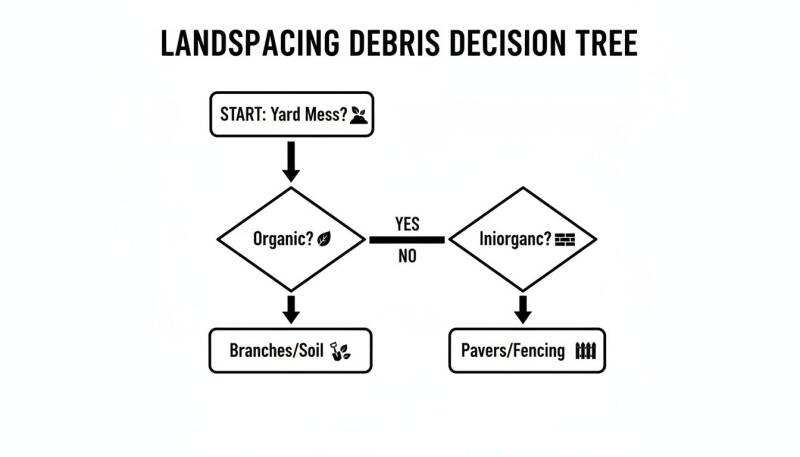
As you can see, once you start moving from lightweight organic materials to heavy-duty items like pavers or old playsets, the job quickly becomes more than a simple weekend chore.
To help you weigh your options, let's break down the pros and cons of each path.
DIY vs Professional Landscaping Debris Removal
This head-to-head comparison should give you a clearer picture of which approach is the right fit for your project.
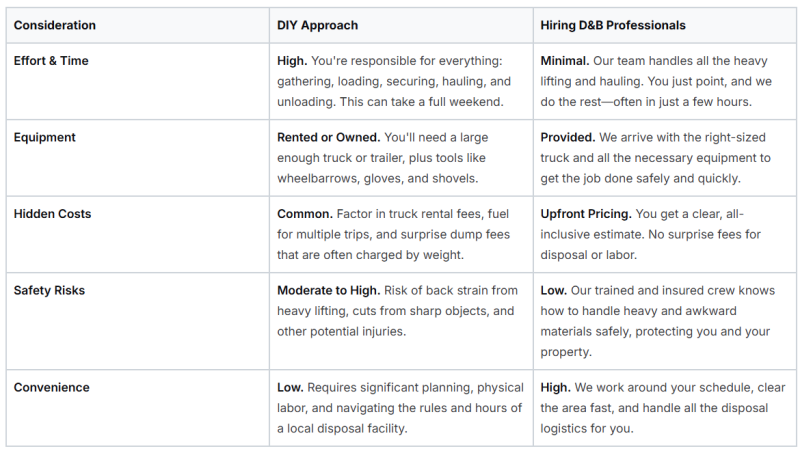
While the DIY route has its place, a professional service often provides peace of mind and frees you up to simply enjoy your newly beautified yard.
Assessing the DIY Approach
Going the do-it-yourself route can feel empowering, and it seems like the most cost-effective option on the surface. If you’ve just got a small pile of branches or a few bags of weeds, loading them into your SUV for a trip to the local transfer station sounds simple enough.
But the hidden costs and hassles can catch you by surprise. Before you commit, think about these points:
- Your Time is Valuable: A DIY cleanup isn't just about loading debris. It's the trip to rent a truck, the drive time to the dump, waiting in line with commercial vehicles, and then unloading it all. Your entire Saturday could easily disappear.
- The Right Tools for the Job: Do you have a vehicle that can handle the load without getting damaged? Will you need to rent a trailer? Don't forget heavy-duty gloves, a sturdy wheelbarrow, and maybe even a dolly for heavier items.
- The Sneaky Costs: The rental truck is just the start. You'll also have to pay dump fees, which are typically charged by weight and can be shockingly high for heavy materials like soil or concrete. Then there's the cost of fuel for one, or maybe even two, trips.
For a lot of homeowners, the biggest surprise is the physical toll. Heaving heavy stumps, wrestling with sharp metal fencing, or lifting bags of wet, heavy soil is back-breaking work. It’s a surefire way to turn a satisfying weekend project into a week of aches and pains.
When to Call a Professional Service
Hiring a professional landscaping debris removal service takes the entire burden off your shoulders and places it onto experienced experts. This option is a game-changer when you're dealing with huge volumes, heavy materials, or you just don't have the time or energy to manage the cleanup yourself.
A professional team shows up with the right-sized truck, the right equipment, and the know-how to get the job done quickly and safely. This is especially true after a big storm leaves massive tree limbs scattered across your lawn, or a renovation project generates a ton of concrete and wood waste.
Here’s when calling a pro really makes sense:
- It's a Lot of Debris: If the pile is bigger than what you could comfortably fit in the back of a standard pickup truck, a professional service is almost always the more efficient choice.
- It's Heavy Stuff: Materials like concrete, bricks, soil, and large stumps are not only difficult but also dangerous to handle without the proper equipment and technique.
- You're Short on Time: Need the yard cleared fast for a party or just want your space back without losing a weekend? Professionals bring speed and convenience that's hard to beat.
Choosing a professional service isn't just about paying someone to haul away junk; it's about buying back your time and ensuring the job is done right. To get a better feel for the process, you can learn more about professional junk removal services and see how they can simplify even the most overwhelming cleanup projects.
Navigating Local Debris Disposal Regulations
When it’s time to get rid of all that landscaping debris, you’d think just dragging it to the curb would be enough. Unfortunately, it's rarely that simple. Every town and county has its own rulebook for waste, and for homeowners in Westchester, Putnam, Dutchess, and Fairfield counties, knowing those rules is the key to avoiding a major headache and surprise fines.
These regulations aren't just bureaucratic red tape—they serve a real purpose. The rules are there to boost recycling, keep local landfills from overflowing with perfectly good organic material, and maintain public safety. Think of them as the traffic laws for trash; they keep everything running smoothly and prevent bigger messes down the road.
One of the most common rules you'll run into is how you have to handle different kinds of debris. For example, most towns won't let you mix yard trimmings like branches and leaves in with your regular household garbage. Making that mistake can lead to your trash being left at the curb and maybe even a citation, a frequent stumbling block for many DIY landscaping debris removal projects.
Common Regulations in NY and CT
While the fine print changes from one town to the next, you'll find a few common themes across the region. Getting familiar with them will save you a lot of grief.
- Separation is Key: Most places insist you separate the organic stuff (leaves, grass, branches) from inorganic materials like old pavers, concrete chunks, or fencing. This is non-negotiable for their recycling and composting programs to work.
- Burning is a No-Go: Open burning of yard waste is either completely banned or heavily restricted in most areas. It’s a fire hazard and bad for air quality, so always check with your local fire department before you even think about lighting a match.
- Bag and Bundle Correctly: If your town does offer curbside pickup for yard waste, they'll have strict rules. You might need to use specific paper yard bags, clear plastic bags, or tie branches into bundles of a certain size and weight.
Just look at the construction industry, which deals with similar heavy-duty cleanups. Construction projects in the U.S. produce over 600 million tons of debris every year. To stop illegal dumping, authorities can slap on fines as high as $10,000 per violation. That really puts the financial risk of getting it wrong into perspective.
Why It Gets Complicated
The biggest hurdle for homeowners is that these rules are often incredibly specific and can change with little warning. What’s allowed in one corner of Westchester County might be completely different just a few miles away in Fairfield County. Trying to keep track of it all is where DIY plans often fall apart.
For instance, some local transfer stations require you to buy a permit just to drop off debris, while others might cap how much you can bring in a single trip. If your project generated a mix of old wood, excess soil, and broken concrete, untangling the proper disposal route for each material can feel like a full-blown logistical nightmare. And that’s exactly where a professional service makes all the difference.
"Trying to skirt local disposal regulations is a gamble you don't want to take. A single fine for improper dumping can easily cost more than hiring a professional crew to handle everything. It’s not just about saving time—it’s about protecting your wallet and staying on the right side of the law."
When you hire an expert in landscaping debris removal, you don’t have to become a walking encyclopedia of local waste ordinances. A good company already knows the ins and outs of the rules in every town they serve. They take care of the sorting, hauling, and legal disposal, making sure every last branch and leaf goes to the right place—whether that’s a recycling center or a composting facility. It keeps you compliant and supports your community’s environmental goals at the same time.
For more ideas on managing clutter, check out our comprehensive junk removal tips and resources.
How to Prepare for a Smooth Debris Pickup
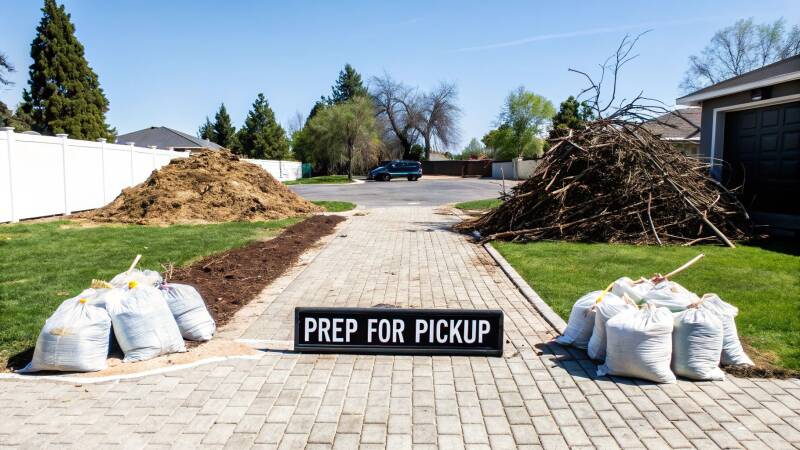
A little prep work before our landscaping debris removal crew pulls up can make a world of difference. Think of it like organizing your kitchen before a chef arrives to cook; a few simple steps help everything run faster, safer, and more efficiently. When you take a few minutes to get the site ready, you help us get the job done quickly so you can get back to enjoying your clean, open space.
This isn’t about you doing our job for us—it’s about clearing the way so we can work at peak performance. A well-prepared site helps our team assess the job accurately, work safely, and load the truck without any hitches. Ultimately, it just makes the whole experience seamless for you.
Consolidate and Separate Your Debris
The single most helpful thing you can do? Gather everything into one central, accessible pile. Instead of leaving small piles of branches in the backyard, a stack of old pavers by the garage, and bags of leaves at the curb, try to bring it all together. A driveway or a clear spot on your lawn near the street is perfect.
This simple step saves our crew from wasting time trekking back and forth across your property, which really speeds up the whole process. On top of that, a quick separation of materials is incredibly helpful.
- Group Heavy with Heavy: Put all the concrete, bricks, and stones together.
- Bundle Woody Materials: Stack branches, logs, and old fencing in a separate pile.
- Bag Loose Waste: Use yard waste bags for leaves, grass clippings, and small twigs.
Separating materials like this is about more than just tidiness. It helps us balance the weight in our trucks and is crucial for our eco-friendly disposal process. This way, we can make sure organic materials head off for composting and other items get recycled properly.
Clear a Path for Access
Imagine trying to move a sofa through a cluttered hallway. That’s what it’s like for our crew trying to navigate a yard filled with obstacles. To make sure the pickup goes smoothly, please clear a wide, direct path from the debris pile to where our truck will be parked.
This means moving things that could become trip hazards, like garden hoses, kids' toys, wheelbarrows, or even a parked car. A clear path is absolutely essential for both safety and speed, letting our team use dollies and wheelbarrows without risking damage to your property or themselves.
A clear and accessible site is the key to a fast and safe cleanup. By flagging potential hazards and ensuring a direct path to the debris, you help us complete the job in record time, often reducing the overall time spent on your property significantly.
Identify and Flag Potential Hazards
Finally, take a quick walk around the work area to spot anything that could pose a risk. You know your property better than anyone, and your insights are invaluable for keeping everyone safe.
Keep an eye out for things like:
- Overhead Wires: Low-hanging power or cable lines are a major hazard.
- Hidden Sprinkler Heads: These are easily damaged by heavy foot traffic or equipment.
- Septic Tank Lids: We should never drive over these or pile heavy debris on them.
- Uneven Ground: Pointing out hidden dips or holes can prevent a nasty fall.
Marking these spots with a small flag, an orange cone, or even just giving our crew chief a heads-up when we arrive is a huge help. These simple preparations pave the way for a perfect landscaping debris removal service.
Choosing the Right Landscaping Debris Removal Service
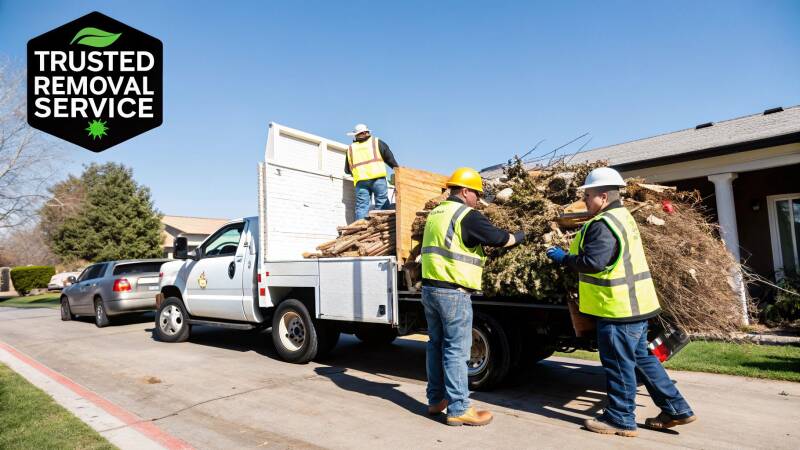
Once you've decided to bring in the pros, the next step is finding a company you can trust to get the job done right. Let's be honest, not all services are the same. The best ones offer a mix of efficiency, reliability, and clear communication that turns a stressful cleanup into a simple, satisfying experience.
Think of it like hiring any contractor for a project inside your home. You want a team that respects your property, talks to you straight, and handles all the messy details behind the scenes. At D&B Complete Home Services, we’ve built our entire process around these core ideas for homeowners across New York and Connecticut.
From the first phone call to the final sweep-up, our goal is to make landscaping debris removal completely painless for you. We get it—you just want your yard back. Our whole service is designed to make that happen quickly and professionally.
What to Expect From Our Service
We believe in a straightforward process without any guesswork. When you work with us, you know exactly what’s happening every step of the way.
- Simple Scheduling: It all starts with a quick chat to get a feel for your project. We'll ask about the type and amount of debris and where it is on your property. This lets us offer flexible scheduling, often including same-day or next-day appointments when you're in a pinch.
- Upfront, Honest Pricing: Before we even think about lifting a branch, we give you a clear, no-obligation quote. Our pricing is transparent and based mostly on volume—how much space your debris takes up in our truck. No hidden fees, no surprises.
- Efficient and Safe Removal: Our trained and insured crew shows up on time with the right equipment for the job. We do all the heavy lifting and hauling, and we work carefully to protect your lawn, garden beds, and driveway from any damage.
- Thorough Final Sweep-Up: We don’t just haul away the big pile and call it a day. Our job isn’t done until we've swept the area clean of stray leaves, twigs, and dirt, leaving your space looking pristine and ready for you to enjoy.
Key Factors That Influence Cost
Transparency is important, and that includes helping you understand what goes into your quote. While every job is a bit different, a few standard factors determine the final cost of your landscaping debris removal.
- Volume of Debris: This is the big one. The cost is directly tied to how much truck space your items fill, from a small corner to a full load.
- Type of Material: Heavy, dense materials like old concrete, soil, or bricks simply cost more to dispose of than lighter organic waste like leaves and branches.
- Accessibility: If the debris is piled neatly in your driveway, it's quicker (and more cost-effective) to remove than debris scattered across a backyard with tricky access.
By understanding these factors, you can see how our quotes are structured fairly and accurately. Our on-site estimates ensure we see exactly what we're dealing with, providing you with a precise price before any work begins.
Our Commitment to Eco-Friendly Disposal
Doing things the right way is at the heart of our business. We don’t just haul your debris to the nearest landfill and forget about it. We’re committed to environmentally friendly practices that benefit our communities in NY and CT.
This isn't just us—it's part of a bigger shift toward sustainability. The junk removal market, valued at $14.4 billion recently, is growing fast, and eco-friendly practices are a huge part of that. Landscaping debris can account for 20-30% of what we haul from homes. By prioritizing recycling, professionals can keep up to 70% of that green waste out of landfills and often cut client costs by 15-25% by repurposing materials. You can discover more about the junk removal business market and its growth.
Here’s how our eco-friendly process works:
- Recycling Green Waste: We take branches, leaves, and other organic materials to local facilities where they’re turned into valuable mulch or compost.
- Donating Usable Items: If we’re removing things like old pavers, fencing, or patio furniture that are still in good shape, we do our best to donate them to local charities.
- Properly Disposing of the Rest: Only the materials that absolutely cannot be recycled or donated are taken to a licensed transfer station for proper disposal.
This approach doesn't just reduce our environmental footprint; it ensures your unwanted items are handled in the most responsible way possible. When you choose D&B, you're choosing a partner who cares about your property and our shared environment.
Your Top Questions About Debris Removal, Answered
After you've wrapped up a big yard project, a few questions about the final cleanup always seem to pop up. Getting straight answers is the best way to feel confident about your landscaping debris removal plan. Here, we’ll tackle the most common questions we hear from homeowners across New York and Connecticut, giving you practical info to help you finish the job with zero stress.
Think of this as your go-to guide for the final step. We've pulled together all the essential details, from what we can haul away to how our whole process works. Our goal is to clear up any confusion so you can get back to enjoying your clean, beautiful yard.
What Kinds of Landscaping Debris Do You Take?
This is probably the number one question we get, and the answer is simple: we handle just about everything, both organic and inorganic. We’ve designed our service to be a true one-stop solution for nearly any mess a yard project leaves behind.
We haul away all the usual suspects. This includes organic materials like:
- Branches, tree limbs, and logs
- Leaves, grass clippings, and old mulch
- Soil, sod, and uprooted shrubs
But our service doesn't stop there. We also take the heavier stuff left over from outdoor construction and renovations. This "inorganic" debris covers things like old fencing, dismantled deck wood, broken-up concrete from a patio, discarded pavers, and even entire sheds that have been torn down. If it came out of your yard, chances are we can take it.
The only real exceptions are hazardous materials. Things like certain pesticides, old garden chemicals, or other toxic substances need specialized disposal, which isn't something we're equipped for. If you have items like these, our team can point you in the right direction.
How Do You Figure Out the Cost for a Removal Job?
We're big believers in straightforward pricing with no last-minute surprises. The biggest factor that determines the cost of a landscaping debris removal job is the volume of your debris. Simply put, it comes down to how much space your stuff takes up in our truck.
A few other things play a role in the final quote, too:
- Weight of Materials: Denser, heavier items like concrete, soil, and bricks cost more for us to dispose of at the transfer station. Disposal facilities charge by weight, so we have to factor that into our pricing.
- Accessibility of the Pile: How easy is it for our crew to get to the debris? A pile sitting right on the driveway is a much quicker job than one scattered in a hard-to-reach corner of the backyard.
- Type of Material: Like we mentioned, what the debris is made of matters. A full truck of light, woody branches will have a different price than a truck loaded with heavy, dense construction rubble.
We always give you a clear, no-obligation quote right upfront, before we start any work. Our crew assesses everything on-site and gives you an exact price. You'll know the total cost before we lift a single branch, guaranteeing a smooth and predictable experience.
Do I Have to Be Home for the Appointment?
We get it—your schedule is packed. That’s why we’ve made our service as flexible as possible. The short answer is no, you don't necessarily have to be home for us to clear your debris.
As long as the pile is in an easily accessible outdoor spot—like your driveway, front yard, or by the curb—our crew can handle the entire job without you needing to be there. This "contactless" service is a popular option for homeowners who can't take time off work or have other plans.
Here’s how it works when you're not home:
- You just give us clear instructions on where to find the debris.
- Our team arrives, takes a look at the pile, and gives you a call to confirm the final price before we start.
- Once you give us the thumbs-up over the phone, we get to work.
- After the job is done, we can easily process your payment with a credit card right over the phone.
- For your peace of mind, we’re always happy to send a quick photo of the cleared space so you can see the finished result right away.
This whole approach lets you get your yard cleared without having to shuffle your day around. It’s all part of our commitment to making landscaping debris removal as convenient as we can.
How Quickly Can You Get Rid of My Debris?
We pride ourselves on being fast and reliable. We know that once a project is finished, you just want the mess gone so you can get your space back.
In most cases, we can offer same-day or next-day appointments, especially for our clients in our main service areas across NY and CT. We've built our schedule around being responsive and efficient.
Once our team is on-site, the job itself moves quickly. A typical residential landscaping debris removal is usually done in well under an hour. Our experienced crew works fast to load everything up, sweep the area clean, and get out of your way, leaving you with a tidy, usable yard in no time.
Our mission is pretty simple: help you enjoy your yard again, as quickly and smoothly as possible.
Ready to clear out the clutter and reclaim your yard? Let the professional team at D&B Complete Home Services INC. handle all the heavy lifting for you. Schedule your fast, no-obligation estimate today!
Add comment
Comments